HIV: Understanding the Virus, its Impact, and Implications - Social Issues | UPSC Learning
Topics
0 topics • 0 completed
🔍
No topics match your search
HIV: Understanding the Virus, its Impact, and Implications
Easy⏱️ 6 min read
social issues
📖 Introduction
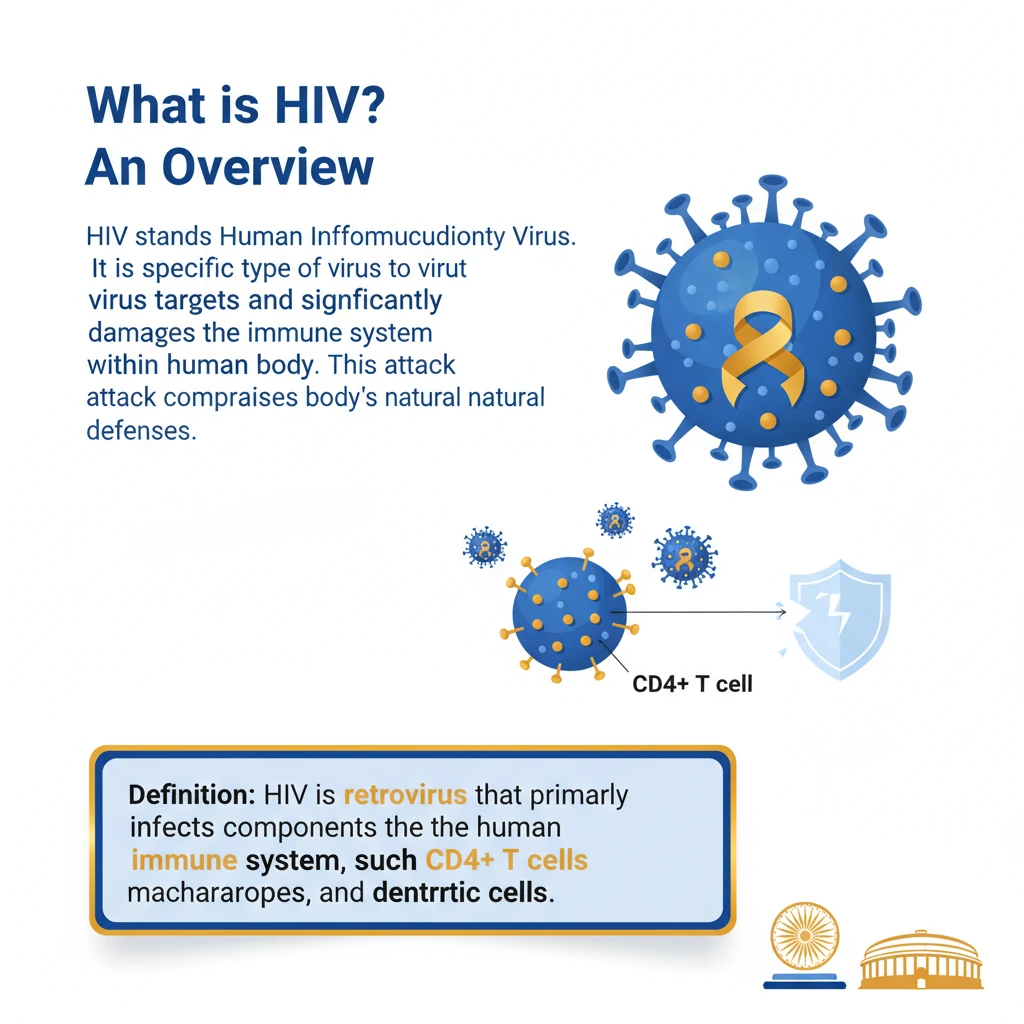
<h4>What is HIV? An Overview</h4><p><strong>HIV</strong> stands for <strong>Human Immunodeficiency Virus</strong>. It is a specific type of virus that targets and significantly damages the <strong>immune system</strong> within the human body. This attack compromises the body's natural defenses.</p><div class='info-box'><p><strong>Definition:</strong> HIV is a retrovirus that primarily infects components of the human immune system, such as <strong>CD4+ T cells</strong>, macrophages, and dendritic cells.</p></div><h4>Targeting Key Immune Cells</h4><p>The virus primarily targets and damages <strong>CD4 immune cells</strong>. These are a crucial type of <strong>White Blood Cell</strong>, playing an essential role in orchestrating the body's immune response against infections and various diseases.</p><p>By destroying these vital cells, HIV progressively weakens the immune system. This makes the infected individual increasingly susceptible to illnesses that a healthy immune system would normally fight off.</p><h4>Impact on the Body's Defenses</h4><p>Over an extended period, the continuous assault by HIV severely debilitates the body's immune system. This leaves the individual highly vulnerable to a range of <strong>opportunistic infections</strong> and certain types of <strong>cancers</strong>.</p><div class='key-point-box'><p><strong>Key Concept:</strong> HIV does not directly cause death, but rather creates a state of severe immunodeficiency (<strong>AIDS</strong>) that allows other infections and cancers to thrive, ultimately leading to severe health complications.</p></div>
💡 Key Takeaways
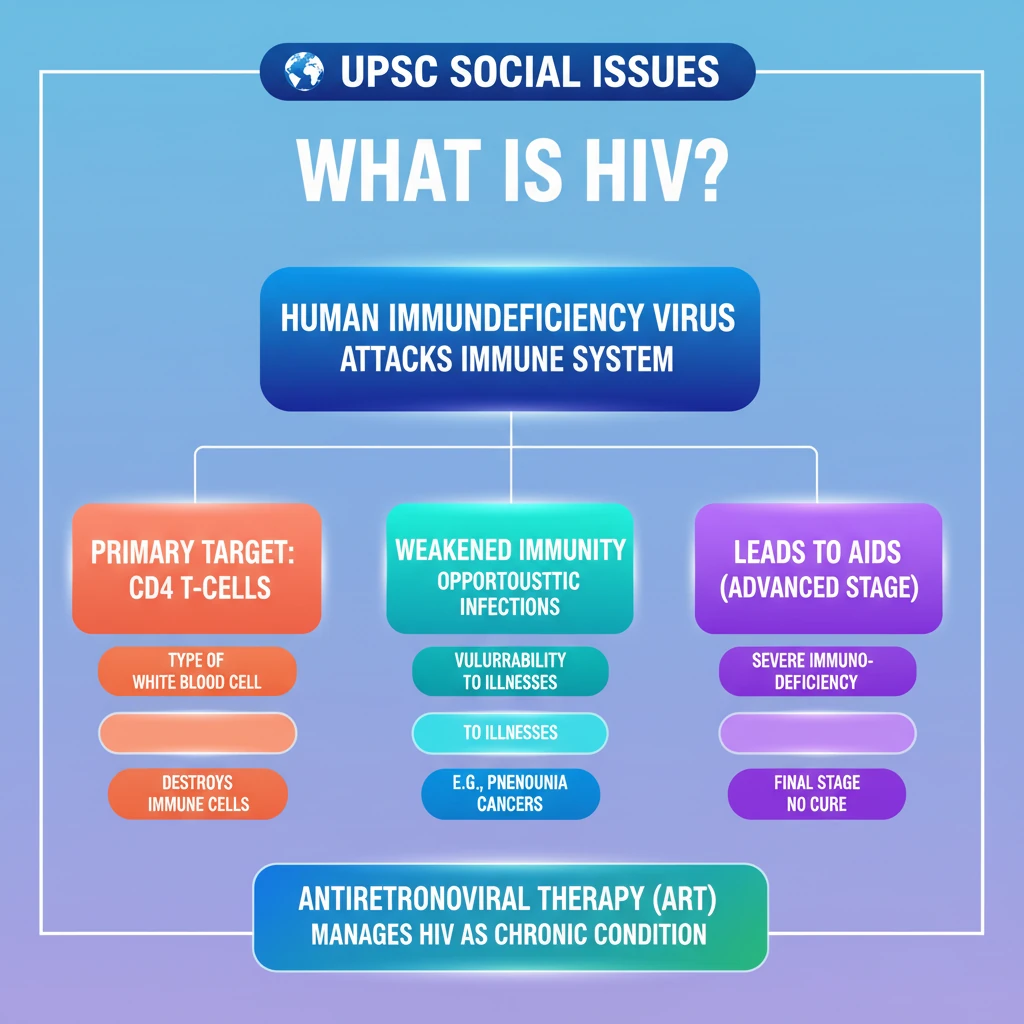
- •HIV is the Human Immunodeficiency Virus, attacking the body's immune system.
- •It primarily targets and destroys CD4 immune cells, a type of White Blood Cell.
- •Weakened immunity leads to vulnerability to opportunistic infections and cancers.
- •AIDS is the advanced stage of HIV infection, characterized by severe immunodeficiency.
- •Antiretroviral Therapy (ART) effectively manages HIV, making it a chronic condition and reducing transmission.
🧠 Memory Techniques

98% Verified Content
📚 Reference Sources
•UNAIDS - The Joint United Nations Programme on HIV/AIDS
•Centers for Disease Control and Prevention (CDC) - About HIV
•National AIDS Control Organisation (NACO), India