Chenchu Tribe: MGNREGS Impact, Livelihoods, and Vulnerable Status - Social Issues | UPSC Learning
Topics
0 topics • 0 completed
🔍
No topics match your search
Chenchu Tribe: MGNREGS Impact, Livelihoods, and Vulnerable Status
Medium⏱️ 6 min read
social issues
📖 Introduction
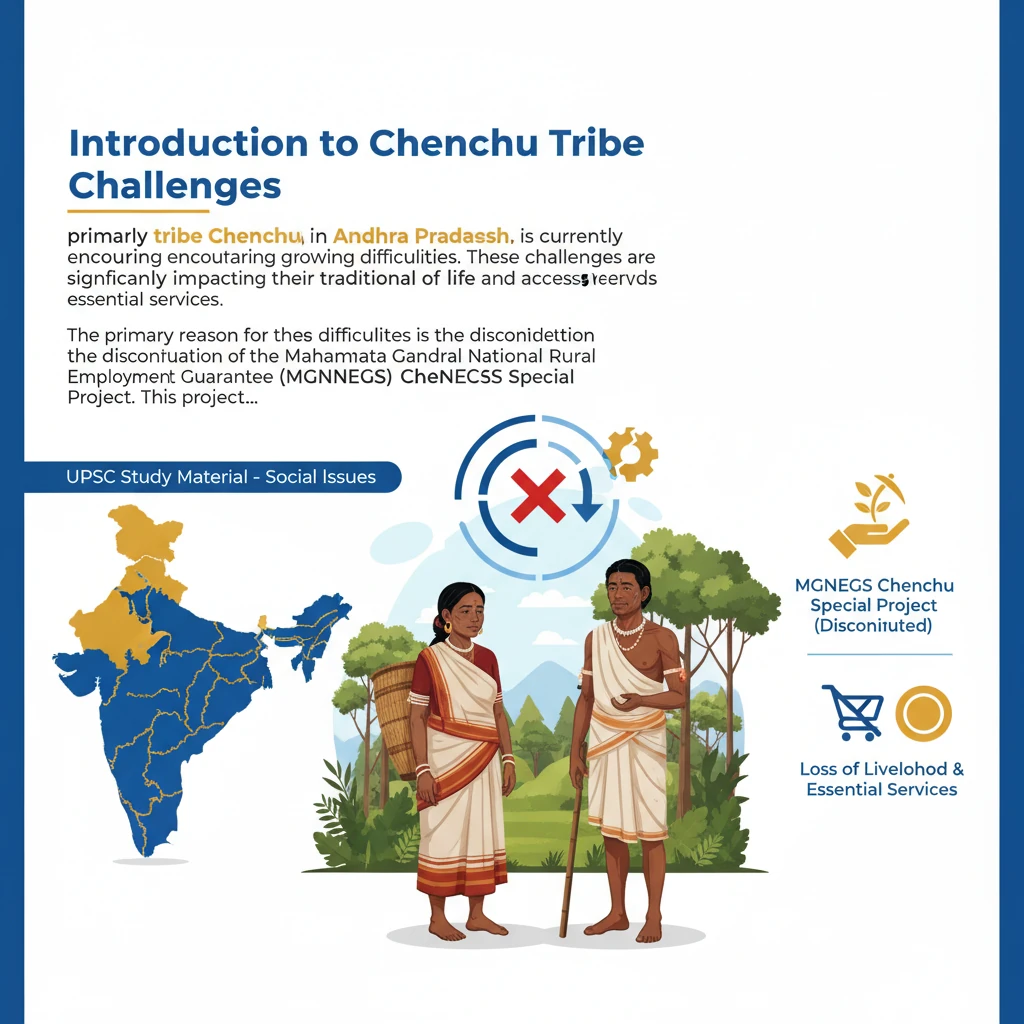
<h4>Introduction to Chenchu Tribe Challenges</h4><p>The <strong>Chenchu tribe</strong>, primarily residing in <strong>Andhra Pradesh</strong>, is currently encountering growing difficulties. These challenges are significantly impacting their traditional way of life and access to essential services.</p><p>The primary reason for these difficulties is the discontinuation of the <strong>Mahatma Gandhi National Rural Employment Guarantee Scheme (MGNREGS) Chenchu Special Project</strong>. This project was a vital source of support for the community.</p><p>The cessation of the project has negatively affected their <strong>livelihoods</strong>, compromised their <strong>food security</strong>, and limited their access to crucial services such as <strong>healthcare</strong> and <strong>education</strong>.</p><h4>Who are the Chenchus?</h4><p>The <strong>Chenchus</strong> are also known by the names <strong>‘Chenchuvaru’</strong> or <strong>‘Chenchwar’</strong>. They represent a unique tribal community with distinct cultural and linguistic characteristics.</p><div class='info-box'><p>While primarily associated with <strong>Andhra Pradesh</strong>, the <strong>Chenchus</strong> are numerically the <strong>smallest Scheduled Tribe of Odisha</strong>. This highlights their presence across different states.</p></div><p>Their traditional way of life has historically been based on practices of <strong>hunting</strong> and <strong>food gathering</strong>, showcasing a deep connection to their natural environment.</p><p>They are considered one of the oldest <strong>Telugu-speaking tribes</strong>, indicating a long historical presence and linguistic heritage in the region.</p><h4>Particularly Vulnerable Tribal Groups (PVTGs) Classification</h4><p>The <strong>Chenchus</strong> are classified as one of the <strong>12 Particularly Vulnerable Tribal Groups (PVTGs)</strong> in <strong>Andhra Pradesh</strong>. This classification recognizes their heightened vulnerability.</p><div class='key-point-box'><p>The <strong>PVTG</strong> classification is assigned to tribes exhibiting specific indicators: <strong>low literacy rates</strong>, <strong>stagnant population growth</strong>, and <strong>limited access to development</strong> and its benefits.</p></div><h4>Habitat and Livelihood</h4><p>The tribe mainly resides in <strong>forested regions</strong>, with a significant presence in the <strong>Nallamala forest</strong> and its surrounding areas. These forests are central to their existence.</p><p>Their livelihood is intrinsically linked to the forest ecosystem, as they heavily rely on <strong>forest produce</strong> for sustenance and economic activities.</p><h4>Major Government Initiatives for PVTGs</h4><p>The Government of India has launched several initiatives specifically aimed at the welfare and comprehensive development of <strong>PVTGs</strong> across the country.</p><ul><li><strong>Janajatiya Gaurav Divas</strong>: Celebrated to honor tribal cultures, histories, and contributions to national development.</li><li><strong>Viksit Bharat Sankalp Yatra</strong>: A nationwide outreach initiative to ensure the saturation of various government welfare schemes, including those for tribal communities.</li><li><strong>PM PVTG Mission</strong>: A dedicated mission focused on the holistic development and upliftment of <strong>Particularly Vulnerable Tribal Groups</strong>.</li></ul>
💡 Key Takeaways
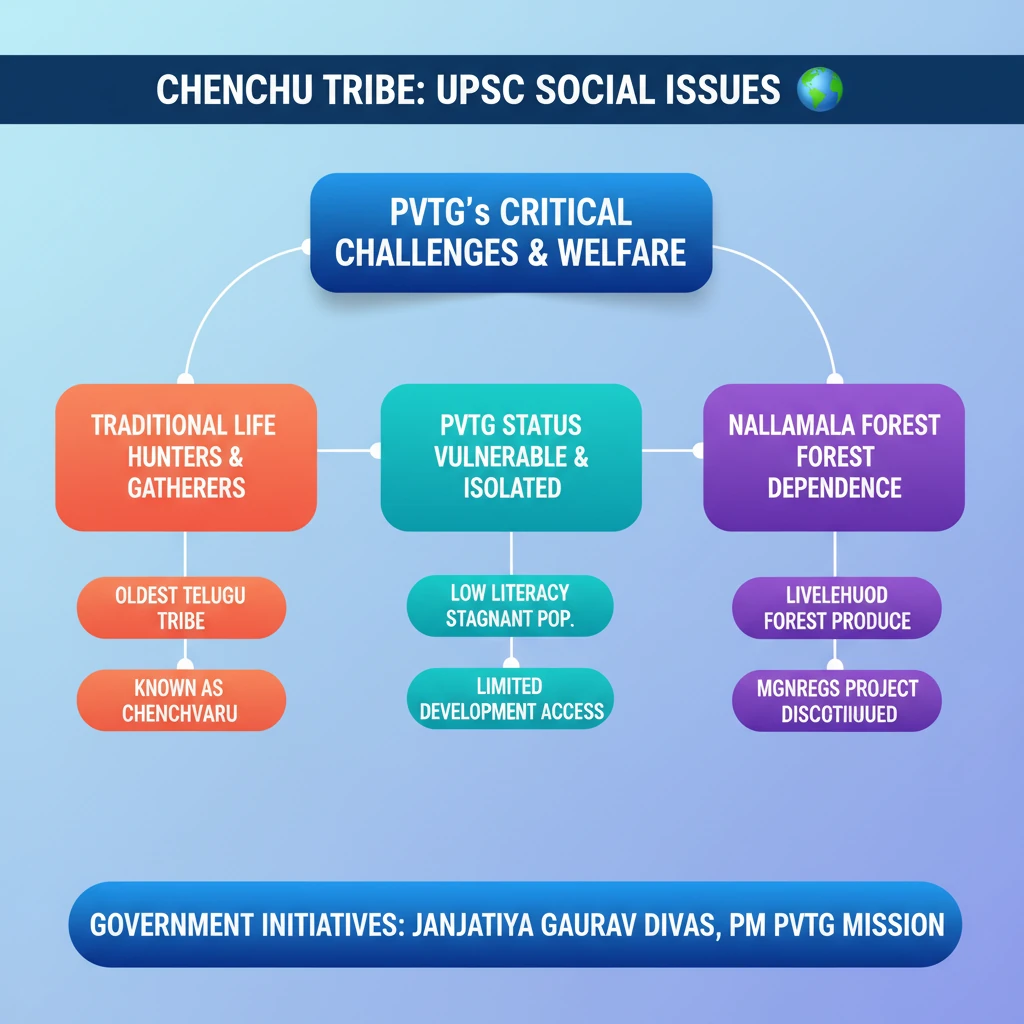
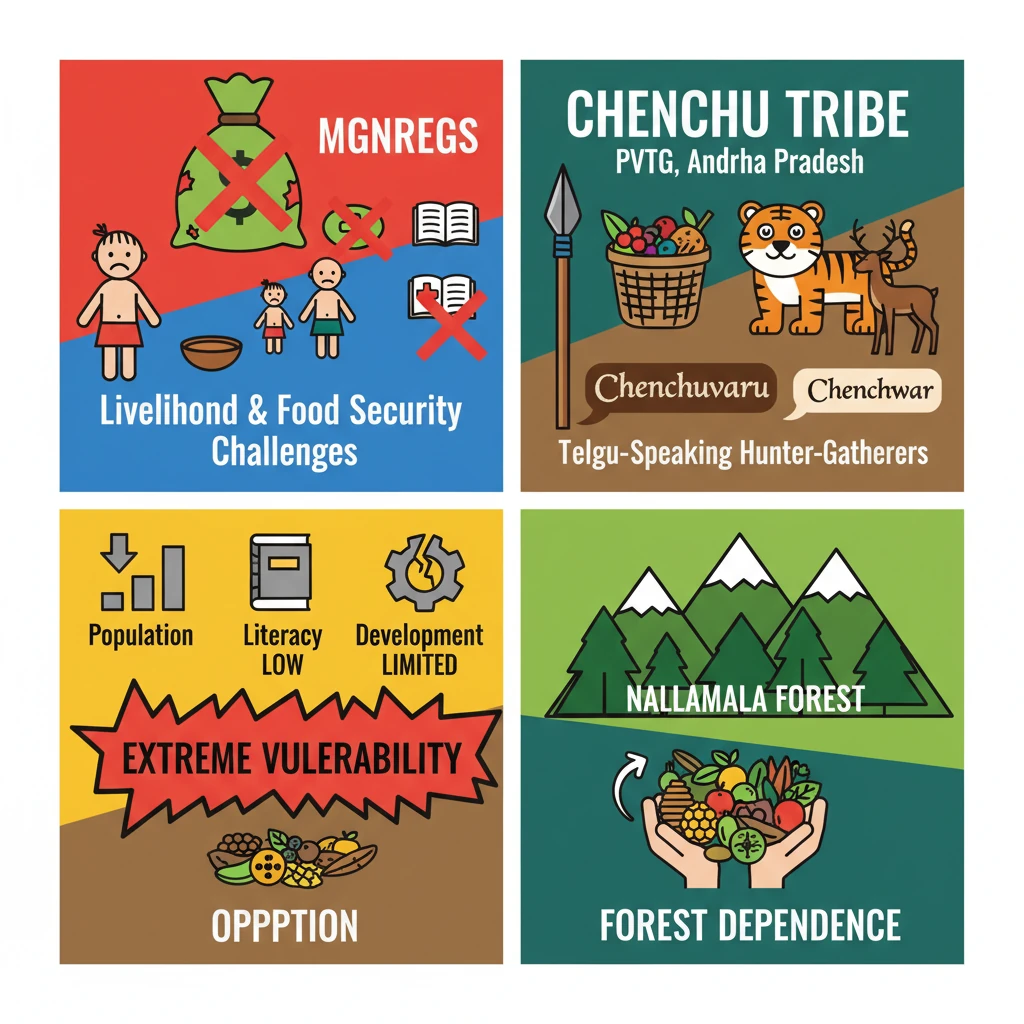
- •The Chenchu tribe, a PVTG in Andhra Pradesh, faces severe livelihood, food security, healthcare, and education challenges due to the discontinuation of the MGNREGS Chenchu Special Project.
- •Known as 'Chenchuvaru' or 'Chenchwar', they are one of the oldest Telugu-speaking tribes, traditionally relying on hunting and food gathering.
- •PVTGs are classified by low literacy, stagnant population, and limited access to development, indicating extreme vulnerability.
- •They primarily reside in the Nallamala forest, with their livelihood deeply dependent on forest produce.
- •Government initiatives like Janajatiya Gaurav Divas, Viksit Bharat Sankalp Yatra, and the PM PVTG Mission aim to address the welfare and development needs of PVTGs.
🧠 Memory Techniques
95% Verified Content