Key Anti-TB Drugs: Isoniazid, Rifampicin, and Delamanid - Social Issues | UPSC Learning
Topics
0 topics • 0 completed
🔍
No topics match your search
Key Anti-TB Drugs: Isoniazid, Rifampicin, and Delamanid
Easy⏱️ 7 min read
social issues
📖 Introduction
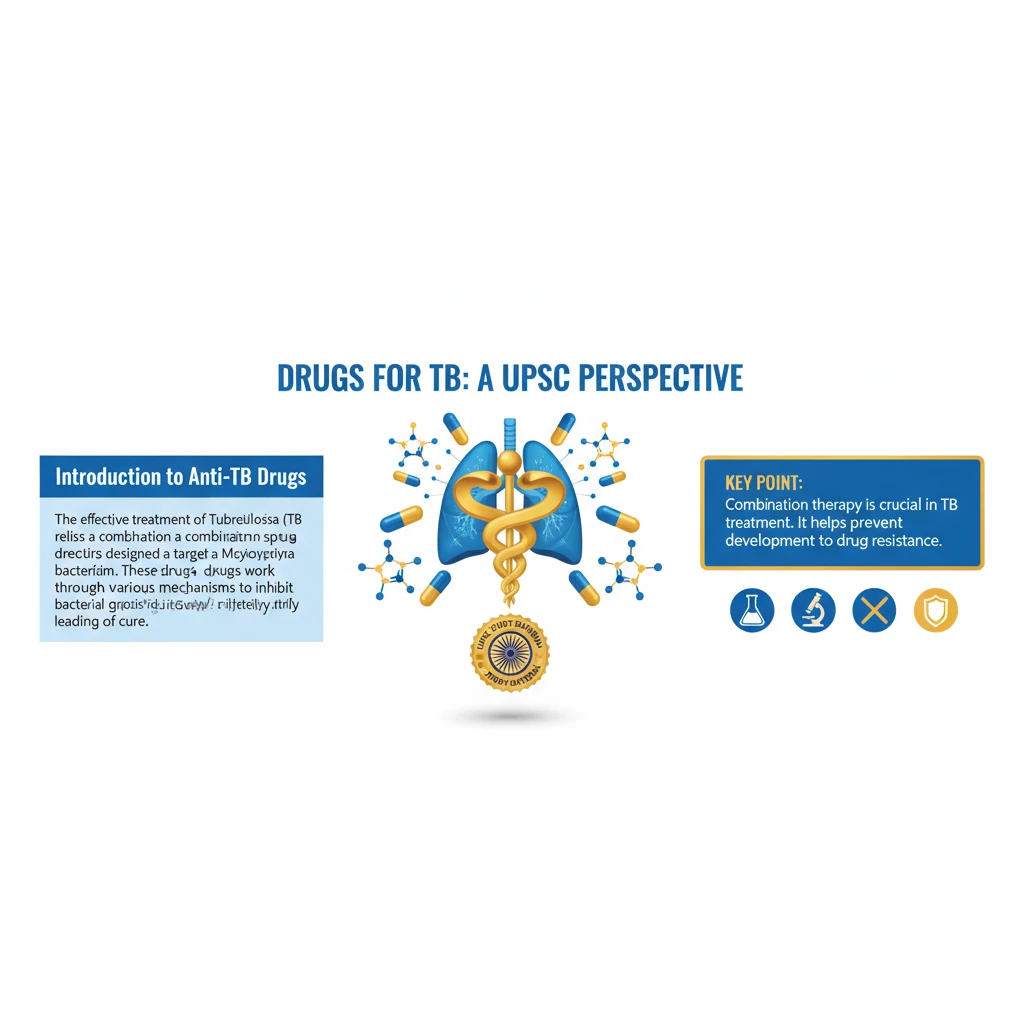
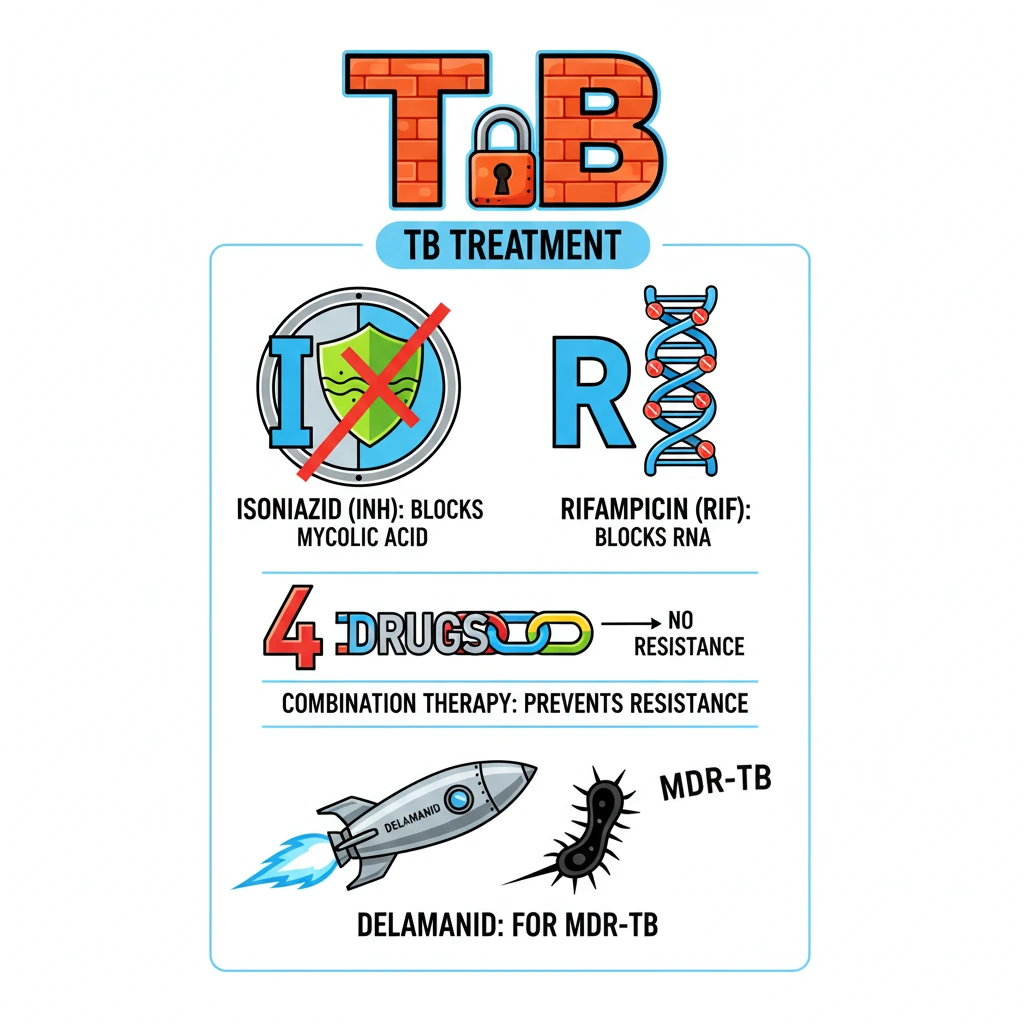
<h4>Introduction to Anti-TB Drugs</h4><p>The effective treatment of <strong>Tuberculosis (TB)</strong> relies heavily on a combination of specific drugs designed to target the <strong>Mycobacterium tuberculosis</strong> bacterium. These drugs work through various mechanisms to inhibit bacterial growth and replication, ultimately leading to a cure.</p><div class='key-point-box'><p><strong>Combination therapy</strong> is crucial in TB treatment. It helps prevent the development of <strong>drug resistance</strong> and ensures complete eradication of the infection.</p></div><h4>Isoniazid (INH): The Cornerstone of Treatment</h4><p><strong>Isoniazid (INH)</strong> is a foundational drug in the treatment regimen for <strong>Tuberculosis</strong>. It is highly effective against the causative agent, <strong>Mycobacterium tuberculosis</strong>.</p><p>Its primary mechanism of action involves inhibiting the synthesis of <strong>mycolic acids</strong>. These acids are vital components of the bacterial cell wall, and their disruption leads to bacterial death.</p><div class='info-box'><p><strong>Mechanism of Action (INH)</strong>: Inhibits <strong>mycolic acid</strong> synthesis, weakening the bacterial cell wall.</p></div><h4>Rifampicin (RIF): Essential for Preventing Resistance</h4><p><strong>Rifampicin (RIF)</strong> is another indispensable drug in the standard TB treatment protocol. It plays a critical role, especially when used in combination with other anti-TB agents.</p><p>This drug works by inhibiting the synthesis of <strong>RNA</strong> within the bacterial cell. By disrupting RNA production, it prevents the bacteria from producing essential proteins, thereby halting their growth and multiplication.</p><p>The inclusion of <strong>Rifampicin</strong> in multi-drug regimens is crucial for preventing the development of <strong>drug resistance</strong>, a significant challenge in TB management.</p><div class='info-box'><p><strong>Mechanism of Action (RIF)</strong>: Inhibits bacterial <strong>RNA synthesis</strong>.</p></div><h4>Delamanid: A Newer Drug for MDR-TB</h4><p><strong>Delamanid</strong> represents a newer class of drugs developed to combat more challenging forms of <strong>Tuberculosis</strong>. It is primarily used in the treatment of <strong>multidrug-resistant TB (MDR-TB)</strong>.</p><p>Like other potent anti-TB agents, <strong>Delamanid</strong> is typically administered in combination with other drugs to enhance its effectiveness and prevent further resistance development in <strong>MDR-TB</strong> cases.</p><div class='info-box'><p><strong>Delamanid Usage</strong>: Specifically targets <strong>Multidrug-Resistant TB (MDR-TB)</strong>.</p></div>
💡 Key Takeaways
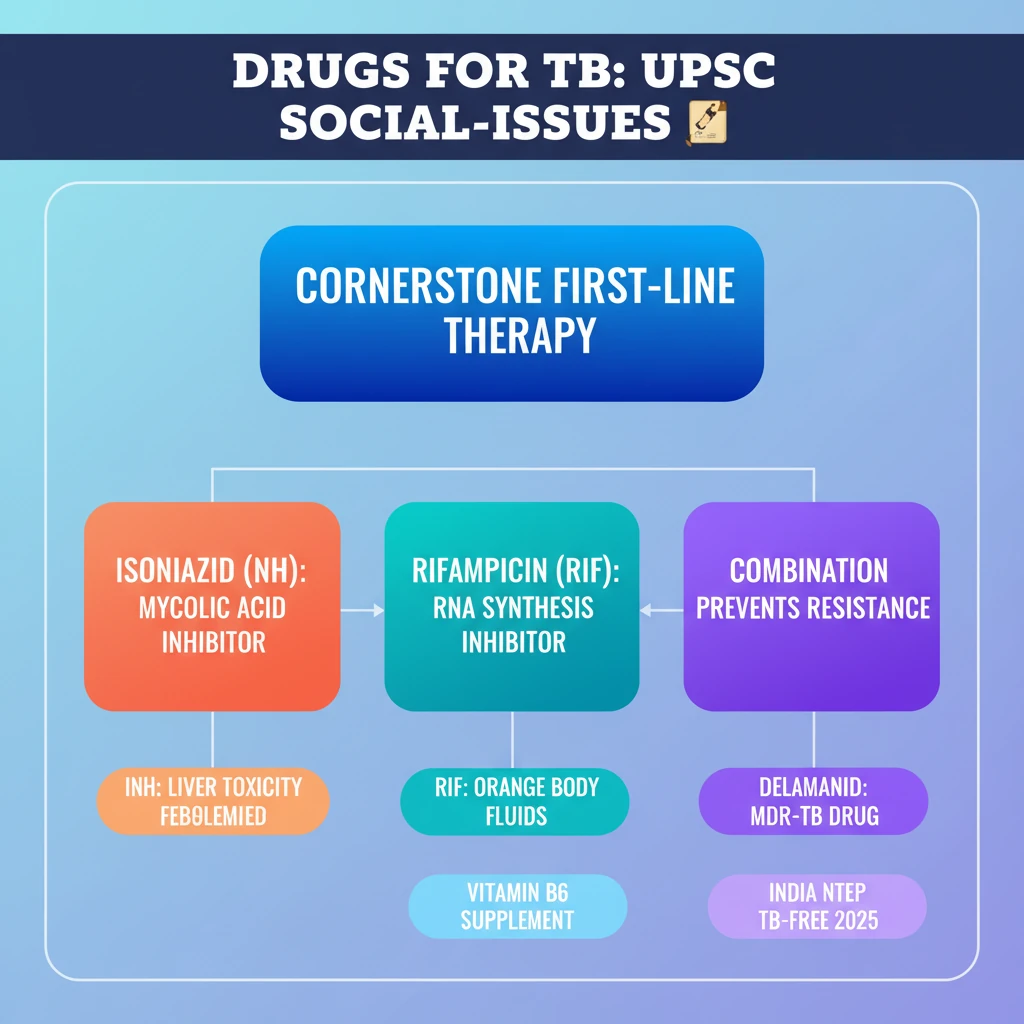
- •Isoniazid (INH) and Rifampicin (RIF) are cornerstone first-line drugs for TB treatment.
- •INH inhibits mycolic acid synthesis; RIF inhibits bacterial RNA synthesis.
- •Combination therapy with multiple drugs is essential to prevent drug resistance and ensure cure.
- •Delamanid is a newer drug specifically used for Multidrug-Resistant TB (MDR-TB).
- •India's National Tuberculosis Elimination Programme (NTEP) aims to eliminate TB by 2025, with a strong focus on drug management and combating resistance.
🧠 Memory Techniques
95% Verified Content