Empowerment Schemes and Programs - Social Issues | UPSC Learning
Topics
0 topics • 0 completed
🔍
No topics match your search
Empowerment Schemes and Programs
Medium⏱️ 8 min read
social issues
📖 Introduction
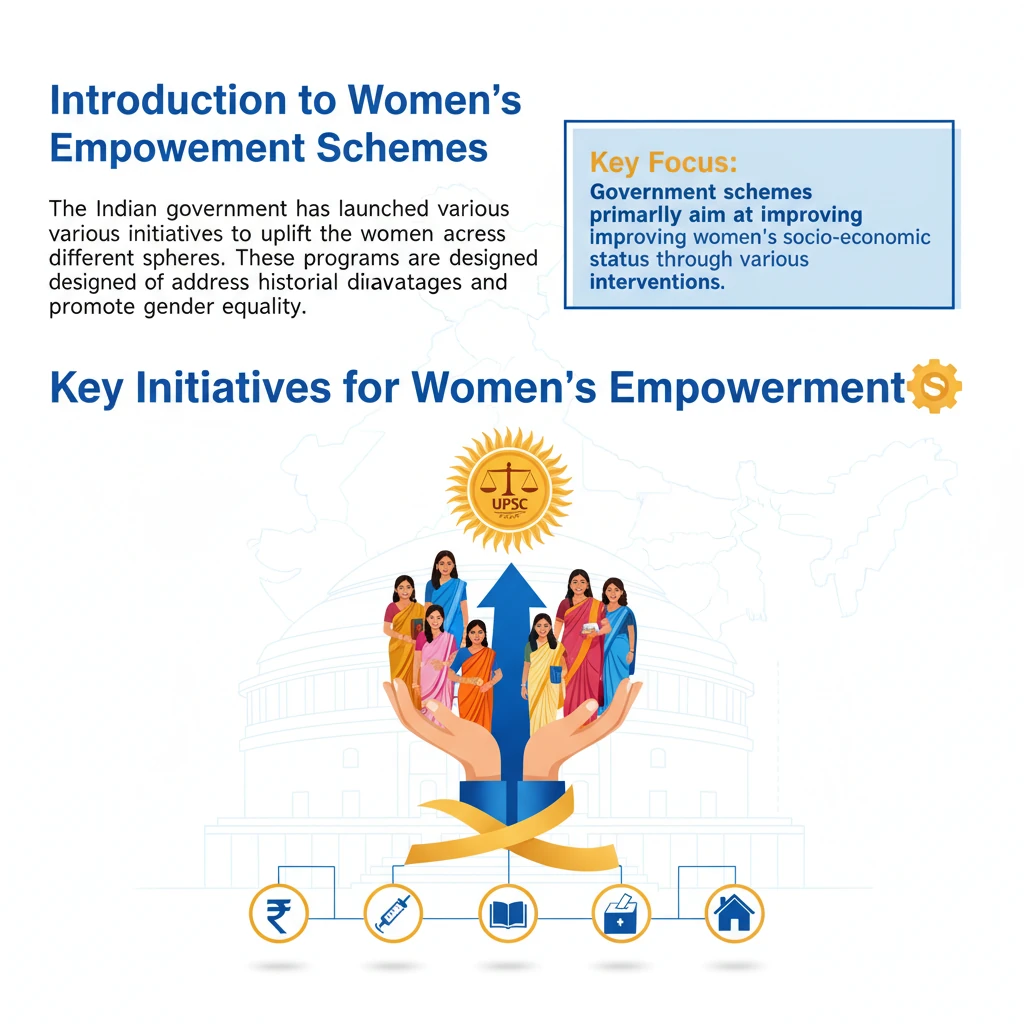
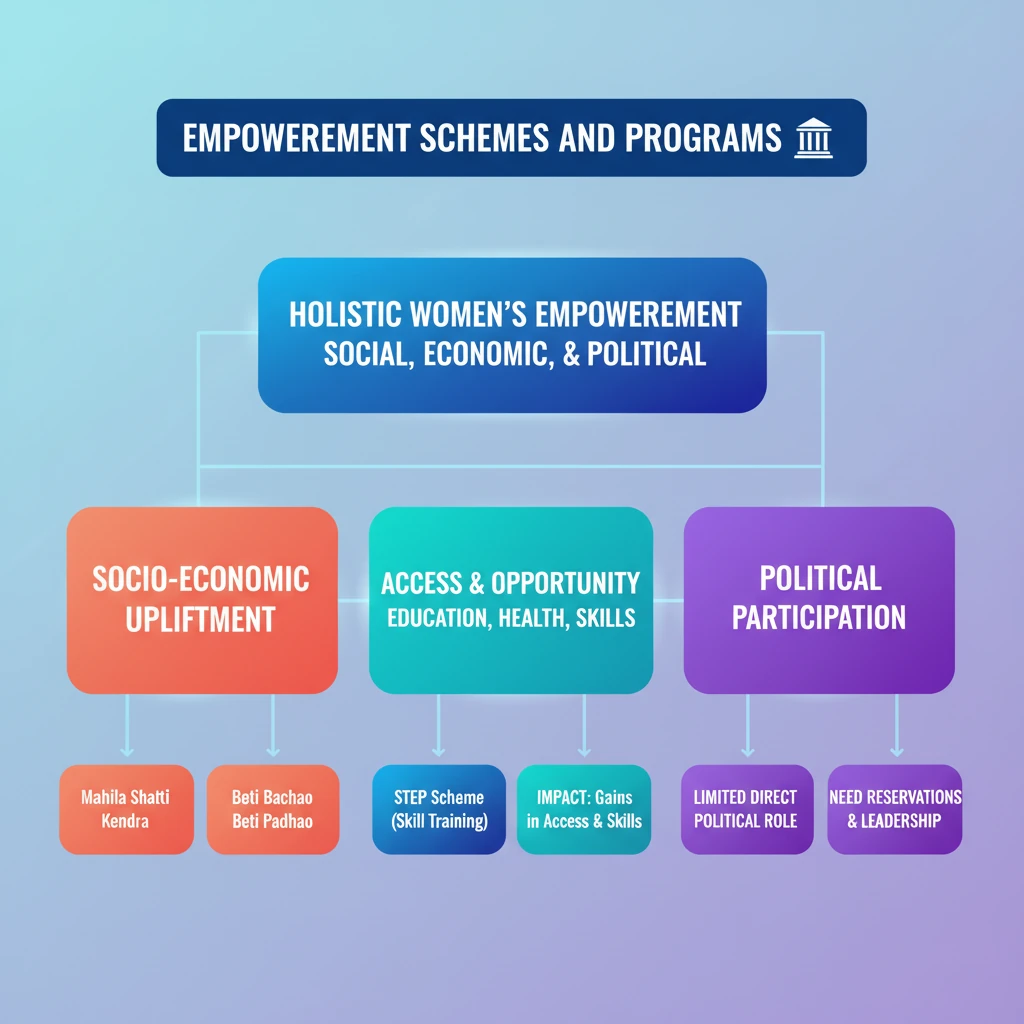
<h4>Introduction to Women's Empowerment Schemes</h4><p>The Indian government has launched various initiatives to uplift the status of women across different spheres. These programs are designed to address historical disadvantages and promote gender equality.</p><div class='info-box'><p><strong>Key Focus:</strong> Government schemes primarily aim at improving women's <strong>socio-economic status</strong> through various interventions.</p></div><h4>Key Initiatives for Women's Empowerment</h4><p>Several prominent schemes have been implemented to foster women's development. These include the <strong>Mahila Shakti Kendra (MSK)</strong>, <strong>Beti Bachao Beti Padhao (BBBP)</strong>, and the <strong>Support to Training and Employment Programme for Women (STEP)</strong>.</p><p>Each of these programs targets specific aspects of women's lives, from education and health to skill development and livelihood generation.</p><h4>Socio-Economic Impact vs. Political Participation</h4><p>While these initiatives have significantly aimed to improve women's socio-economic status, their direct impact on enhancing <strong>political participation</strong> has been limited.</p><div class='key-point-box'><p><strong>Core Challenge:</strong> Schemes often focus on economic independence and social welfare, but do not directly translate into increased representation or active involvement in political decision-making bodies.</p></div><div class='exam-tip-box'><p><strong>UPSC Insight:</strong> When analyzing empowerment schemes, it's crucial to distinguish between their impact on socio-economic indicators and their influence on political representation. This nuanced understanding is often tested in <strong>GS-I (Society)</strong> and <strong>GS-II (Social Justice)</strong>.</p></div>
💡 Key Takeaways
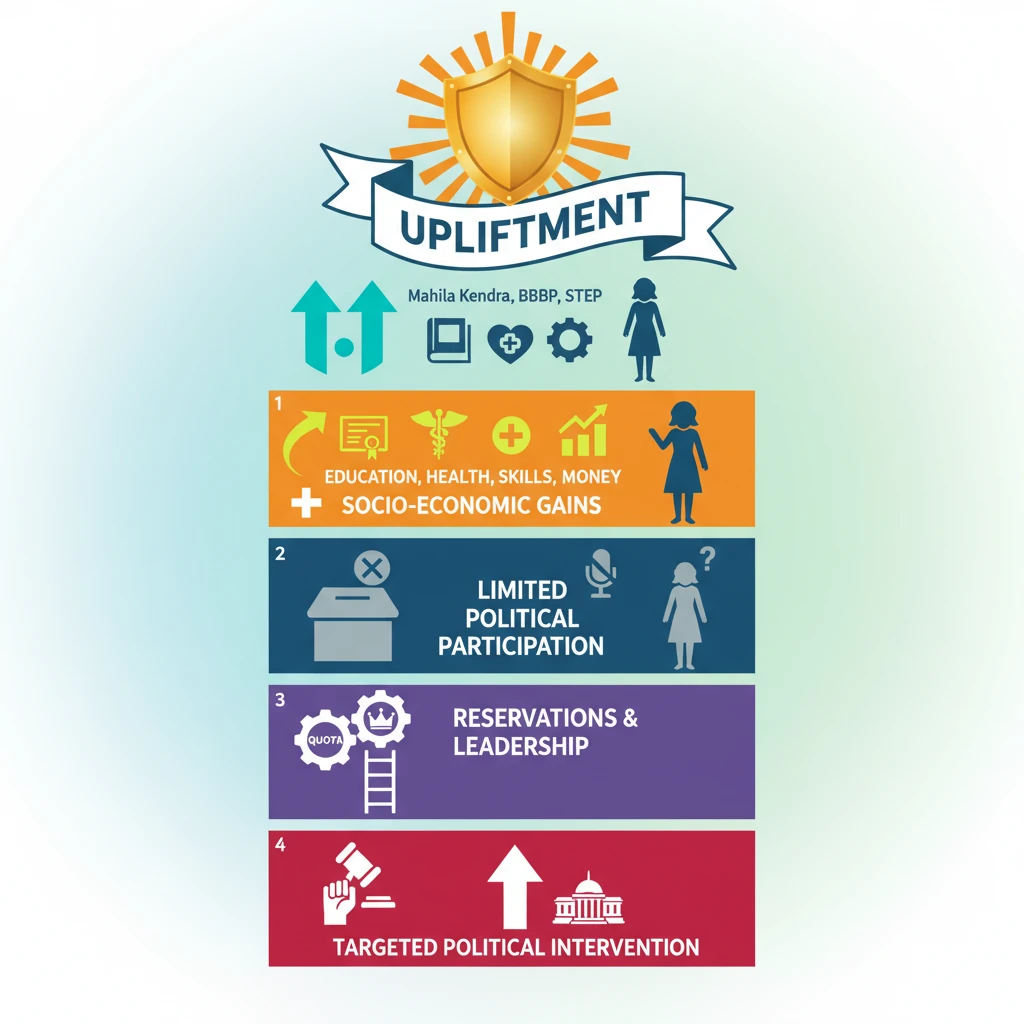
- •Government initiatives like Mahila Shakti Kendra, Beti Bachao Beti Padhao, and STEP primarily target women's socio-economic upliftment.
- •These schemes have significantly contributed to improving women's access to education, health, skills, and economic opportunities.
- •Despite socio-economic gains, the direct impact of these programs on enhancing women's formal political participation has been limited.
- •Political empowerment requires targeted interventions beyond socio-economic support, such as reservations and leadership development.
- •A holistic approach is needed to ensure women's empowerment across all spheres: social, economic, and political.
🧠 Memory Techniques
95% Verified Content
📚 Reference Sources
•NITI Aayog Reports on Women's Empowerment
•Press Information Bureau (PIB) releases on social welfare schemes
•Drishti IAS Study Material on Social Issues