What is the Regulatory Framework Related to Organ Transplantation in India? - Social Issues | UPSC Learning
Topics
0 topics • 0 completed
🔍
No topics match your search
What is the Regulatory Framework Related to Organ Transplantation in India?
Medium⏱️ 8 min read
social issues
📖 Introduction
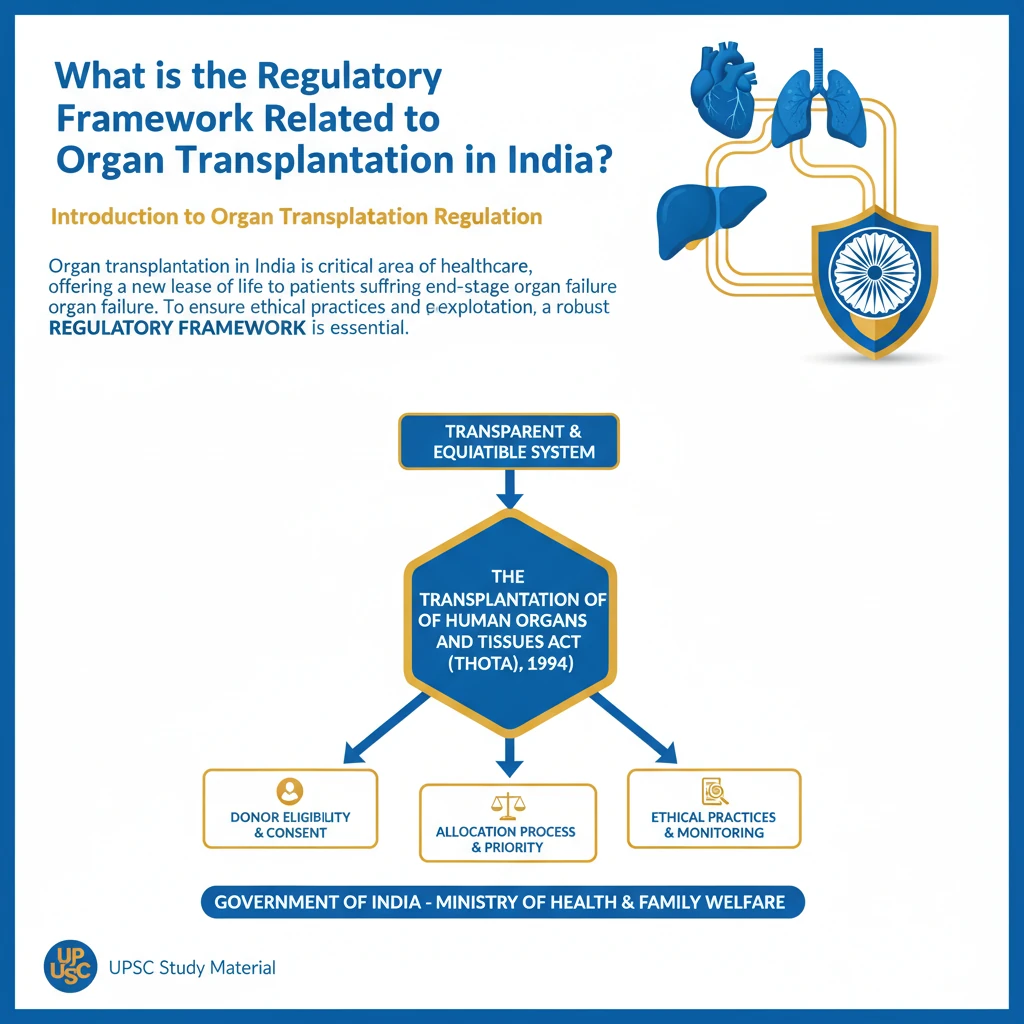
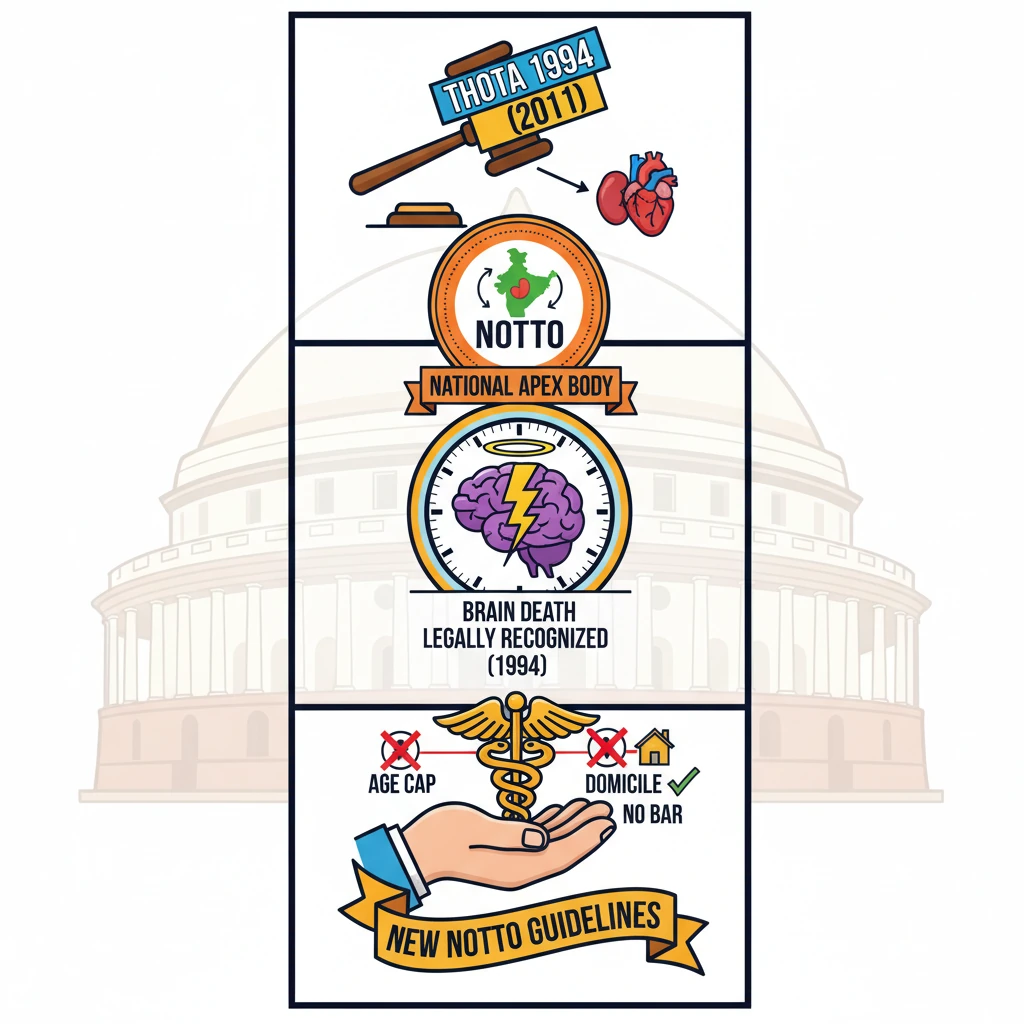
<h4>Introduction to Organ Transplantation Regulation</h4><p>Organ transplantation in India is a critical area of healthcare, offering a new lease of life to patients suffering from end-stage organ failure. To ensure ethical practices and prevent exploitation, a robust <strong>regulatory framework</strong> is essential.</p><p>This framework governs all aspects of organ donation and transplantation, from donor eligibility to the allocation process, aiming to create a transparent and equitable system.</p><h4>The Transplantation of Human Organs and Tissues Act (THOTA), 1994</h4><p>The primary legislation governing organ donation and transplantation in India is the <strong>Transplantation of Human Organs and Tissues Act (THOTA), 1994</strong>. This Act was subsequently <strong>amended in 2011</strong> to address emerging challenges and strengthen its provisions.</p><div class='info-box'><p><strong>Key Legislation:</strong></p><ul><li><strong>Transplantation of Human Organs and Tissues Act (THOTA), 1994</strong></li><li><strong>Amendment: 2011</strong></li><li><strong>Purpose:</strong> Regulates organ donation and transplantation in India.</li></ul></div><p>Under <strong>THOTA</strong>, specific provisions dictate how organs can be donated and transplanted:</p><ul><li>A transplant can originate from organs donated by a <strong>deceased individual</strong> or from a <strong>living donor</strong> who is genetically or legally related to the recipient.</li><li><strong>Altruistic donations</strong> from distant relatives, in-laws, or long-time friends are permissible. However, these cases undergo additional scrutiny to ensure no financial transaction has occurred.</li><li>For <strong>unrelated donors</strong>, comprehensive documentation and photographs are required to establish a long-term connection or friendship with the recipient, preventing commercial dealings.</li><li>The Act legally recognises <strong>brain stem death</strong> as a valid definition of death since its enactment in <strong>1994</strong>, paving the way for deceased organ donation.</li></ul><div class='key-point-box'><p><strong>Penalties for Illegal Organ Trade:</strong></p><p><strong>THOTA</strong> imposes stringent penalties for violations. Offering or paying for organs, arranging or advertising such deals, selling organ suppliers, or aiding in the creation of false documents can lead to:</p><ul><li>Up to <strong>10 years in jail</strong></li><li>A fine of up to <strong>Rs 1 crore</strong></li></ul><p>These provisions aim to deter the illicit trade of human organs.</p></div><h4>The Transplantation of Human Organs and Tissues Rules, 2014</h4><p>To further operationalise the <strong>THOTA Act</strong> and specifically promote organ donation from deceased donors, the <strong>Transplantation of Human Organs and Tissues Rules, 2014</strong>, were notified. These rules provide detailed procedures and guidelines.</p><h4>National Organ and Tissue Transplant Organisation (NOTTO)</h4><p>The <strong>National Organ and Tissue Transplant Organisation (NOTTO)</strong> is the apex body at the national level responsible for the management and coordination of organ and tissue transplantation activities in India.</p><div class='info-box'><p><strong>Role of NOTTO:</strong></p><ul><li>Established to provide a <strong>national system</strong> for organ procurement and distribution.</li><li>Functions as a central agency for networking, registration, and allocation of organs.</li></ul></div><h4>National Organ Transplantation Guidelines: Recent Key Changes</h4><p><strong>NOTTO</strong> periodically updates its guidelines to reflect advancements and address practical challenges. Two significant recent changes have broadened access to organ transplantation:</p><div class='key-point-box'><p><strong>1. Removal of Age Cap:</strong></p><p>The upper age limit for organ recipients has been removed. Previously, <strong>NOTTO guidelines</strong> prohibited end-stage organ failure patients above <strong>65 years of age</strong> from registering to receive an organ. This change acknowledges increased life expectancy and improved medical care.</p></div><div class='key-point-box'><p><strong>2. No Domicile Requirement:</strong></p><p>The requirement for a <strong>domicile certificate</strong> to register as an organ recipient has been abolished. This ensures that patients across India have equal access to organs, irrespective of their state of residence, promoting a more inclusive national waiting list.</p></div><div class='exam-tip-box'><p><strong>UPSC Insight:</strong> These recent guideline changes by <strong>NOTTO</strong> are crucial for understanding the evolving landscape of healthcare policy in India. They reflect a move towards more equitable and accessible healthcare, often asked in <strong>GS-II (Social Justice)</strong>.</p></div>
💡 Key Takeaways
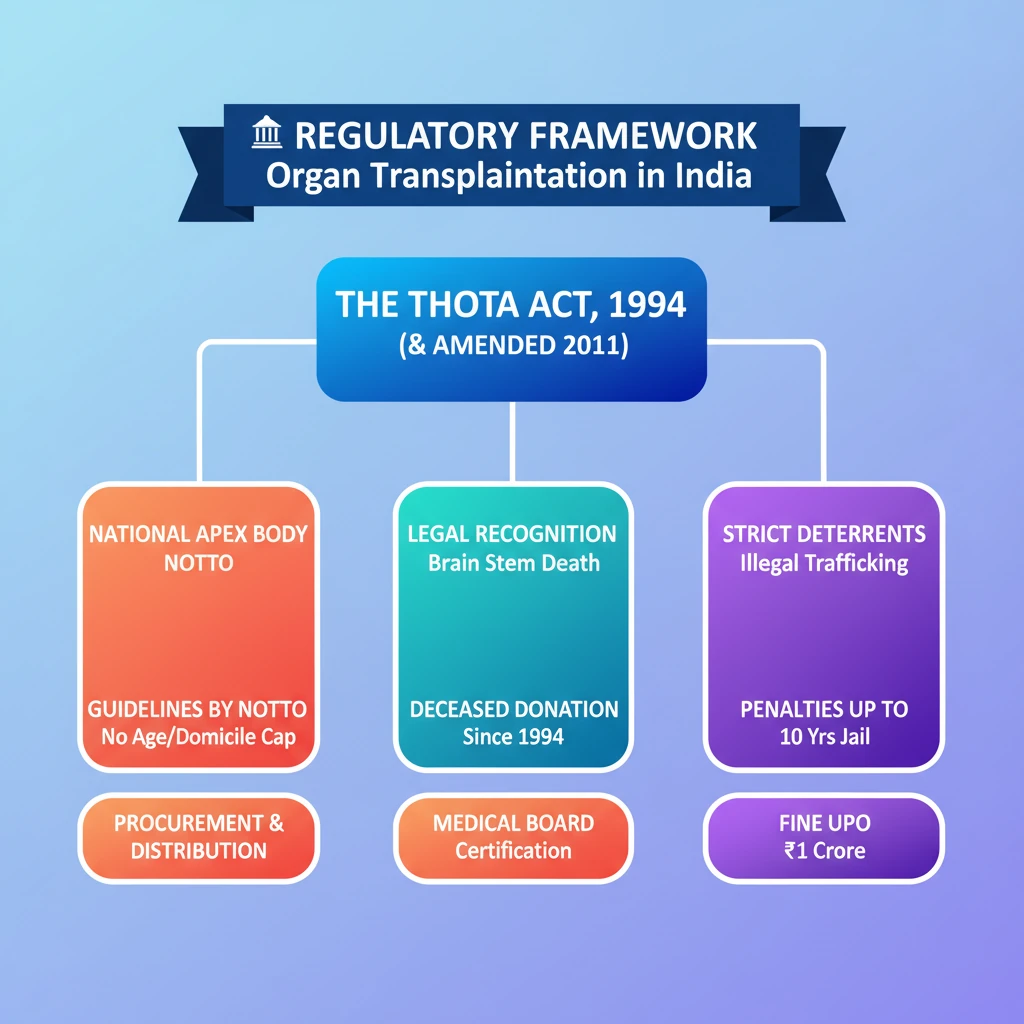
- •THOTA 1994 (amended 2011) is India's core law for organ and tissue transplantation.
- •NOTTO is the national apex body for organ procurement, distribution, and guidelines.
- •Brain stem death is legally recognised for deceased organ donation since 1994.
- •Recent NOTTO guidelines removed age cap and domicile requirement for recipients.
- •Strict penalties (up to 10 years jail, Rs 1 crore fine) exist to deter illegal organ trade.
- •The framework promotes ethical practices and deceased organ donation.
🧠 Memory Techniques
95% Verified Content
📚 Reference Sources
•The Transplantation of Human Organs and Tissues Act, 1994 (as amended in 2011)
•The Transplantation of Human Organs and Tissues Rules, 2014
•National Organ and Tissue Transplant Organisation (NOTTO) official website