What is the Legality of Sex Work? - Social Issues | UPSC Learning
Topics
0 topics • 0 completed
🔍
No topics match your search
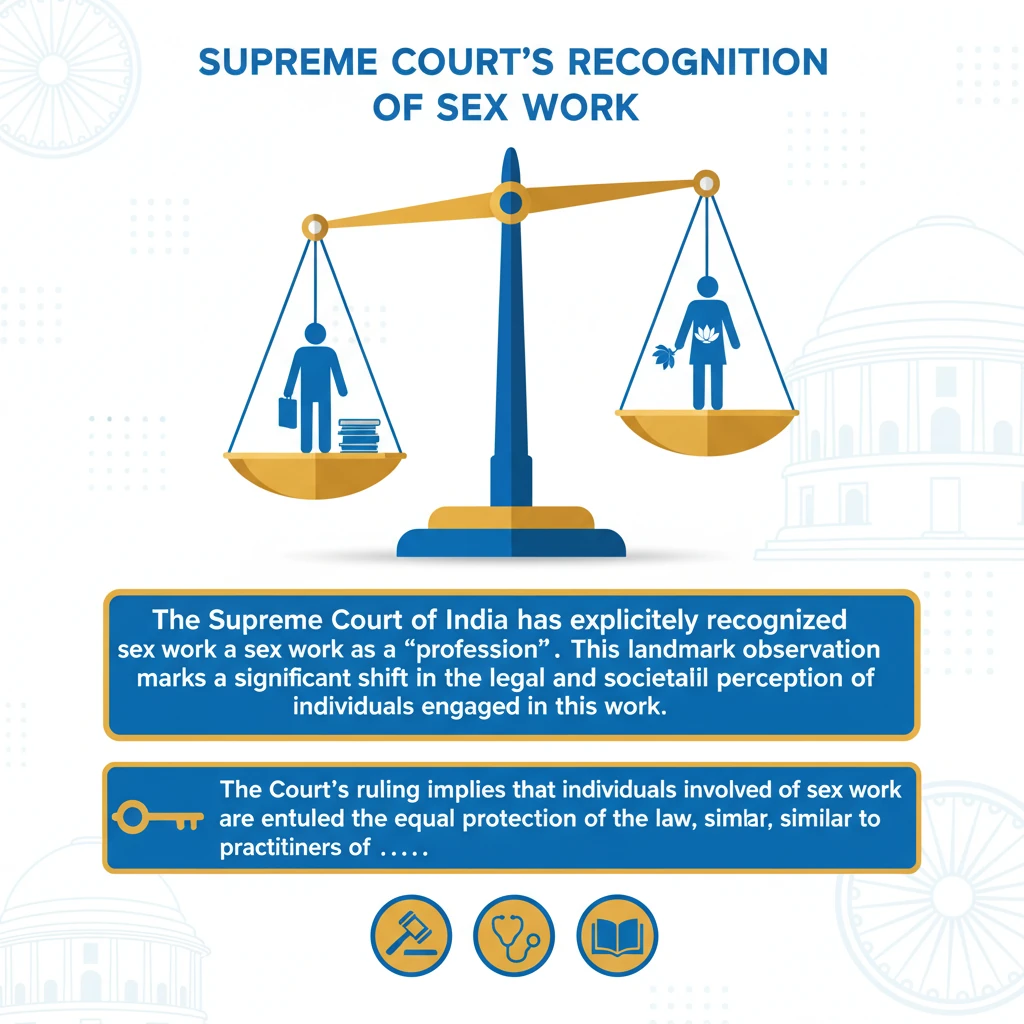
What is the Legality of Sex Work?
Medium⏱️ 8 min read
social issues
📖 Introduction
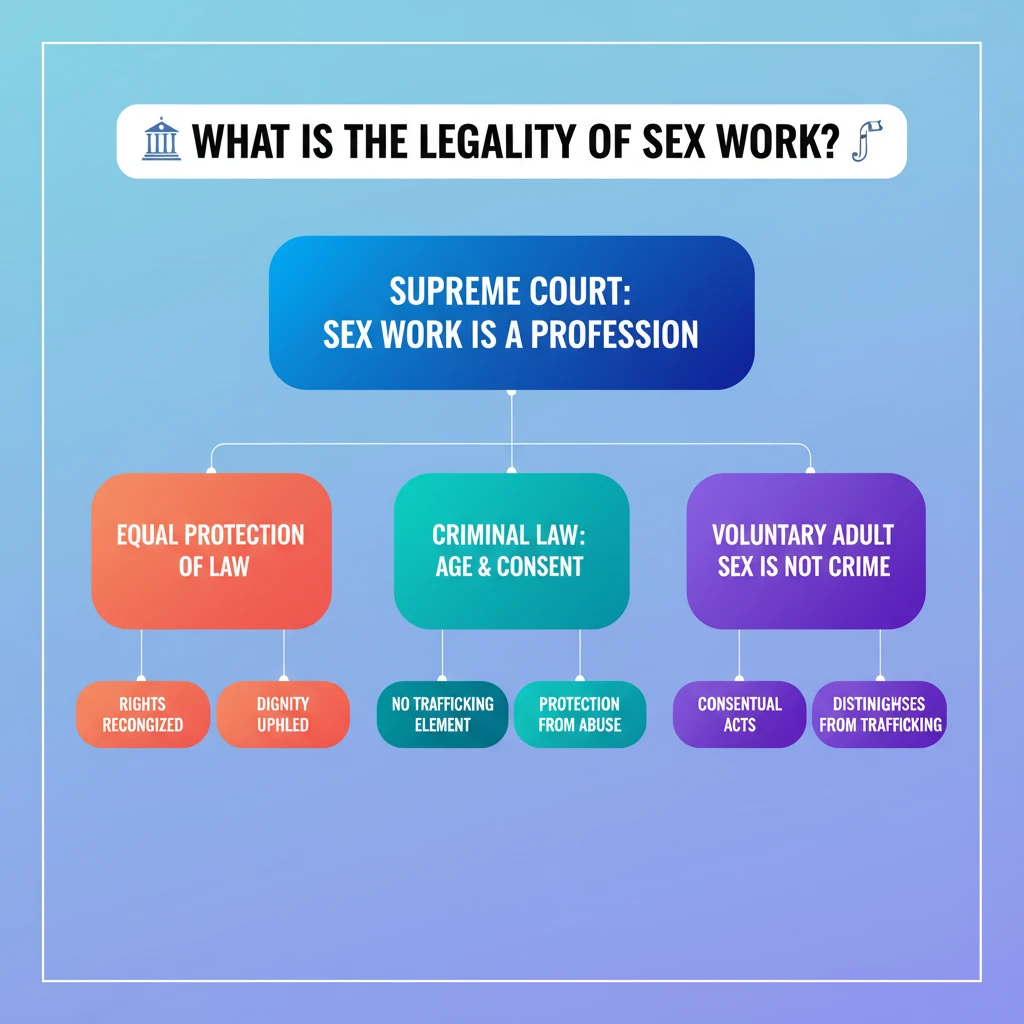
<h4>Supreme Court's Recognition of Sex Work</h4><p>The <strong>Supreme Court of India</strong> has explicitly recognized <strong>sex work</strong> as a <strong>“profession”</strong>. This landmark observation marks a significant shift in the legal and societal perception of individuals engaged in this work.</p><div class='key-point-box'><p>The Court's ruling implies that individuals involved in sex work are entitled to the <strong>equal protection of the law</strong>, similar to practitioners of any other profession in India. This ensures their fundamental rights are upheld.</p></div><p>Furthermore, the Supreme Court clarified that <strong>criminal law</strong> must be applied equally to all individuals. This application is contingent on two crucial factors: <strong>age</strong> and <strong>consent</strong>.</p><div class='info-box'><p>The ruling emphasizes that <strong>voluntary sex</strong>, when conducted between consenting adults, is <strong>not considered a crime</strong> under Indian law. This distinguishes consensual acts from exploitative practices.</p></div><div class='exam-tip-box'><p>This judgment is critical for understanding the evolving legal landscape concerning marginalized communities and fundamental rights in <strong>UPSC Mains GS Paper I (Social Issues)</strong> and <strong>GS Paper II (Polity & Governance)</strong>.</p></div>
💡 Key Takeaways
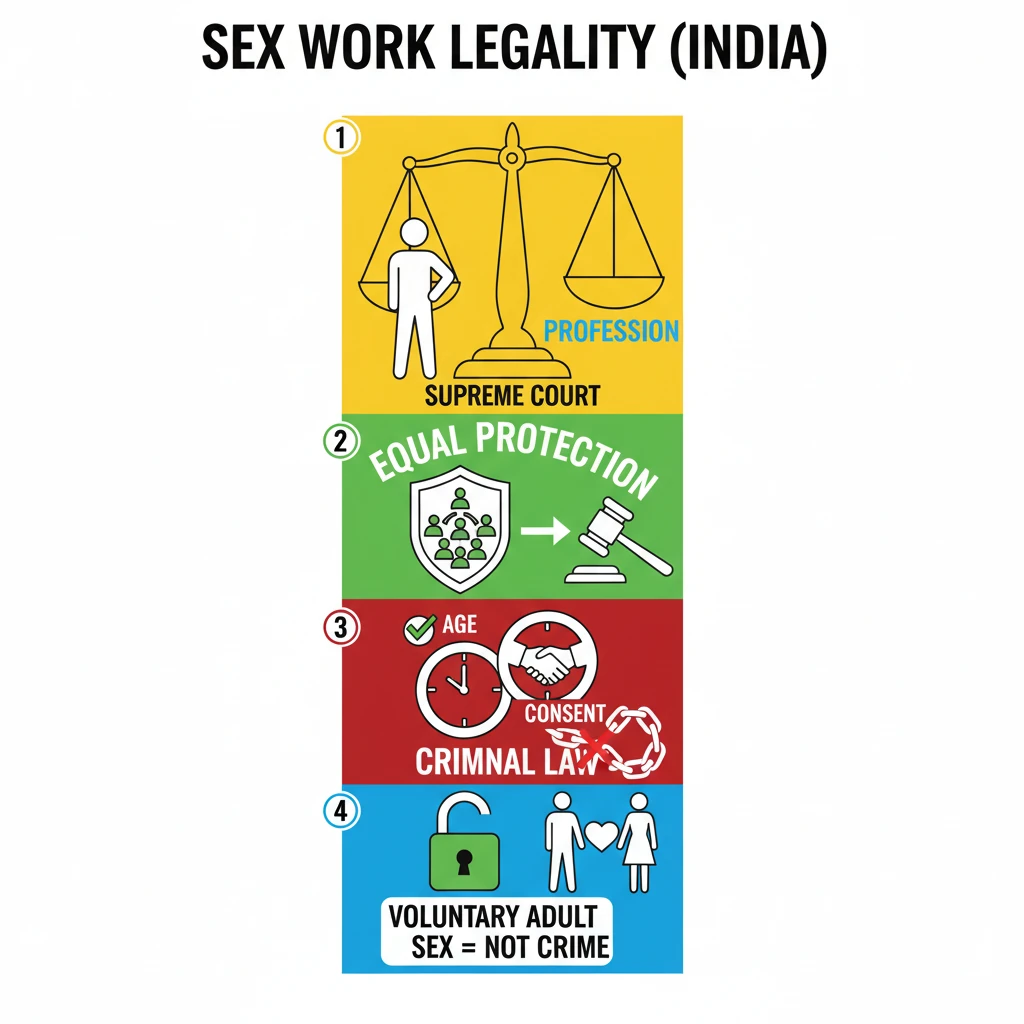
- •Supreme Court recognized sex work as a "profession."
- •Sex workers are entitled to equal protection of the law.
- •Criminal law applies based on 'age' and 'consent.'
- •Voluntary sex between adults is not a crime.
- •Ruling distinguishes consensual adult sex work from trafficking.
🧠 Memory Techniques
95% Verified Content
📚 Reference Sources
•Supreme Court of India judgments (general knowledge of the 2022 ruling)
•Immoral Traffic (Prevention) Act, 1956 (ITPA)