Surrogacy: Types - Traditional and Gestational - Social Issues | UPSC Learning
Topics
0 topics • 0 completed
🔍
No topics match your search

Surrogacy: Types - Traditional and Gestational
Medium⏱️ 8 min read
social issues
📖 Introduction
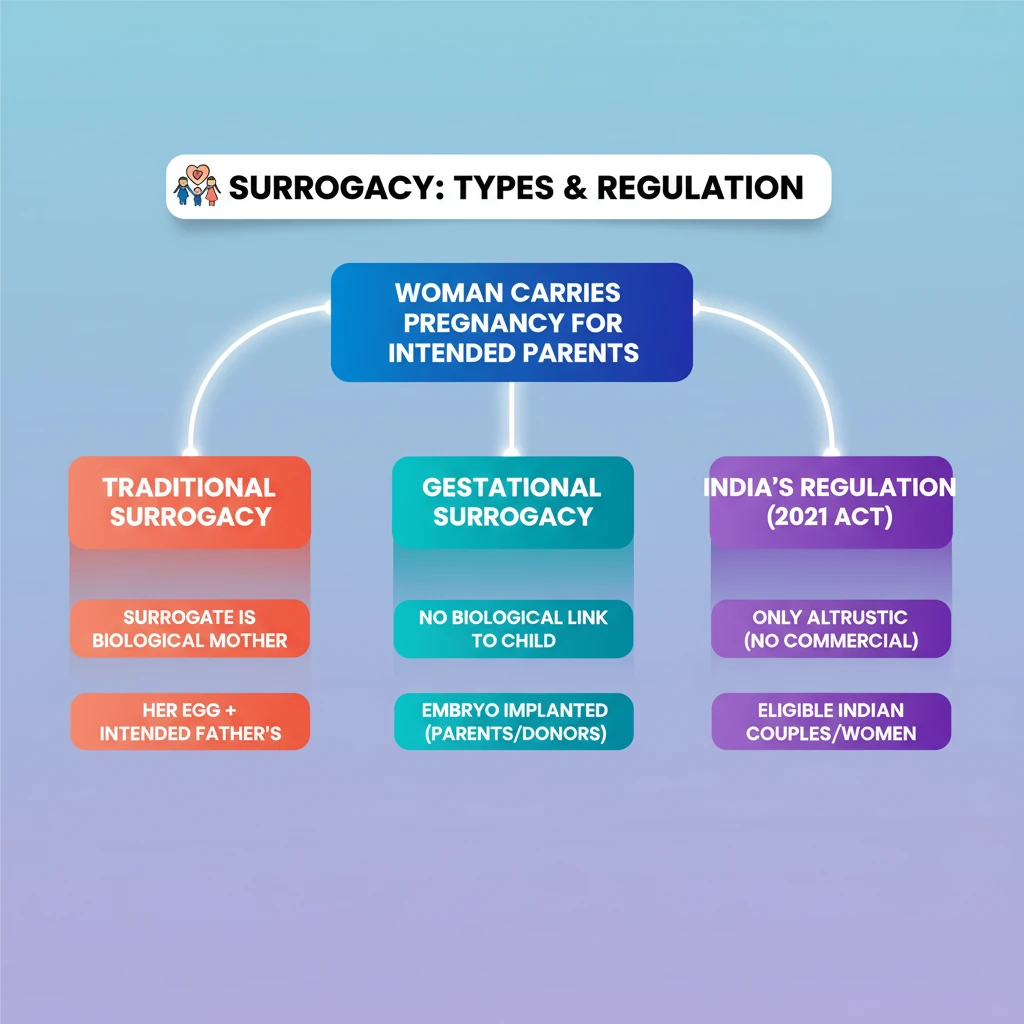
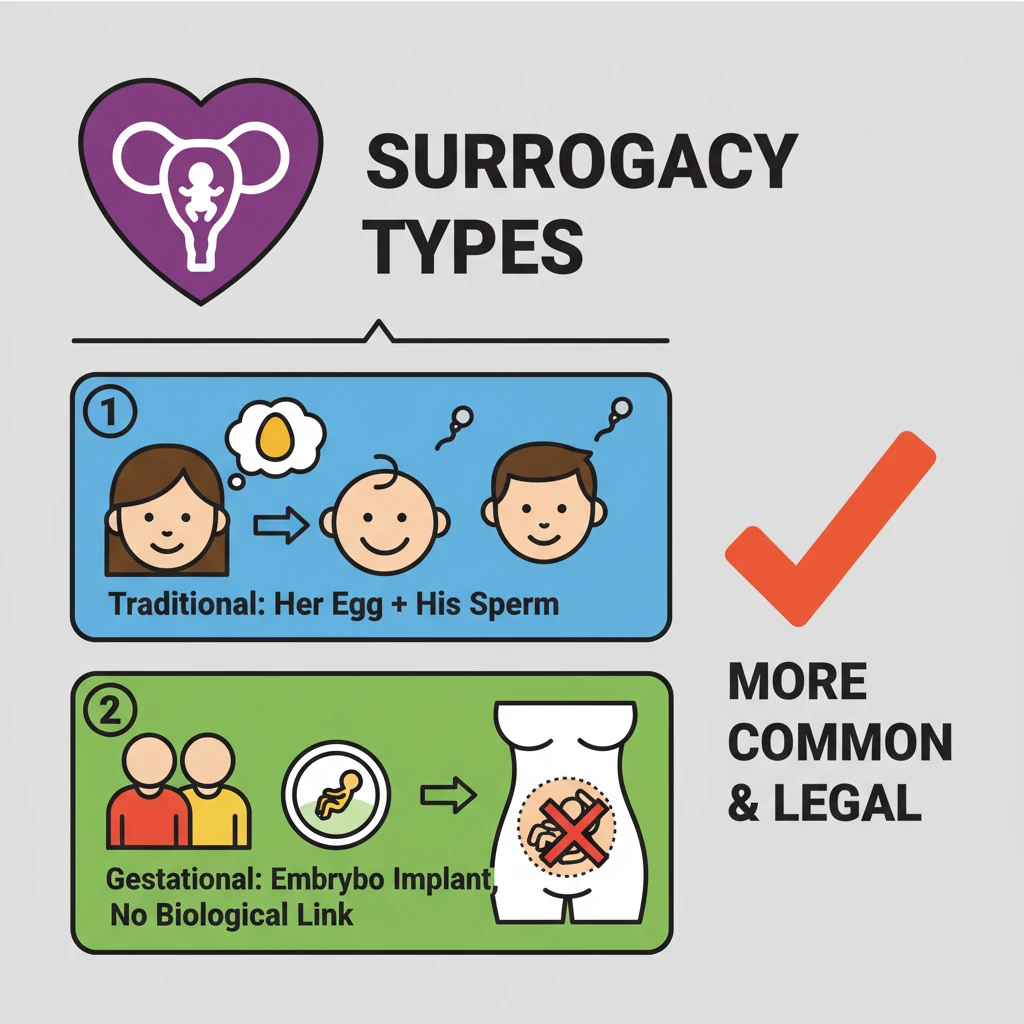
<h4>Understanding Surrogacy Types</h4><p><strong>Surrogacy</strong> is an arrangement where a woman (the <strong>surrogate mother</strong>) carries a pregnancy for another individual or couple (the <strong>intended parents</strong>). This medical procedure allows individuals or couples who cannot carry a pregnancy to term to have children.</p><p>There are primarily two distinct types of surrogacy, each with different biological and legal implications. Understanding these differences is crucial, especially in the context of evolving legal frameworks like India's Surrogacy (Regulation) Act.</p><h4>Traditional Surrogacy</h4><p><strong>Traditional surrogacy</strong> is a method where the surrogate mother is also the biological mother of the child. This process involves the use of the <strong>intended father’s sperm</strong> to fertilise the <strong>surrogate’s own egg</strong>.</p><div class='info-box'><p>In traditional surrogacy, conception typically occurs through <strong>artificial insemination</strong>. The surrogate mother contributes her genetic material, making her the biological mother of the child.</p></div><p>The surrogate carries the pregnancy to term and gives birth to the baby. Consequently, the child born through traditional surrogacy is <strong>biologically related</strong> to the <strong>surrogate mother</strong> and the <strong>intended father</strong>.</p><div class='key-point-box'><p><strong>Key Point:</strong> Due to the surrogate's genetic link, traditional surrogacy often raises more complex ethical, emotional, and legal challenges regarding parental rights.</p></div><h4>Gestational Surrogacy</h4><p><strong>Gestational surrogacy</strong> is the more common and legally preferred form of surrogacy today. In this method, the <strong>baby is not biologically related</strong> to the surrogate mother.</p><div class='info-box'><p>An <strong>embryo</strong> is created through <strong>In Vitro Fertilisation (IVF)</strong> using the <strong>intended father’s sperm</strong> (or <strong>donor sperm</strong>) and the <strong>biological mother’s egg</strong> (or <strong>donor egg</strong>). This embryo is then implanted into the <strong>surrogate’s uterus</strong>.</p></div><p>The gestational surrogate carries the pregnancy to term, but she has <strong>no genetic connection</strong> to the child. Her role is solely to gestate the embryo and give birth.</p><div class='exam-tip-box'><p><strong>UPSC Insight:</strong> The distinction between <strong>traditional</strong> and <strong>gestational surrogacy</strong> is fundamental for questions on reproductive technologies, bioethics, and social issues in <strong>GS Paper I</strong> and <strong>GS Paper II</strong>.</p></div>
💡 Key Takeaways
- •Surrogacy involves a woman carrying a pregnancy for intended parents.
- •<strong>Traditional Surrogacy:</strong> Surrogate is biological mother (her egg + intended father's sperm).
- •<strong>Gestational Surrogacy:</strong> Surrogate has no biological link (embryo from intended parents/donors implanted).
- •Gestational surrogacy is medically more common and legally preferred due to fewer genetic complexities.
- •India's <strong>Surrogacy (Regulation) Act, 2021</strong> permits only <strong>altruistic gestational surrogacy</strong> for eligible Indian couples/single women, banning commercial surrogacy.
🧠 Memory Techniques
98% Verified Content
📚 Reference Sources
•The Surrogacy (Regulation) Act, 2021, Government of India
•Assisted Reproductive Technology (Regulation) Act, 2021, Government of India
•NCERT Sociology Textbooks (for social implications)
•Medical and Legal journals on Assisted Reproductive Technologies