Brothel Definition: Section 2 and Key Elements - Social Issues | UPSC Learning
Topics
0 topics • 0 completed
🔍
No topics match your search
Brothel Definition: Section 2 and Key Elements
Medium⏱️ 7 min read
social issues
📖 Introduction
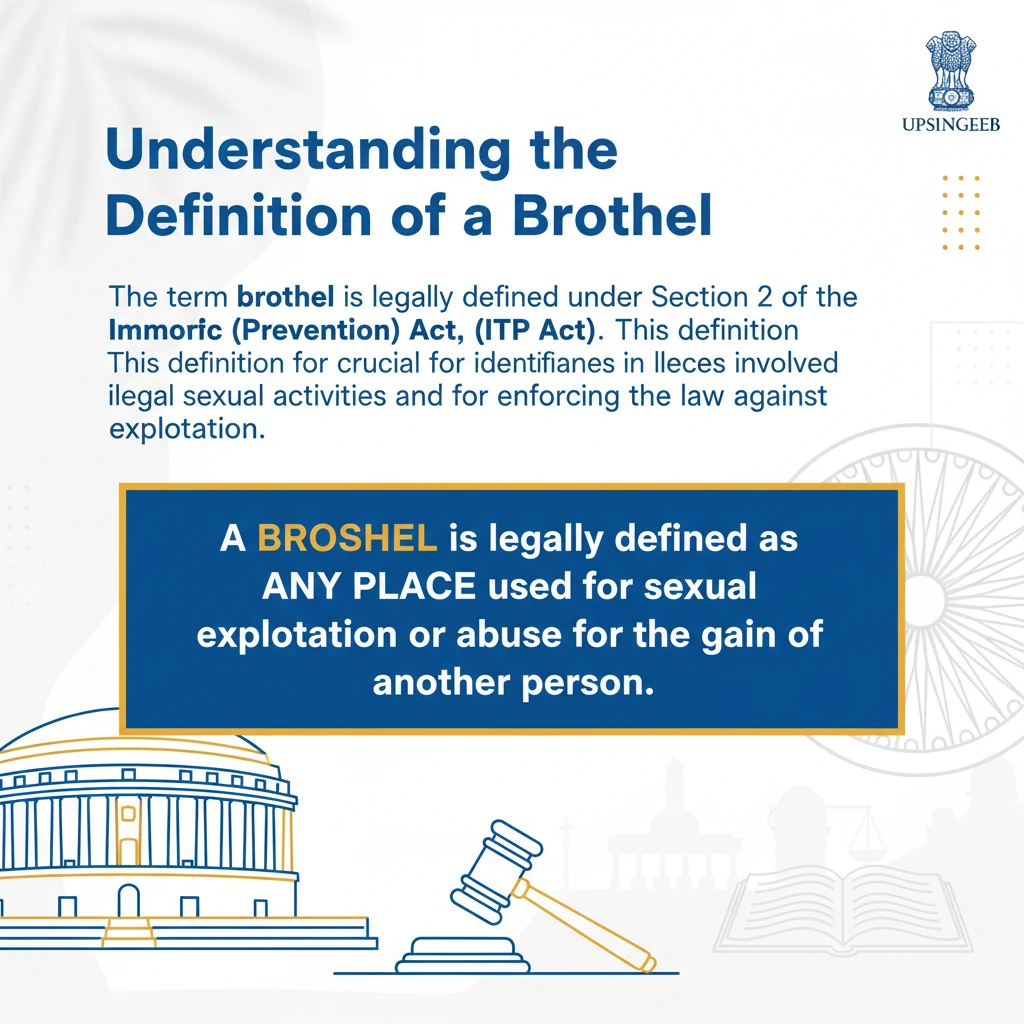
<h4>Understanding the Definition of a Brothel</h4><p>The term <strong>brothel</strong> is legally defined under <strong>Section 2</strong> of the <strong>Immoral Traffic (Prevention) Act, 1956 (ITP Act)</strong>. This definition is crucial for identifying places involved in illegal sexual activities and for enforcing the law against exploitation.</p><div class='info-box'><p>A <strong>brothel</strong> is legally defined as <strong>any place used for sexual exploitation or abuse for the gain of another person or for the mutual gain of two or more prostitutes</strong>.</p></div><h4>Key Components of the Definition</h4><p>The definition of a brothel can be broken down into several critical elements, each carrying significant legal implications. Understanding these components is essential for accurate interpretation and application of the law.</p><ul><li><strong>Place Used for Sexual Exploitation or Abuse:</strong> This refers to any physical location, whether a house, apartment, or other premises, where acts of sexual exploitation or abuse occur. The focus is on the *purpose* for which the place is used.</li><li><strong>For the Gain of Another Person:</strong> This component targets individuals or groups who profit from the sexual exploitation of others. It highlights the element of coercion or undue influence where a third party benefits financially from the illicit activities.</li><li><strong>For the Mutual Gain of Two or More Prostitutes:</strong> This clause covers situations where multiple individuals engaged in prostitution share a common premise and mutually benefit from their activities. It aims to prevent the communal operation of such establishments, even if direct third-party exploitation is not immediately apparent.</li></ul><div class='key-point-box'><p>The core of the <strong>brothel definition</strong> under the <strong>ITP Act</strong> revolves around the elements of <strong>sexual exploitation</strong>, <strong>abuse</strong>, and <strong>financial gain</strong>, whether by a third party or collectively by the individuals involved.</p></div><div class='exam-tip-box'><p>For <strong>UPSC Mains GS Paper I (Social Issues)</strong> and <strong>GS Paper II (Governance, Social Justice)</strong>, understanding this definition is vital. It forms the basis for questions on human trafficking, women's safety, and the effectiveness of anti-trafficking laws. Be prepared to discuss its nuances and challenges in implementation.</p></div>
💡 Key Takeaways
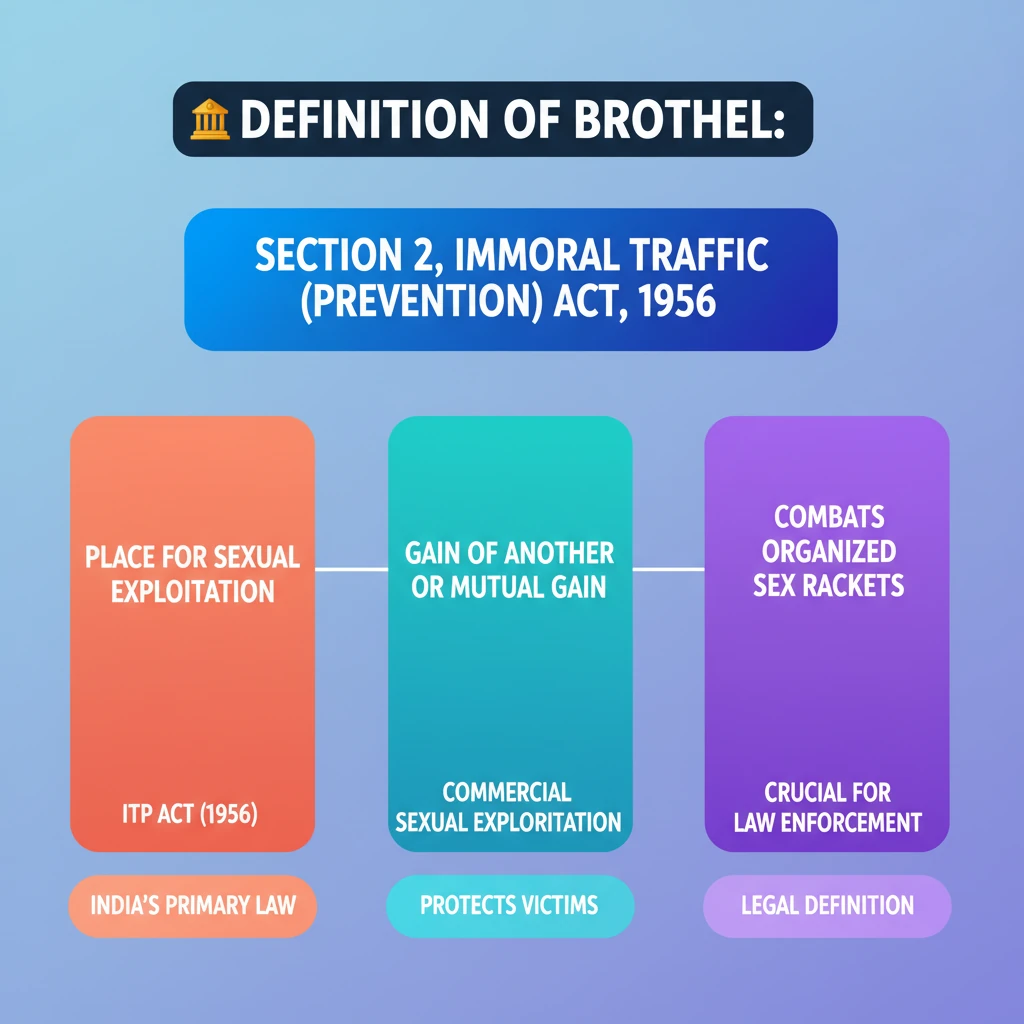
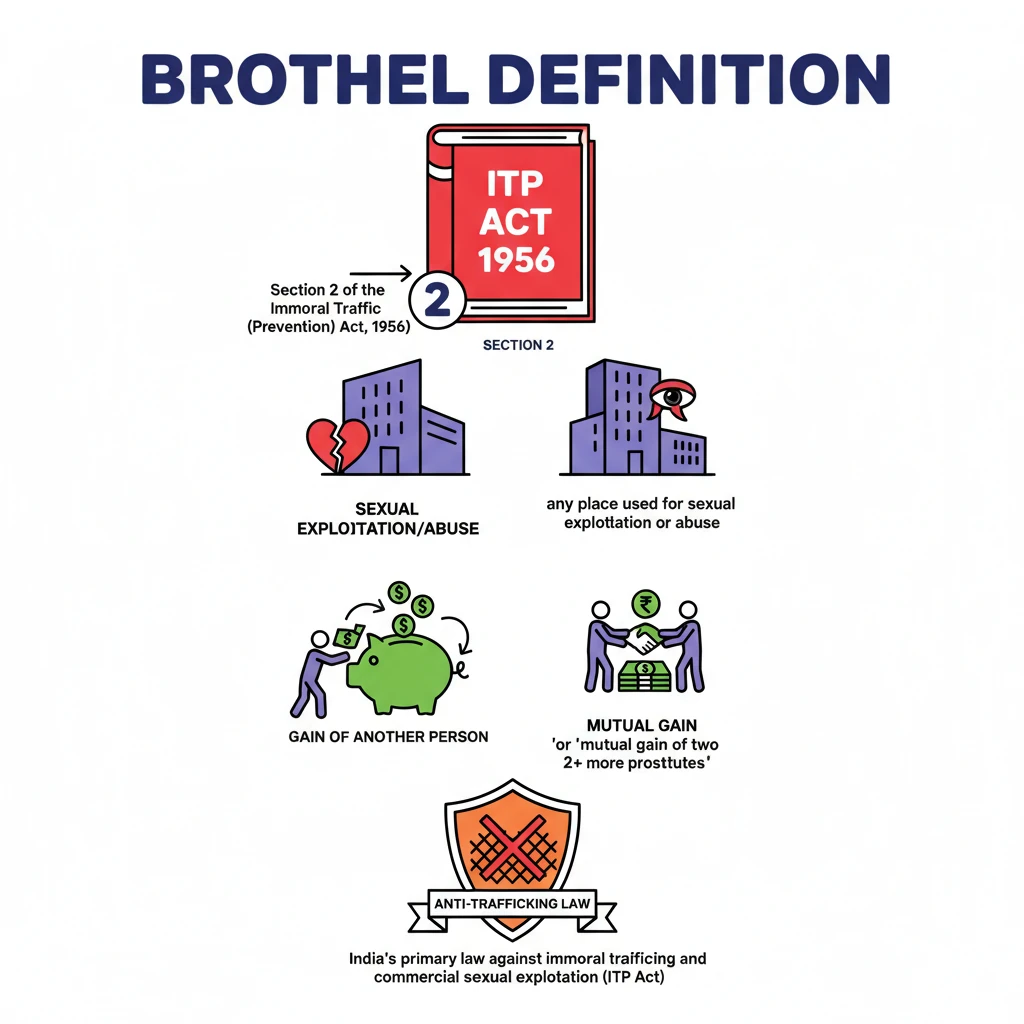
- •A brothel is defined under Section 2 of the Immoral Traffic (Prevention) Act, 1956 (ITP Act).
- •It refers to any place used for sexual exploitation or abuse.
- •The definition includes 'gain of another person' or 'mutual gain of two or more prostitutes'.
- •The ITP Act is India's primary law against immoral trafficking and commercial sexual exploitation.
- •The definition is crucial for law enforcement to combat organized sex rackets and protect victims.
🧠 Memory Techniques
98% Verified Content
📚 Reference Sources
•National Crime Records Bureau (NCRB) Reports on Human Trafficking
•Ministry of Women and Child Development, Government of India
•Legal commentaries and academic articles on Indian anti-trafficking laws