Neglected Tropical Diseases (NTDs) - Social Issues | UPSC Learning
Topics
0 topics • 0 completed
🔍
No topics match your search
Neglected Tropical Diseases (NTDs)
Medium⏱️ 7 min read
social issues
📖 Introduction
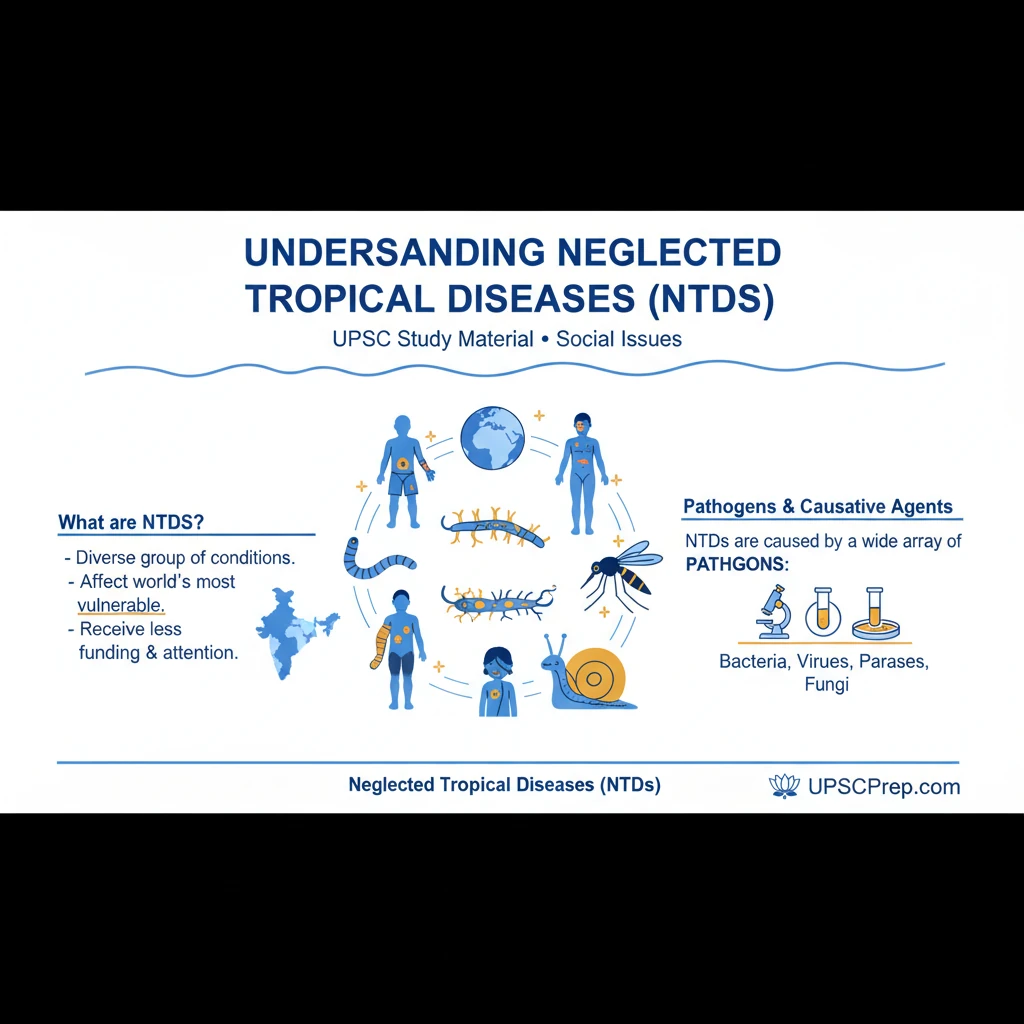
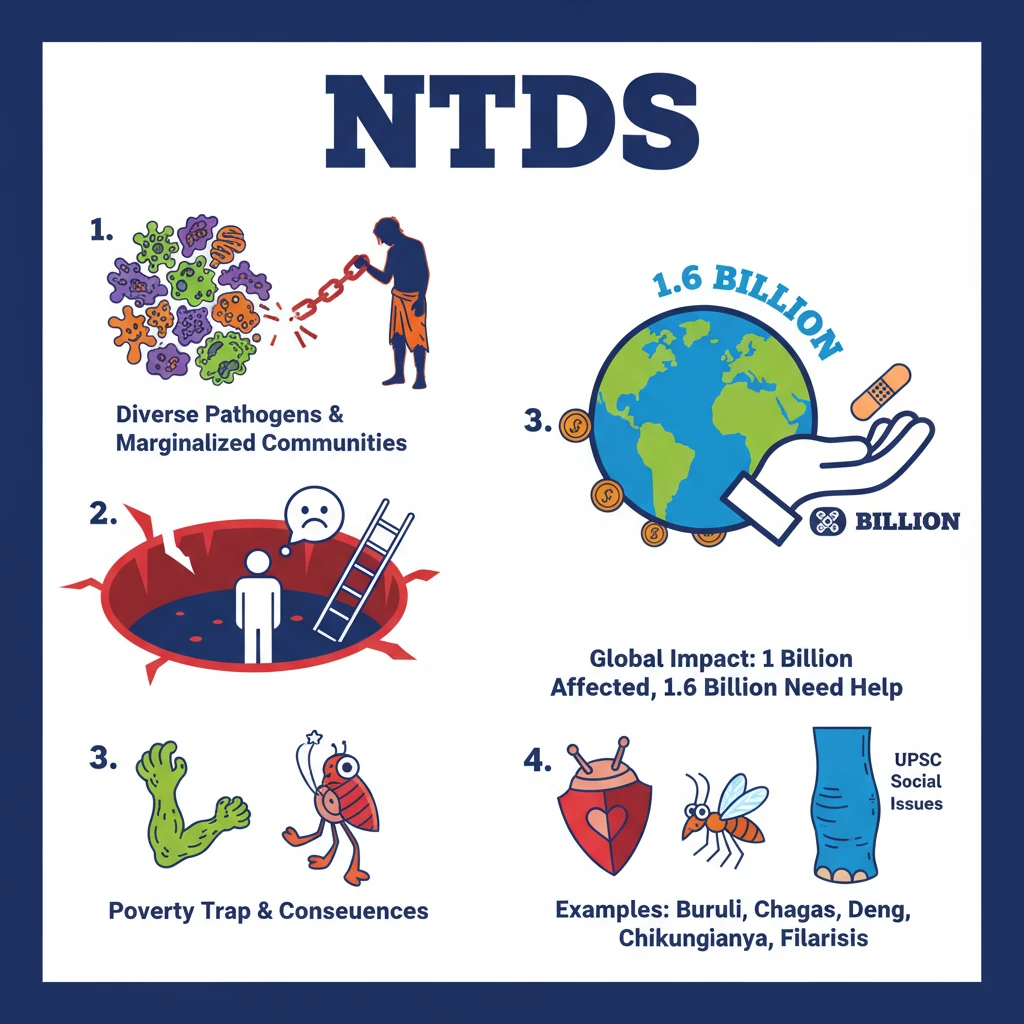
<h4>Understanding Neglected Tropical Diseases (NTDs)</h4><p><strong>Neglected Tropical Diseases (NTDs)</strong> represent a diverse group of conditions that disproportionately affect the world's most vulnerable populations.</p><p>These diseases are termed 'neglected' because they generally receive less funding and attention compared to other major global health issues.</p><h4>Pathogens and Causative Agents</h4><p>NTDs are caused by a wide array of <strong>pathogens</strong>, highlighting their varied nature and complex epidemiology.</p><div class='info-box'><ul><li><strong>Viruses</strong>: Such as those causing <strong>dengue</strong> and <strong>chikungunya</strong>.</li><li><strong>Bacteria</strong>: Responsible for conditions like <strong>Buruli ulcer</strong>.</li><li><strong>Parasites</strong>: Including those causing <strong>Chagas disease</strong> and <strong>lymphatic filariasis</strong>.</li><li><strong>Fungi</strong>: A less common but significant group of causative agents.</li><li><strong>Toxins</strong>: Certain NTDs are linked to toxic exposures.</li></ul></div><h4>Socio-Economic and Health Consequences</h4><p>The impact of NTDs extends far beyond mere physical illness, leading to severe <strong>health, social, and economic consequences</strong>.</p><p>They often result in chronic disability, disfigurement, stigma, and reduced productivity, trapping affected individuals and communities in cycles of poverty.</p><h4>Global Distribution and Affected Populations</h4><p>NTDs are predominantly found among <strong>marginalized communities</strong> in the developing regions of the world.</p><p>These regions include significant parts of <strong>Africa, Asia, and the Americas</strong>, where access to healthcare, sanitation, and clean water is often limited.</p><div class='key-point-box'><p>The concentration of NTDs in these areas underscores their strong link to <strong>poverty</strong> and <strong>health inequities</strong>.</p></div><h4>Prevalence and Intervention Needs</h4><p>The global burden of NTDs is substantial, affecting a significant portion of the world's population.</p><div class='info-box'><ul><li>It is estimated that <strong>more than 1 billion people</strong> are currently affected by NTDs.</li><li>A staggering <strong>1.6 billion people</strong> require interventions, which include both preventive and curative measures, to combat these diseases.</li></ul></div><h4>Key Examples of NTDs</h4><p>Understanding specific examples helps illustrate the diversity and impact of these conditions.</p><div class='info-box'><ul><li><strong>Buruli ulcer</strong>: A chronic debilitating skin disease caused by bacteria.</li><li><strong>Chagas disease</strong>: A parasitic disease transmitted by insects, affecting the heart and digestive system.</li><li><strong>Dengue and Chikungunya</strong>: Viral diseases transmitted by mosquitoes, causing fever, joint pain, and other symptoms.</li><li><strong>Lymphatic Filariasis (Elephantiasis)</strong>: A parasitic disease transmitted by mosquitoes, leading to severe swelling and disfigurement.</li></ul></div><div class='exam-tip-box'><p>For UPSC, remember these examples as they often appear in questions related to public health and global disease burden. Focus on their <strong>causative agents</strong> and <strong>modes of transmission</strong>.</p></div>
💡 Key Takeaways
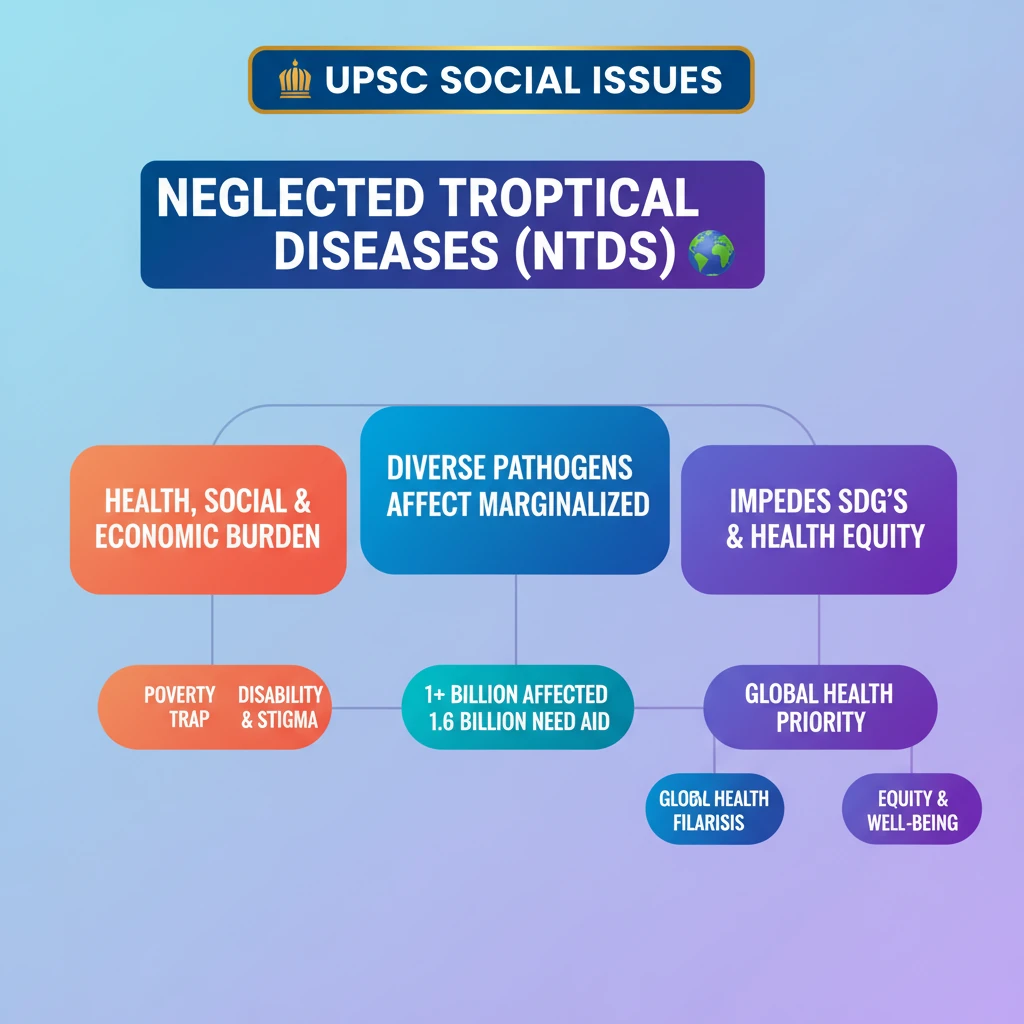
- •NTDs are diverse conditions caused by various pathogens, disproportionately affecting marginalized communities.
- •They lead to severe health, social, and economic consequences, trapping communities in poverty.
- •Over 1 billion people are affected, with 1.6 billion requiring interventions globally.
- •Examples include Buruli ulcer, Chagas disease, dengue, chikungunya, and lymphatic filariasis.
- •Addressing NTDs is crucial for achieving Sustainable Development Goals and promoting health equity.
🧠 Memory Techniques
95% Verified Content
📚 Reference Sources
•World Health Organization (WHO) - Neglected Tropical Diseases