Women’s Representation in State Legislatures - Social Issues | UPSC Learning
Topics
0 topics • 0 completed
🔍
No topics match your search
Women’s Representation in State Legislatures
Medium⏱️ 5 min read
social issues
📖 Introduction
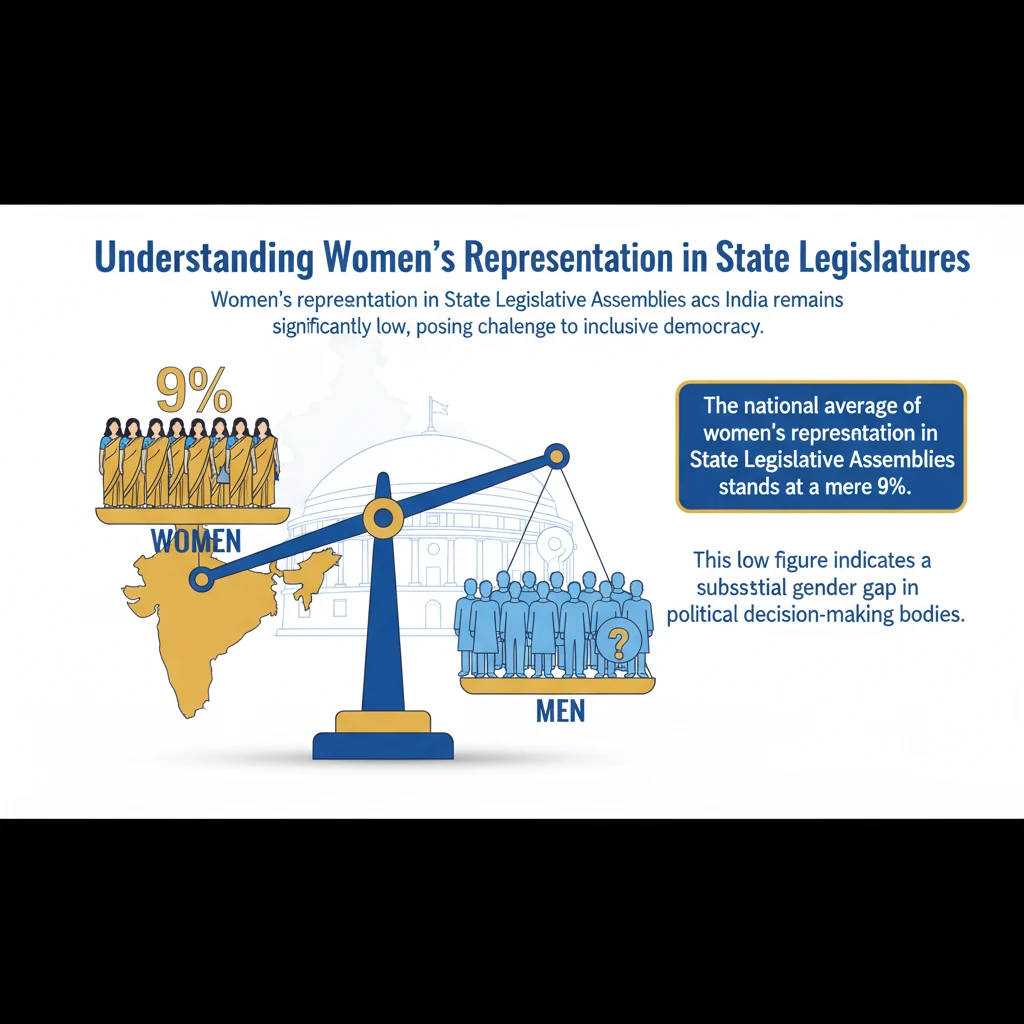
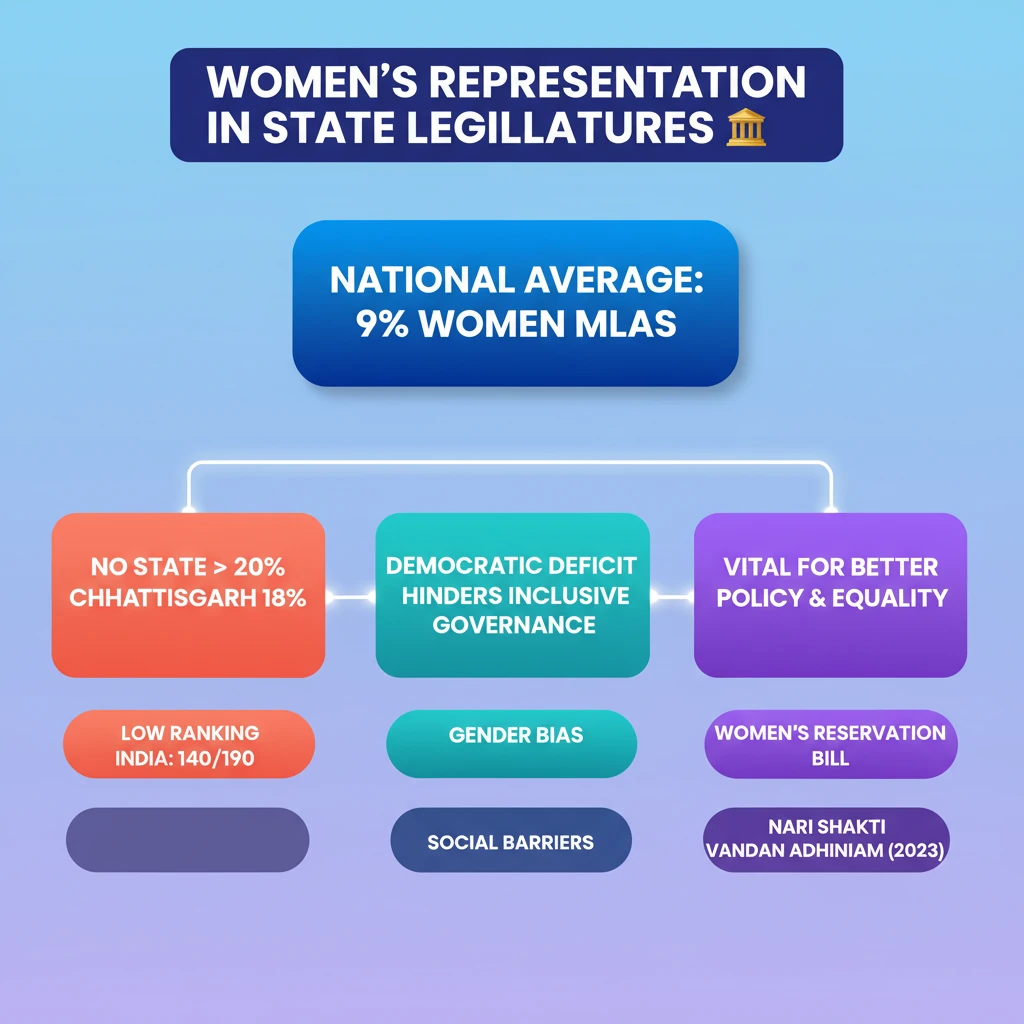
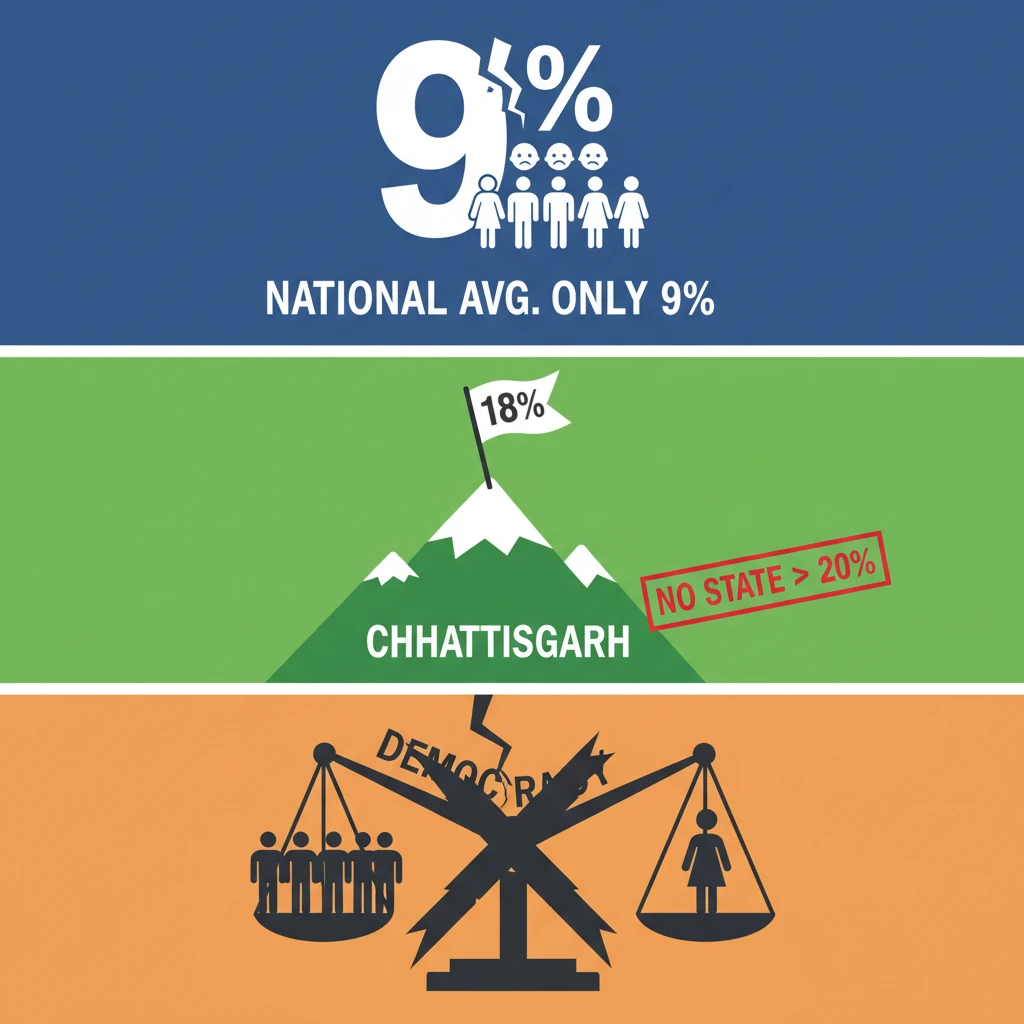
<h4>Understanding Women's Representation in State Legislatures</h4><p><strong>Women's representation</strong> in <strong>State Legislative Assemblies</strong> across India remains significantly low, posing a challenge to inclusive democracy.</p><div class='info-box'><p>The <strong>national average</strong> of women's representation in State Legislative Assemblies stands at a mere <strong>9%</strong>.</p></div><p>This low figure indicates a substantial gender gap in political decision-making bodies at the state level, highlighting an urgent need for reform.</p><div class='info-box'><p>No state in India has achieved more than <strong>20%</strong> women legislators. Even <strong>Chhattisgarh</strong>, which boasts the highest representation, only has <strong>18%</strong> women <strong>MLAs</strong>.</p></div><p>This data underscores the pervasive nature of the problem, even in states with comparatively better performance.</p><div class='exam-tip-box'><p>This crucial data is highly relevant for <strong>UPSC Mains GS-I (Social Issues)</strong> and <strong>GS-II (Polity & Governance)</strong>. It serves as a foundational statistic for analyzing systemic gender disparities in India's political landscape.</p></div>
💡 Key Takeaways
- •National average of women in State Legislative Assemblies is a mere 9%.
- •No state has more than 20% women legislators; Chhattisgarh leads with 18%.
- •Low representation signifies a democratic deficit and hinders inclusive governance.
- •The Women's Reservation Bill (Nari Shakti Vandan Adhiniyam, 2023) aims to address this, but implementation is pending.
- •Enhanced women's representation is vital for better policy outcomes and achieving gender equality.
🧠 Memory Techniques
95% Verified Content
📚 Reference Sources
•Election Commission of India (implied for electoral data)
•Parliamentary Research Service (PRS) India (for Women's Reservation Bill context)