Global Gender Gap Report 2024 - Social Issues | UPSC Learning
Topics
0 topics • 0 completed
🔍
No topics match your search
Global Gender Gap Report 2024
Medium⏱️ 5 min read
social issues
📖 Introduction
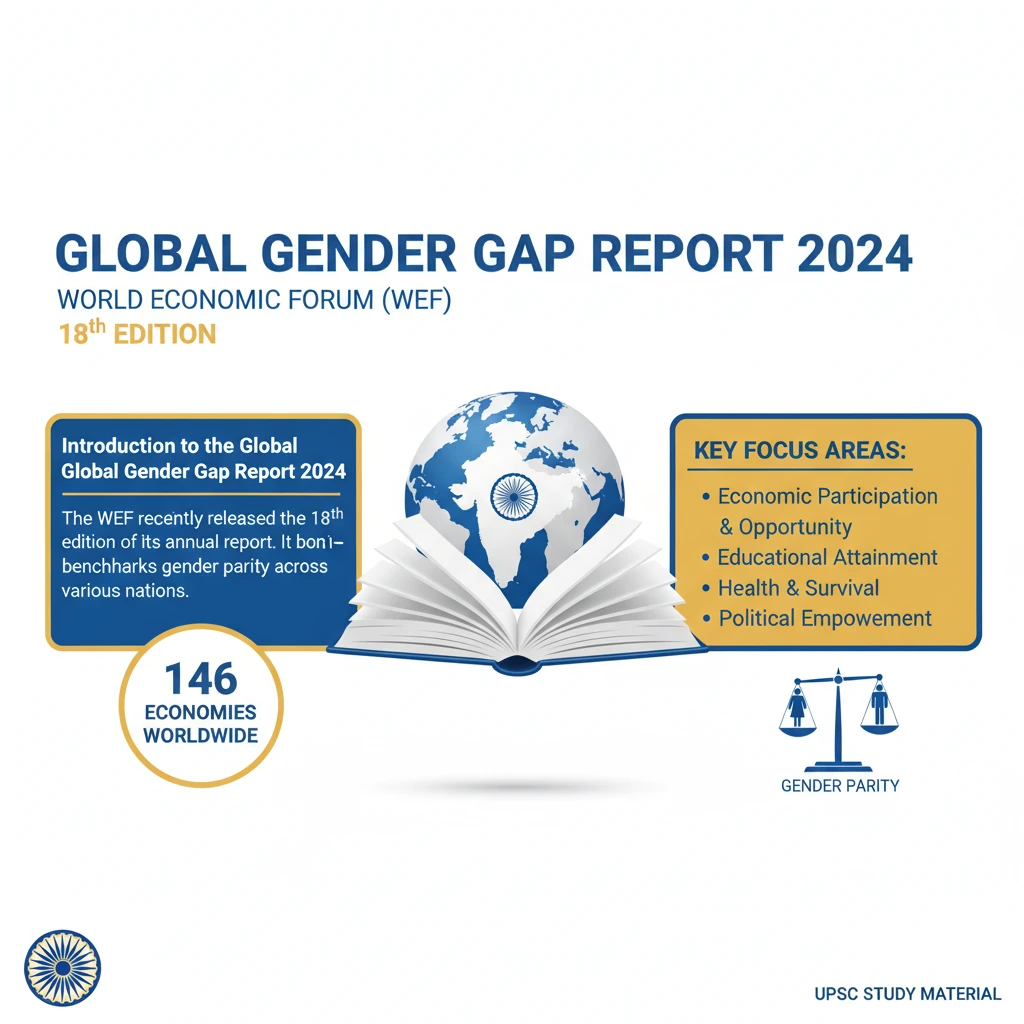
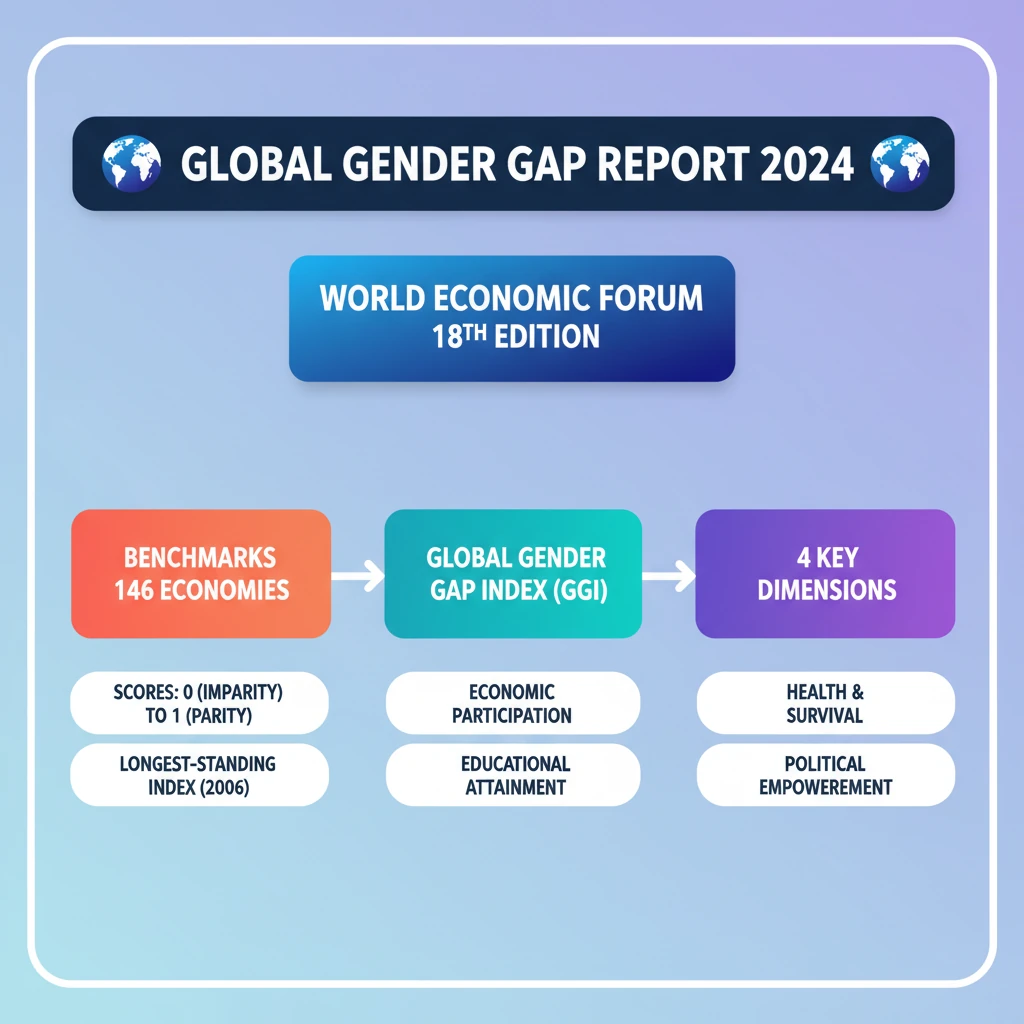
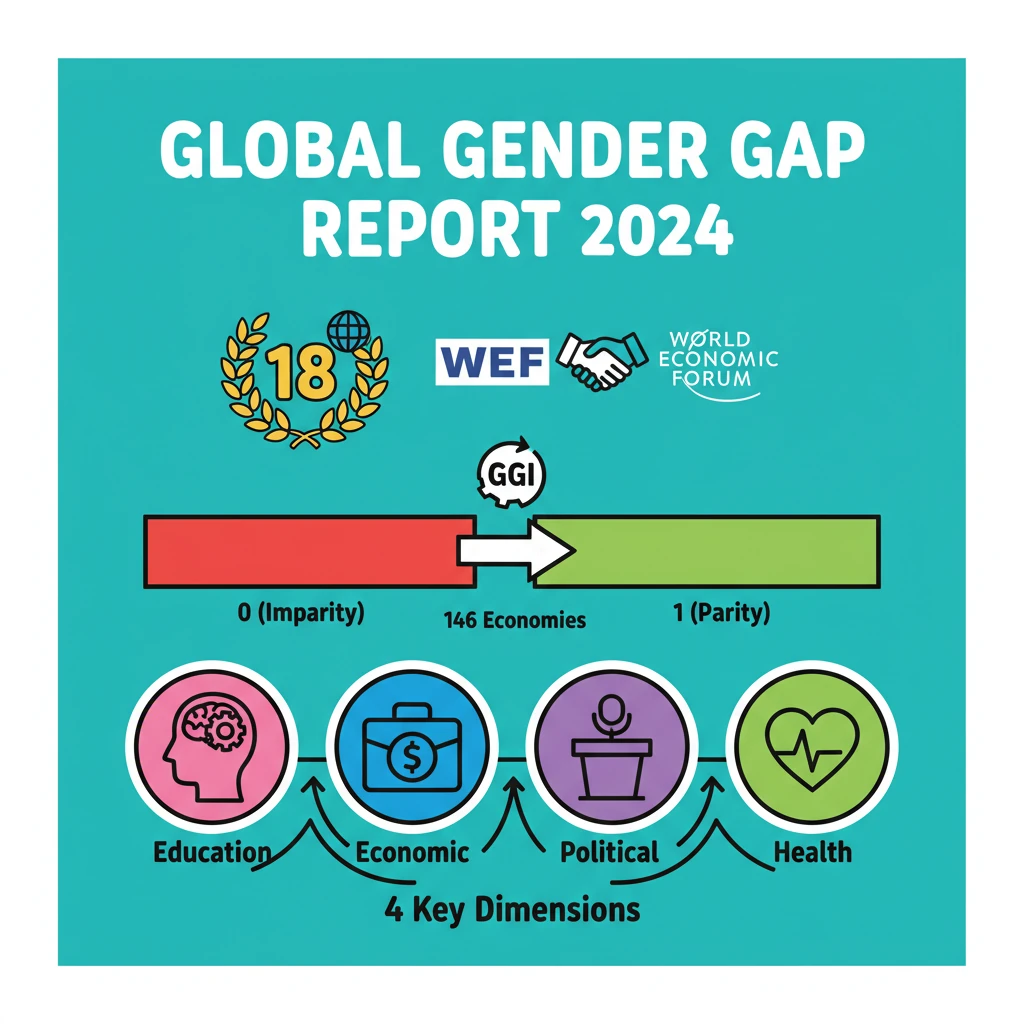
<h4>Introduction to the Global Gender Gap Report 2024</h4><p>The <strong>World Economic Forum (WEF)</strong> recently released the <strong>18th edition</strong> of its annual <strong>Global Gender Gap Report</strong> for <strong>2024</strong>. This report serves as a crucial benchmark for assessing <strong>gender parity</strong> across various nations.</p><p>It provides a comprehensive analysis, benchmarking gender parity across <strong>146 economies worldwide</strong>. This extensive coverage allows for a global perspective on the state of gender equality.</p><h4>Understanding the Global Gender Gap Index (GGI)</h4><div class='info-box'><p>The <strong>Global Gender Gap Index (GGI)</strong> is a unique tool designed to benchmark countries. It measures their progress towards achieving <strong>gender parity</strong> across several critical dimensions.</p></div><p>The index focuses on <strong>four key dimensions</strong>, each comprising multiple sub-matrices. These dimensions allow for a detailed and nuanced understanding of gender disparities in different aspects of society.</p><h4>Scoring Mechanism of the GGI</h4><p>The GGI assigns scores ranging from <strong>0 to 1</strong> for each of its four sub-indices, as well as for the overall index. This standardized scoring system makes comparisons straightforward.</p><div class='key-point-box'><ul><li>A score of <strong>1</strong> signifies <strong>full gender parity</strong>, indicating complete equality between genders in the measured area.</li><li>Conversely, a score of <strong>0</strong> represents <strong>complete imparity</strong>, meaning there is absolute inequality.</li></ul></div><h4>Historical Significance and Tracking Progress</h4><p>The Global Gender Gap Index stands out as the <strong>longest-standing index</strong> dedicated to tracking gender parity. Its consistent methodology allows for long-term trend analysis.</p><p>Since its inception in <strong>2006</strong>, the GGI has continuously tracked progress towards closing gender gaps over time. This historical data is invaluable for policymakers and researchers.</p><div class='exam-tip-box'><p>For <strong>UPSC Prelims</strong>, remember the publishing body (<strong>WEF</strong>), the year of inception (<strong>2006</strong>), and the scoring range (<strong>0-1</strong>). For <strong>Mains</strong>, understanding the <strong>four key dimensions</strong> (though not detailed in the source, it's a common GGI fact) and the concept of <strong>gender parity</strong> is crucial.</p></div>
💡 Key Takeaways
- •Global Gender Gap Report 2024 is the 18th edition, released by the World Economic Forum.
- •It benchmarks gender parity across 146 economies using the Global Gender Gap Index (GGI).
- •GGI scores range from 0 (complete imparity) to 1 (full gender parity).
- •The index measures progress across four key dimensions.
- •It's the longest-standing index, tracking gender gaps since its inception in 2006.
- •Crucial for informing policy, achieving SDGs, and promoting global gender equality.
🧠 Memory Techniques
95% Verified Content
📚 Reference Sources
•Drishti IAS Summary