The Women’s Reservation Bill - Social Issues | UPSC Learning
Topics
0 topics • 0 completed
🔍
No topics match your search
The Women’s Reservation Bill
Easy⏱️ 4 min read
social issues
📖 Introduction
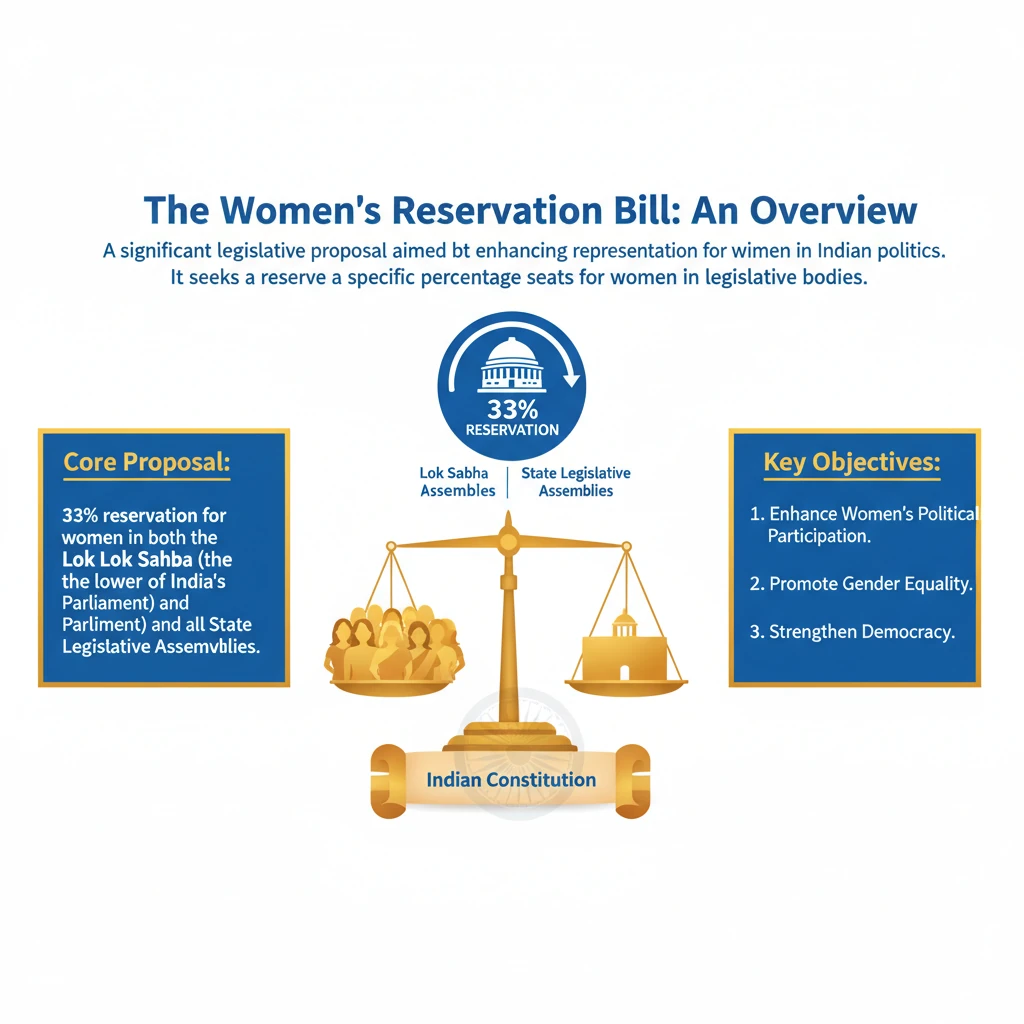
<h4>The Women's Reservation Bill: An Overview</h4><p>The <strong>Women's Reservation Bill</strong> is a significant legislative proposal aimed at enhancing the representation of women in Indian politics. It seeks to reserve a specific percentage of seats for women in legislative bodies.</p><div class='info-box'><p><strong>Core Proposal:</strong> The bill proposes a <strong>33% reservation</strong> for women in both the <strong>Lok Sabha</strong> (the lower house of India's Parliament) and all <strong>state legislative assemblies</strong>.</p></div><h4>Historical Journey and Challenges</h4><p>The concept of reserving seats for women in legislatures is not new. The <strong>Women's Reservation Bill</strong> was <strong>first introduced in 1996</strong>, marking the beginning of a long and often contentious legislative journey.</p><p>Despite being introduced multiple times over the decades, the bill has consistently failed to be passed by Parliament. This prolonged impasse highlights deep-seated political and social challenges.</p><div class='key-point-box'><p><strong>Primary Hurdle:</strong> The main reason for the bill's non-passage has been a persistent <strong>lack of political consensus</strong> among major political parties. Divergent views on its implementation, particularly regarding sub-quotas for OBC women, have stalled its progress.</p></div><div class='exam-tip-box'><p><strong>UPSC Insight:</strong> Understanding the <strong>Women's Reservation Bill</strong> is crucial for topics related to <strong>gender justice</strong>, <strong>electoral reforms</strong>, and <strong>democratic representation</strong> in <strong>GS Paper I and II</strong>. Be prepared to discuss its historical context, proposed provisions, and the socio-political challenges to its enactment.</p></div>
💡 Key Takeaways
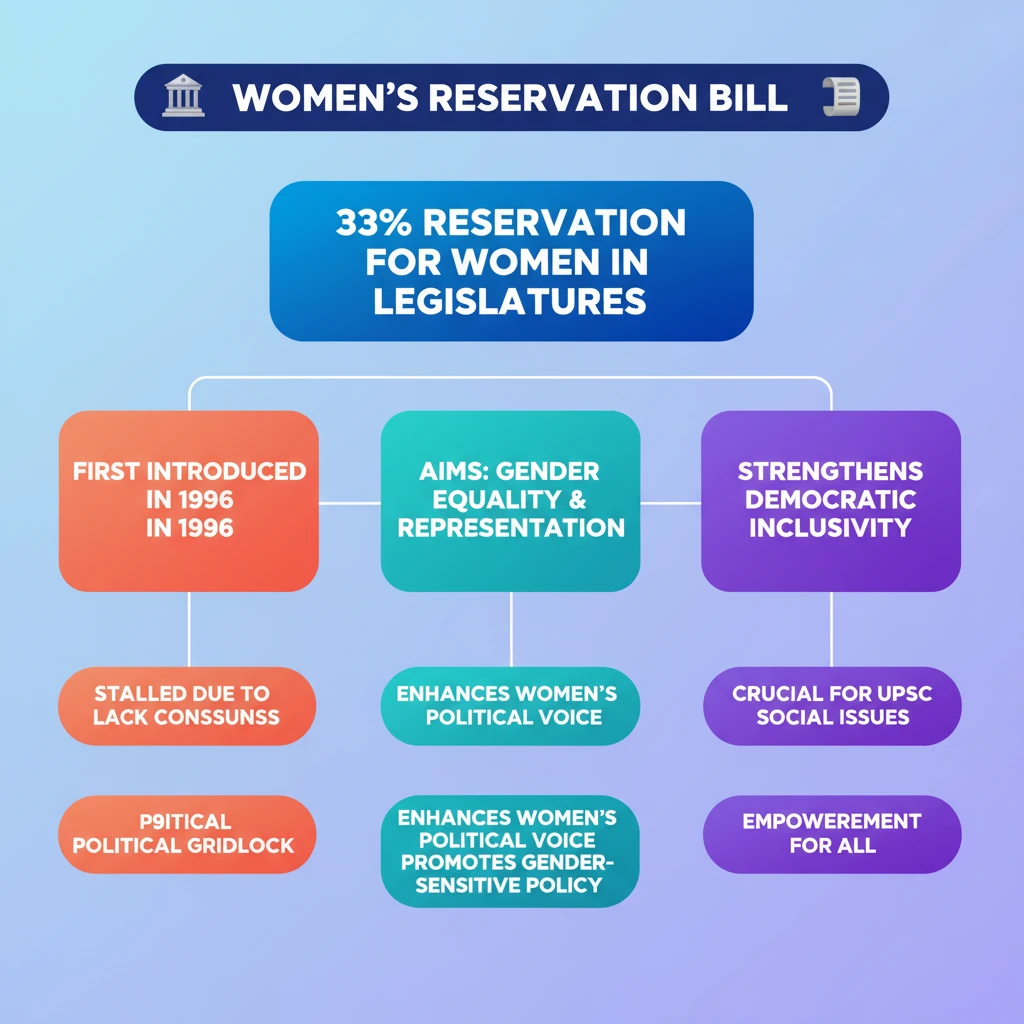
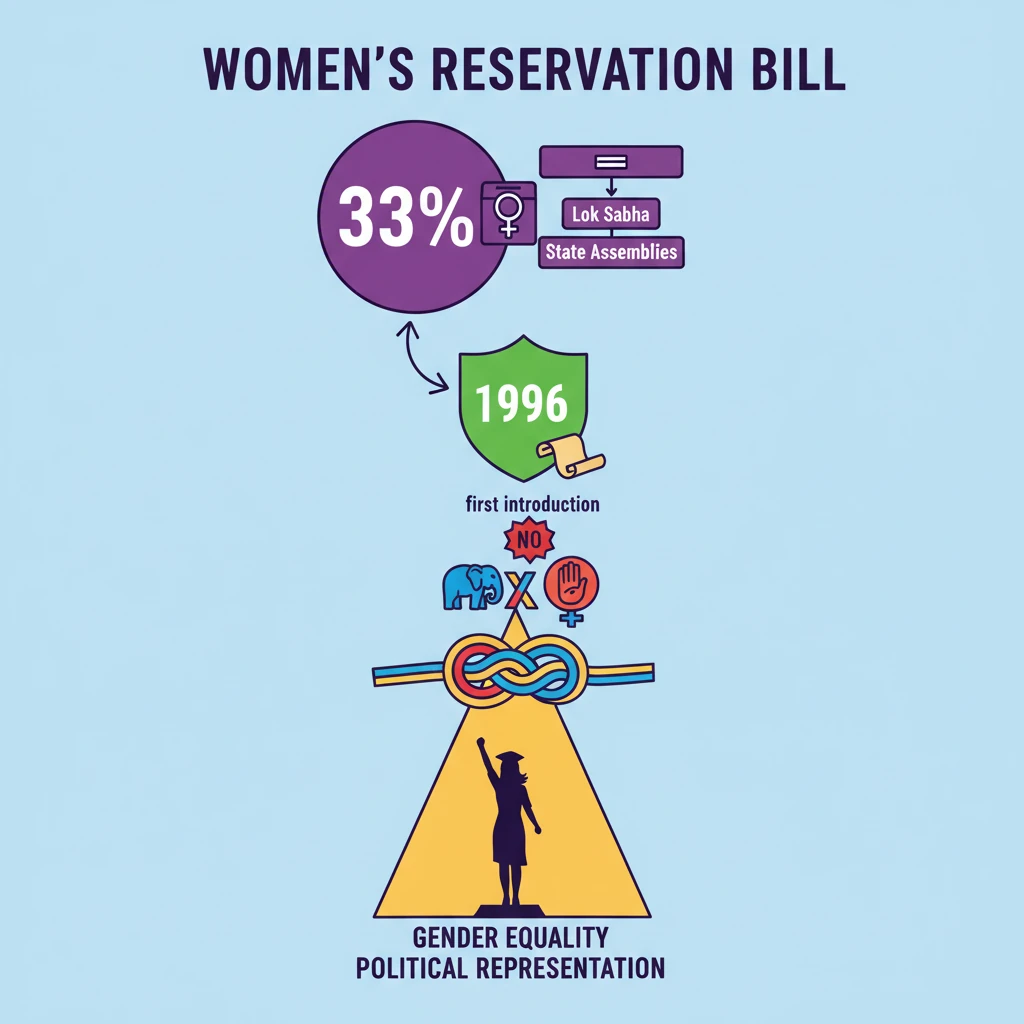
- •The Women's Reservation Bill proposes 33% reservation for women in Lok Sabha and State Legislative Assemblies.
- •It was first introduced in 1996.
- •Its passage has been stalled due to a persistent lack of political consensus among major parties.
- •Aims to enhance women's political representation and promote gender equality.
- •Crucial for strengthening democratic inclusivity and ensuring gender-sensitive policy-making.
🧠 Memory Techniques
95% Verified Content
📚 Reference Sources
•Parliament of India archives (general knowledge of bill's history)
•PRS Legislative Research (general knowledge of bill's provisions and journey)