Women Candidates by Political Parties - Social Issues | UPSC Learning
Topics
0 topics • 0 completed
🔍
No topics match your search
Women Candidates by Political Parties
Medium⏱️ 7 min read
social issues
📖 Introduction
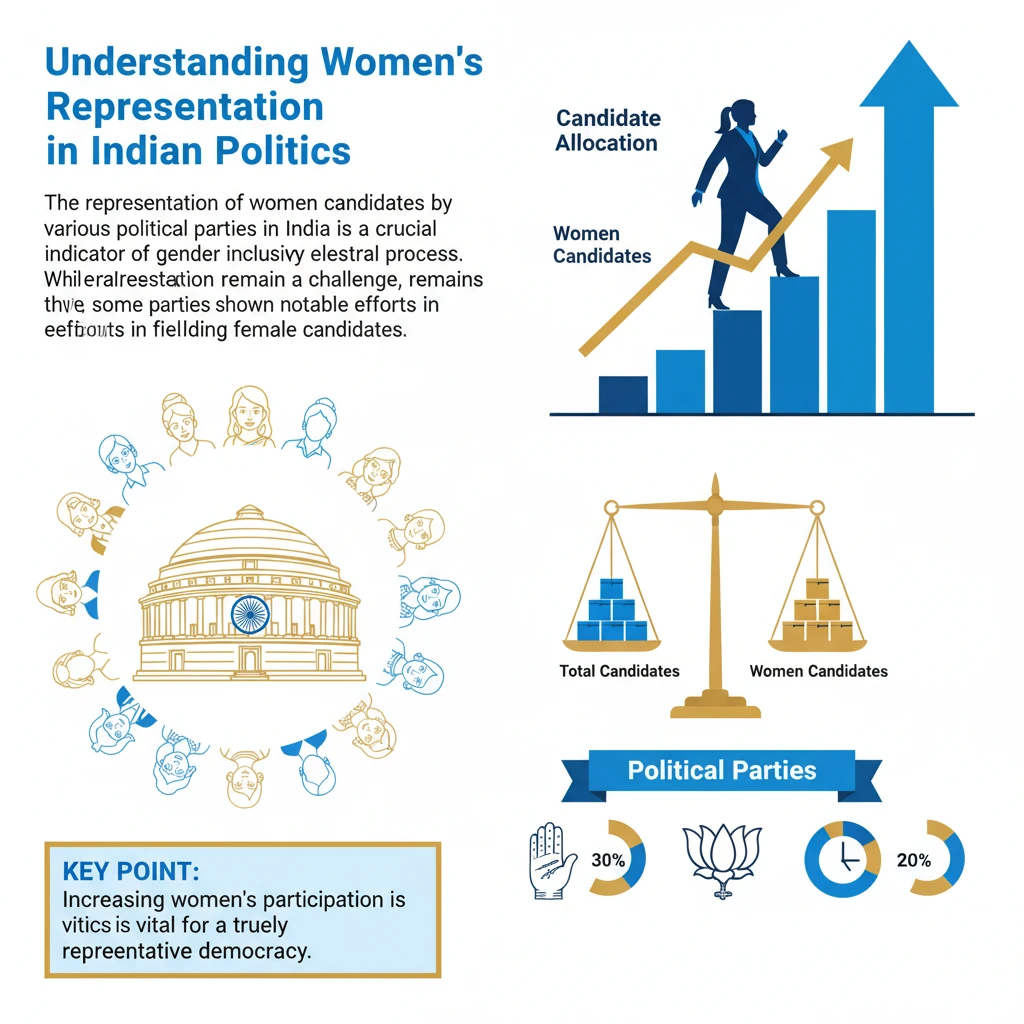
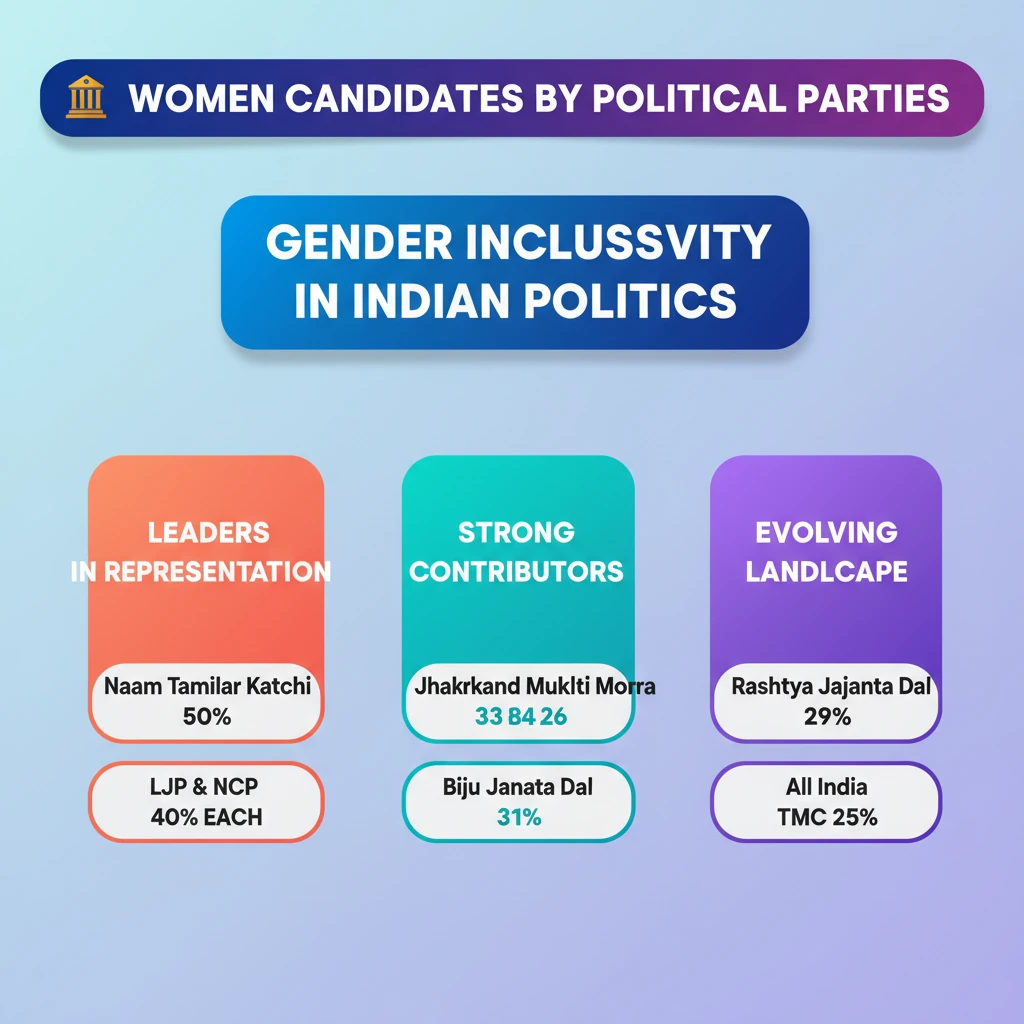
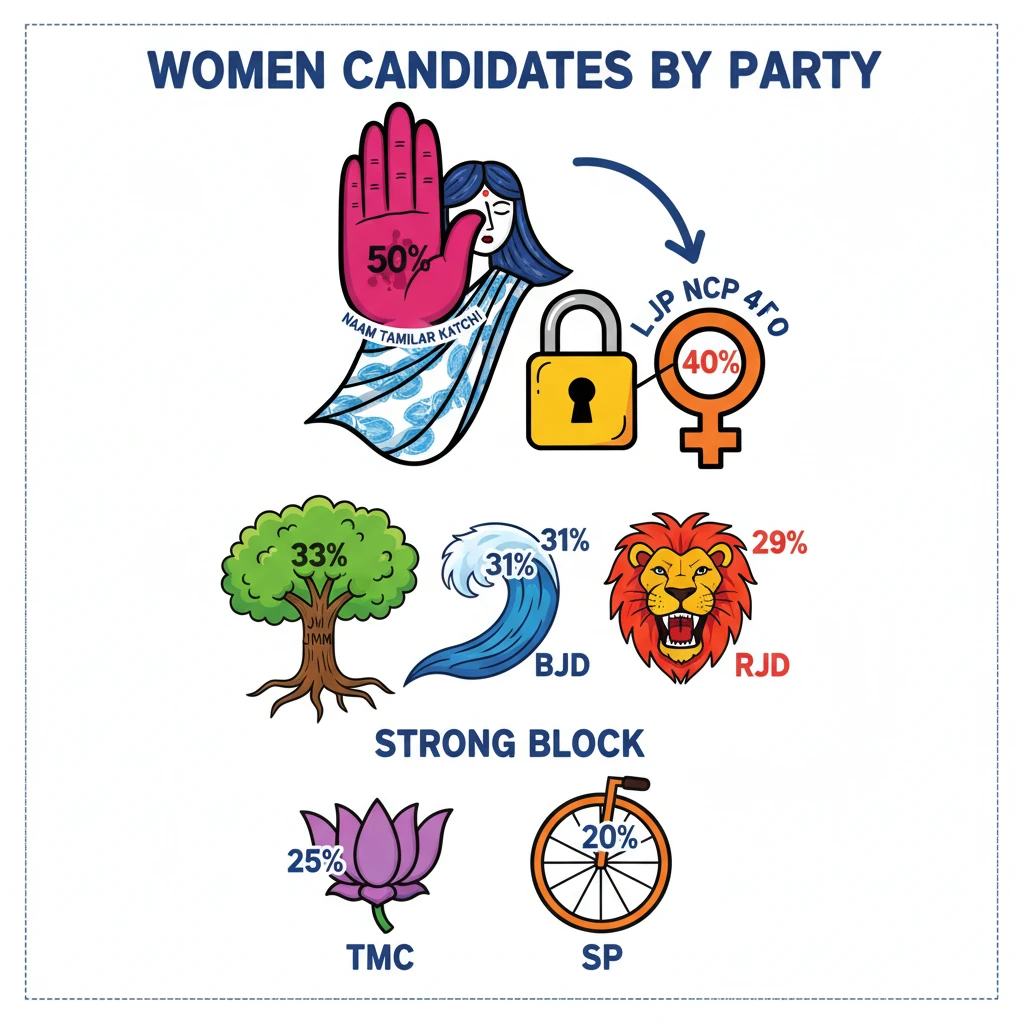
<h4>Understanding Women's Representation in Indian Politics</h4><p>The representation of <strong>women candidates</strong> by various <strong>political parties</strong> in India is a crucial indicator of gender inclusivity in the electoral process. While the overall representation remains a challenge, some parties have shown notable efforts in fielding female candidates.</p><div class='key-point-box'><p>Increasing <strong>women's participation</strong> in politics is vital for a truly representative democracy and for ensuring that diverse perspectives are included in policy-making.</p></div><h4>Leading Parties in Women Candidate Nomination</h4><p>Among the political parties, the <strong>Naam Tamilar Katchi</strong> has demonstrated a significant commitment to gender parity in candidate selection.</p><div class='info-box'><p>The <strong>Naam Tamilar Katchi</strong> nominated <strong>50% women candidates</strong>, setting a high benchmark for other parties.</p></div><p>Following closely, a couple of national parties also showed strong representation for women in their candidate lists.</p><div class='info-box'><p>The <strong>Lok Janshakti Party</strong> and the <strong>Nationalist Congress Party</strong> each fielded <strong>40% women candidates</strong>.</p></div><h4>Mid-Range Representation by Regional Parties</h4><p>Several regional parties also contributed to women's representation, albeit at varying percentages. These efforts highlight a growing awareness of the need for gender balance in political nominations.</p><div class='info-box'><p>The <strong>Jharkhand Mukti Morcha</strong> had <strong>33% female representation</strong> among its candidates.</p><p>The <strong>Biju Janata Dal</strong> nominated <strong>31% women candidates</strong>.</p><p>The <strong>Rashtriya Janata Dal</strong> had <strong>29% female representation</strong>.</p></div><h4>Other Notable Parties</h4><p>Other prominent political parties, including major regional players, also contributed to the pool of women candidates, reflecting a gradual shift in their nomination strategies.</p><div class='info-box'><p>The <strong>All India Trinamool Congress</strong> had <strong>25% women candidates</strong>.</p><p>The <strong>Samajwadi Party</strong> fielded <strong>20% women candidates</strong>.</p></div><div class='exam-tip-box'><p>For <strong>UPSC Mains GS-I (Society)</strong> and <strong>GS-II (Polity)</strong>, understanding these statistics helps in substantiating arguments on <strong>gender equality</strong>, <strong>political empowerment</strong>, and <strong>electoral reforms</strong>. Mentioning specific party examples adds weight to your answers.</p></div>
💡 Key Takeaways
- •Naam Tamilar Katchi leads with 50% women candidates.
- •Lok Janshakti Party and Nationalist Congress Party each fielded 40% women.
- •Jharkhand Mukti Morcha (33%), Biju Janata Dal (31%), and Rashtriya Janata Dal (29%) also show significant representation.
- •All India Trinamool Congress (25%) and Samajwadi Party (20%) contribute to women's candidacies.
- •Women's representation by parties is a key indicator of gender inclusivity in politics.
- •The Women's Reservation Bill (Nari Shakti Vandan Adhiniyam, 2023) aims to increase women's legislative representation in the future.
🧠 Memory Techniques
95% Verified Content
📚 Reference Sources
•Official Election Commission of India reports (for general context on party data trends)
•Parliamentary records on Women's Reservation Bill