What was the Chipko Movement All About? - Social Issues | UPSC Learning
Topics
0 topics • 0 completed
🔍
No topics match your search
What was the Chipko Movement All About?
Medium⏱️ 8 min read
social issues
📖 Introduction
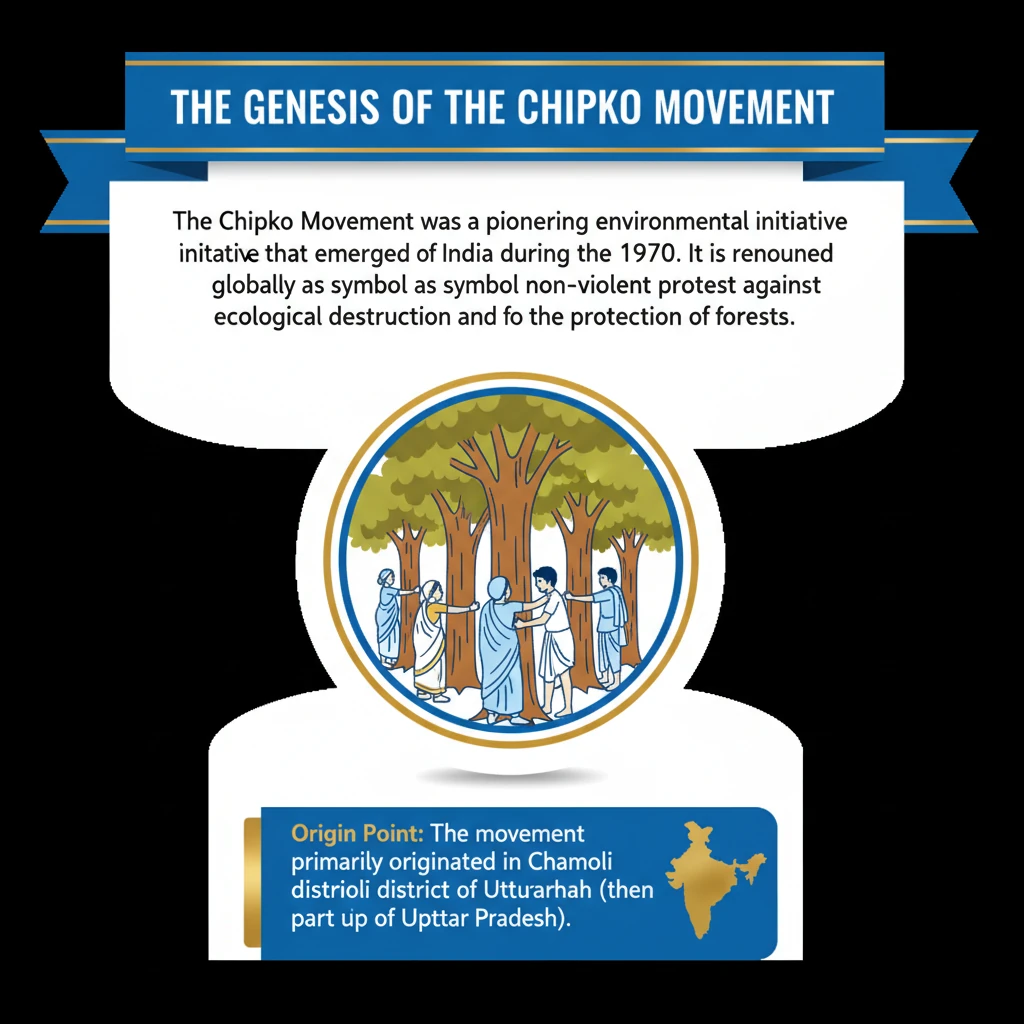
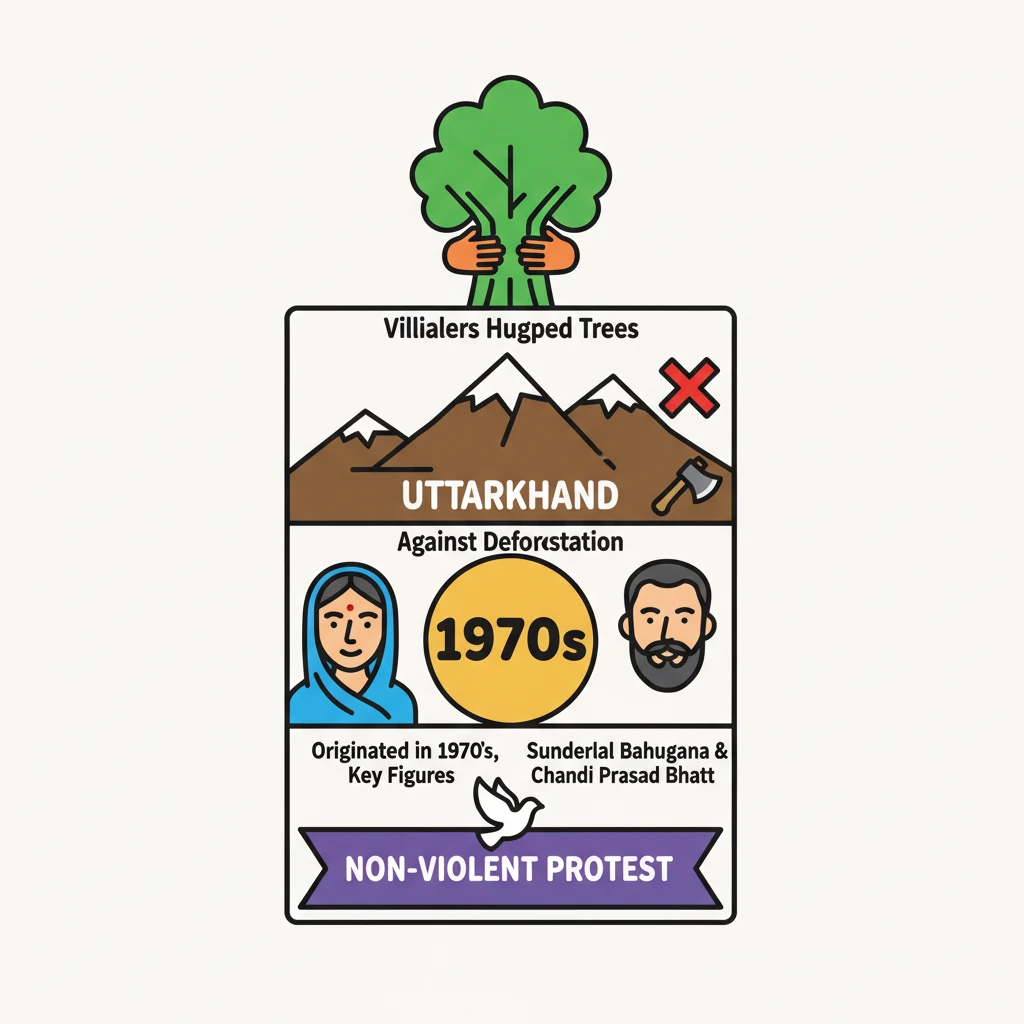
<h4>The Genesis of the Chipko Movement</h4><p>The <strong>Chipko Movement</strong> was a pioneering environmental initiative that emerged in <strong>India</strong> during the <strong>1970s</strong>. It is renowned globally as a symbol of non-violent protest against ecological destruction and for the protection of forests.</p><div class='info-box'><p><strong>Origin Point:</strong> The movement primarily originated in the <strong>Chamoli district</strong> of <strong>Uttarakhand</strong> (then part of Uttar Pradesh).</p><p><strong>Core Issue:</strong> It was a direct response to rampant <strong>deforestation</strong> caused by commercial logging activities.</p></div><h4>Causes of Deforestation and Community Response</h4><p>The region of <strong>Chamoli</strong> was experiencing extensive tree felling due to contracts awarded to <strong>outside commercial contractors</strong>. These activities threatened the ecological balance and the livelihoods of local communities who depended on the forests for their sustenance.</p><div class='key-point-box'><p>The term <strong>'Chipko'</strong> literally means <strong>'to hug'</strong> or <strong>'to cling to'</strong>. Villagers, predominantly women, adopted the strategy of hugging trees to prevent loggers from felling them, thereby physically interposing themselves between the trees and the axes.</p></div><h4>Key Figures and Principles</h4><p>While a spontaneous grassroots movement, several prominent figures provided leadership and direction. These included <strong>Sunderlal Bahuguna</strong>, <strong>Chandi Prasad Bhatt</strong>, and <strong>Gaura Devi</strong>, who played crucial roles in mobilizing communities and articulating the movement's philosophy.</p><p>The movement was deeply rooted in <strong>Gandhian principles</strong> of non-violent resistance (<strong>Satyagraha</strong>) and emphasized the interconnectedness of human well-being with environmental health.</p><h4>Impact and Legacy</h4><p>The <strong>Chipko Movement</strong> successfully pressured the government to ban tree felling in the <strong>Himalayan regions</strong> for a period, leading to a significant reduction in deforestation. It also raised national and international awareness about forest conservation and the rights of indigenous communities.</p><div class='exam-tip-box'><p>For <strong>UPSC Mains (GS-I, GS-III)</strong>, understanding Chipko's <strong>grassroots nature</strong>, its <strong>Gandhian methods</strong>, and its role in promoting <strong>sustainable development</strong> and <strong>women's empowerment</strong> is crucial. It serves as an excellent case study for environmental movements.</p></div>
💡 Key Takeaways
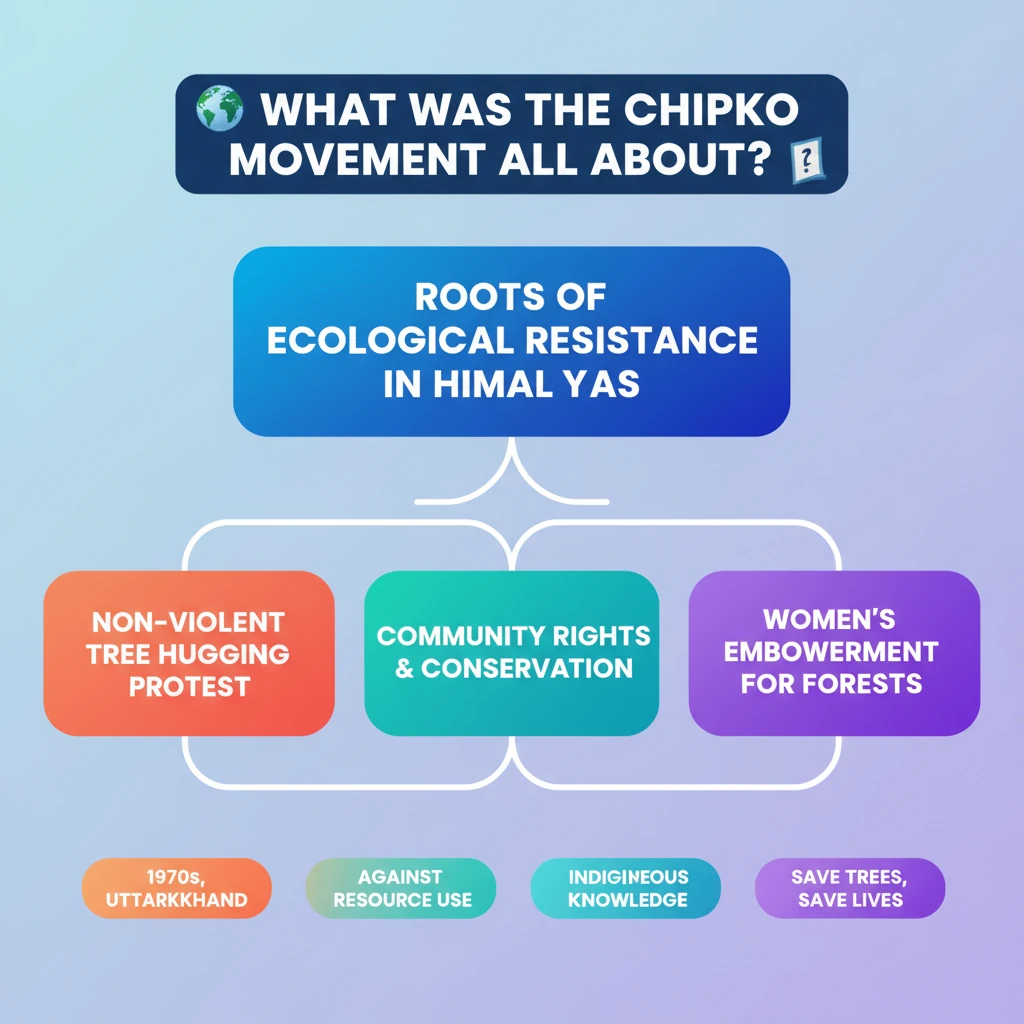
- •Chipko Movement originated in the 1970s in Chamoli, Uttarakhand.
- •It was a non-violent protest against commercial deforestation by outside contractors.
- •Villagers, especially women, 'hugged' trees to prevent felling.
- •Key figures include Sunderlal Bahuguna, Chandi Prasad Bhatt, and Gaura Devi.
- •Emphasized sustainable resource management, community rights, and women's role.
- •Led to a ban on tree felling in the Himalayas and raised global environmental awareness.
🧠 Memory Techniques
95% Verified Content
📚 Reference Sources
•NCERT Textbooks (Social Science)
•Ministry of Environment, Forest and Climate Change (MoEFCC) Reports
•Academic papers on Indian Environmental Movements