Surrogacy Arrangements - Social Issues | UPSC Learning
Topics
0 topics • 0 completed
🔍
No topics match your search

Surrogacy Arrangements
Medium⏱️ 5 min read
social issues
📖 Introduction
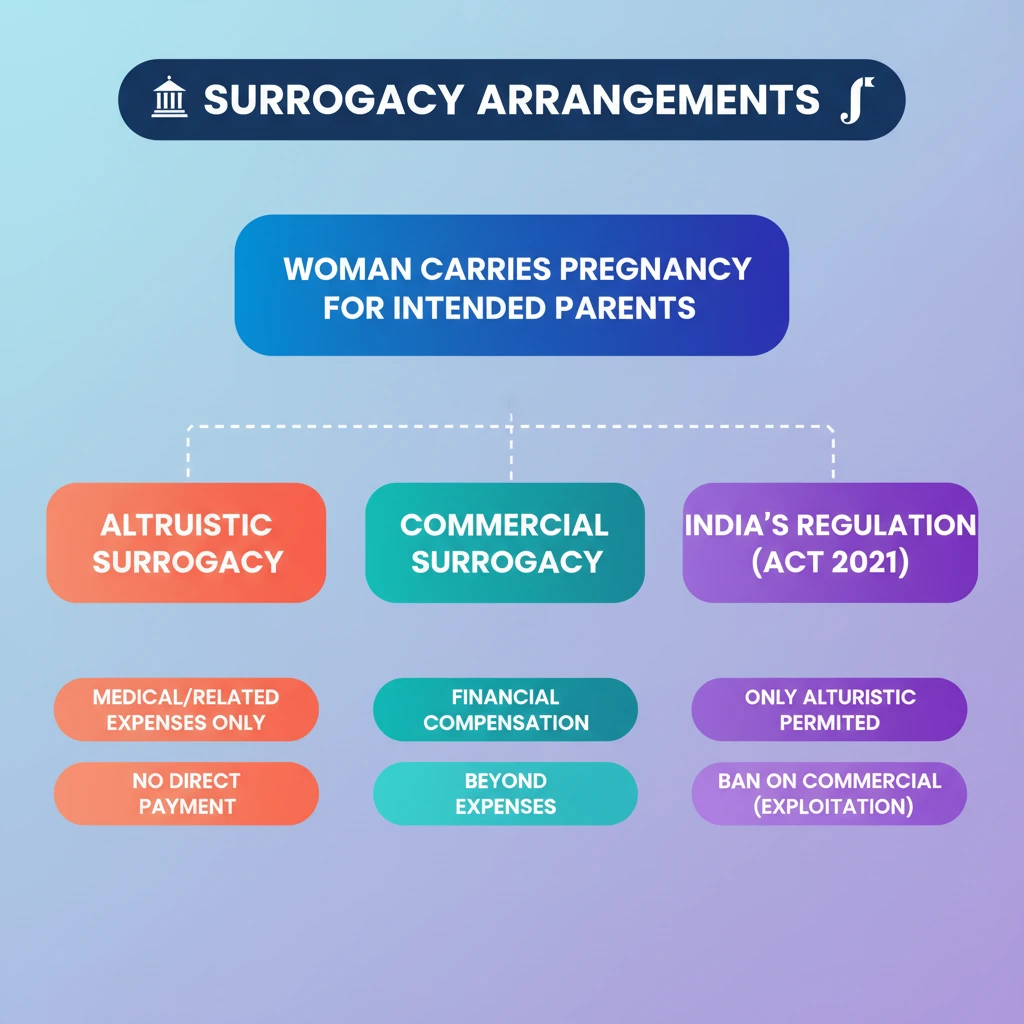
<h4>Introduction to Surrogacy Arrangements</h4><p><strong>Surrogacy arrangements</strong> refer to agreements where a woman carries a pregnancy for another individual or couple, intending to hand over the child after birth. These arrangements are typically entered into when the intended parents are unable to conceive or carry a pregnancy to term themselves.</p><p>The concept has gained significant attention globally due to advancements in reproductive technologies and evolving societal norms.</p><div class='key-point-box'><p>Understanding the distinction between different types of surrogacy is crucial for comprehending the legal and ethical landscape surrounding assisted reproductive technologies.</p></div><h4>Altruistic Surrogacy</h4><p><strong>Altruistic surrogacy</strong> is a type of surrogacy arrangement where the <strong>surrogate mother</strong> does not receive any financial compensation beyond the reimbursement for her medical expenses and other pregnancy-related costs.</p><p>The primary motivation for a surrogate in an altruistic arrangement is typically to help another individual or couple fulfill their dream of having a child. It is driven by a sense of goodwill and compassion.</p><div class='info-box'><p><strong>Key Characteristics of Altruistic Surrogacy:</strong><ul><li><strong>No financial compensation</strong> for carrying the pregnancy.</li><li>Only <strong>reimbursement for medical expenses</strong> and related costs.</li><li>Motivation is primarily <strong>humanitarian</strong> or familial.</li></ul></p></div><h4>Commercial Surrogacy</h4><p><strong>Commercial surrogacy</strong> involves a contractual agreement where the <strong>surrogate mother</strong> receives financial compensation that goes beyond just the reimbursement for medical expenses and other costs associated with the pregnancy.</p><p>This compensation is often a significant sum, agreed upon in advance, reflecting the service provided by the surrogate.</p><div class='info-box'><p><strong>Key Characteristics of Commercial Surrogacy:</strong><ul><li><strong>Financial compensation</strong> is provided to the surrogate.</li><li>Compensation covers <strong>more than just medical and related expenses</strong>.</li><li>The amount may vary based on market rates and specific contractual terms.</li></ul></p></div><div class='exam-tip-box'><p>For UPSC, it's vital to grasp the <strong>ethical dilemmas</strong> and <strong>socio-economic implications</strong> associated with both altruistic and commercial surrogacy, especially in the Indian context. The distinction forms the basis of recent legislative changes.</p></div>
💡 Key Takeaways
- •Surrogacy involves a woman carrying a pregnancy for intended parents.
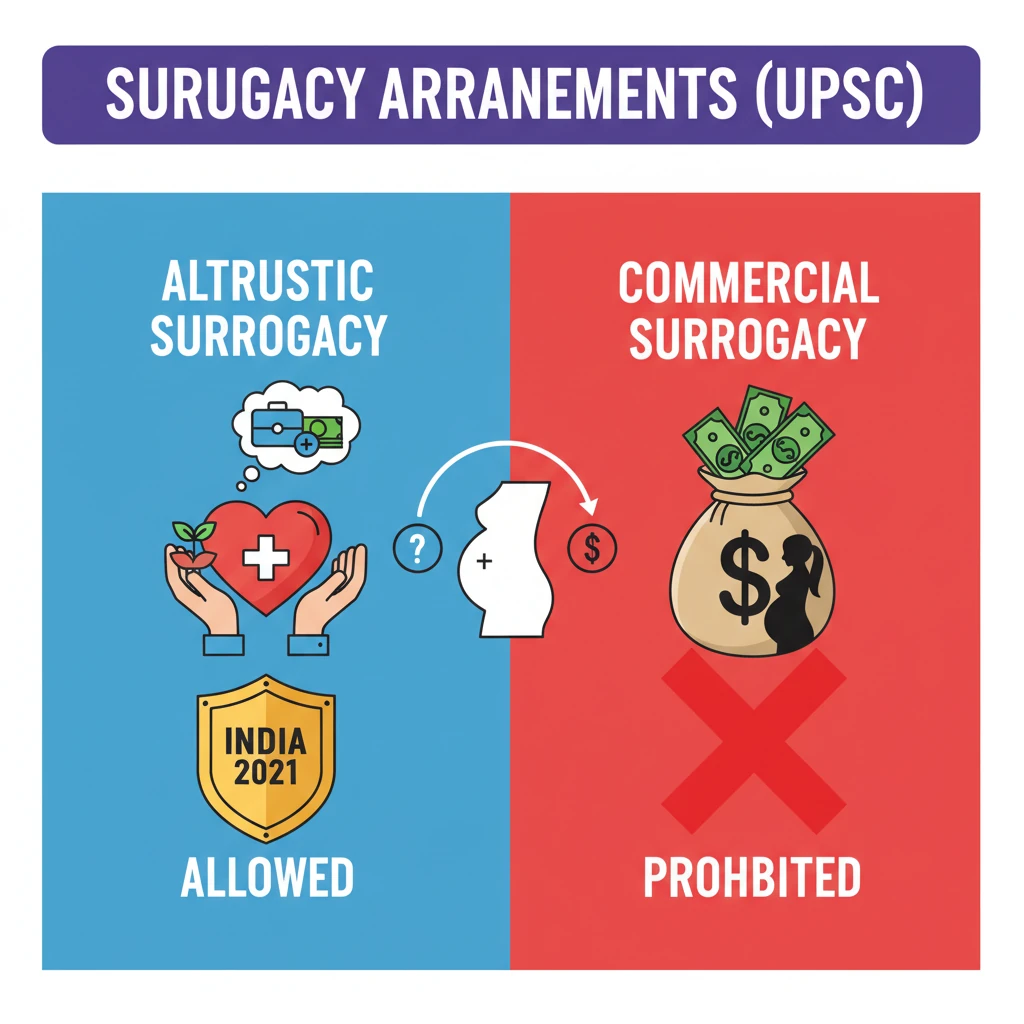
- •Altruistic surrogacy reimburses only medical/related expenses; no direct payment for carrying the child.
- •Commercial surrogacy involves financial compensation beyond expenses for the surrogate mother.
- •India's Surrogacy (Regulation) Act, 2021, permits only altruistic surrogacy.
- •The ban on commercial surrogacy aims to prevent exploitation of surrogate mothers.
- •Ethical and social implications are central to understanding surrogacy arrangements.
🧠 Memory Techniques
95% Verified Content
📚 Reference Sources
•Surrogacy (Regulation) Act, 2021 (for current relevance and historical context framing)