Global Status on Recognition of Same-Sex Marriage - Social Issues | UPSC Learning
Topics
0 topics • 0 completed
🔍
No topics match your search
Global Status on Recognition of Same-Sex Marriage
Medium⏱️ 6 min read
social issues
📖 Introduction
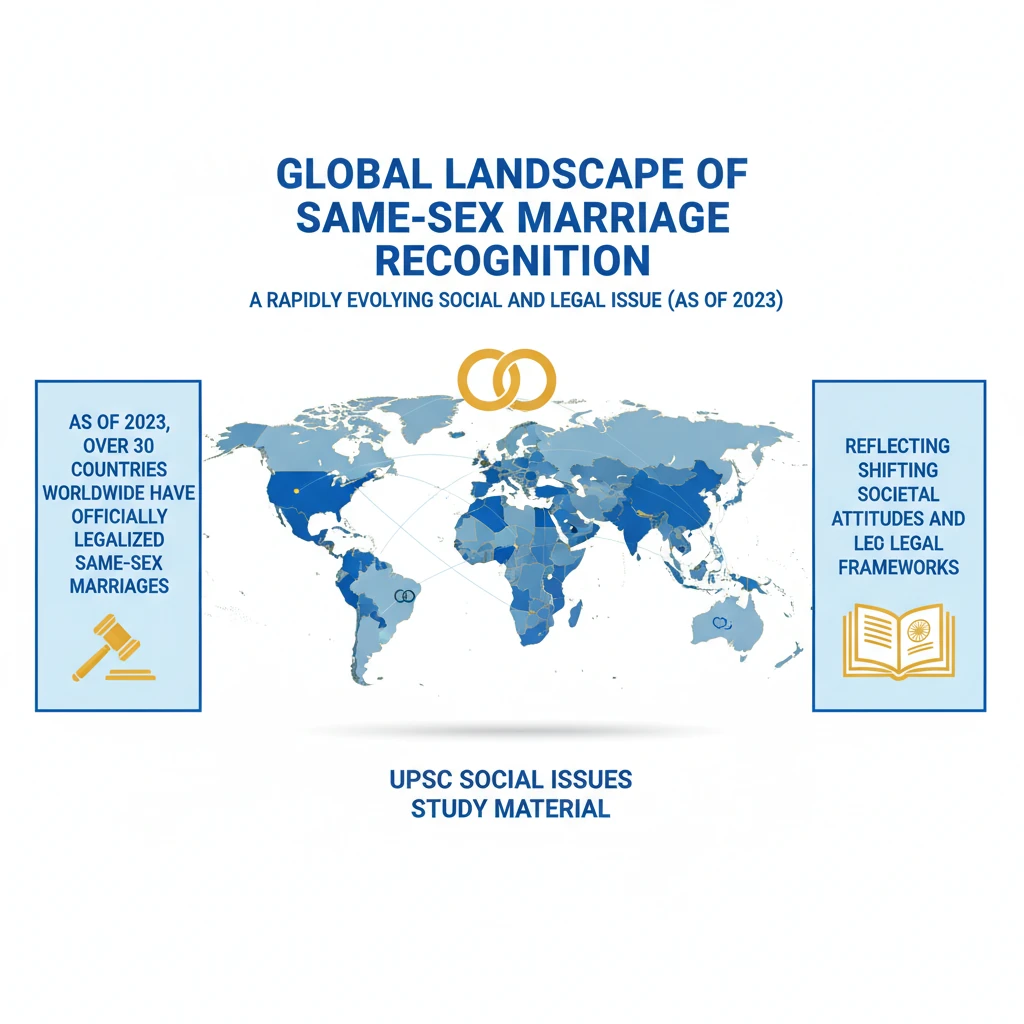
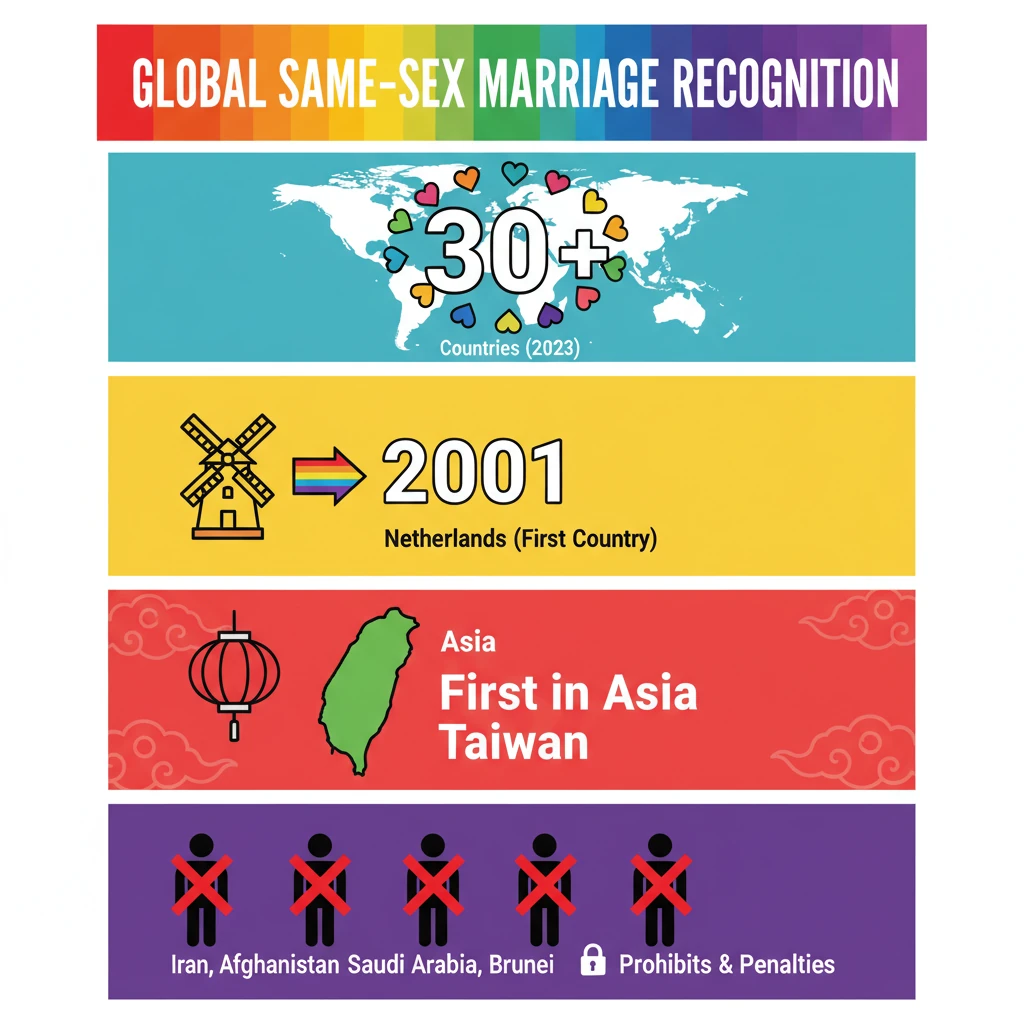
<h4>Global Landscape of Same-Sex Marriage Recognition</h4><p>The global recognition of <strong>same-sex marriage</strong> is a rapidly evolving social and legal issue. As of <strong>2023</strong>, a significant number of nations have moved towards legalizing these unions, reflecting shifting societal attitudes and legal frameworks.</p><div class='info-box'><p>As of <strong>2023</strong>, <strong>over 30 countries worldwide</strong> have officially legalized <strong>same-sex marriages</strong>.</p></div><p>This trend signifies a growing acceptance of LGBTQ+ rights and the principle of equality in marital institutions across various jurisdictions. However, this progress is not uniform globally.</p><h4>Pioneering Nations in Legalization</h4><p>The journey towards legalizing <strong>same-sex marriage</strong> began in the early 21st century with pioneering nations taking the lead. These countries often amended existing civil marriage laws to include same-sex couples.</p><div class='key-point-box'><p>The <strong>Netherlands</strong> holds the distinction of being the <strong>first country globally</strong> to legalize <strong>same-sex marriage</strong>. This landmark decision occurred in <strong>2001</strong> through an amendment to its civil marriage law.</p></div><p>Following this, other nations in Europe and North America progressively adopted similar legislation, expanding the rights of same-sex couples.</p><div class='info-box'><p>In <strong>Asia</strong>, <strong>Taiwan</strong> emerged as the <strong>first country</strong> to legalize <strong>same-sex marriage</strong>, marking a significant milestone for LGBTQ+ rights in the continent.</p></div><h4>Nations with Prohibitive Stances</h4><p>Despite the global trend towards recognition, several nations maintain strict prohibitions against <strong>same-sex marriage</strong>. These prohibitions are often rooted in cultural, religious, or traditional beliefs.</p><p>In some countries, the legal framework not only bans <strong>same-sex marriages</strong> but also imposes severe penalties for engaging in or advocating for such unions. These punishments can range from imprisonment to more extreme measures.</p><div class='exam-tip-box'><p>Countries like <strong>Iran</strong>, <strong>Afghanistan</strong>, <strong>Saudi Arabia</strong>, and <strong>Brunei</strong> are notable examples where <strong>same-sex marriages</strong> are not only prohibited but can also lead to severe penalties, including the <strong>death penalty</strong> or <strong>corporal punishment</strong>. This stark contrast highlights the diverse legal and social landscapes worldwide.</p></div><p>Understanding these divergent global statuses is crucial for comprehending the complex international human rights discourse surrounding LGBTQ+ issues.</p>

💡 Key Takeaways
- •Over 30 countries globally have legalized same-sex marriage as of 2023.
- •The Netherlands was the first country worldwide to legalize same-sex marriage in 2001.
- •Taiwan holds the distinction of being the first country in Asia to legalize same-sex marriage.
- •Several nations, including Iran, Afghanistan, Saudi Arabia, and Brunei, prohibit same-sex marriage and impose severe penalties.
- •The global status reflects a significant divide between nations recognizing and those criminalizing same-sex relationships.
🧠 Memory Techniques
95% Verified Content
📚 Reference Sources
•UN Human Rights Office of the High Commissioner (OHCHR) reports on LGBTQ+ rights
•Pew Research Center reports on same-sex marriage