HIV/AIDS: Severity and Progression to AIDS Stage - Social Issues | UPSC Learning
Topics
0 topics • 0 completed
🔍
No topics match your search
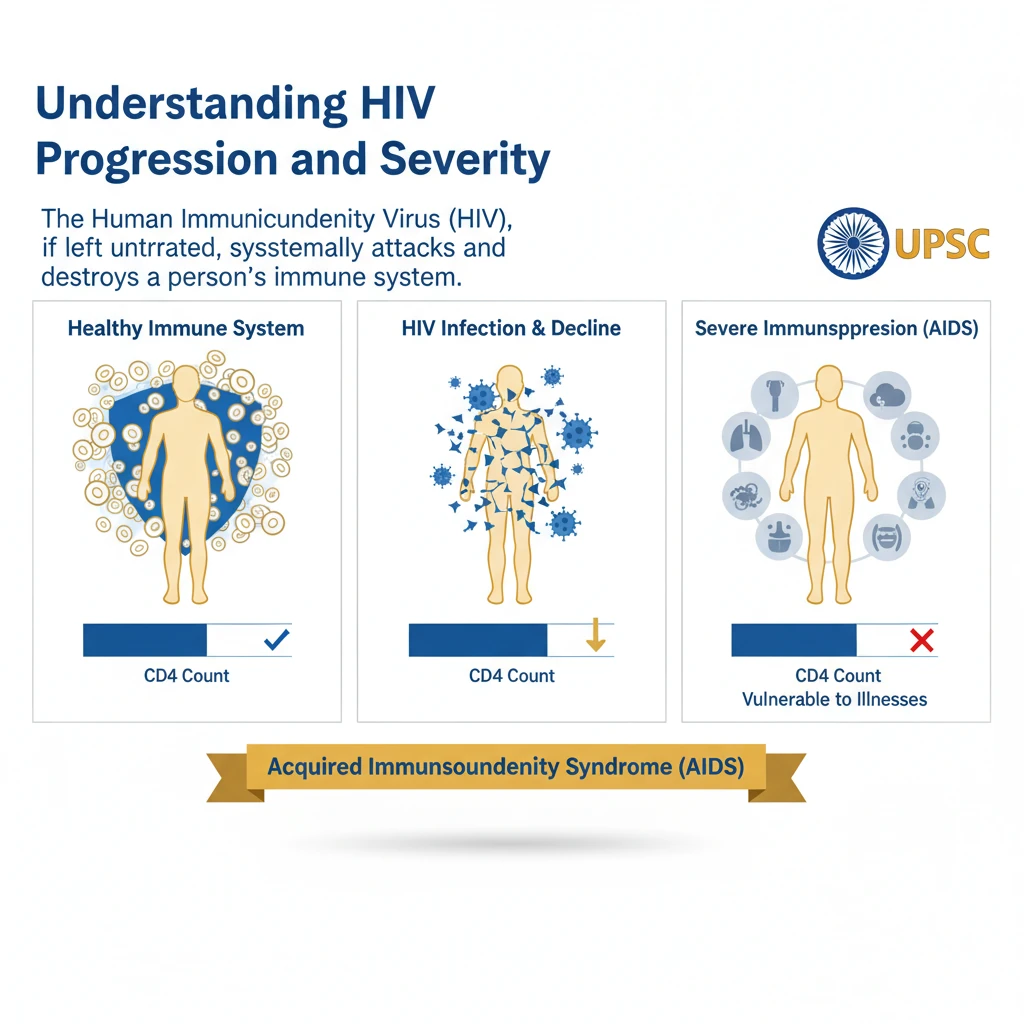
HIV/AIDS: Severity and Progression to AIDS Stage
Medium⏱️ 7 min read
social issues
📖 Introduction
<h4>Understanding HIV Progression and Severity</h4><p>The <strong>Human Immunodeficiency Virus (HIV)</strong>, if left <strong>untreated</strong>, systematically attacks and destroys a person's <strong>immune system</strong>. This critical deterioration leaves the body vulnerable to various illnesses.</p><p>The progressive damage to the <strong>immune system</strong> means the body loses its ability to fight off common pathogens, leading to severe health complications.</p><h4>The Acquired Immunodeficiency Syndrome (AIDS) Stage</h4><p>When the <strong>immune system</strong> is severely compromised due to <strong>untreated HIV</strong>, the individual enters the stage known as <strong>Acquired Immunodeficiency Syndrome (AIDS)</strong>. This is the final, most severe stage of <strong>HIV infection</strong>.</p><div class='info-box'><p><strong>AIDS Definition:</strong> <strong>AIDS</strong> is a syndrome caused by the <strong>HIV virus</strong>, characterized by a severely weakened <strong>immune system</strong>, making the body susceptible to <strong>opportunistic infections</strong> and certain cancers.</p></div><h4>Impact of Opportunistic Infections</h4><p>In the <strong>AIDS stage</strong>, individuals become highly susceptible to <strong>opportunistic infections</strong>. These are infections that typically do not affect people with healthy <strong>immune systems</strong> but can be life-threatening for those with compromised immunity.</p><div class='key-point-box'><p><strong>Key Concept: Opportunistic Infections</strong> thrive when the body's defenses are down. Examples include certain types of pneumonia, tuberculosis, candidiasis, and various viral infections.</p></div><p>These <strong>opportunistic infections</strong> are the primary cause of illness and <strong>mortality</strong> in individuals with <strong>untreated AIDS</strong>. Without intervention, the progression from <strong>HIV</strong> to <strong>AIDS</strong> and subsequent death is almost inevitable.</p><h4>Preventing Severe Outcomes</h4><p>Modern medical advancements, particularly <strong>Antiretroviral Therapy (ART)</strong>, have dramatically changed the prognosis for people living with <strong>HIV</strong>. Early diagnosis and consistent treatment can prevent the progression to <strong>AIDS</strong> and allow individuals to lead long, healthy lives.</p><div class='exam-tip-box'><p><strong>UPSC Insight:</strong> Understanding the distinction between <strong>HIV infection</strong> and the <strong>AIDS stage</strong> is crucial. Focus on the impact of <strong>untreated disease</strong> on public health and the significance of treatment access for Mains answers.</p></div>
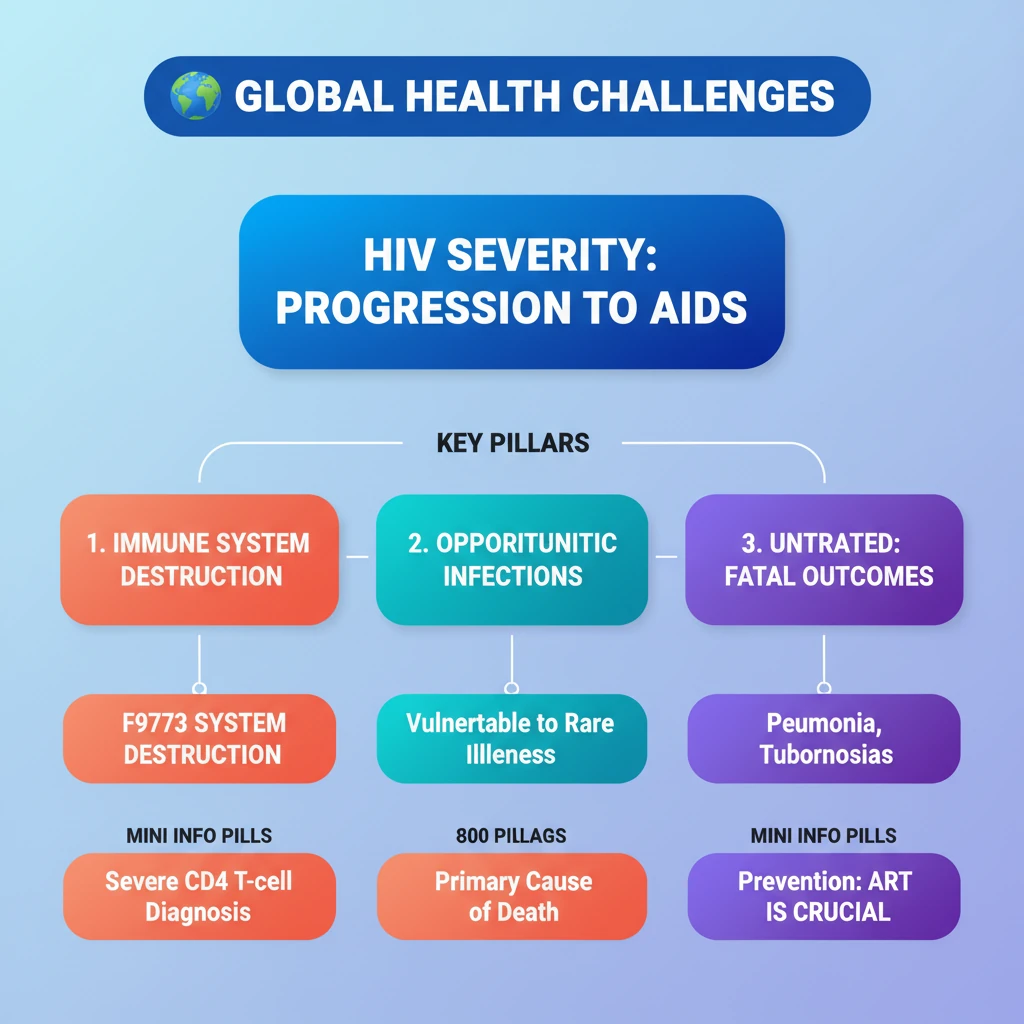
💡 Key Takeaways
- •Untreated HIV systematically destroys the immune system.
- •Severe immune suppression leads to the Acquired Immunodeficiency Syndrome (AIDS) stage.
- •AIDS patients are highly vulnerable to life-threatening opportunistic infections.
- •Opportunistic infections are the primary cause of death in untreated AIDS.
- •Antiretroviral Therapy (ART) is crucial to prevent progression to AIDS and manage the disease effectively.
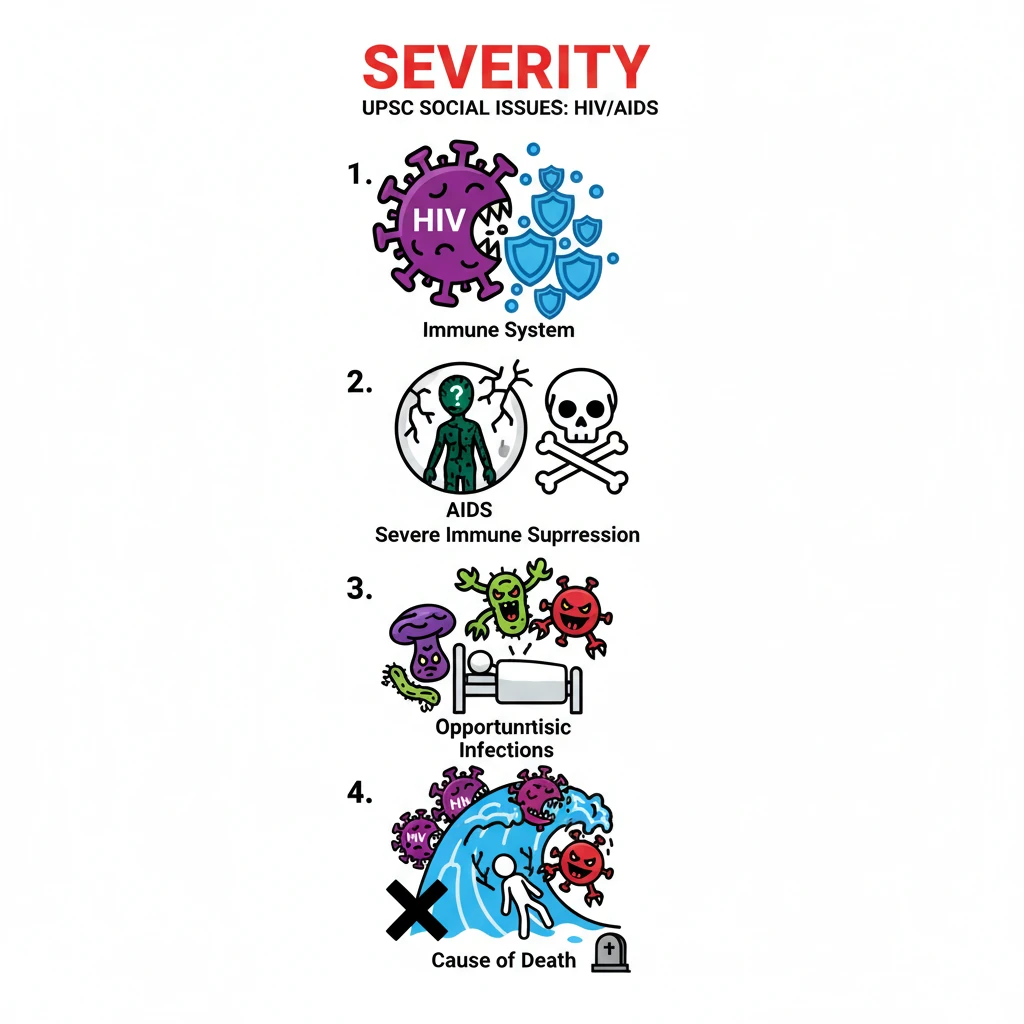
🧠 Memory Techniques
98% Verified Content
📚 Reference Sources
•Joint United Nations Programme on HIV/AIDS (UNAIDS) - Global HIV & AIDS statistics
•U.S. Centers for Disease Control and Prevention (CDC) - About HIV/AIDS
•National AIDS Control Organisation (NACO), India - Annual Reports and Guidelines