What are the Major Provisions of the Amended Surrogacy Rules? - Social Issues | UPSC Learning
Topics
0 topics • 0 completed
🔍
No topics match your search
What are the Major Provisions of the Amended Surrogacy Rules?
Medium⏱️ 10 min read
social issues
📖 Introduction
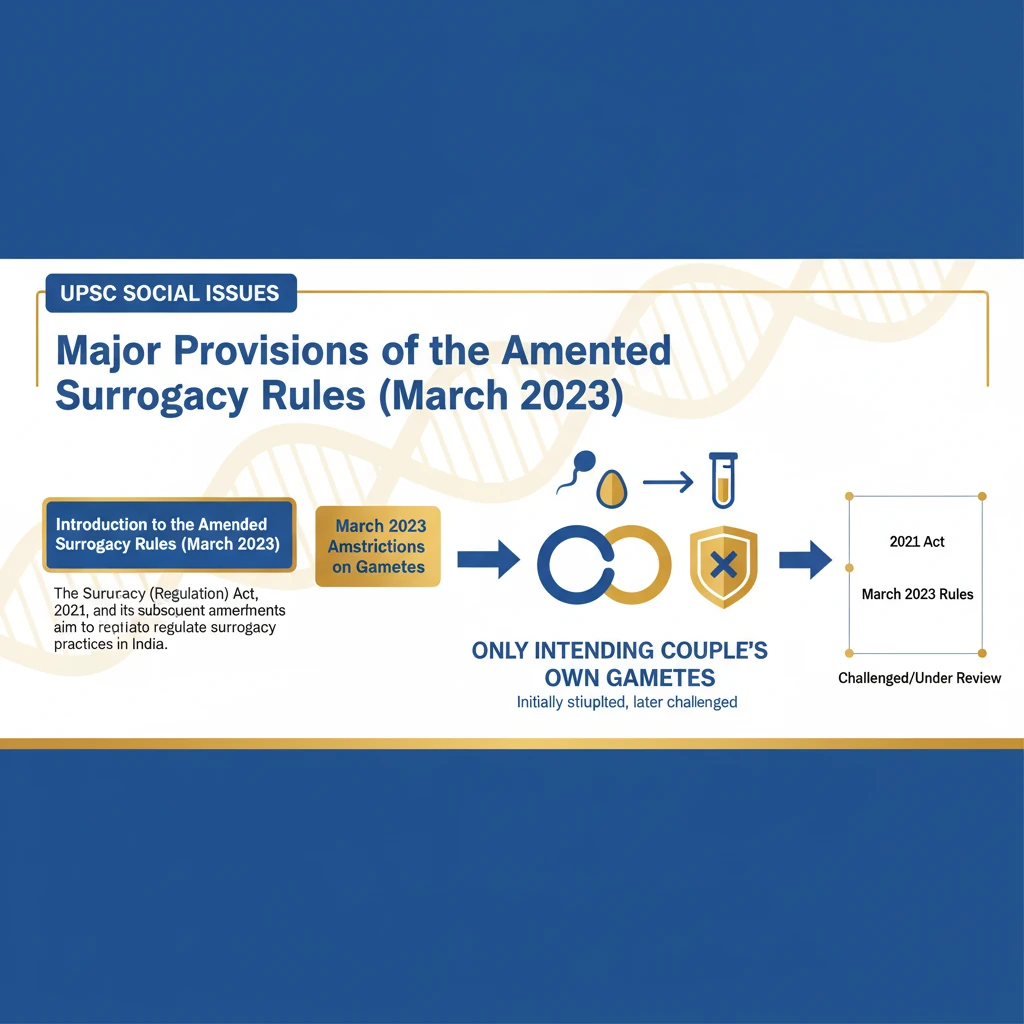
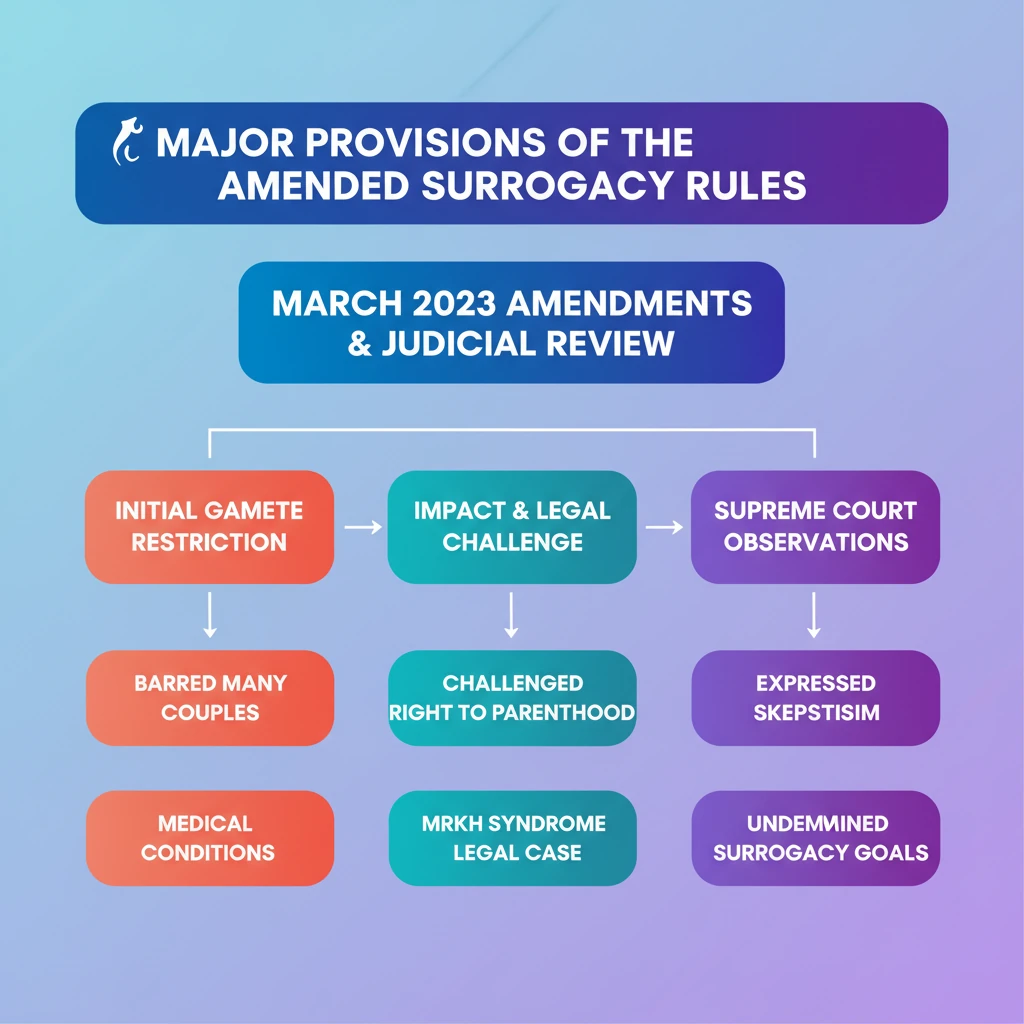
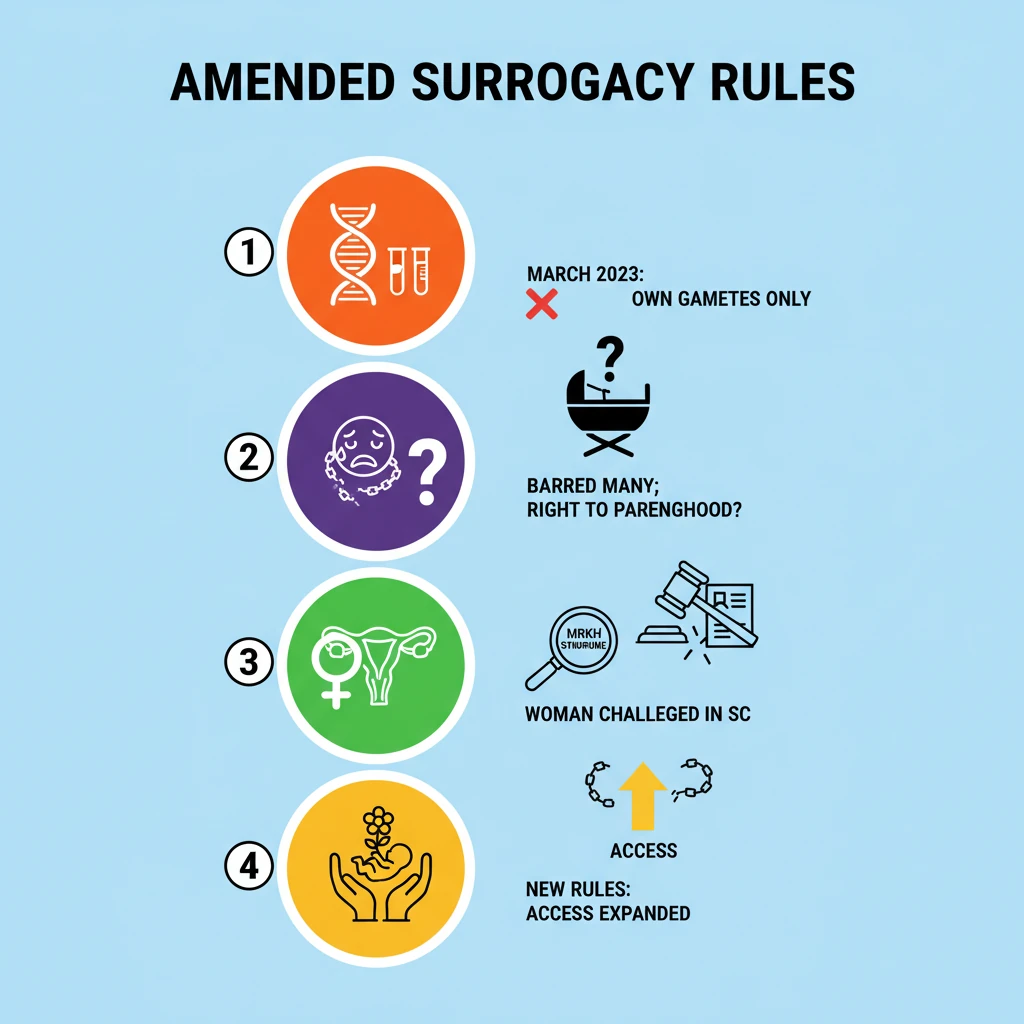
<h4>Introduction to the Amended Surrogacy Rules (March 2023)</h4><p>The <strong>Surrogacy (Regulation) Act, 2021</strong>, and its subsequent amendments aim to regulate surrogacy practices in India. A significant amendment was introduced in <strong>March 2023</strong>, which brought about specific restrictions on the use of gametes.</p><p>These <strong>March 2023 amended rules</strong> initially stipulated that only the <strong>intending couple’s own gametes</strong> could be used for surrogacy. This provision had far-reaching implications for many couples seeking to have children through this process.</p><h4>Impact of Initial Restrictions on Parenthood Rights</h4><p>The restriction on gamete use effectively <strong>barred couples with specific medical conditions</strong> from having biological children through surrogacy. This included individuals or couples where one or both partners could not produce viable gametes.</p><p>These limitations caused considerable <strong>distress</strong> among affected couples. It also raised serious questions regarding their fundamental <strong>right to parenthood</strong>, as the pathway to having biological children was significantly narrowed.</p><div class='key-point-box'><p>The core issue with the <strong>March 2023 amendment</strong> was its strict mandate for <strong>autologous gamete use</strong>, excluding many infertile couples from accessing surrogacy.</p></div><h4>Legal Challenges and Supreme Court Intervention</h4><p>The restrictive nature of the <strong>March 2023 rules</strong> led to significant <strong>legal challenges</strong>. One prominent case involved a woman who approached the <strong>Supreme Court of India</strong>, challenging the validity of these regulations.</p><p>This woman was diagnosed with <strong>Mayer-Rokitansky-Kuster-Hauser (MRKH) Syndrome</strong>, a congenital disorder. This condition results in the absence or underdevelopment of the uterus and vagina, leading to <strong>infertility</strong> and making it impossible for her to carry a pregnancy.</p><div class='info-box'><p><strong>Mayer-Rokitansky-Kuster-Hauser (MRKH) Syndrome:</strong> A congenital disorder affecting approximately 1 in 4,500-5,000 female births, characterized by an underdeveloped or absent uterus and vagina, while external genitalia and ovarian function are typically normal.</p></div><p>The <strong>Supreme Court</strong>, upon reviewing the petition and the implications of the rules, expressed considerable <strong>skepticism</strong> regarding their efficacy. The court observed that such stringent regulations seemed to undermine the very <strong>fundamental objectives of surrogacy</strong>.</p><div class='exam-tip-box'><p>UPSC aspirants should note the role of the <strong>Supreme Court</strong> in safeguarding <strong>fundamental rights</strong>, especially the <strong>right to life and personal liberty (Article 21)</strong>, which implicitly includes the right to reproductive choice and parenthood. This case highlights judicial review of legislative amendments.</p></div>
💡 Key Takeaways
- •March 2023 Surrogacy Rules initially mandated only intending couple's own gametes.
- •This restriction barred many couples with specific medical conditions from accessing surrogacy.
- •Caused distress and challenged the fundamental right to parenthood for affected individuals.
- •A woman with MRKH Syndrome legally challenged the rules in the Supreme Court.
- •Supreme Court expressed skepticism, asserting rules undermined surrogacy's fundamental objectives.
- •Highlights the ongoing debate on reproductive rights, medical ethics, and judicial oversight in India.
🧠 Memory Techniques
95% Verified Content
📚 Reference Sources
•The Surrogacy (Regulation) Act, 2021
•Surrogacy (Regulation) Amendment Rules, March 2023
•Supreme Court of India observations/reports on the MRKH Syndrome case
•Ministry of Health and Family Welfare official notifications