What are the Key Features of Comprehensive Cancer Multi-omics Data Portal? - Social Issues | UPSC Learning
Topics
0 topics • 0 completed
🔍
No topics match your search
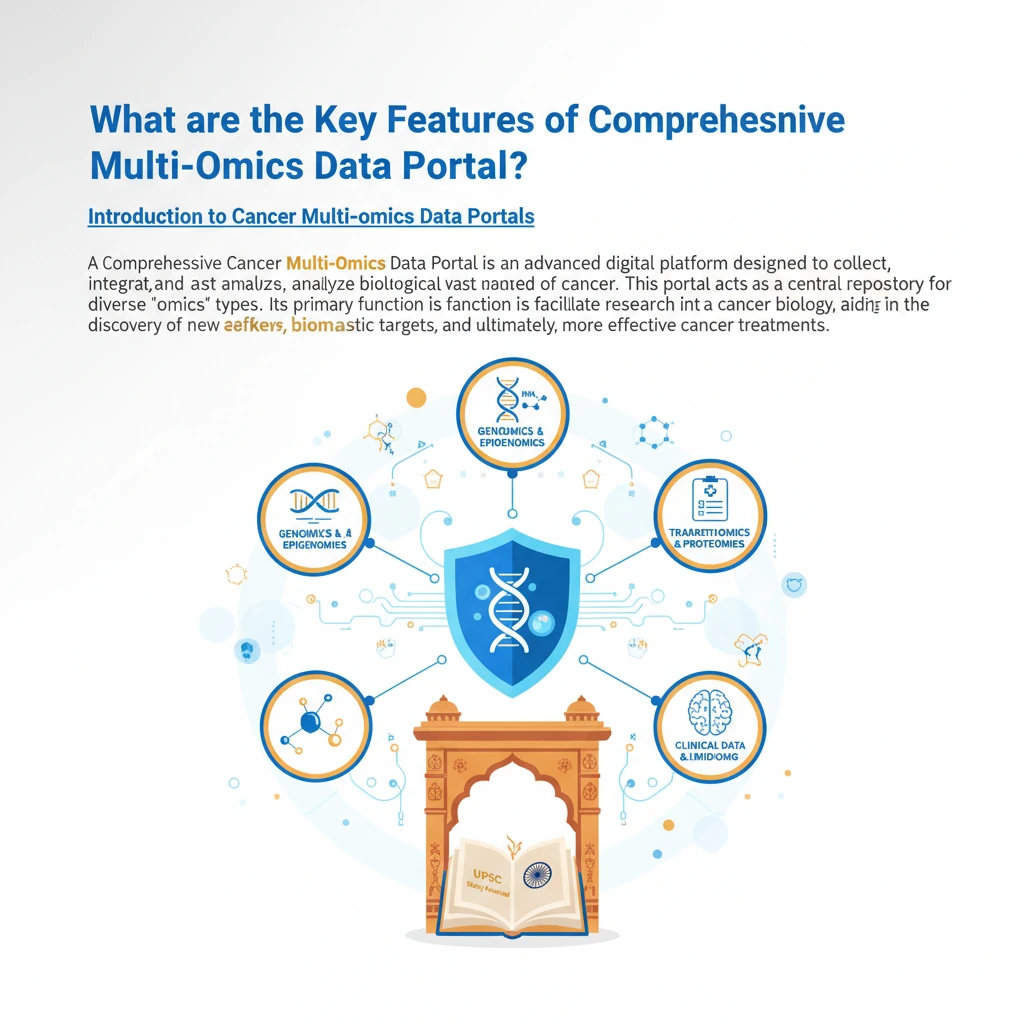
What are the Key Features of Comprehensive Cancer Multi-omics Data Portal?
Medium⏱️ 7 min read
social issues
📖 Introduction
<h4>Introduction to Cancer Multi-omics Data Portals</h4><p>A <strong>Comprehensive Cancer Multi-omics Data Portal</strong> is an advanced digital platform designed to collect, integrate, and analyze vast amounts of biological data related to cancer. This portal acts as a central repository for diverse 'omics' data types.</p><p>Its primary function is to facilitate research into cancer biology, aiding in the discovery of new <strong>biomarkers</strong>, therapeutic targets, and ultimately, more effective treatment strategies.</p><h4>Understanding the Multi-omics Approach</h4><p>The term <strong>'Multi-omics'</strong> refers to the integration of data from multiple 'omics' fields. These include <strong>genomics</strong> (DNA), <strong>transcriptomics</strong> (RNA), <strong>proteomics</strong> (proteins), and <strong>metabolomics</strong> (metabolites).</p><p>By combining these layers of biological information, researchers gain a holistic view of cancer, moving beyond single-gene analyses to understand complex molecular interactions within tumors.</p><div class='info-box'><p><strong>Key Omics Data Types:</strong><ul><li><strong>Genomics:</strong> Study of an organism's entire <strong>DNA sequence</strong>.</li><li><strong>Transcriptomics:</strong> Study of <strong>RNA molecules</strong>, reflecting gene expression.</li><li><strong>Proteomics:</strong> Large-scale study of <strong>proteins</strong>, their structures, and functions.</li><li><strong>Metabolomics:</strong> Study of <strong>metabolites</strong>, the end products of cellular processes.</li></ul></p></div><h4>Objective: Indian-Specific Cancer Datasets</h4><p>A crucial feature of such a portal, particularly in the Indian context, is the creation of <strong>Indian-specific cancer datasets</strong>. This objective addresses the significant genetic and environmental diversity within the Indian population.</p><p>These datasets are vital because cancer patients in India often exhibit <strong>molecular-level differences</strong> compared to Western populations. These differences can impact disease progression, drug response, and treatment efficacy.</p><div class='key-point-box'><p><strong>Why Indian-Specific Data?</strong></p><p>Existing global cancer databases are predominantly based on <strong>Western populations</strong>. Relying solely on this data can lead to suboptimal or ineffective treatments for Indian patients due to inherent <strong>genetic and lifestyle variations</strong>.</p></div><h4>Enabling Personalised Cancer Treatment Protocols</h4><p>The ultimate goal of accumulating and analyzing this data is to enable <strong>personalised cancer treatment protocols</strong>. This approach, also known as <strong>precision oncology</strong>, tailors medical decisions, treatments, and practices to the individual patient.</p><p>By understanding the unique molecular profile of an individual's tumor, clinicians can select therapies that are most likely to be effective, while minimizing adverse side effects. This represents a paradigm shift from 'one-size-fits-all' medicine.</p><div class='exam-tip-box'><p><strong>UPSC Relevance:</strong> The concept of <strong>precision medicine</strong> and <strong>personalized healthcare</strong> is a recurring theme in <strong>GS Paper II (Health)</strong> and <strong>GS Paper III (Science & Technology)</strong>. Understanding data portals like this highlights India's commitment to advanced healthcare solutions.</p></div>
💡 Key Takeaways
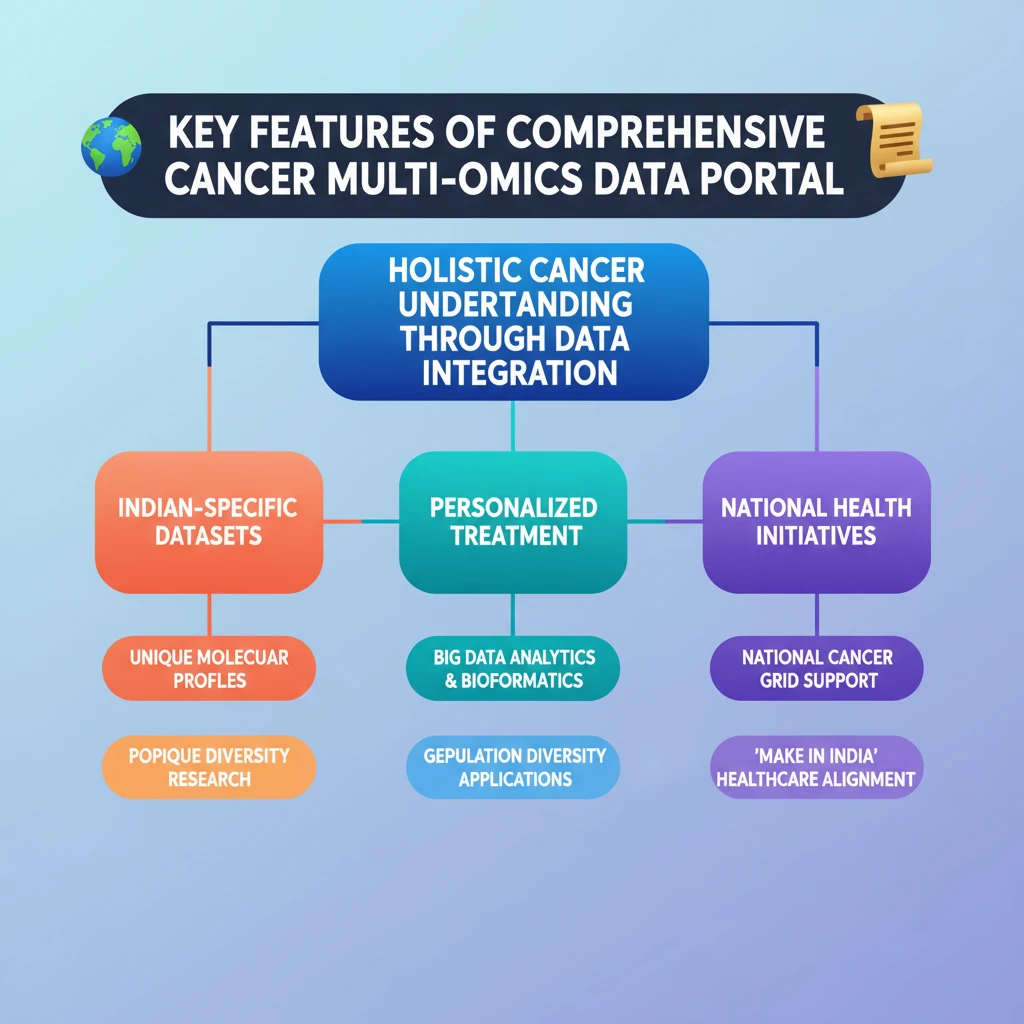
- •Comprehensive Cancer Multi-omics Data Portals integrate diverse biological data for holistic cancer understanding.
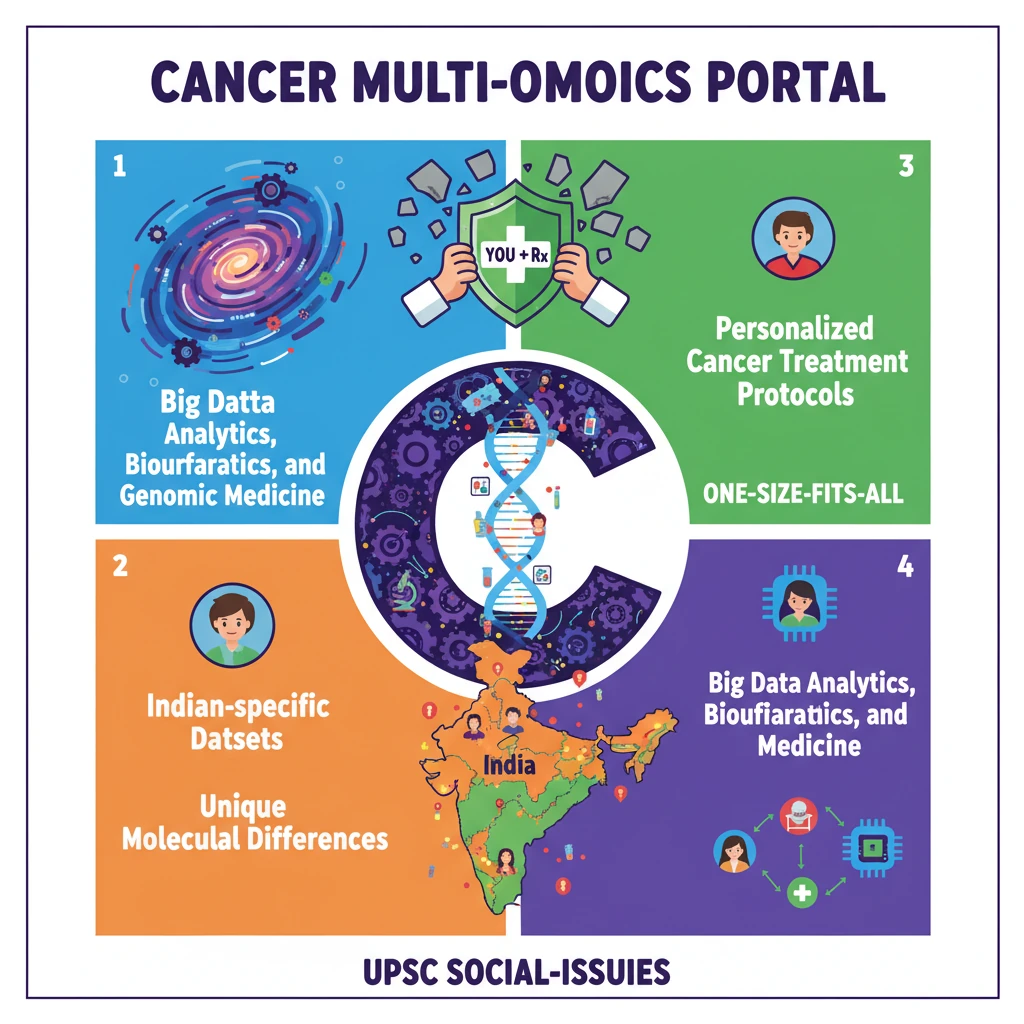
- •Indian-specific datasets are crucial due to unique molecular differences in cancer patients across the Indian population.
- •The primary goal is to enable personalized cancer treatment protocols, moving beyond 'one-size-fits-all' medicine.
- •These portals leverage principles of big data analytics, bioinformatics, and genomic medicine.
- •They support national health initiatives like the National Cancer Grid and align with the 'Make in India' in healthcare.
🧠 Memory Techniques
95% Verified Content
📚 Reference Sources
•National Cancer Institute (NCI) resources on Multi-omics
•Indian Council of Medical Research (ICMR) publications on cancer research
•Reports on Ayushman Bharat Digital Mission (ABDM)