Porja, Bagata, and Konda Dora Tribes - Social Issues | UPSC Learning
Topics
0 topics • 0 completed
🔍
No topics match your search
Porja, Bagata, and Konda Dora Tribes
Medium⏱️ 10 min read
social issues
📖 Introduction
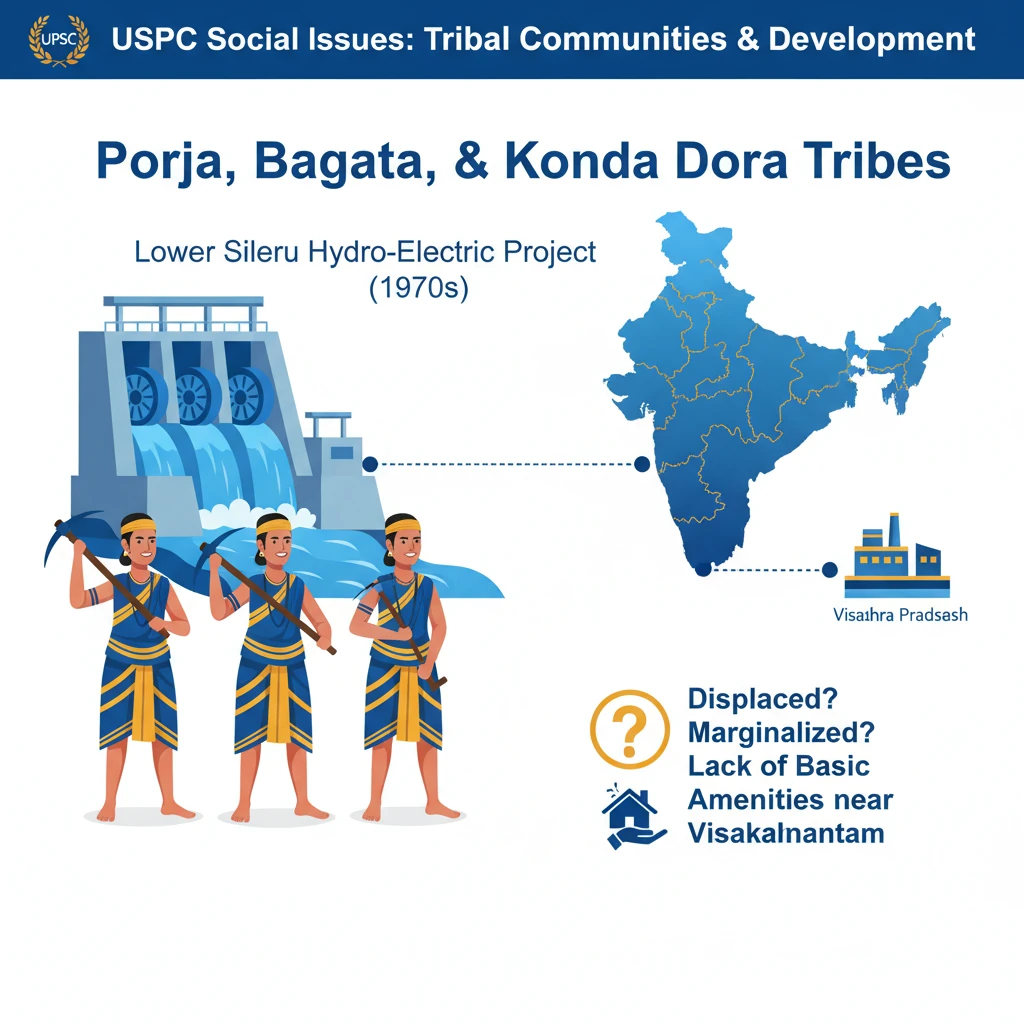
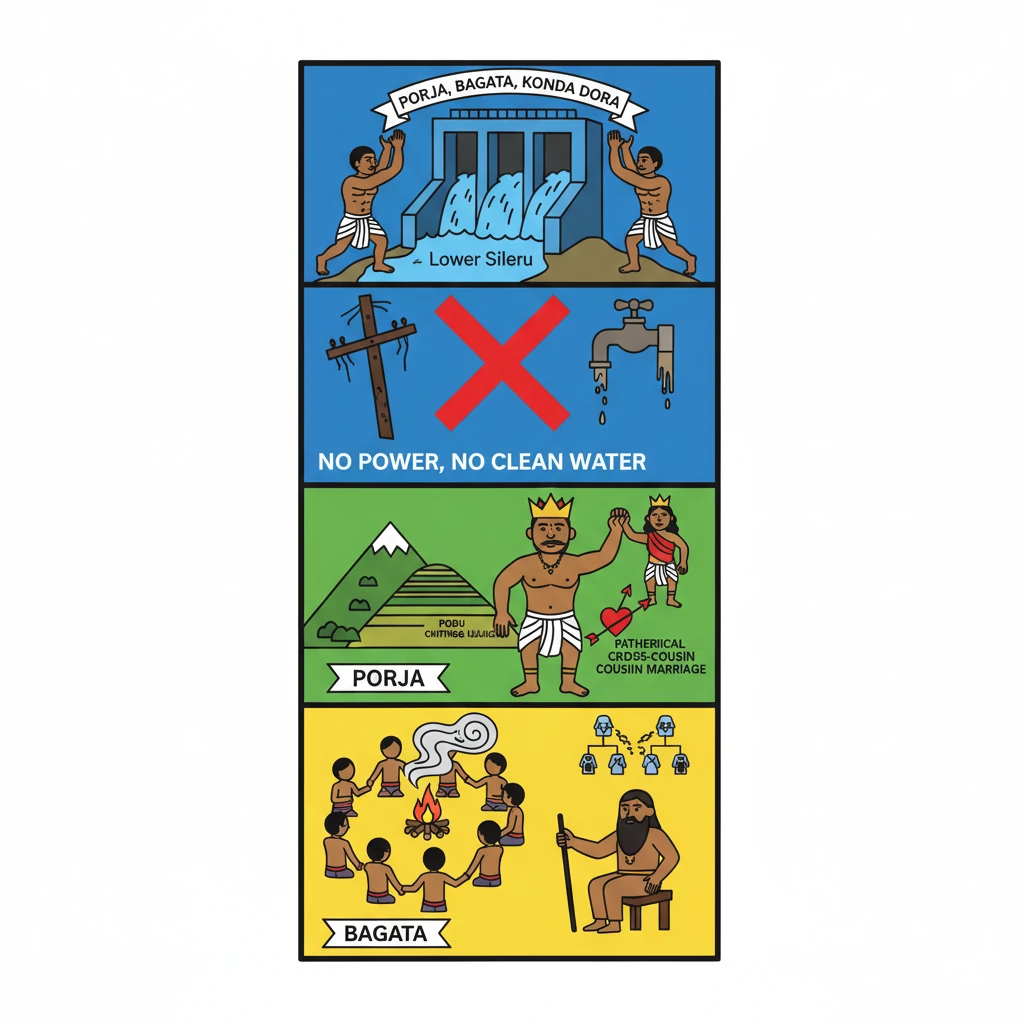
<h4>Context and Introduction</h4><p>The situation of <strong>tribal communities</strong> in <strong>Andhra Pradesh</strong> has recently drawn significant attention. These communities, including the <strong>Porja</strong>, <strong>Bagata</strong>, and <strong>Konda Dora tribes</strong>, played a vital role in the construction of the <strong>Lower Sileru Hydro-Electric Project (LSP)</strong> in the <strong>1970s</strong>.</p><p>Despite their crucial contributions, villages near <strong>Visakhapatnam</strong>, where these tribes reside, continue to suffer from severe shortages of basic amenities like <strong>electricity</strong> and <strong>clean water</strong>.</p><div class='exam-tip-box'><p><strong>UPSC Relevance:</strong> This scenario highlights issues of <strong>tribal welfare</strong>, <strong>displacement</strong>, and the <strong>impact of development projects</strong> on indigenous populations, crucial for <strong>GS-I (Indian Society)</strong> and <strong>GS-II (Social Justice)</strong>.</p></div><h4>The Porja Tribe</h4><p>The <strong>Porja tribe</strong>, with sub-groups such as <strong>Bondo Porja</strong>, <strong>Khondi Porja</strong>, and <strong>Parangi Porja</strong>, primarily resides in the <strong>Visakhapatnam area</strong> of <strong>Andhra Pradesh</strong>.</p><div class='info-box'><p><strong>Population:</strong> Approximately <strong>16,479</strong> (as per <strong>Census, 1991</strong>).</p><p><strong>Origin:</strong> They migrated from <strong>Odisha</strong> around <strong>300 years ago</strong> in search of cultivable land.</p></div><p>Historically, the <strong>Porjas</strong> were employed as <strong>palanquin bearers</strong> and for other menial tasks. The term ‘<strong>Porja</strong>’ is derived from Oriya words meaning “<strong>son of a king</strong>,” reflecting their historical employment by the <strong>Jeypore rulers</strong>.</p><p>They inhabit <strong>hilly terrains</strong> and practice <strong>shifting cultivation</strong>, which is locally known as <strong>Podu</strong>.</p><h4>Porja Social Structure and Customs</h4><p>The <strong>Porjas</strong> follow a <strong>patriarchal system</strong> with <strong>patrilineal descent</strong>. Property inheritance and succession to hereditary offices adhere to this system, with the <strong>eldest son</strong> receiving an extra share.</p><ul><li><strong>Marriage Practices:</strong> They practice <strong>cross-cousin marriages</strong>.</li><li><strong>Bride Price:</strong> A formal <strong>bride price system</strong> is in place.</li><li><strong>Pre/Post-Marital Relations:</strong> Acceptance of pre and post-marital relations.</li><li><strong>Tattooing:</strong> An integral part of their <strong>socio-religious culture</strong>.</li></ul><p>The <strong>Porjas</strong> have <strong>endogamous sub-groups</strong>, each possessing unique customs, languages, and food habits. Most <strong>Porjas</strong> in Visakhapatnam belong to the <strong>Barang Jati group</strong>.</p><h4>The Bagata Tribe</h4><p>The <strong>Bagata</strong> are an <strong>aboriginal tribe</strong> predominantly found in the states of <strong>Andhra Pradesh</strong> and <strong>Odisha</strong>. They are also known by various names such as <strong>Bagatha</strong>, <strong>Bagat</strong>, <strong>Bagodi</strong>, <strong>Bogad</strong>, or <strong>Bhakta</strong>.</p><h4>Bagata Social and Cultural Practices</h4><p>Their marriage patterns strictly adhere to <strong>lineage exogamy</strong>, meaning marriage outside one’s own clan or kinship group. Marriages can be arranged through <strong>negotiation</strong> or <strong>elopement</strong>.</p><div class='info-box'><p><strong>Social Norms:</strong> <strong>Divorce</strong> and <strong>remarriage</strong> are permitted within the community.</p><p><strong>Dietary Shift:</strong> Their traditional staple food of <strong>millets</strong> has largely been replaced by <strong>rice</strong>.</p></div><p>The <strong>Bagathas</strong> hold strong beliefs in <strong>supernaturalism</strong>, <strong>magic</strong>, <strong>witchcraft</strong>, the <strong>evil eye</strong>, <strong>sorcery</strong>, <strong>luck</strong>, <strong>ghosts</strong>, and <strong>shapeless phantoms</strong>. They also practice <strong>nature worship</strong>, often in the form of <strong>totems</strong> and <strong>clans</strong>.</p><p>Traditional governance involves a <strong>tribal headman</strong> who resolves intra-family and inter-tribal disputes. A <strong>village headman</strong> addresses broader inter-tribal issues and violations of traditional customs.</p><h4>The Konda Dora Tribe</h4><p>The <strong>Konda Dora</strong> are a <strong>Scheduled Tribe</strong> primarily inhabiting the <strong>Kamberu range</strong> of the <strong>Eastern Ghats</strong>, spanning across <strong>south Odisha</strong> and <strong>Andhra Pradesh</strong>.</p><div class='info-box'><p><strong>Name Origin:</strong> The name ‘<strong>Kondadora</strong>’ translates to ‘<strong>Lords of the Hill</strong>’, derived from ‘<strong>Konda</strong>’ (hill) and ‘<strong>Dora</strong>’ (lord).</p><p><strong>Alternative Names:</strong> They are also known as ‘<strong>Konda Raju</strong>’, ‘<strong>Oja</strong>’, ‘<strong>Pandava Raju</strong>,’ and ‘<strong>Pandava Dora</strong>.’</p><p><strong>Mythological Ancestry:</strong> They consider themselves descendants of the mythological <strong>Pandavas</strong>.</p></div><p>Their original language, <strong>Kubi/Konda</strong>, has largely been supplanted by <strong>Telugu</strong>, often mixed with <strong>Odia</strong>.</p><h4>Konda Dora Settlements and Social Structure</h4><p><strong>Konda Dora settlements</strong> are typically <strong>homogeneous</strong>. In multi-ethnic villages, they reside in separate wards to maintain social distance and preserve their ethnic identity.</p><ul><li><strong>Marriage Practices:</strong> While <strong>polygyny</strong> and <strong>child marriages</strong> are not prohibited, <strong>adult marriage</strong> and <strong>monogamy</strong> are the commonly practiced norms.</li><li><strong>Cousin Marriages:</strong> <strong>Cross-cousin marriages</strong> are preferred, whereas <strong>parallel-cousin marriages</strong> are strictly prohibited.</li></ul><p>They operate a traditional <strong>village council</strong> known as the <strong>Kulam Panchayat</strong>, headed by a <strong>Kula Peda</strong>, who is assisted by a <strong>Pillalipandam</strong>. An <strong>inter-village community council</strong> also exists, with both councils managing customary affairs within their respective jurisdictions.</p>
💡 Key Takeaways
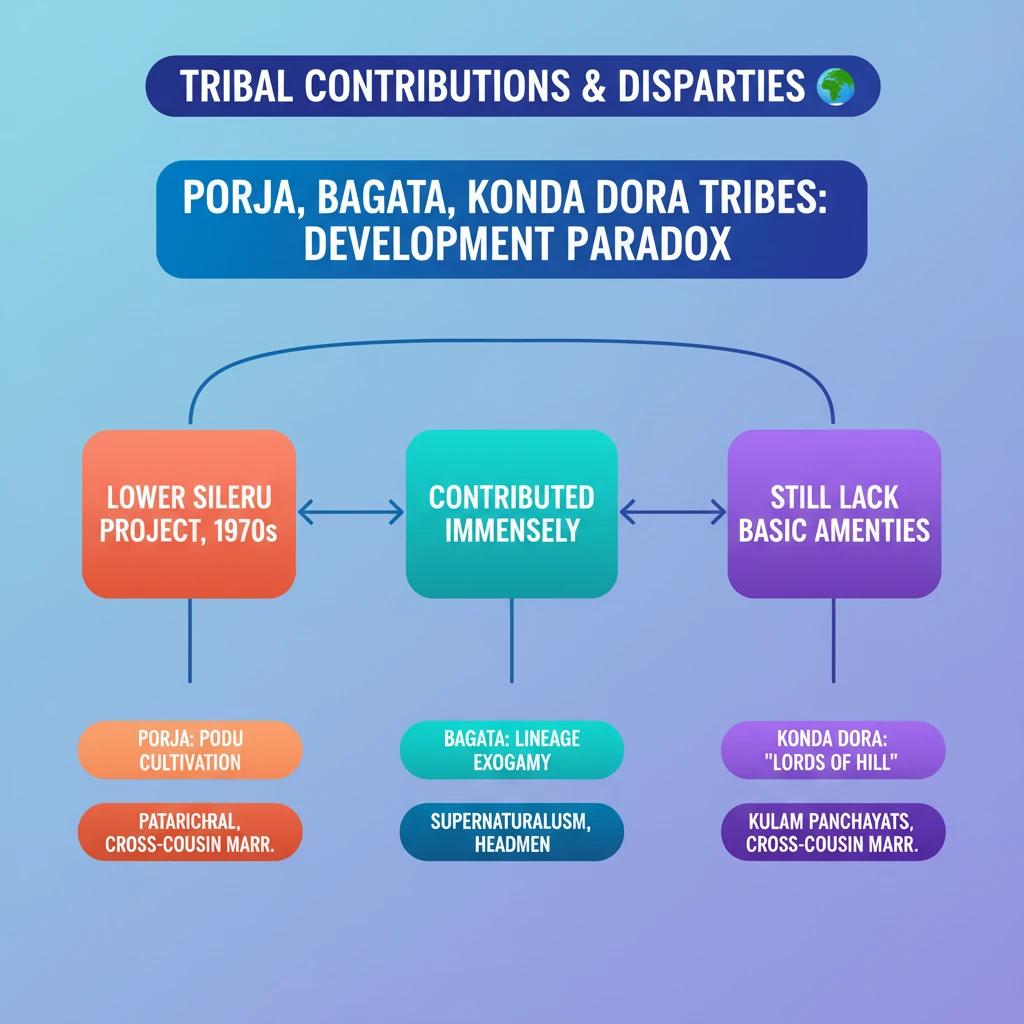
- •Porja, Bagata, and Konda Dora tribes contributed significantly to the Lower Sileru Hydro-Electric Project in the 1970s.
- •Despite contributions, these tribes in Visakhapatnam still lack basic electricity and clean water.
- •Porjas practice Podu (shifting cultivation) and have a patriarchal system with cross-cousin marriages.
- •Bagatas follow lineage exogamy, believe in supernaturalism, and have traditional headmen for dispute resolution.
- •Konda Doras, 'Lords of the Hill,' have traditional Kulam Panchayats and prefer cross-cousin marriages.
- •Their plight underscores the need for better tribal welfare, recognition, and equitable development.
🧠 Memory Techniques
95% Verified Content
📚 Reference Sources
•Census, 1991 (for Porja population data)