The State of Food Security and Nutrition in the World 2024 - Social Issues | UPSC Learning
Topics
0 topics • 0 completed
🔍
No topics match your search
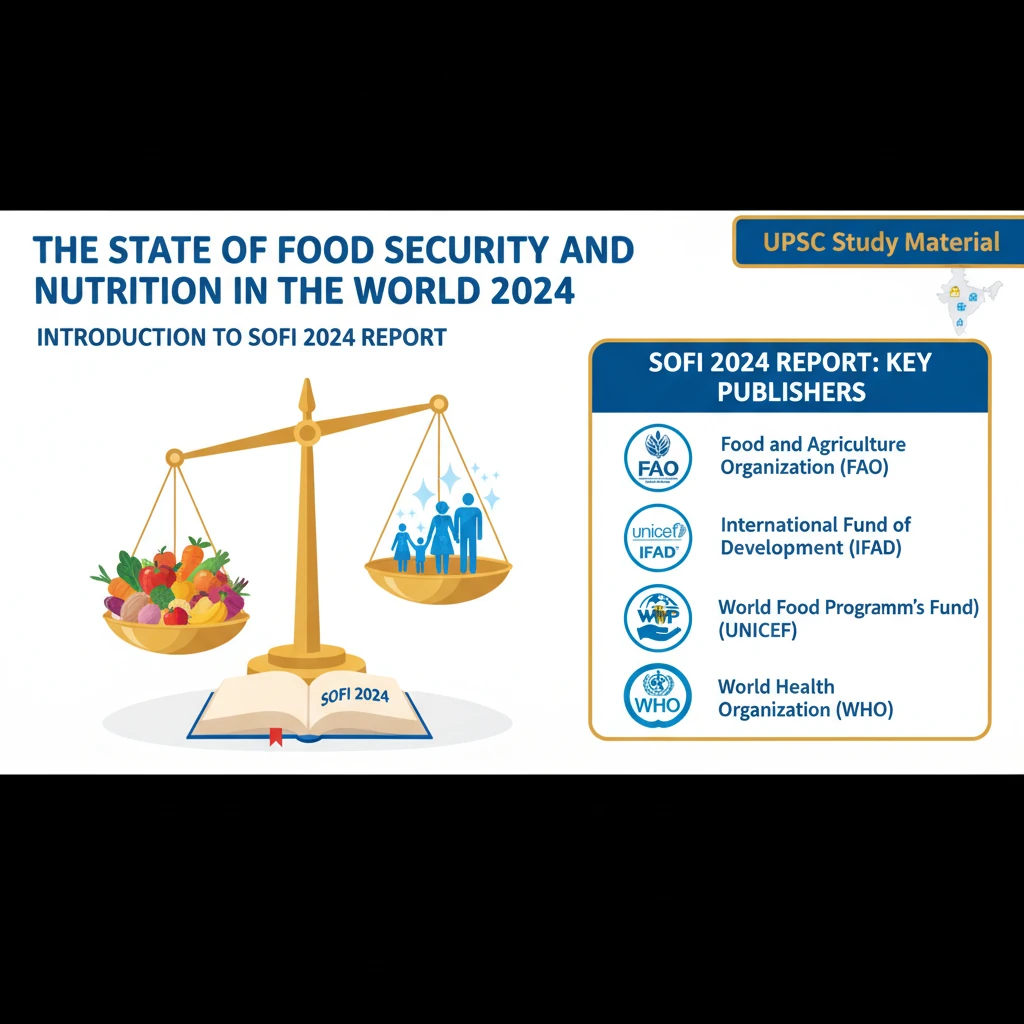
The State of Food Security and Nutrition in the World 2024
Medium⏱️ 8 min read
social issues
📖 Introduction
<h4>Introduction to SOFI 2024 Report</h4><p>The <strong>“State of Food Security and Nutrition in the World 2024”</strong> (SOFI 2024) report is a crucial annual publication. It provides a comprehensive analysis of the global status of <strong>food security</strong> and <strong>nutrition</strong>.</p><div class='info-box'><p>The <strong>SOFI 2024 report</strong> is jointly published by five leading international organizations:</p><ul><li><strong>Food and Agriculture Organization</strong> (FAO)</li><li><strong>International Fund for Agricultural Development</strong> (IFAD)</li><li><strong>United Nations Children's Fund</strong> (UNICEF)</li><li><strong>World Food Programme</strong> (WFP)</li><li><strong>World Health Organization</strong> (WHO)</li></ul></div><div class='key-point-box'><p>A central theme of the <strong>SOFI 2024 report</strong> is the urgent requirement for <strong>increased financing</strong>. This is essential to effectively combat <strong>hunger</strong>, <strong>food insecurity</strong>, and all forms of <strong>malnutrition</strong> globally.</p></div><h4>Key Findings Related to India</h4><p>The <strong>SOFI 2024 report</strong> highlights several critical aspects concerning <strong>India's food security and nutrition landscape</strong>. These findings underscore persistent challenges despite some areas of improvement.</p><div class='info-box'><p><strong>Undernourishment in India:</strong></p><ul><li>India is home to <strong>194.6 million undernourished individuals</strong>, which is the <strong>highest number globally</strong>.</li><li>Despite this, the number has decreased from <strong>240 million</strong> in the <strong>2004-06 period</strong>, indicating some progress.</li><li>Approximately <strong>13% of India's population</strong> suffers from <strong>chronic undernourishment</strong>, pointing to long-term food insecurity issues.</li></ul></div><p>The report also points out significant challenges in access to <strong>healthy diets</strong>. A large proportion of the Indian population struggles to afford nutritious food.</p><div class='info-box'><p><strong>Affordability of Healthy Diets:</strong></p><ul><li><strong>55.6% of Indians</strong>, translating to about <strong>790 million people</strong>, cannot afford a <strong>healthy diet</strong>.</li><li>This proportion shows a slight improvement of about <strong>3 percentage points</strong> compared to <strong>2022</strong> figures.</li></ul></div><div class='exam-tip-box'><p>India's performance in the <strong>Global Hunger Index (GHI) 2023</strong> is also relevant. The country ranked <strong>111th</strong>, which further emphasizes the significant issues in achieving comprehensive <strong>food security</strong> and <strong>nutrition goals</strong>.</p></div><p>Child and maternal health indicators remain a major concern. India faces high rates of various forms of <strong>malnutrition</strong> among vulnerable groups.</p><div class='info-box'><p><strong>Child and Maternal Malnutrition:</strong></p><ul><li>India has the <strong>highest prevalence of wasting (18.7%)</strong> in <strong>South Asia</strong> among children under five years.</li><li>The prevalence of <strong>stunting</strong> in children under five is also high at <strong>31.7%</strong>.</li><li><strong>27.4% of babies born in India</strong> have <strong>low birth weight</strong>, the <strong>highest globally</strong>, reflecting widespread <strong>maternal malnutrition</strong>.</li><li><strong>53% of women in India</strong> are <strong>anaemic</strong>, which is the <strong>highest in South Asia</strong>.</li><li>The report projects that the <strong>global prevalence of anaemia in women aged 15–49</strong> is expected to increase, significantly driven by trends in <strong>South Asia</strong>.</li></ul></div><p>While addressing undernutrition, the report also highlights the rising concern of <strong>obesity</strong> in India, indicating a <strong>double burden of malnutrition</strong>.</p><div class='info-box'><p><strong>Obesity Trends:</strong></p><ul><li>The prevalence of <strong>obesity in children under five years</strong> is <strong>2.8%</strong>.</li><li>In adults, the prevalence of <strong>obesity</strong> has risen to <strong>7.3%</strong>.</li><li>A significant portion of the <strong>Indian population</strong> is <strong>physically inactive</strong>, which is a contributing factor to the observed rise in <strong>obesity rates</strong>.</li></ul></div>
💡 Key Takeaways
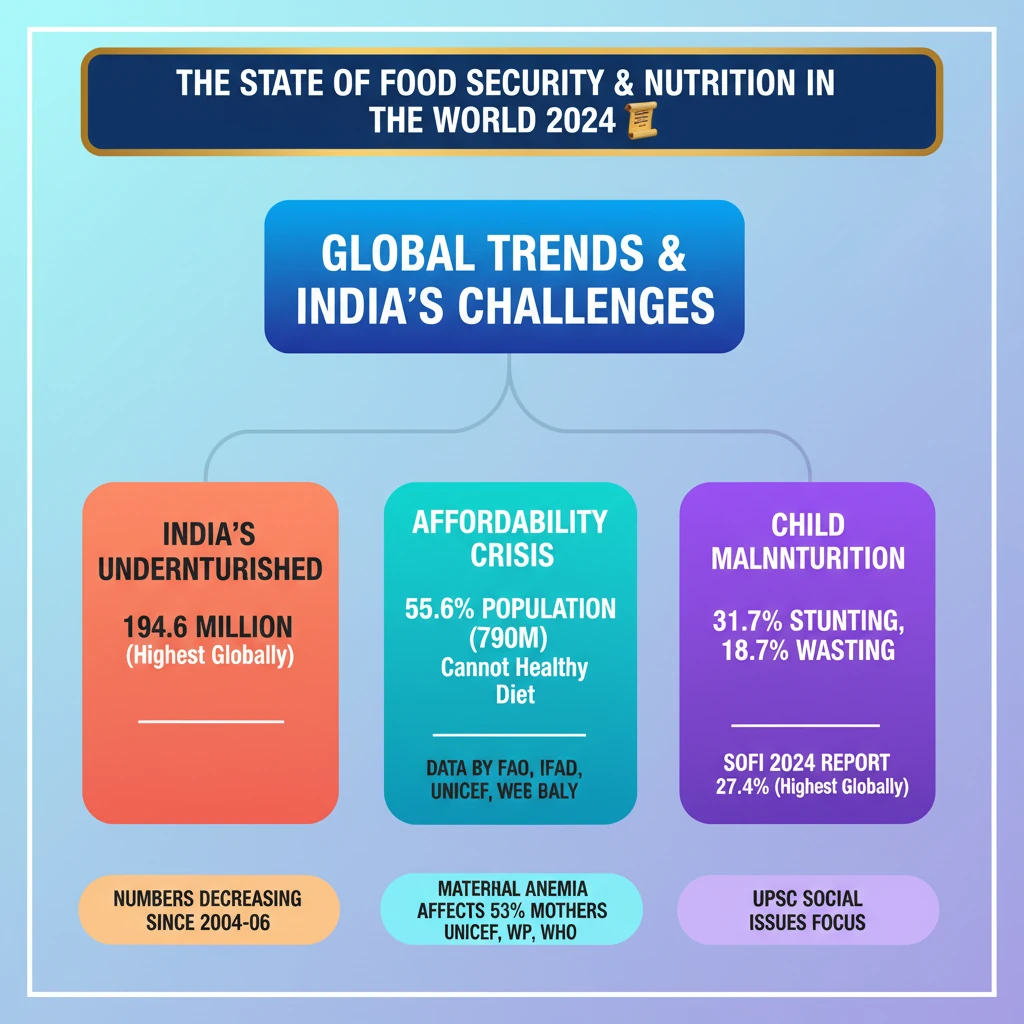
- •SOFI 2024 report by FAO, IFAD, UNICEF, WFP, WHO highlights global food security and nutrition trends.
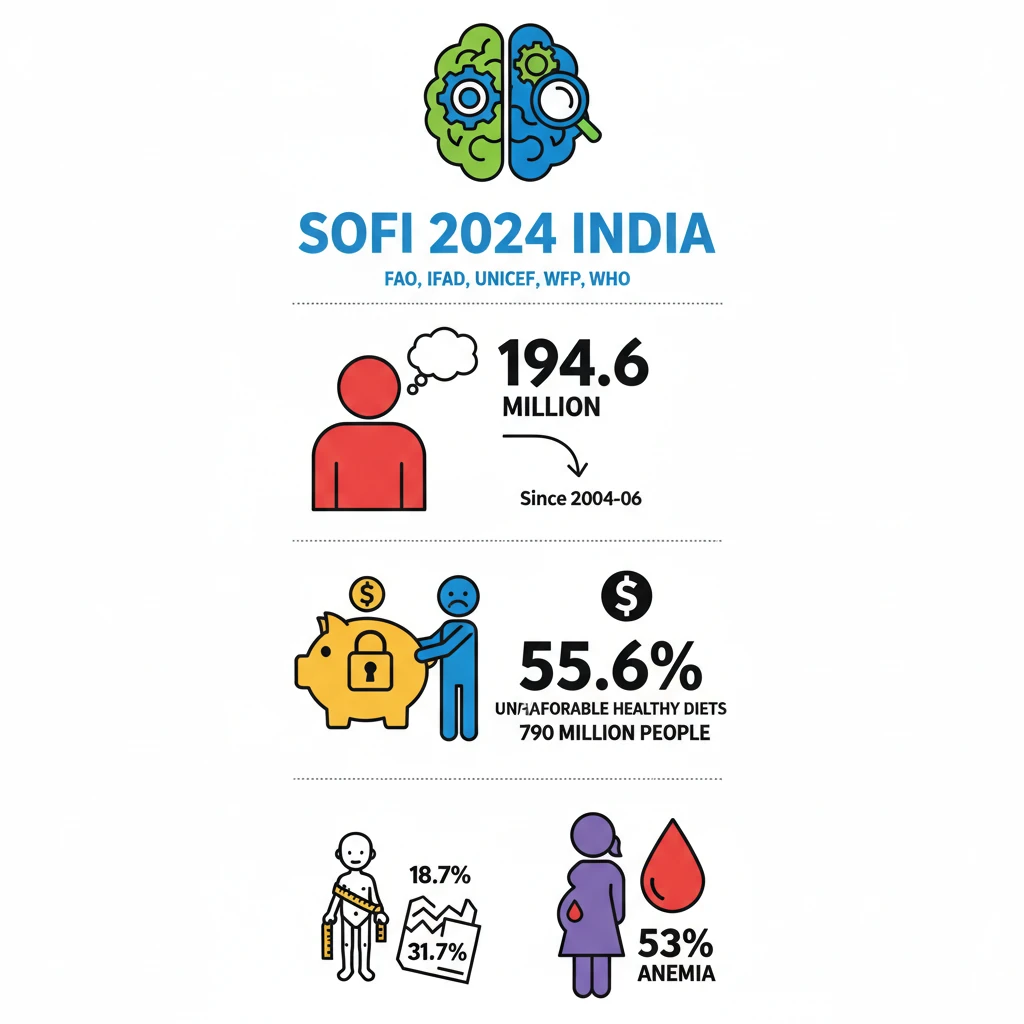
- •India has the highest number of undernourished individuals globally (194.6 million), though numbers have decreased since 2004-06.
- •Over half of India's population (55.6%) cannot afford a healthy diet, impacting 790 million people.
- •India faces a significant burden of child malnutrition (18.7% wasting, 31.7% stunting) and maternal anemia (53%).
- •Low birth weight (27.4%) is highest globally in India, indicating severe maternal malnutrition.
- •Rising obesity (7.3% adults) alongside undernutrition presents a 'double burden of malnutrition' challenge.
- •The report calls for increased financing to end hunger and malnutrition, emphasizing the urgency for SDG 2.
🧠 Memory Techniques
95% Verified Content
📚 Reference Sources
•Drishti IAS Summary of SOFI 2024 Report
•Government of India official documents (NFSA, POSHAN Abhiyaan)