What is International Day of Indigenous Peoples? - Social Issues | UPSC Learning
Topics
0 topics • 0 completed
🔍
No topics match your search
What is International Day of Indigenous Peoples?
Easy⏱️ 6 min read
social issues
📖 Introduction
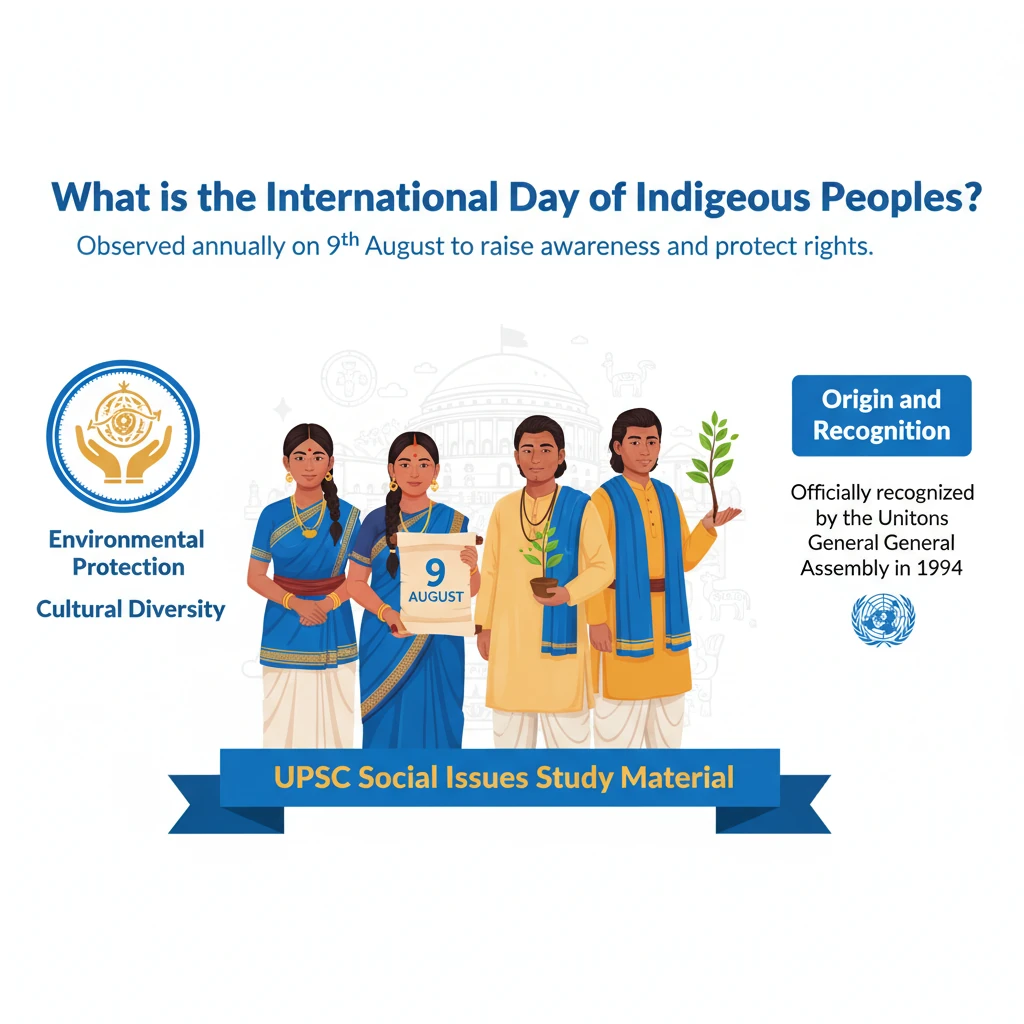
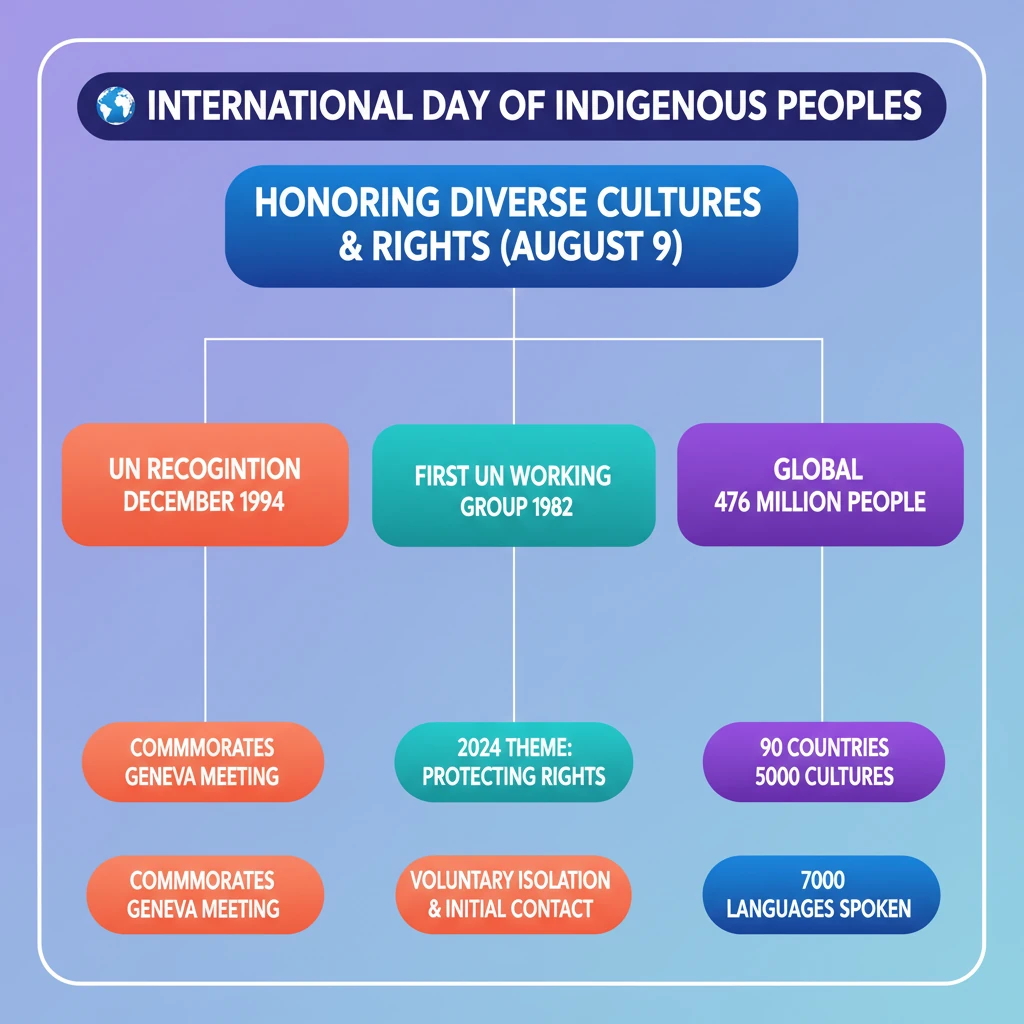
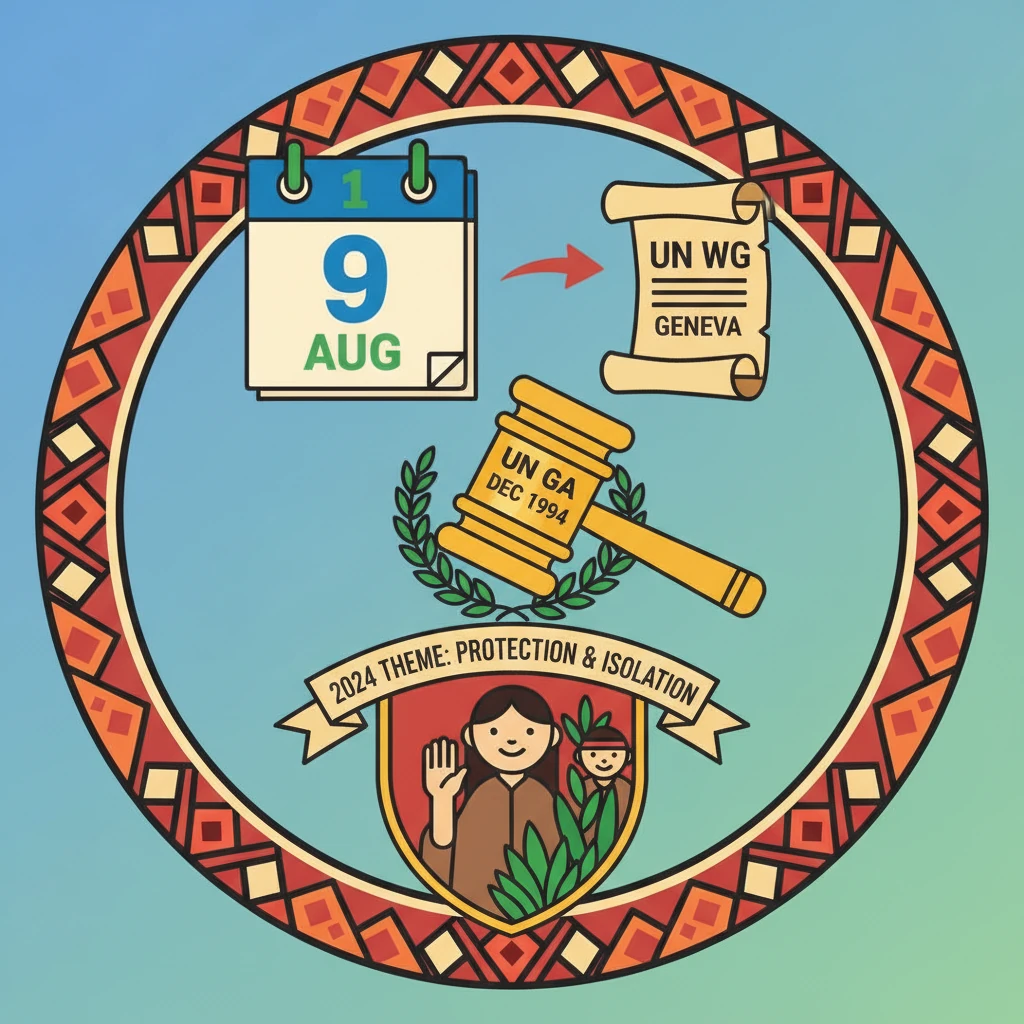
<h4>What is the International Day of Indigenous Peoples?</h4><p>The <strong>International Day of Indigenous Peoples</strong> is observed annually on <strong>9th August</strong>. This day serves to raise awareness and protect the rights of the world's indigenous population.</p><p>It highlights the contributions indigenous peoples make to global issues like environmental protection and cultural diversity.</p><h4>Origin and Recognition</h4><p>The observance of this day was officially recognized by the <strong>UN General Assembly</strong> in <strong>December 1994</strong>. This resolution formalized the global commitment to indigenous rights.</p><div class='info-box'><p>The date, <strong>9th August</strong>, commemorates the <strong>first meeting</strong> of the <strong>United Nations Working Group on Indigenous Populations</strong>. This significant meeting took place in <strong>Geneva</strong> in <strong>1982</strong>.</p></div><h4>Annual Theme</h4><p>Each year, the day is celebrated with a specific theme to focus global efforts. The <strong>Theme 2024</strong> is particularly important.</p><div class='key-point-box'><p>The <strong>Theme 2024</strong> is: “<strong>Protecting the Rights of Indigenous Peoples in Voluntary Isolation and Initial Contact</strong>”. This theme emphasizes a highly vulnerable segment of the indigenous population.</p></div><h4>Global Facts about Indigenous Peoples</h4><p>Indigenous Peoples constitute a significant, yet often marginalized, segment of the global population. Their unique cultures and ways of life are invaluable.</p><ul><li>Around <strong>200 groups</strong> of <strong>Indigenous Peoples</strong> currently live in <strong>voluntary isolation</strong>.</li><li>These groups are found in countries such as <strong>Bolivia</strong>, <strong>Brazil</strong>, <strong>Colombia</strong>, <strong>Ecuador</strong>, and <strong>India</strong>.</li></ul><div class='info-box'><p>There are an estimated <strong>476 million Indigenous Peoples</strong> globally, spread across <strong>90 countries</strong>. They represent a vast array of human diversity.</p></div><p>Despite their numbers, indigenous peoples face disproportionate challenges.</p><ul><li>They make up less than <strong>6%</strong> of the world’s population.</li><li>However, they account for at least <strong>15%</strong> of the poorest people globally.</li></ul><p>Their cultural and linguistic contributions are immense.</p><ul><li>They speak an overwhelming majority of the world’s estimated <strong>7,000 languages</strong>.</li><li>These groups represent approximately <strong>5,000 different cultures</strong>, showcasing incredible diversity.</p></ul>
💡 Key Takeaways
- •International Day of Indigenous Peoples is observed annually on August 9th.
- •It commemorates the first UN Working Group meeting on Indigenous Populations in Geneva (1982).
- •The UN General Assembly recognized this day in December 1994.
- •Theme 2024: “Protecting the Rights of Indigenous Peoples in Voluntary Isolation and Initial Contact”.
- •Globally, 476 million Indigenous Peoples live in 90 countries, representing 5,000 cultures and 7,000 languages.
- •They constitute <6% of world population but >15% of the poorest, highlighting significant disparities.
🧠 Memory Techniques
98% Verified Content
📚 Reference Sources
•United Nations official website (for International Day of Indigenous Peoples details and themes)
•UNDP/UNICEF reports on Indigenous Peoples (for global statistics)