Global Burden of Cancer: WHO - Social Issues | UPSC Learning
Topics
0 topics • 0 completed
🔍
No topics match your search
Global Burden of Cancer: WHO
Medium⏱️ 10 min read
social issues
📖 Introduction
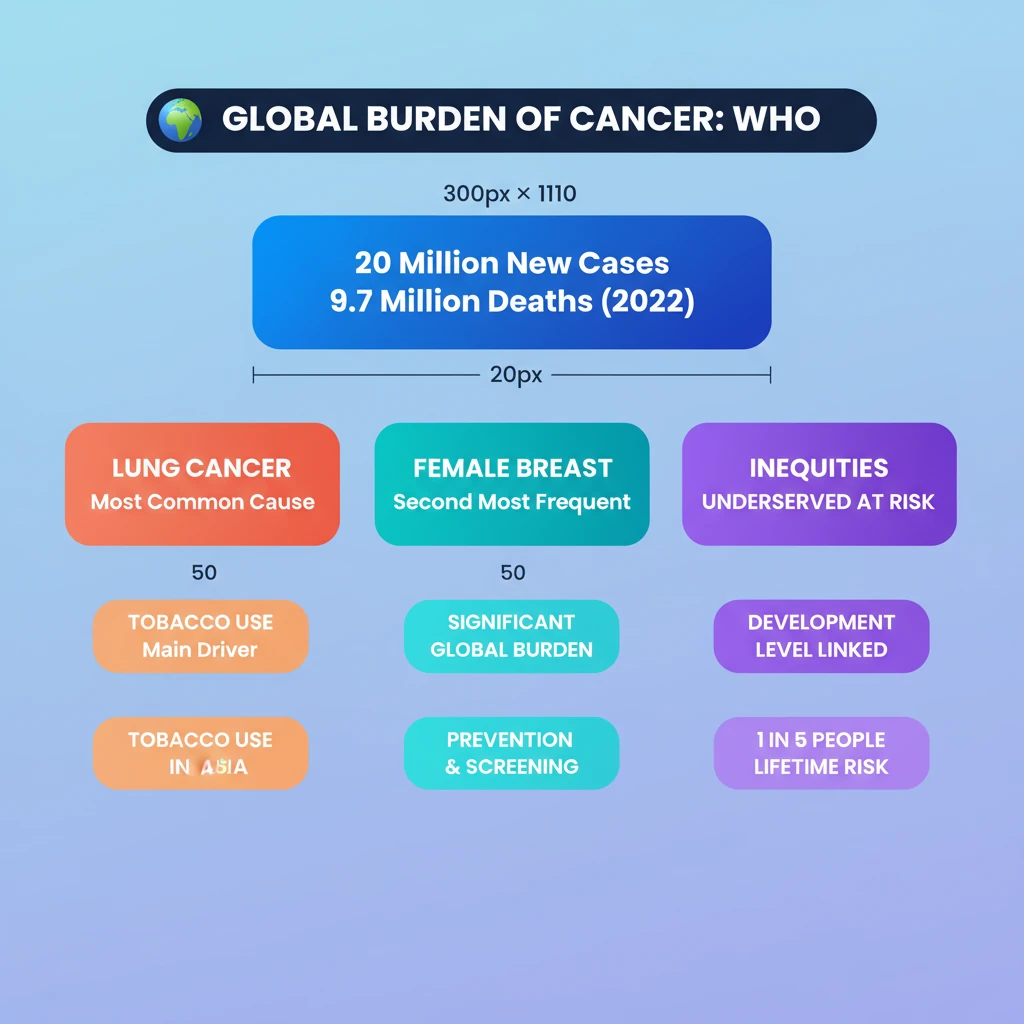
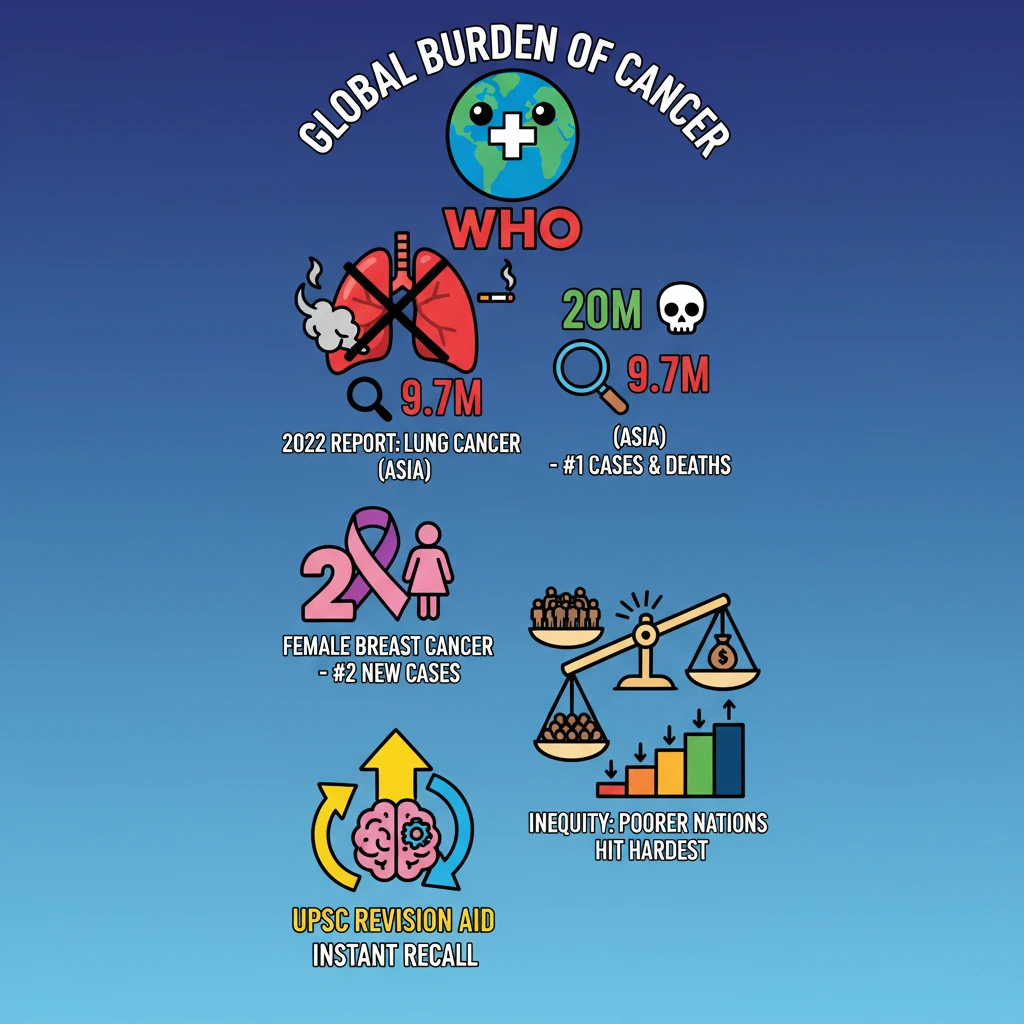
<h4>Introduction to the Global Burden of Cancer 2022 Estimates</h4><p>The <strong>World Health Organization (WHO)</strong>, through its specialized cancer agency, the <strong>International Agency for Research on Cancer (IARC)</strong>, released critical estimates on the <strong>Global Burden of Cancer</strong> in <strong>2022</strong>.</p><p>These findings were published just before <strong>World Cancer Day</strong>, observed annually on <strong>February 4th</strong>, underscoring the urgency of addressing this global health challenge.</p><div class='key-point-box'><p>The <strong>IARC estimates</strong> highlighted a significant and growing burden of <strong>cancer</strong> worldwide. They also emphasized the <strong>disproportionate impact</strong> on <strong>underserved populations</strong> and the pressing need to tackle <strong>cancer inequities</strong> globally.</p></div><h4>Key Highlights of the Global Burden in 2022</h4><p>The <strong>2022 estimates</strong> revealed alarming statistics regarding the prevalence and mortality of cancer across the globe.</p><div class='info-box'><ul><li>Approximately <strong>20 million new cancer cases</strong> were recorded worldwide.</li><li>A staggering <strong>9.7 million deaths</strong> were attributed to cancer.</li><li>The number of individuals alive within <strong>5 years</strong> of a cancer diagnosis stood at <strong>53.5 million</strong>.</li><li>Globally, about <strong>1 in 5 people</strong> are expected to develop cancer during their lifetime.</li></ul></div><h4>Most Common Cancer Types in 2022</h4><p>A concentrated number of cancer types accounted for the majority of new cases and deaths in 2022, indicating specific areas of concern for public health interventions.</p><div class='info-box'><p><strong>Ten types of cancer</strong> collectively comprised approximately <strong>two-thirds</strong> of both new cases and deaths globally in <strong>2022</strong>.</p></div><p>The most frequently occurring cancers were:</p><ul><li><strong>Lung cancer</strong>: Most common, with <strong>2.5 million new cases</strong> (<strong>12.4%</strong> of total).</li><li><strong>Female breast cancer</strong>: Second, with <strong>2.3 million cases</strong> (<strong>11.6%</strong>).</li><li>Followed by <strong>colorectal cancer</strong>, <strong>prostate cancer</strong>, and <strong>stomach cancer</strong>.</li></ul><h4>Leading Causes of Cancer Death in 2022</h4><p>Understanding the primary causes of cancer-related mortality is crucial for developing targeted prevention and treatment strategies.</p><ul><li><strong>Lung cancer</strong>: Leading cause of death, with <strong>1.8 million deaths</strong> (<strong>18.7%</strong> of total cancer deaths).</li><li><strong>Colorectal cancer</strong>: Second, with <strong>900,000 deaths</strong> (<strong>9.3%</strong>).</li><li>Followed by <strong>liver cancer</strong>, <strong>breast cancer</strong>, and <strong>stomach cancer</strong>.</li></ul><div class='key-point-box'><p>The re-emergence of <strong>lung cancer</strong> as the most common cancer and leading cause of death is largely linked to persistent <strong>tobacco use</strong>, particularly prevalent in <strong>Asia</strong>.</p></div><h4>Addressing Cancer Inequities</h4><p>The <strong>IARC report</strong> highlighted significant disparities in the <strong>cancer burden</strong>, which are closely correlated with levels of <strong>human development</strong> across different regions.</p><p>These striking inequities mean that certain populations, especially those in underserved areas, bear a disproportionately higher burden of cancer.</p><div class='exam-tip-box'><p><strong>UPSC Insight:</strong> The concept of <strong>cancer inequities</strong> is vital for GS-II (Social Justice) and GS-III (Health). Be prepared to discuss how socio-economic factors, access to healthcare, and lifestyle differences contribute to these disparities, especially concerning diseases like <strong>breast cancer</strong> which showed particular inequities.</p></div>
💡 Key Takeaways
- •The 2022 WHO IARC report estimated 20 million new cancer cases and 9.7 million deaths globally.
- •Lung cancer was the most common cancer and the leading cause of cancer death, largely due to persistent tobacco use, especially in Asia.
- •Female breast cancer ranked second in new cases, highlighting its significant global burden.
- •Striking inequities in cancer burden exist, disproportionately affecting underserved populations and correlating with human development levels.
- •About 1 in 5 people develop cancer in their lifetime, underscoring its widespread impact.
- •The report calls for urgent action to address cancer inequities and strengthen global cancer control strategies.
🧠 Memory Techniques
98% Verified Content
📚 Reference Sources
•Drishti IAS Summary (provided source material)