How is India Fighting Against Tobacco? - Social Issues | UPSC Learning
Topics
0 topics • 0 completed
🔍
No topics match your search
How is India Fighting Against Tobacco?
Medium⏱️ 8 min read
social issues
📖 Introduction
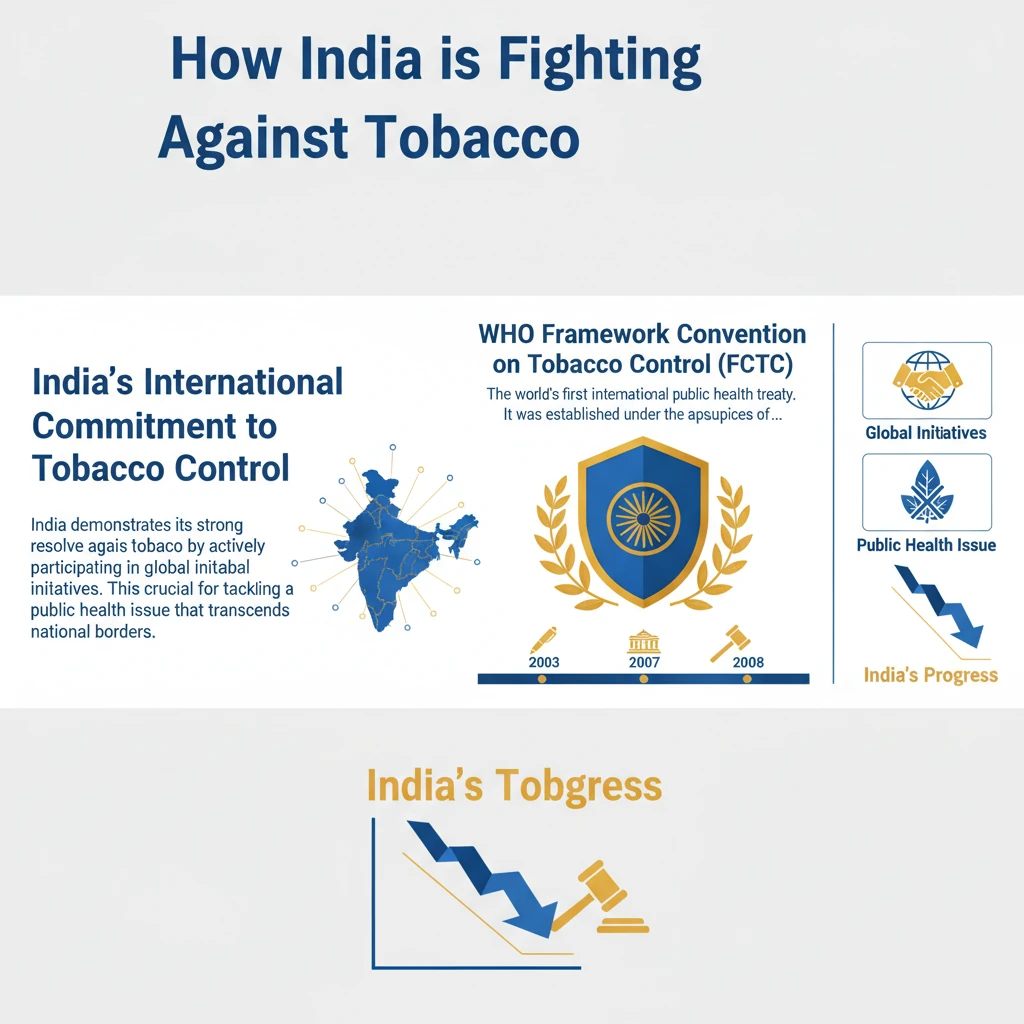
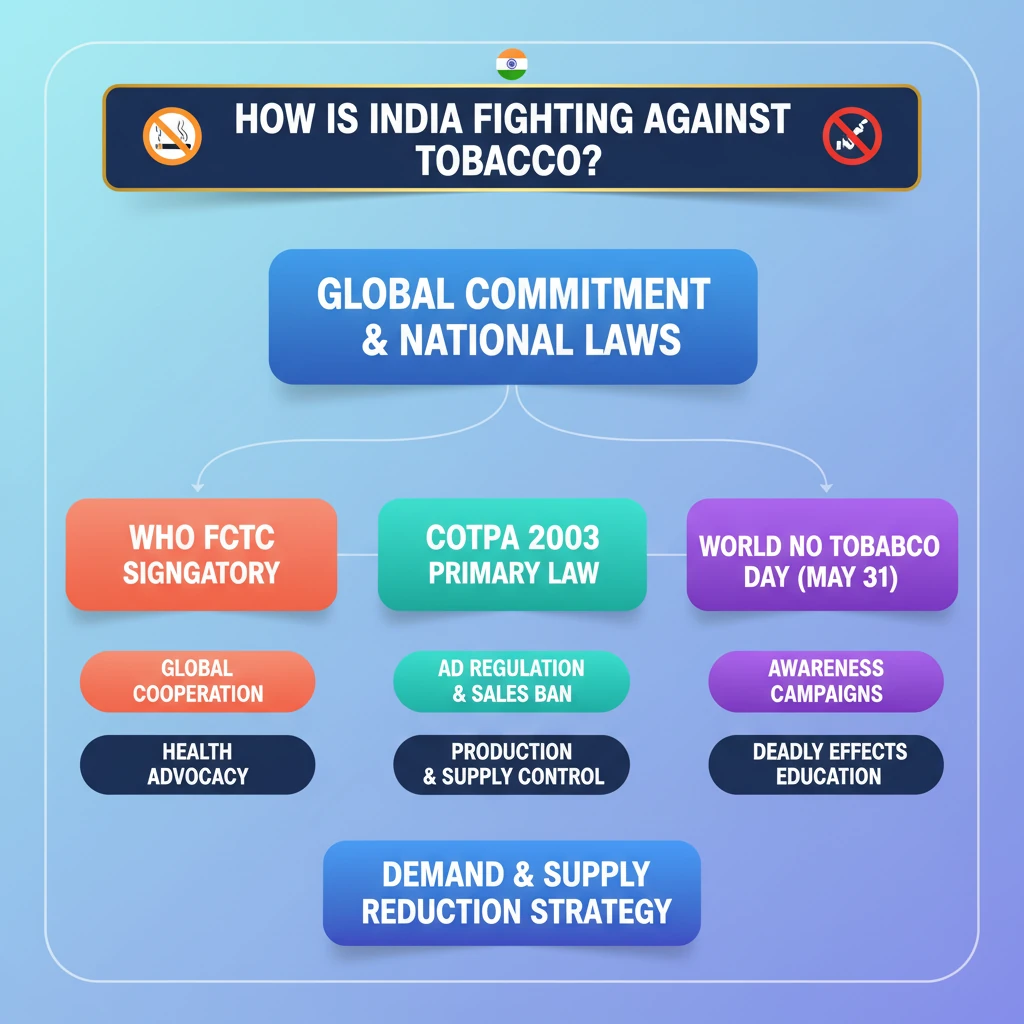
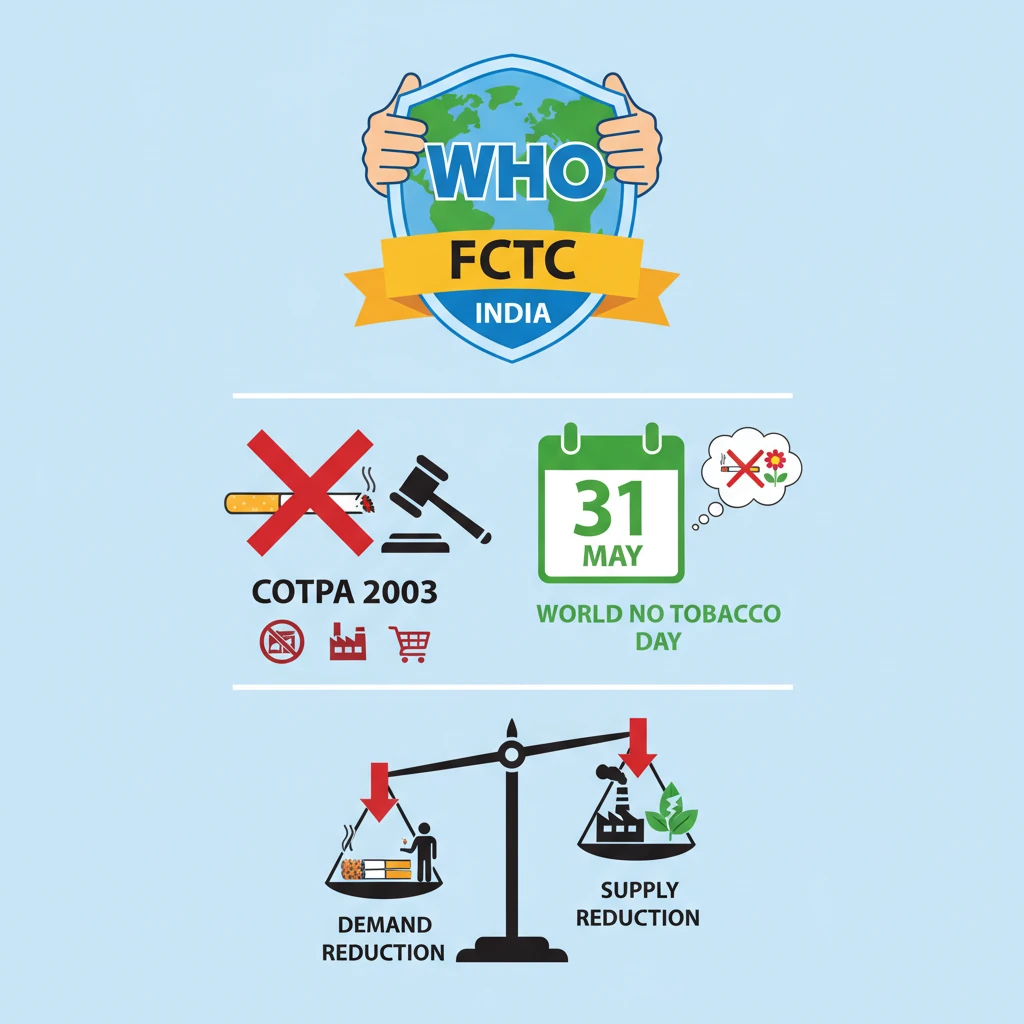
<h4>India's International Commitment to Tobacco Control</h4><p>India demonstrates its strong resolve against tobacco by actively participating in global initiatives. This commitment is crucial for tackling a public health issue that transcends national borders.</p><h4>WHO Framework Convention on Tobacco Control (FCTC)</h4><p>The <strong>WHO Framework Convention on Tobacco Control (FCTC)</strong> is the world's first international public health treaty. It was established under the auspices of the <strong>World Health Organization (WHO)</strong>.</p><div class='info-box'><p>India is one of the <strong>182 signatories</strong> to the <strong>WHO FCTC</strong>. This signifies its dedication to global tobacco control efforts and international cooperation.</p></div><p>The primary goal of the <strong>FCTC</strong> is to reduce tobacco usage worldwide. It achieves this by guiding countries in developing effective demand and supply reduction strategies.</p><p>It also assists nations in formulating robust national tobacco control policies tailored to their specific contexts.</p><div class='key-point-box'><p>The <strong>FCTC</strong> provides a comprehensive framework for tobacco control, covering aspects from advertising bans to taxation and protection from passive smoking.</p></div><h4>World No Tobacco Day</h4><p>Every year, <strong>May 31st</strong> is observed globally as <strong>'World No Tobacco Day'</strong>. This day serves as a critical platform to raise awareness about the severe health consequences of tobacco consumption.</p><div class='info-box'><p>The observance of <strong>World No Tobacco Day</strong> highlights the deadly effects of tobacco, including various cancers, respiratory diseases, and cardiovascular issues.</p></div><p>It encourages individuals to quit tobacco and advocates for effective policies to reduce tobacco use.</p><h4>National Legislation: The Cigarettes and Other Tobacco Products Act (COTPA)</h4><p>Domestically, India has robust legal frameworks to combat tobacco. The most significant legislation is the <strong>Cigarettes and Other Tobacco Products (Prohibition of Advertisement and Regulation of Trade and Commerce, Production, Supply and Distribution) Act, 2003</strong>.</p><div class='info-box'><p>This Act is commonly known as <strong>COTPA 2003</strong>. It is the principal comprehensive law governing tobacco control in India.</p></div><p><strong>COTPA 2003</strong> addresses various critical aspects of tobacco control. These include the prohibition of advertising, regulation of trade and commerce, and control over production, supply, and distribution of tobacco products.</p><div class='exam-tip-box'><p>Understanding <strong>COTPA 2003</strong> is vital for Mains answers related to public health and social issues. Be prepared to cite its key provisions.</p></div>
💡 Key Takeaways
- •India is a signatory to the WHO FCTC, demonstrating global commitment to tobacco control.
- •COTPA 2003 is India's primary domestic law regulating tobacco advertisement, trade, production, and distribution.
- •World No Tobacco Day (May 31st) is observed annually to raise awareness about tobacco's deadly effects.
- •India's strategy against tobacco involves both demand and supply reduction measures.
- •Effective enforcement of laws and continuous public awareness campaigns are crucial for successful tobacco control.
🧠 Memory Techniques
95% Verified Content
📚 Reference Sources
•World Health Organization (WHO) Framework Convention on Tobacco Control (FCTC) Official Website
•Ministry of Health & Family Welfare, Government of India Official Website