Tribal Research Institutes (TRIs) - Social Issues | UPSC Learning
Topics
0 topics • 0 completed
🔍
No topics match your search
Tribal Research Institutes (TRIs)
Medium⏱️ 8 min read
social issues
📖 Introduction
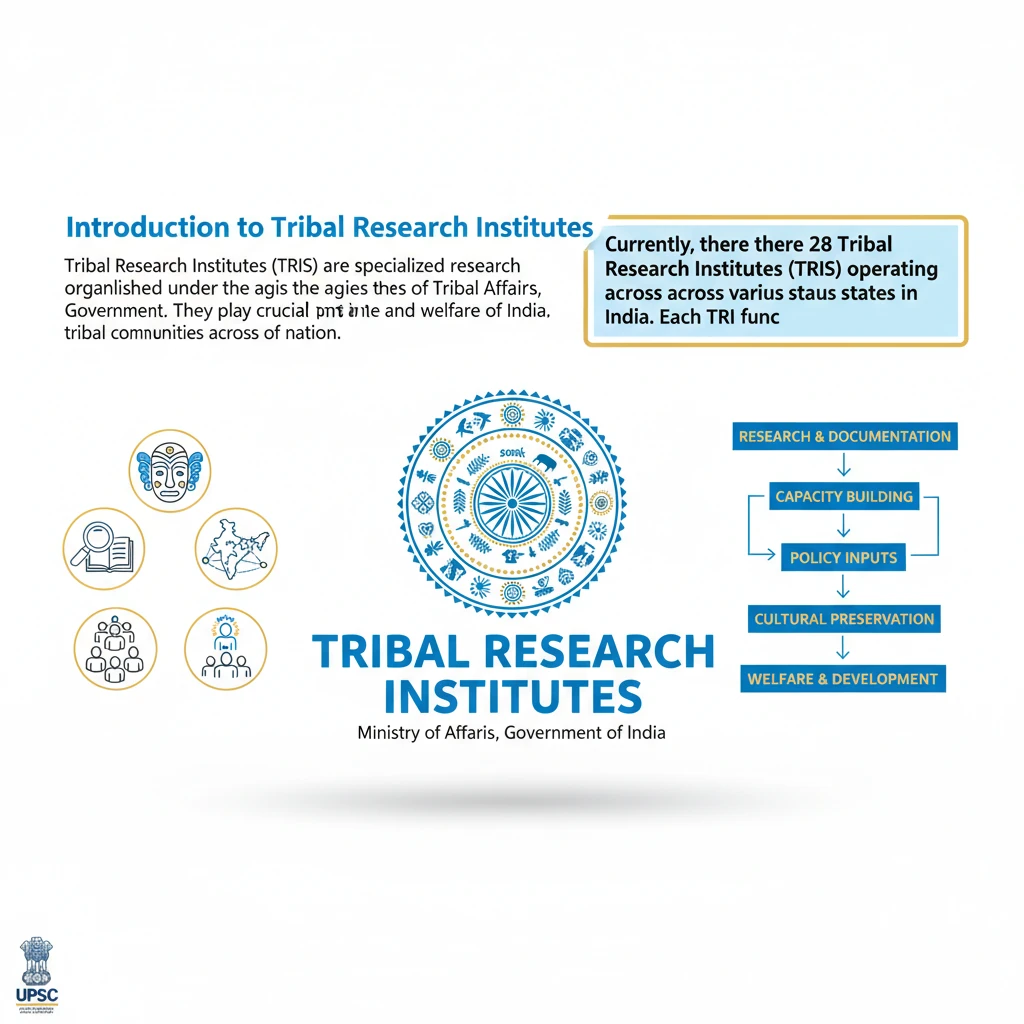
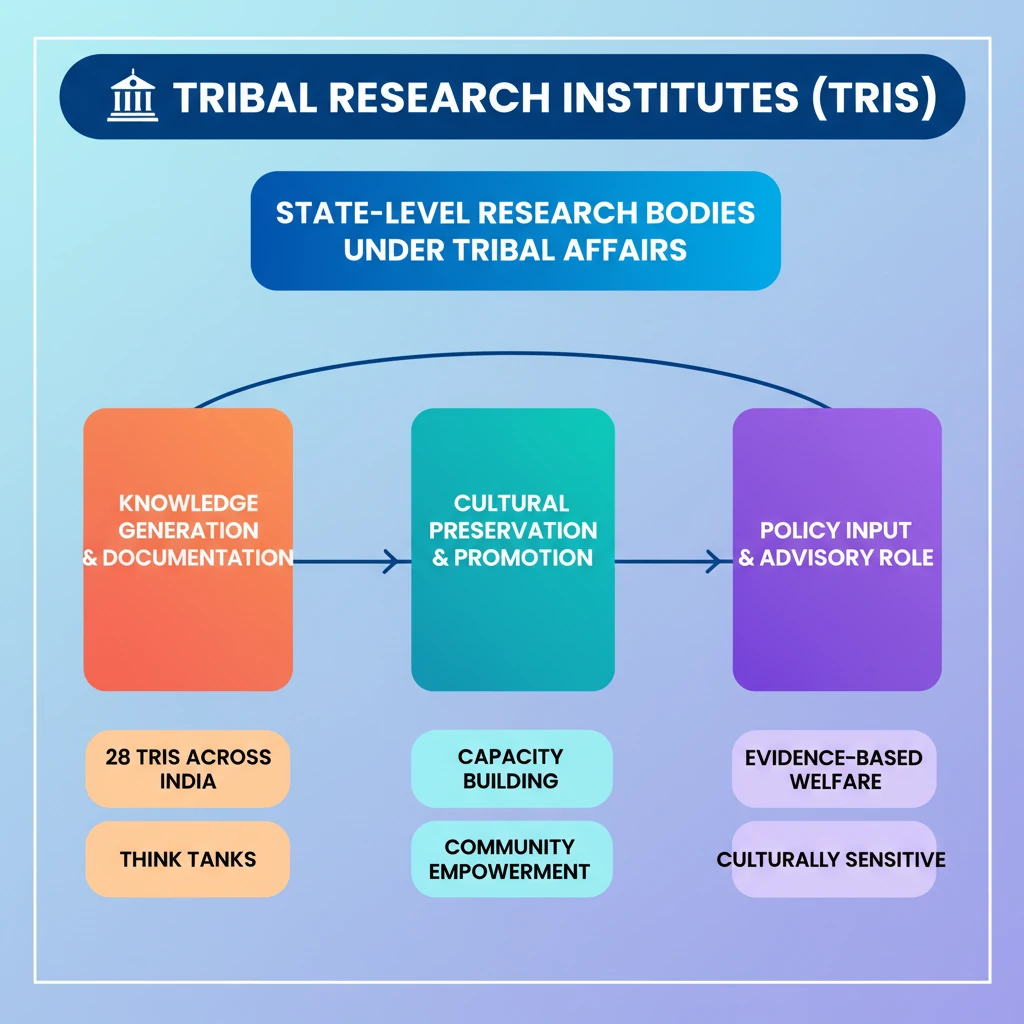
<h4>Introduction to Tribal Research Institutes</h4><p><strong>Tribal Research Institutes (TRIs)</strong> are specialized research organizations established under the aegis of the <strong>Ministry of Tribal Affairs</strong>, Government of India. They play a crucial role in the development and welfare of tribal communities across the nation.</p><div class='info-box'><p>Currently, there are <strong>28 Tribal Research Institutes (TRIs)</strong> operating across various states in India. Each TRI functions at the <strong>state level</strong>, catering to the specific needs and contexts of the tribal populations within its jurisdiction.</p></div><h4>Key Functions and Objectives of TRIs</h4><p>TRIs are multifaceted bodies with several core functions designed to support holistic tribal development. Their primary objectives can be categorized into four main areas:</p><ul><li><strong>Knowledge and Research:</strong> TRIs serve as vital <strong>think tanks</strong>, generating critical knowledge and conducting extensive research on various aspects of tribal life, including their socio-economic conditions, cultural practices, and challenges.</li><li><strong>Cultural Heritage Preservation:</strong> A significant objective is to actively <strong>preserve and promote the rich cultural heritage and traditions</strong> of diverse tribal communities. This includes documenting languages, art forms, rituals, and traditional knowledge systems.</li><li><strong>Evidence-Based Planning:</strong> They provide essential <strong>data and insights</strong> to state governments. This information is crucial for formulating effective, evidence-based tribal development policies, programs, and legislations tailored to specific regional needs.</li><li><strong>Capacity Building:</strong> TRIs are also instrumental in <strong>enhancing the skills and capabilities</strong> of tribal individuals and communities. They work towards strengthening institutions that are dedicated to working with tribal populations, ensuring sustainable development.</li></ul><div class='key-point-box'><p>The overarching goal of TRIs is to bridge the gap between policy formulation and ground-level implementation, ensuring that tribal development initiatives are informed, culturally sensitive, and effective.</p></div><div class='exam-tip-box'><p>For <strong>UPSC Mains (GS Paper 1 & 2)</strong>, understanding TRIs is crucial when discussing <strong>tribal welfare, social justice, cultural preservation, and government policies</strong>. Mentioning their role adds depth to answers on tribal development challenges and solutions.</p></div>
💡 Key Takeaways
- •TRIs are state-level research bodies under the Ministry of Tribal Affairs.
- •There are 28 TRIs across India, acting as think tanks for tribal development.
- •Their core functions include knowledge generation, cultural preservation, and evidence-based policy input.
- •TRIs also focus on capacity building for tribal communities and related institutions.
- •They are crucial for informed, culturally sensitive, and effective tribal welfare initiatives.
🧠 Memory Techniques
95% Verified Content
📚 Reference Sources
•Ministry of Tribal Affairs, Government of India (General information on TRIs)