Immoral Traffic (Prevention) Act: Penalties Under Section 5 - Social Issues | UPSC Learning
Topics
0 topics • 0 completed
🔍
No topics match your search
Immoral Traffic (Prevention) Act: Penalties Under Section 5
Medium⏱️ 8 min read
social issues
📖 Introduction
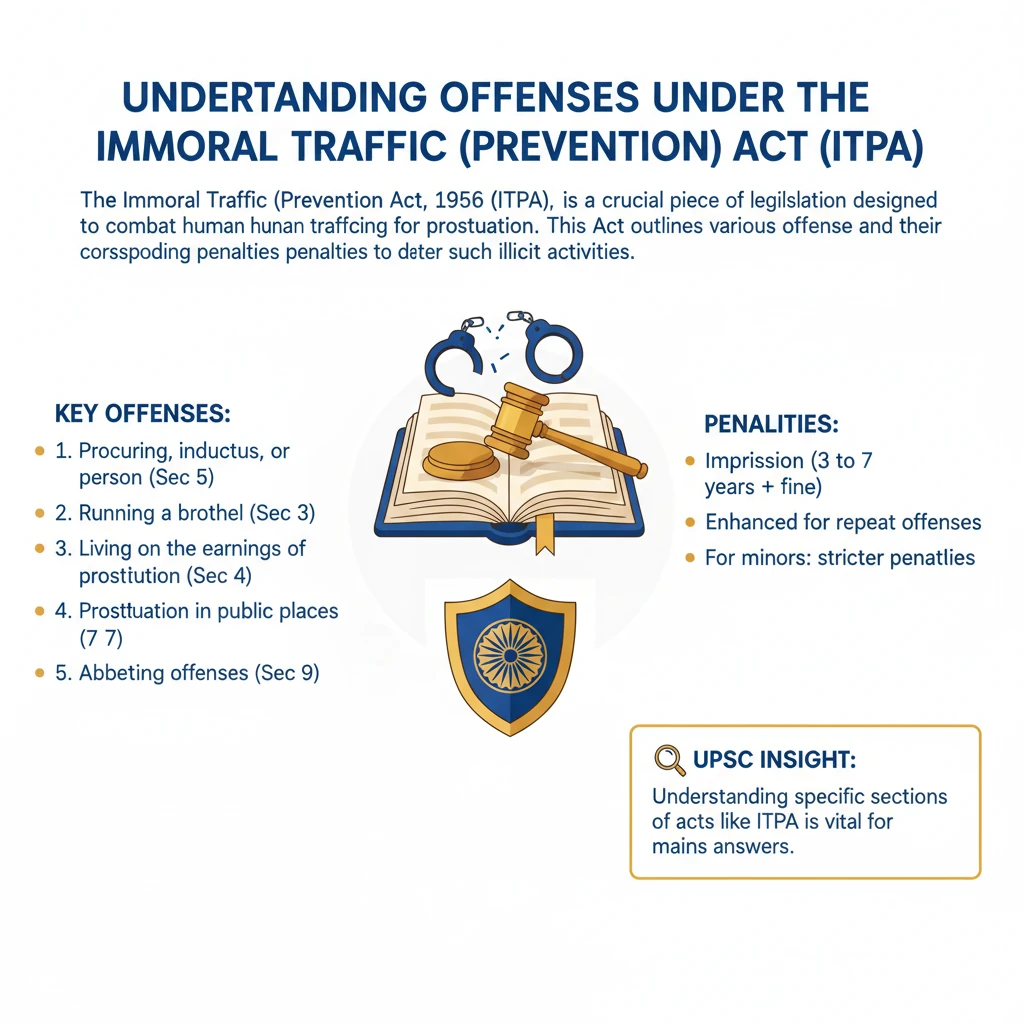
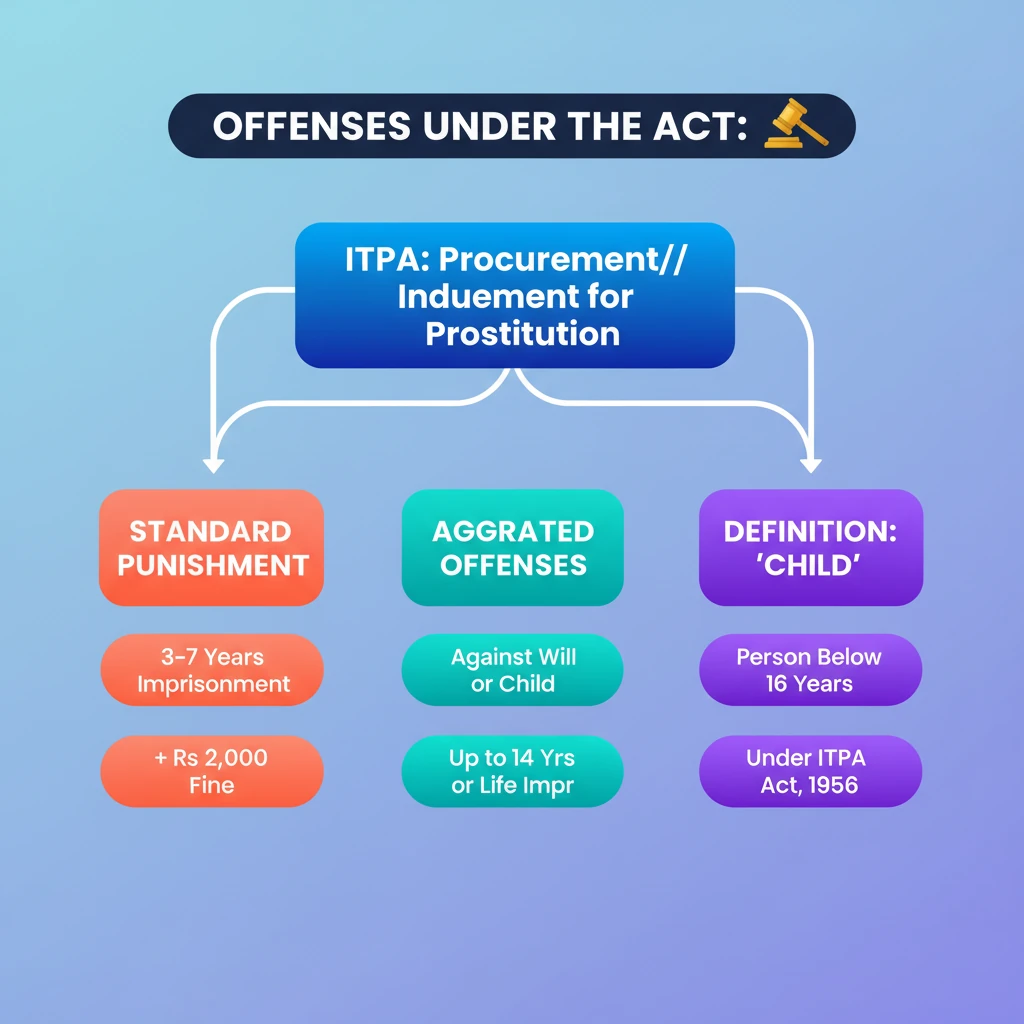
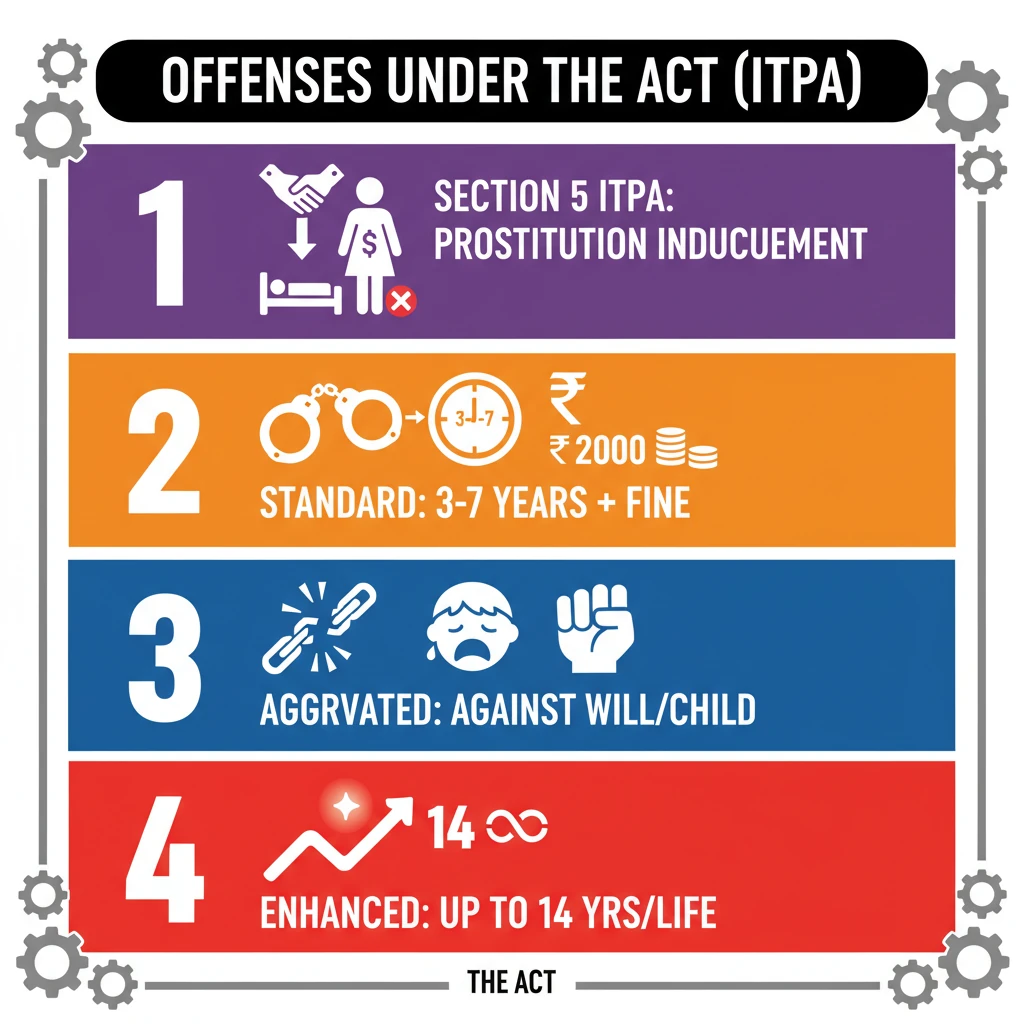
<h4>Understanding Offenses Under the Immoral Traffic (Prevention) Act (ITPA)</h4><p>The <strong>Immoral Traffic (Prevention) Act, 1956 (ITPA)</strong>, is a crucial piece of legislation designed to combat human trafficking for the purpose of prostitution. This Act outlines various offenses and their corresponding penalties to deter such illicit activities.</p><div class='exam-tip-box'><p><strong>UPSC Insight:</strong> Understanding specific sections of acts like <strong>ITPA</strong> is vital for <strong>GS Paper I (Social Issues)</strong> and <strong>GS Paper II (Governance, Social Justice)</strong>. Questions often test knowledge of legal provisions related to vulnerable sections.</p></div><h4>Penalties for Procurement and Inducement (Section 5)</h4><p><strong>Section 5</strong> of the <strong>ITPA</strong> specifically targets individuals who engage in the procurement, inducement, or taking of persons for prostitution. This includes any act that facilitates or forces someone into sex work.</p><div class='info-box'><p><strong>Standard Punishment:</strong> For such offenses, the punishment prescribed is <strong>rigorous imprisonment</strong> ranging from <strong>three to seven years</strong>. Additionally, a <strong>fine of Rs 2,000</strong> is also imposed.</p></div><h4>Aggravated Offenses and Enhanced Penalties</h4><p>The Act provides for significantly harsher penalties when offenses are committed under aggravating circumstances. These situations involve a higher degree of coercion or vulnerability.</p><ul><li><strong>Against a Person's Will:</strong> If the procurement, inducement, or taking for prostitution is done <strong>against the will</strong> of the person, the punishment is substantially increased.</li><li><strong>Offenses Against a Child:</strong> Similarly, if the offense is committed against a <strong>child</strong>, the law imposes stricter penalties.</li></ul><div class='info-box'><p><strong>Enhanced Punishment:</strong> For offenses committed against a person's will or against a child, the maximum sentence can extend to <strong>fourteen years</strong> or even <strong>life imprisonment</strong>, depending on the severity and specific circumstances.</p></div><h4>Definition of 'Child' Under the Act</h4><p>The <strong>ITPA</strong> provides a clear definition of what constitutes a 'child' for the purposes of these offenses. This definition is critical in determining the applicability of enhanced penalties.</p><div class='key-point-box'><p><strong>Definition of Child:</strong> Under the Act, a <strong>child</strong> is defined as a person who has <strong>not completed the age of sixteen years</strong>.</p></div>
💡 Key Takeaways
- •Section 5 of ITPA penalizes procurement/inducement for prostitution.
- •Standard punishment: 3-7 years rigorous imprisonment + Rs 2,000 fine.
- •Aggravated offenses (against will or against a child) carry enhanced penalties.
- •Enhanced penalties can extend to 14 years or life imprisonment.
- •A 'child' under ITPA is defined as a person below 16 years of age.
- •The Act aims to protect vulnerable individuals and deter exploiters.
🧠 Memory Techniques
98% Verified Content
📚 Reference Sources
•The Immoral Traffic (Prevention) Act, 1956 (ITPA), Section 5
•International Convention for the Suppression of Immoral Traffic in Persons and of the Exploitation of the Prostitution of Others, 1950