Chipko Movement: Philosophy, Impact, and Key Figures - Social Issues | UPSC Learning
Topics
0 topics • 0 completed
🔍
No topics match your search
Chipko Movement: Philosophy, Impact, and Key Figures
Medium⏱️ 6 min read
social issues
📖 Introduction
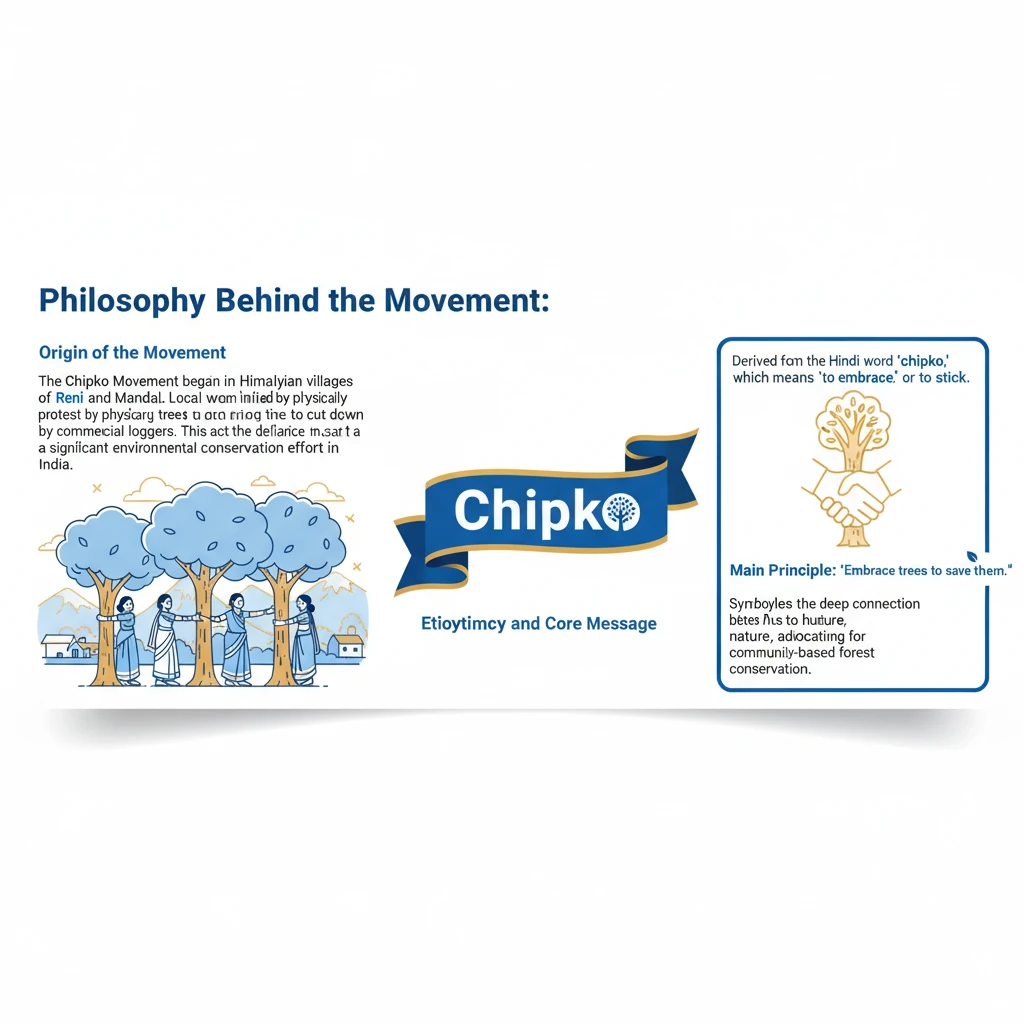
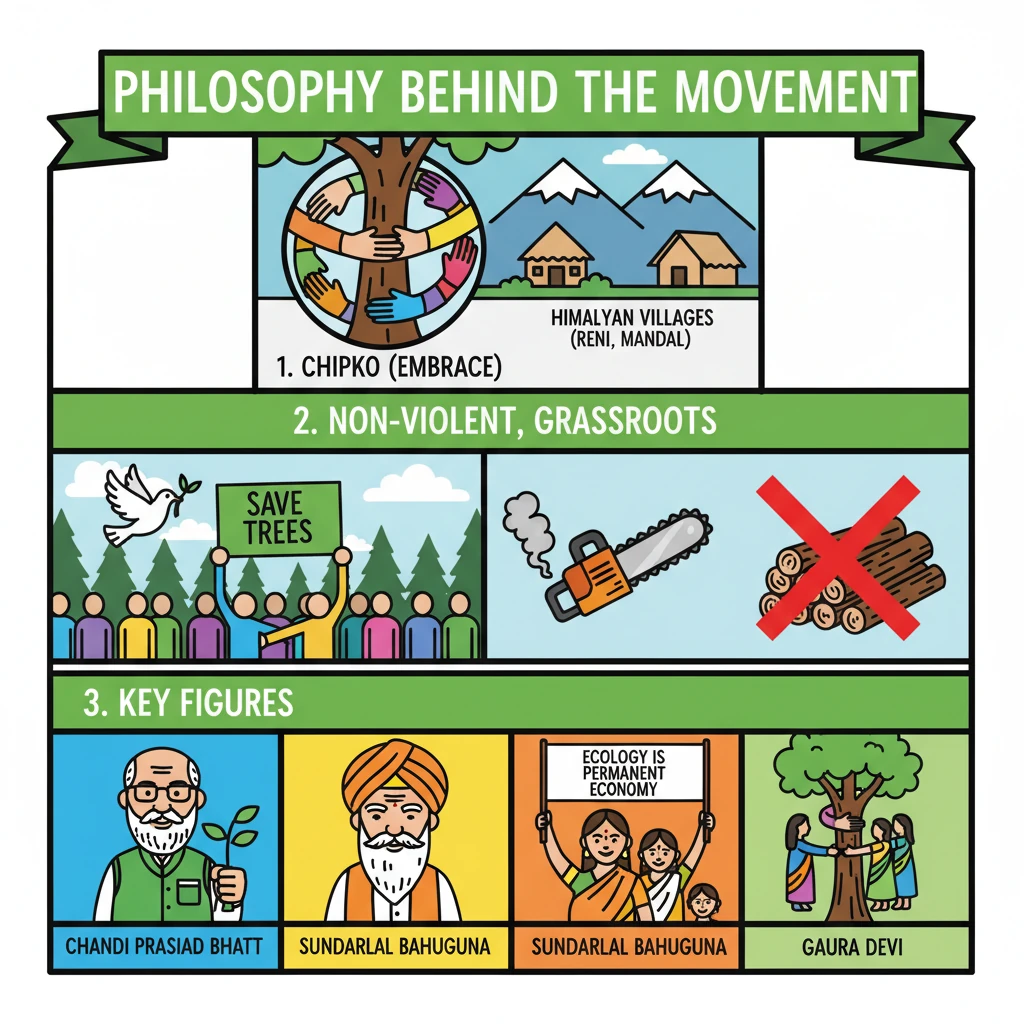
<h4>Origin of the Movement</h4><p>The <strong>Chipko Movement</strong> began in the <strong>Himalayan villages</strong> of <strong>Reni</strong> and <strong>Mandal</strong>. Local women initiated the protest by physically embracing trees to prevent them from being cut down by commercial loggers.</p><p>This act of defiance marked the start of a significant <strong>environmental conservation effort</strong> in India.</p><h4>Etymology and Core Message</h4><p>The name <strong>'Chipko'</strong> is derived from the Hindi word meaning <strong>'to embrace'</strong>. Villagers literally hugged the trees, encircling them to prevent felling.</p><div class='info-box'><p>The core message conveyed was: <strong>“we, our nature and us are One”</strong>, highlighting the intrinsic connection between humans and their environment.</p></div><p>It was fundamentally a <strong>non-violent agitation</strong>, deeply rooted in Gandhian philosophy, aimed at protecting nature.</p><h4>Key Achievements and Impact</h4><p>The movement's greatest triumph was fostering widespread <strong>awareness</strong> among people about their <strong>rights to forests</strong>. It demonstrated how <strong>grassroots activism</strong> could profoundly influence policy-making related to ecology and shared natural resources.</p><div class='exam-tip-box'><p>UPSC often asks about the impact of social movements. The <strong>Chipko Movement's</strong> influence on policy and community empowerment is a crucial point for <strong>GS Paper I (Social Issues)</strong> and <strong>GS Paper III (Environment)</strong>.</p></div><div class='info-box'><p>A significant policy outcome was the <strong>1981 ban</strong> on commercial felling of trees above <strong>30 degrees slope</strong> and above <strong>1,000 meters above mean sea level (msl)</strong> in the Himalayan regions.</p></div><h4>Prominent Figures and Their Contributions</h4><ul><li><strong>Chandi Prasad Bhatt:</strong> A prominent <strong>Gandhian Social Activist</strong> and <strong>Environmentalist</strong> during the early phase. He founded the <strong>Dasholi Gram Swarajya Mandal (DGSM)</strong>, an organization instrumental in shaping the movement and uniting villagers against unsustainable deforestation.</li><li><strong>Sundarlal Bahuguna:</strong> Inspired by <strong>Gandhian philosophy</strong> of <strong>non-violence</strong> and <strong>socialism</strong>. He played a crucial role in organizing local communities and spreading awareness about the importance of forests, mobilizing people through his efforts.</li><li><strong>Gaura Devi:</strong> An iconic village woman from <strong>Reni</strong> who led a group of women to confront loggers. Her act of physically embracing trees effectively prevented their cutting, making <strong>Chipko</strong> predominantly a <strong>women-led movement</strong> and inspiring women nationwide.</li></ul>
💡 Key Takeaways
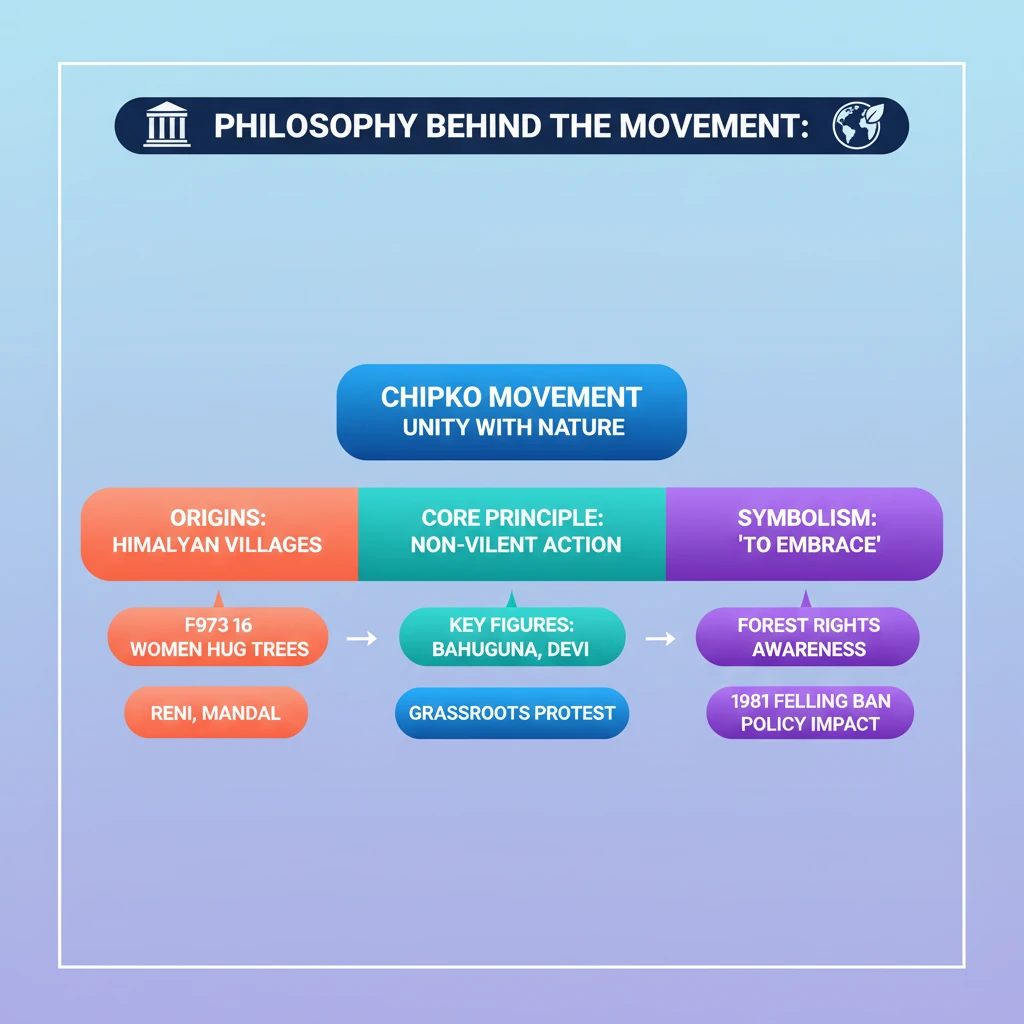
- •Chipko Movement started in Himalayan villages (Reni, Mandal) by women hugging trees.
- •The name 'Chipko' means 'to embrace', symbolizing unity with nature.
- •It was a non-violent, grassroots movement against commercial logging.
- •Key figures: Chandi Prasad Bhatt, Sundarlal Bahuguna, Gaura Devi.
- •Major impact: Increased awareness of forest rights, influenced policy (1981 ban on felling).
- •Highlights the power of community action and women's leadership in environmental conservation.
🧠 Memory Techniques
95% Verified Content