The movement also influenced policy changes - Social Issues | UPSC Learning
Topics
0 topics • 0 completed
🔍
No topics match your search
The movement also influenced policy changes
Medium⏱️ 6 min read
social issues
📖 Introduction
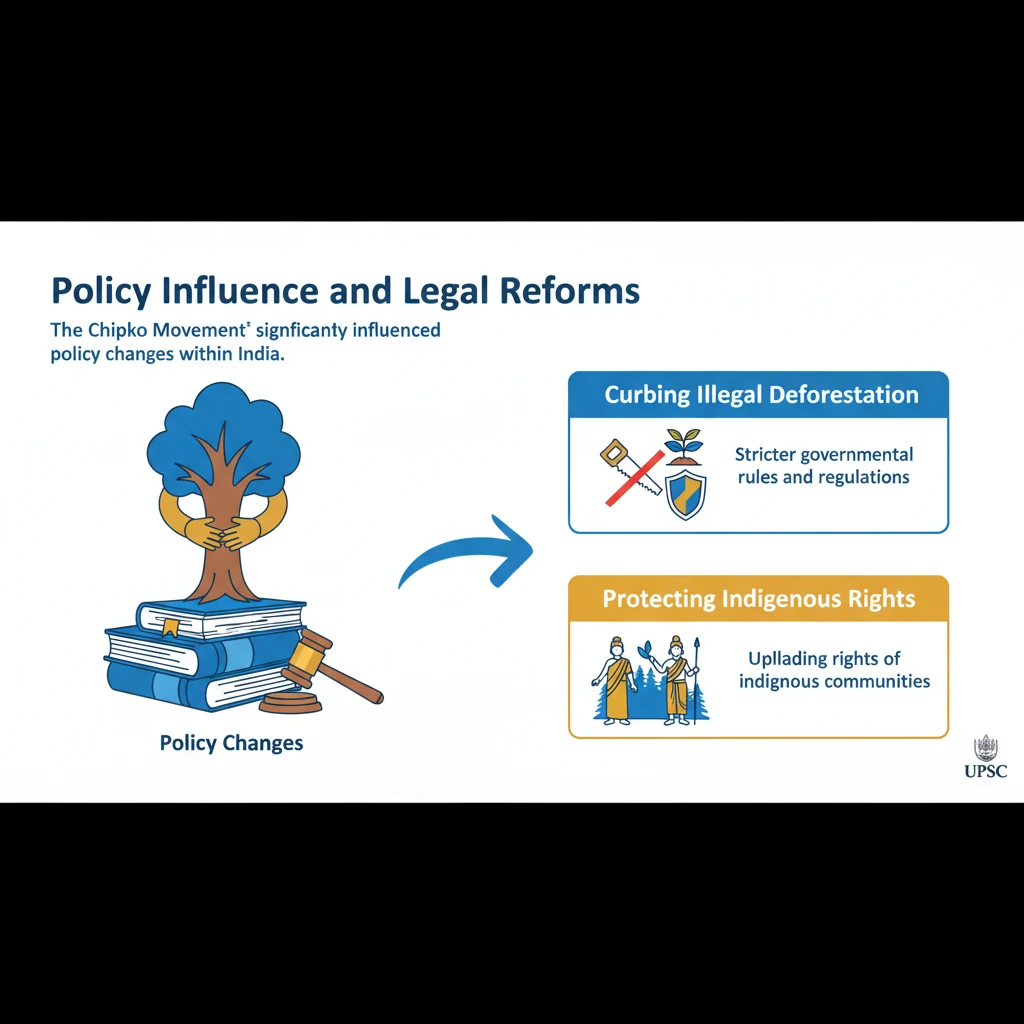
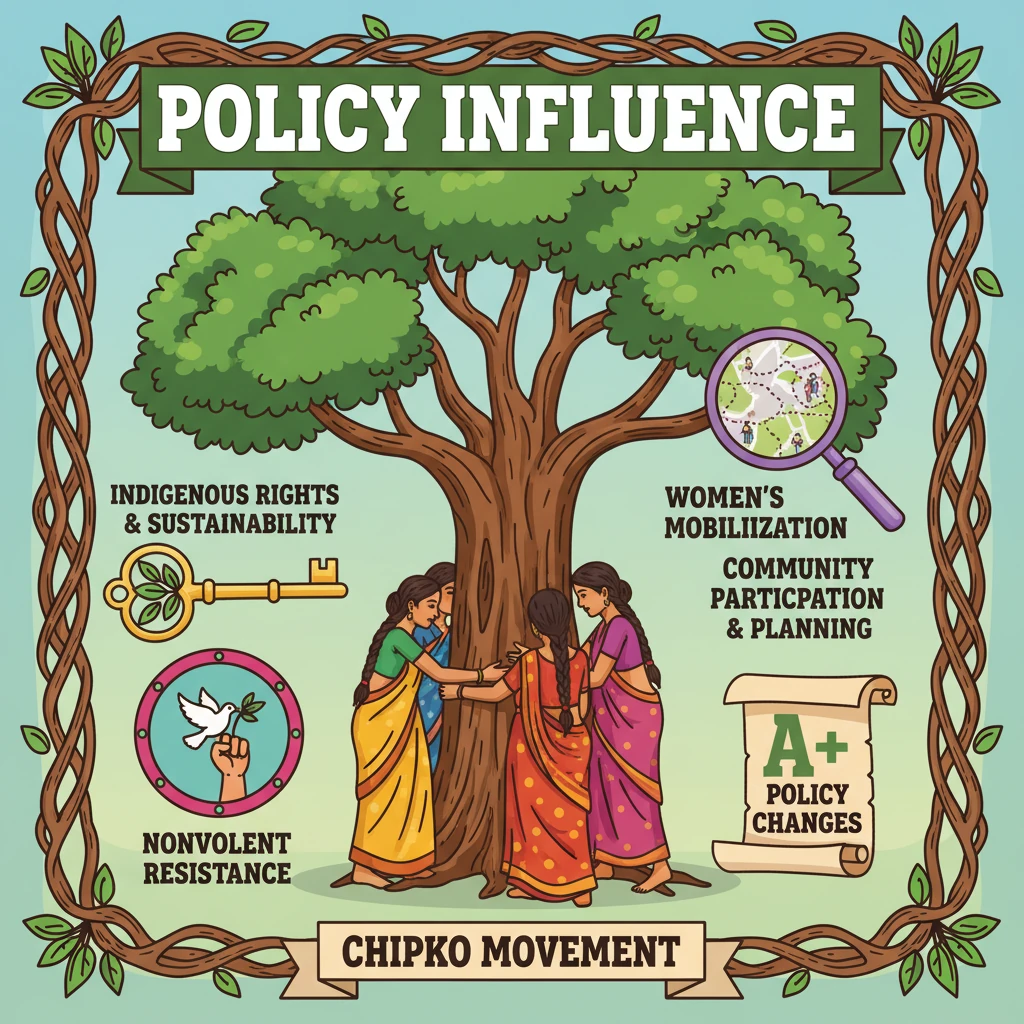
<h4>Policy Influence and Legal Reforms</h4><p>The <strong>Chipko Movement</strong> significantly influenced <strong>policy changes</strong> within India. It played a crucial role in advocating for stricter governmental rules and regulations.</p><p>These new policies were primarily aimed at curbing <strong>illegal deforestation</strong>. They also sought to protect and uphold the <strong>rights of indigenous communities</strong> who were directly dependent on forest resources.</p><div class='info-box'><p><strong>Key Policy Areas Influenced:</strong></p><ul><li>Stricter regulations against <strong>illegal logging</strong>.</li><li>Recognition and protection of <strong>indigenous communities' rights</strong> over forest land and resources.</li></ul></div><h4>Role of Women and Social Empowerment</h4><p>The movement is prominently remembered for the powerful <strong>collective mobilization of women</strong>. Women from local communities actively participated in preserving forests, often by literally hugging trees to prevent them from being felled.</p><p>This widespread participation not only achieved environmental goals but also brought about a significant <strong>change in attitude</strong> regarding women's own status in society. Their active role challenged traditional gender norms and highlighted their crucial contributions.</p><div class='key-point-box'><p>The <strong>Chipko Movement</strong> empowered women by providing them a platform for collective action, enhancing their visibility, and fostering a sense of agency and leadership within their communities.</p></div><h4>Contemporary Relevance of Chipko Principles</h4><p>Even in <strong>2024</strong>, the <strong>Chipko Movement</strong> remains a profound source of inspiration. It serves as a powerful reminder of the immense potential of <strong>collective action</strong> in addressing complex environmental challenges.</p><p>Its core principles of <strong>sustainability</strong>, active <strong>community participation</strong>, and unwavering <strong>nonviolent resistance</strong> continue to be highly relevant. These principles are vital in the ongoing global fight against <strong>climate change</strong> and for the comprehensive protection of our fragile <strong>ecosystems</strong>.</p><div class='key-point-box'><p><strong>Enduring Principles of Chipko:</strong></p><ul><li><strong>Sustainability:</strong> Emphasizing harmonious coexistence with nature.</li><li><strong>Community Participation:</strong> Empowering local populations in resource management.</li><li><strong>Nonviolent Resistance:</strong> Advocating peaceful means to achieve environmental justice.</li></ul></div><p>Furthermore, the movement inspires contemporary <strong>grassroots-level actions</strong> globally. It underscores the critical importance of involving <strong>women</strong> and ensuring the genuine <strong>inclusion of local communities</strong> in all stages of environmental planning and conservation efforts.</p><div class='exam-tip-box'><p><strong>UPSC Insight:</strong> When discussing environmental movements or women's empowerment, referencing the <strong>Chipko Movement</strong> provides a strong historical and conceptual foundation. Highlight its principles for answers on <strong>environmental ethics</strong>, <strong>sustainable development</strong>, and <strong>social justice</strong> (GS I, II, III).</p></div>
💡 Key Takeaways
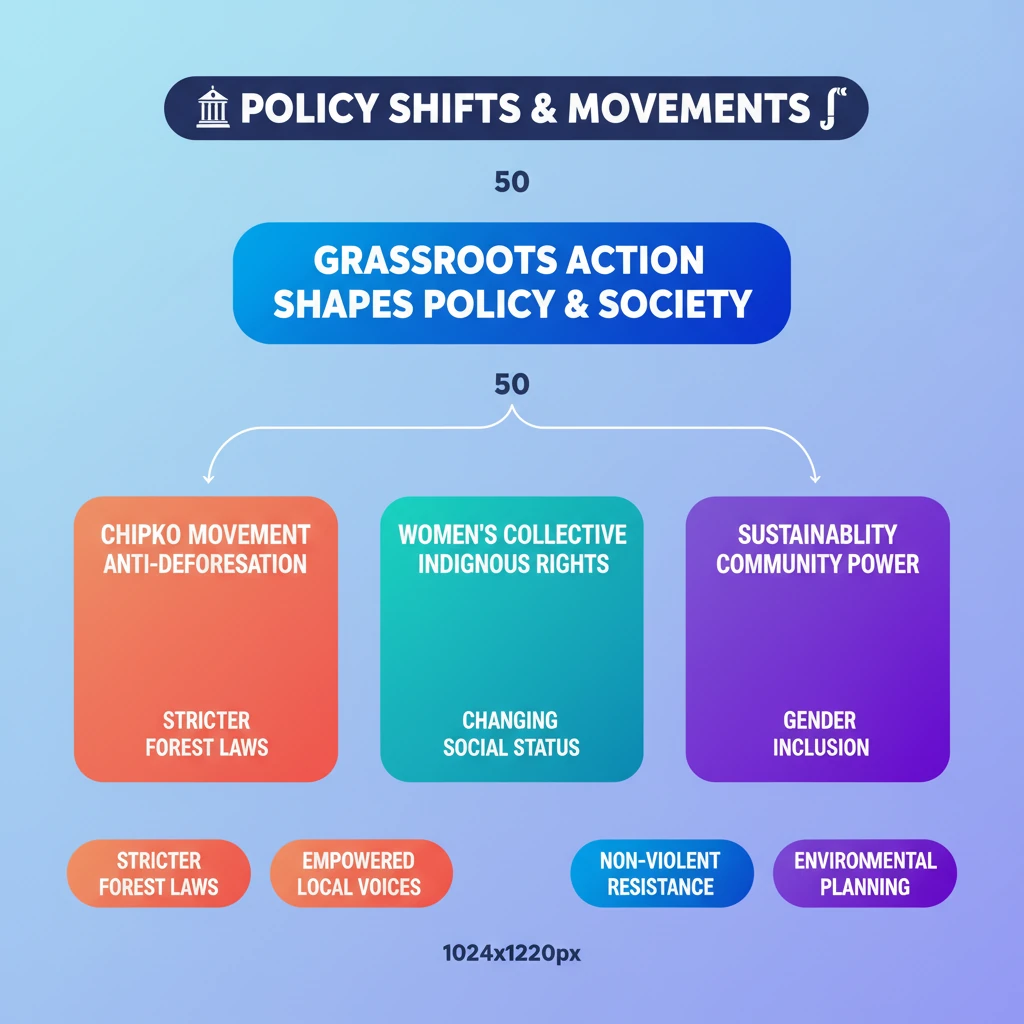
- •Chipko Movement influenced policies for stricter anti-deforestation rules and indigenous rights.
- •It's iconic for women's collective mobilization, changing perceptions of their societal status.
- •Its principles of sustainability, community participation, and nonviolent resistance are highly relevant today.
- •Inspires grassroots action, women's inclusion, and local community involvement in environmental planning.
- •A powerful reminder of collective action's impact on environmental challenges and social change.
🧠 Memory Techniques
95% Verified Content
📚 Reference Sources
•Ministry of Environment, Forest and Climate Change (MoEFCC) reports
•NCERT Textbooks (Social Science)
•Academic articles on environmental movements in India