Cervical Cancer - Social Issues | UPSC Learning
Topics
0 topics • 0 completed
🔍
No topics match your search
Cervical Cancer
Medium⏱️ 7 min read
social issues
📖 Introduction
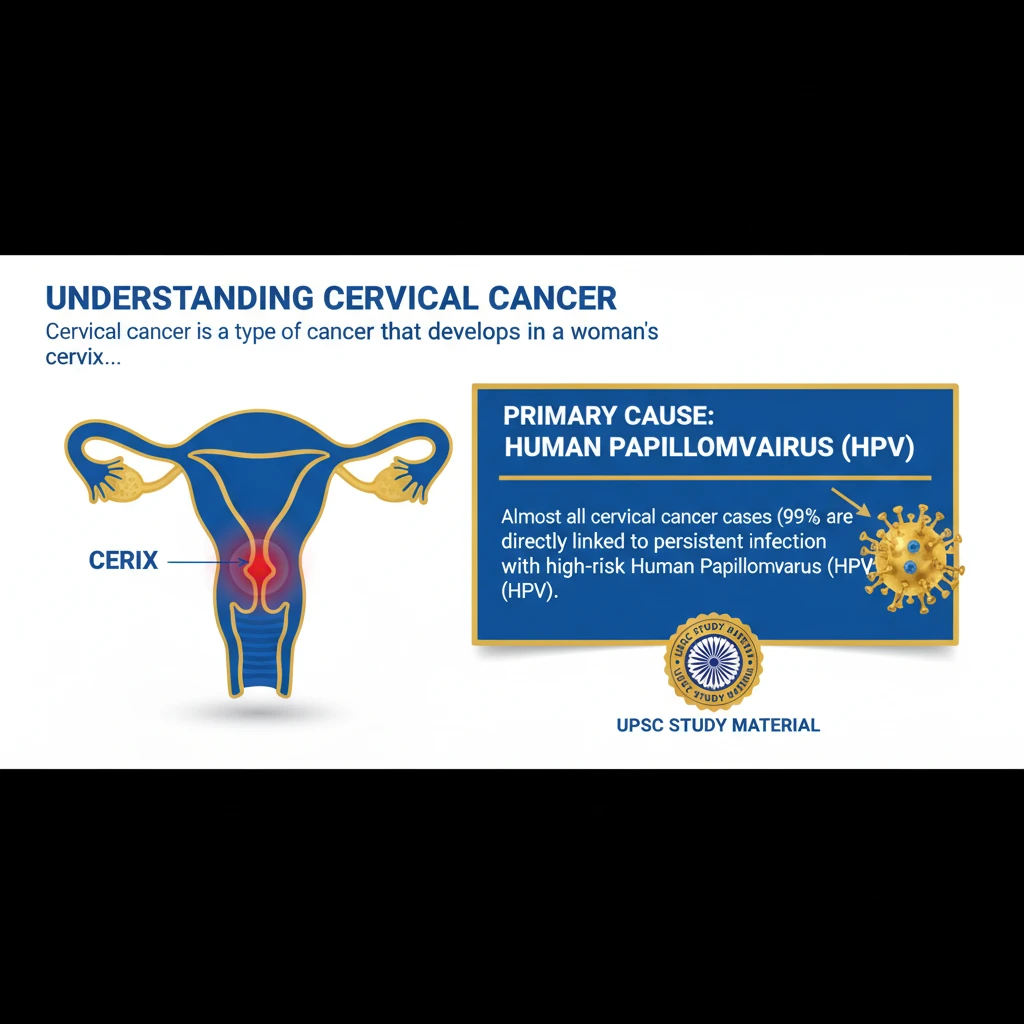
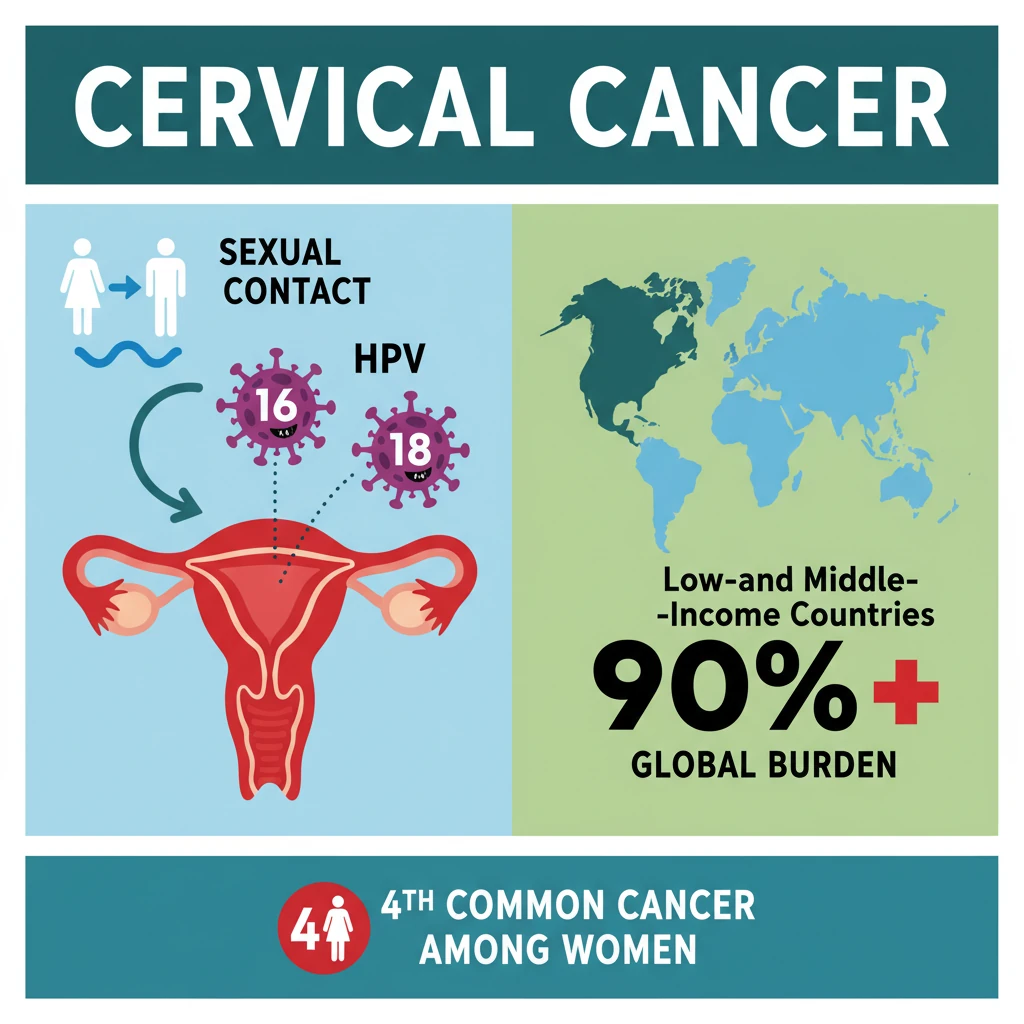
<h4>Understanding Cervical Cancer</h4><p><strong>Cervical cancer</strong> is a type of cancer that develops in a woman’s <strong>cervix</strong>, which is the lower, narrow part of the uterus that connects to the vagina.</p><p>It is a significant global health concern, primarily affecting women worldwide.</p><h4>Primary Cause: Human Papillomavirus (HPV)</h4><p>Almost all <strong>cervical cancer cases (99%)</strong> are directly linked to persistent infection with <strong>high-risk Human Papillomaviruses (HPV)</strong>.</p><p><strong>HPV</strong> is an extremely common virus that is primarily transmitted through <strong>sexual contact</strong>.</p><div class='key-point-box'><p>The strong causal link between <strong>HPV infection</strong> and <strong>cervical cancer</strong> makes it a preventable disease through vaccination and screening.</p></div><h4>Key HPV Types Responsible</h4><p>Among the many types of HPV, two specific strains, <strong>HPV types 16 and 18</strong>, are particularly virulent.</p><p>These two types alone are responsible for nearly <strong>50% of high-grade cervical pre-cancers</strong>, which can progress to invasive cancer if left untreated.</p><h4>Global Burden and Disparities</h4><p>Globally, <strong>cervical cancer</strong> ranks as the <strong>fourth most common cancer among women</strong>.</p><div class='info-box'><p>In <strong>2020</strong>, approximately <strong>90% of new cases and deaths</strong> from cervical cancer worldwide occurred in <strong>low- and middle-income countries (LMICs)</strong>. This highlights a significant health equity challenge.</p></div><div class='exam-tip-box'><p>UPSC often focuses on health disparities. Understanding why <strong>LMICs</strong> bear a disproportionate burden of diseases like <strong>cervical cancer</strong> is crucial for Mains answers, especially for <strong>GS Paper 2 (Social Justice)</strong>.</p></div>
💡 Key Takeaways
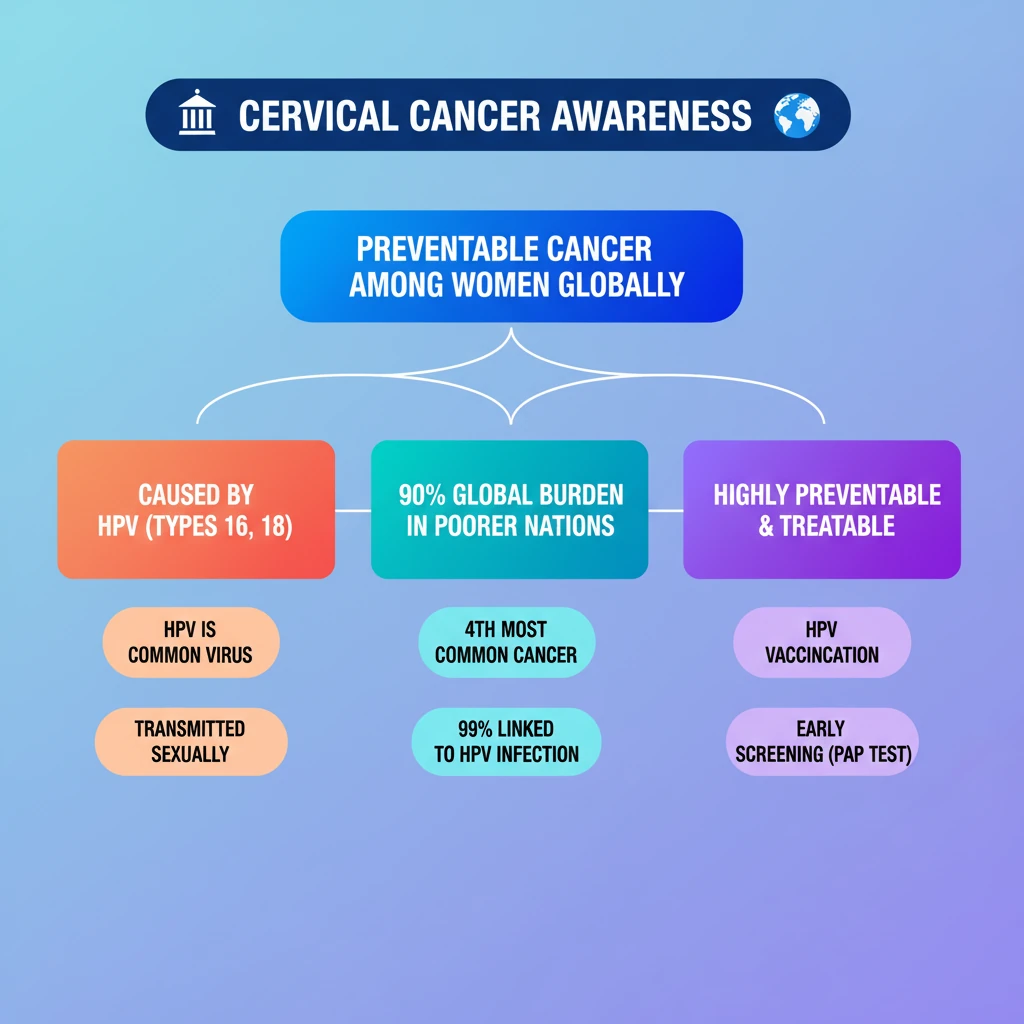
- •Cervical cancer develops in the cervix and is the fourth most common cancer among women globally.
- •Nearly all cases (99%) are caused by high-risk Human Papillomaviruses (HPV), primarily types 16 and 18.
- •HPV is a common virus transmitted through sexual contact.
- •Low- and middle-income countries bear 90% of the global burden of cervical cancer cases and deaths.
- •It is a highly preventable cancer through HPV vaccination and early detection via screening (Pap test).
🧠 Memory Techniques
95% Verified Content
📚 Reference Sources
•Drishti IAS Summary (provided source)
•Ministry of Health & Family Welfare, Government of India reports
•National Technical Advisory Group on Immunization (NTAGI) recommendations