Social Issues: HIV/AIDS - Management via Antiretroviral Therapy - Social Issues | UPSC Learning
Topics
0 topics • 0 completed
🔍
No topics match your search
Social Issues: HIV/AIDS - Management via Antiretroviral Therapy
Medium⏱️ 6 min read
social issues
📖 Introduction
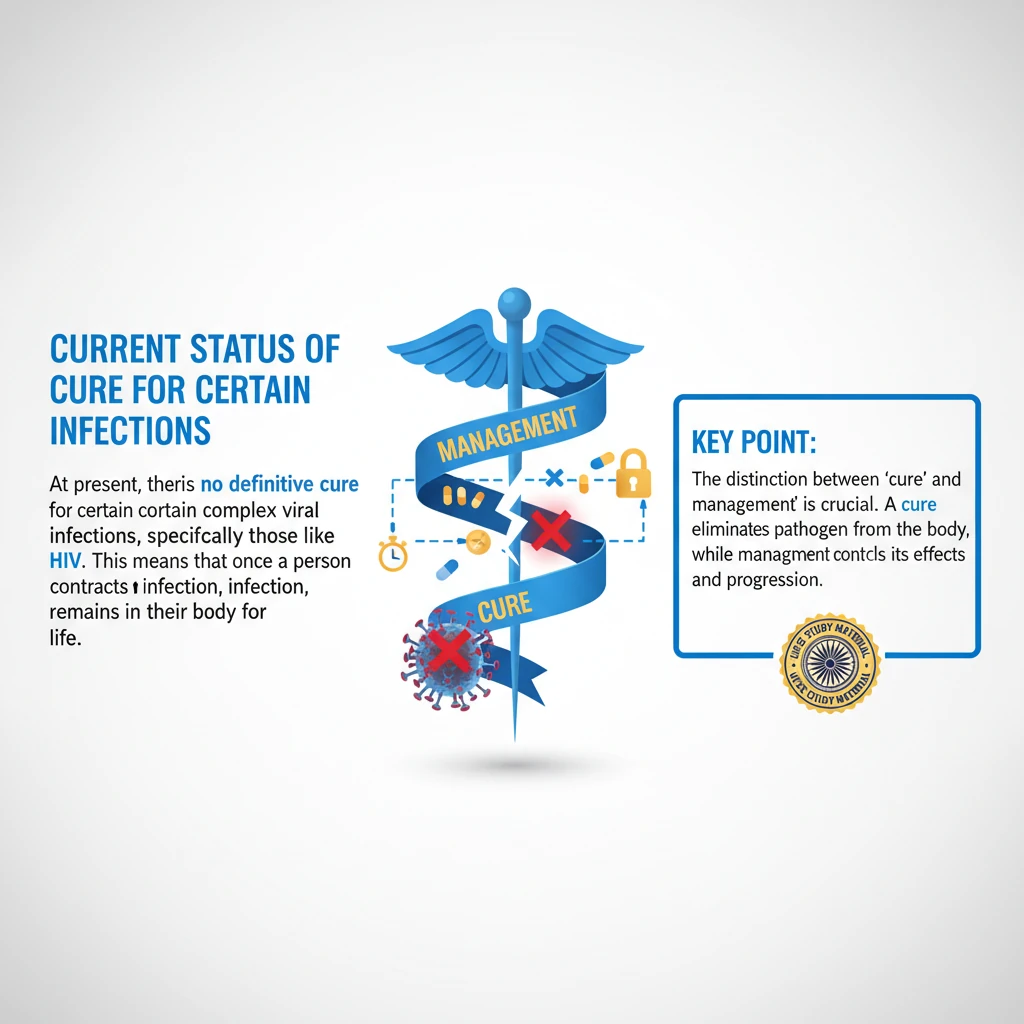
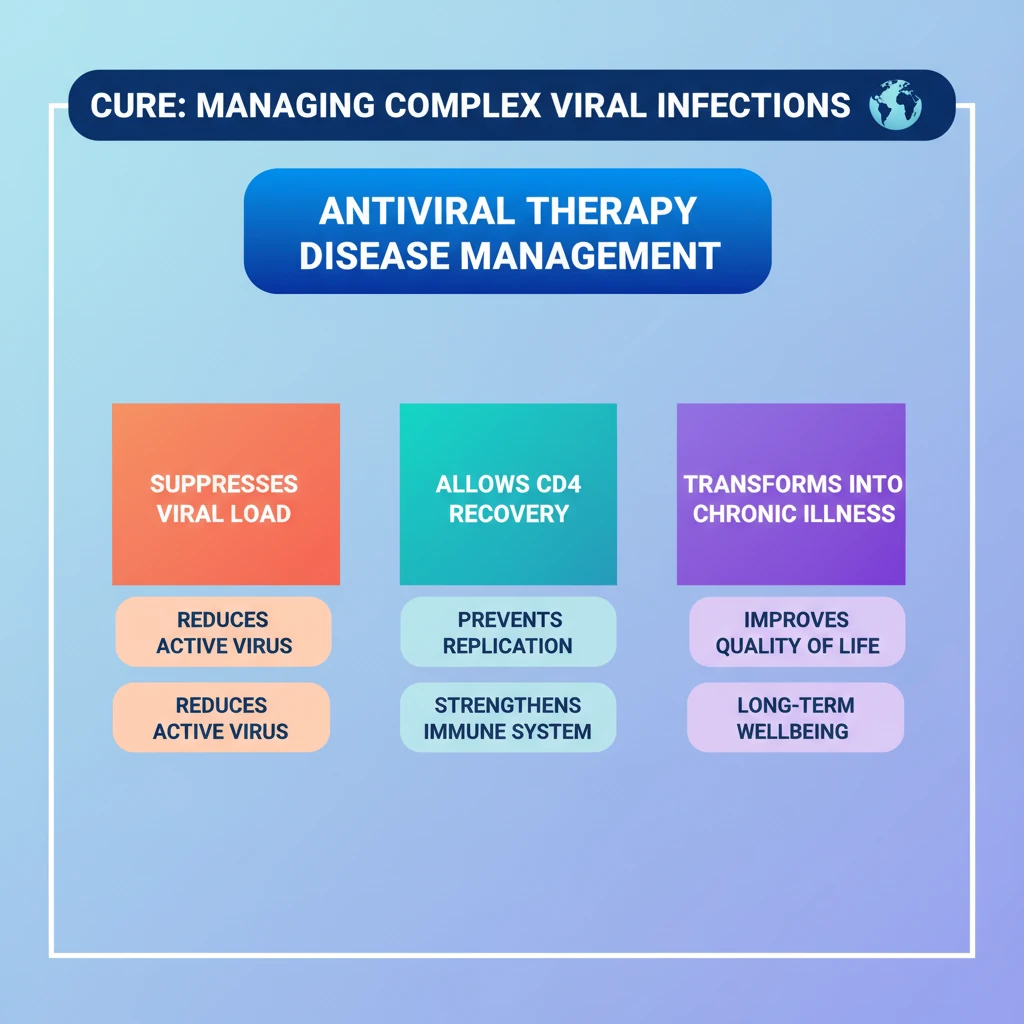
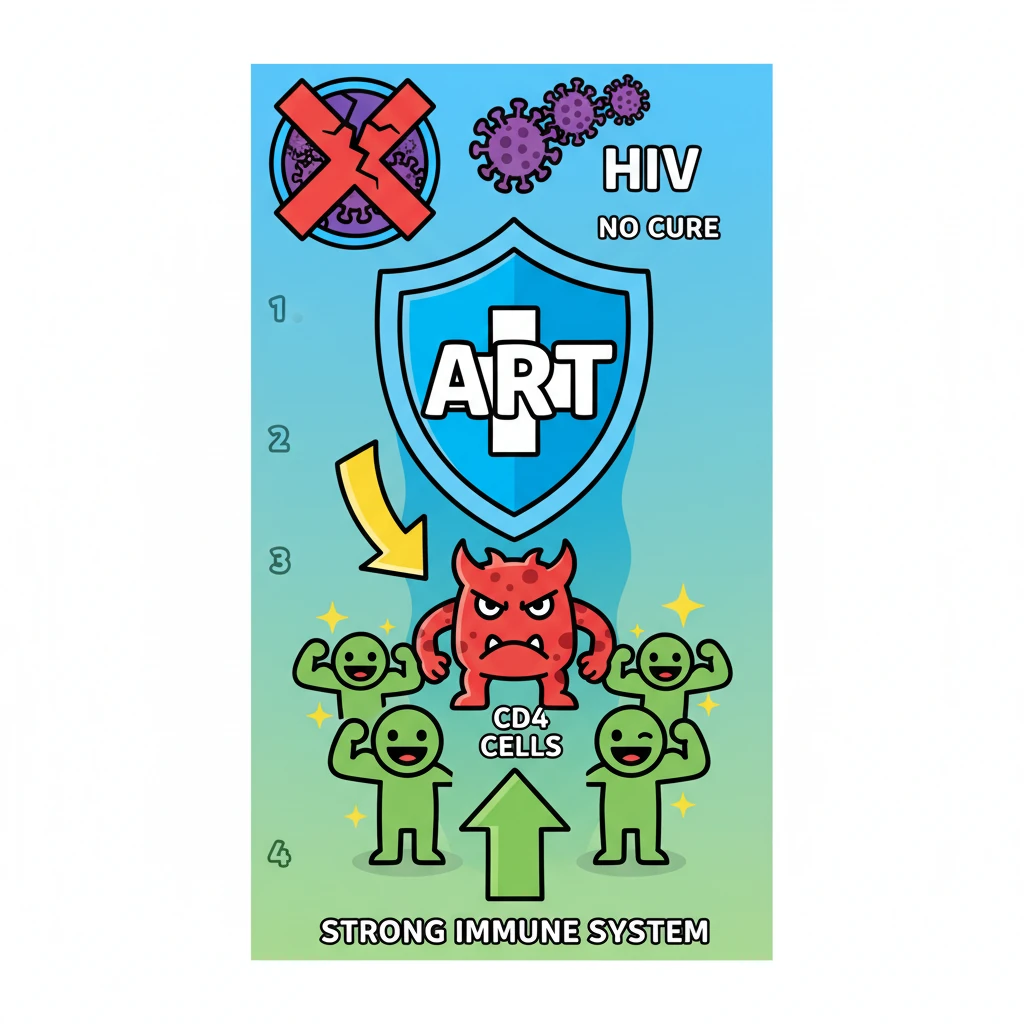
<h4>Current Status of Cure for Certain Infections</h4><p>At present, there is <strong>no definitive cure</strong> for certain complex viral infections, specifically those like <strong>HIV</strong>, which was implicitly referred to in the source. This means that once a person contracts the infection, it remains in their body for life.</p><div class='key-point-box'><p><strong>Key Point:</strong> The distinction between 'cure' and 'management' is crucial. A <strong>cure</strong> eliminates the pathogen entirely, while <strong>management</strong> controls its effects and progression.</p></div><h4>Disease Management through Antiretroviral Therapy (ART)</h4><p>Despite the absence of a cure, the disease can be effectively <strong>managed</strong>. This management relies heavily on a medical intervention known as <strong>Antiretroviral Therapy (ART)</strong>. ART has revolutionized the lives of millions affected by such infections.</p><div class='info-box'><p><strong>Definition:</strong> <strong>Antiretroviral Therapy (ART)</strong> is a regimen of medicines used to treat retroviral infections, most notably <strong>HIV</strong>.</p></div><h4>Mechanism of Antiretroviral Therapy</h4><p>The primary function of <strong>ART medicines</strong> is to <strong>suppress the replication of the virus</strong> within the human body. These drugs target various stages of the viral life cycle, preventing the virus from multiplying and spreading.</p><p>By halting viral replication, ART significantly reduces the <strong>viral load</strong>. This reduction is critical in preventing disease progression and transmission.</p><h4>Impact on CD4 Immune Cells</h4><p>When the virus's replication is suppressed by <strong>ART</strong>, it allows the body's immune system to recover. Specifically, the number of <strong>CD4 immune cells</strong>, which are crucial for immune function, begins to <strong>bounce back</strong>.</p><div class='info-box'><p><strong>CD4 Cells:</strong> These are a type of <strong>white blood cell</strong> (T-helper cells) that play a vital role in the immune system. They are the primary targets of the <strong>HIV virus</strong>.</p></div><div class='exam-tip-box'><p><strong>UPSC Insight:</strong> Understanding the difference between 'cure' and 'management' is important for questions on public health and disease control. Also, knowing the basic mechanism and impact of therapies like <strong>ART</strong> on immune markers like <strong>CD4 cells</strong> is essential for General Studies Paper II (Social Justice/Health).</p></div>
💡 Key Takeaways
- •No cure currently exists for certain complex viral infections like HIV.
- •Antiretroviral Therapy (ART) is the primary method for managing these infections.
- •ART works by suppressing viral replication within the body.
- •Effective ART allows CD4 immune cells to recover, strengthening the immune system.
- •Disease management through ART has transformed these conditions into manageable chronic illnesses.
🧠 Memory Techniques
98% Verified Content
📚 Reference Sources
•World Health Organization (WHO) - HIV/AIDS Fact Sheets
•UNAIDS - Global HIV & AIDS statistics
•National AIDS Control Organisation (NACO), India - Annual Reports