HIV Transmission: Modes and Mechanisms - Social Issues | UPSC Learning
Topics
0 topics • 0 completed
🔍
No topics match your search
HIV Transmission: Modes and Mechanisms
Medium⏱️ 7 min read
social issues
📖 Introduction
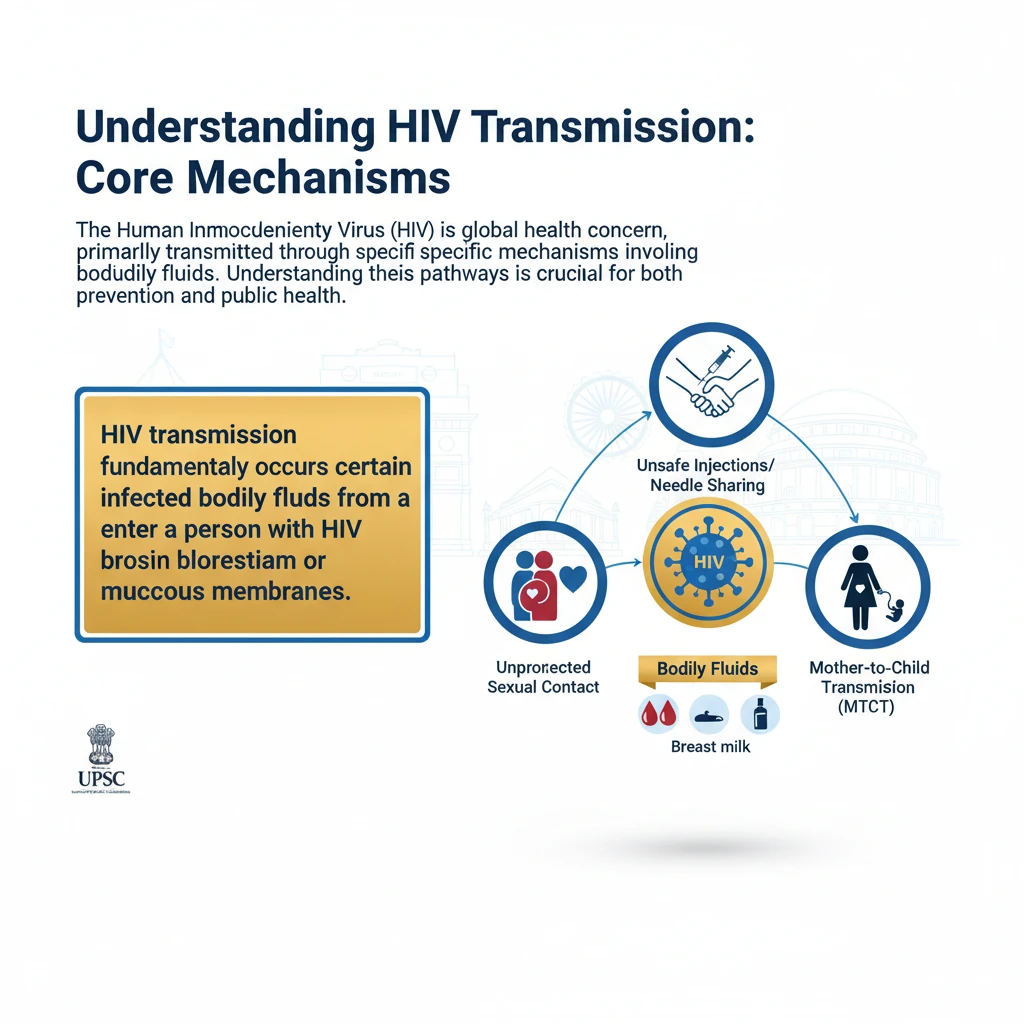
<h4>Understanding HIV Transmission: Core Mechanisms</h4><p>The <strong>Human Immunodeficiency Virus (HIV)</strong> is a global health concern, primarily transmitted through specific mechanisms involving bodily fluids. Understanding these pathways is crucial for both prevention and public health.</p><div class='key-point-box'><p><strong>HIV transmission</strong> fundamentally occurs when certain <strong>infected bodily fluids</strong> from a person with HIV enter the bloodstream or mucous membranes of another person.</p></div><p>This process requires a direct exchange of these fluids, not casual contact. The virus cannot survive for long outside the human body, making indirect transmission highly unlikely.</p><h4>Key Bodily Fluids Involved in Transmission</h4><p>Transmission of <strong>HIV</strong> is specifically linked to the exchange of a limited set of bodily fluids. These fluids contain sufficient viral load to cause infection if they enter another person's body.</p><ul><li><strong>Blood:</strong> Direct contact with infected blood, such as through shared needles or contaminated blood transfusions.</li><li><strong>Semen (pre-cum, cum):</strong> Transmitted during unprotected sexual intercourse.</li><li><strong>Vaginal Fluids:</strong> Transmitted during unprotected sexual intercourse.</li><li><strong>Breast Milk:</strong> Can be transmitted from an HIV-positive mother to her child during breastfeeding.</li></ul><p>It is important to note that fluids like saliva, tears, sweat, and urine do <strong>not</strong> transmit HIV, as the viral concentration in these fluids is too low.</p><div class='exam-tip-box'><p><strong>UPSC Insight:</strong> Questions on social issues often test knowledge of public health challenges. Understanding <strong>HIV transmission modes</strong> is fundamental for discussing prevention strategies, government policies, and addressing social stigma, relevant for <strong>GS Paper I (Social Issues)</strong> and <strong>GS Paper II (Health)</strong>.</p></div>
💡 Key Takeaways
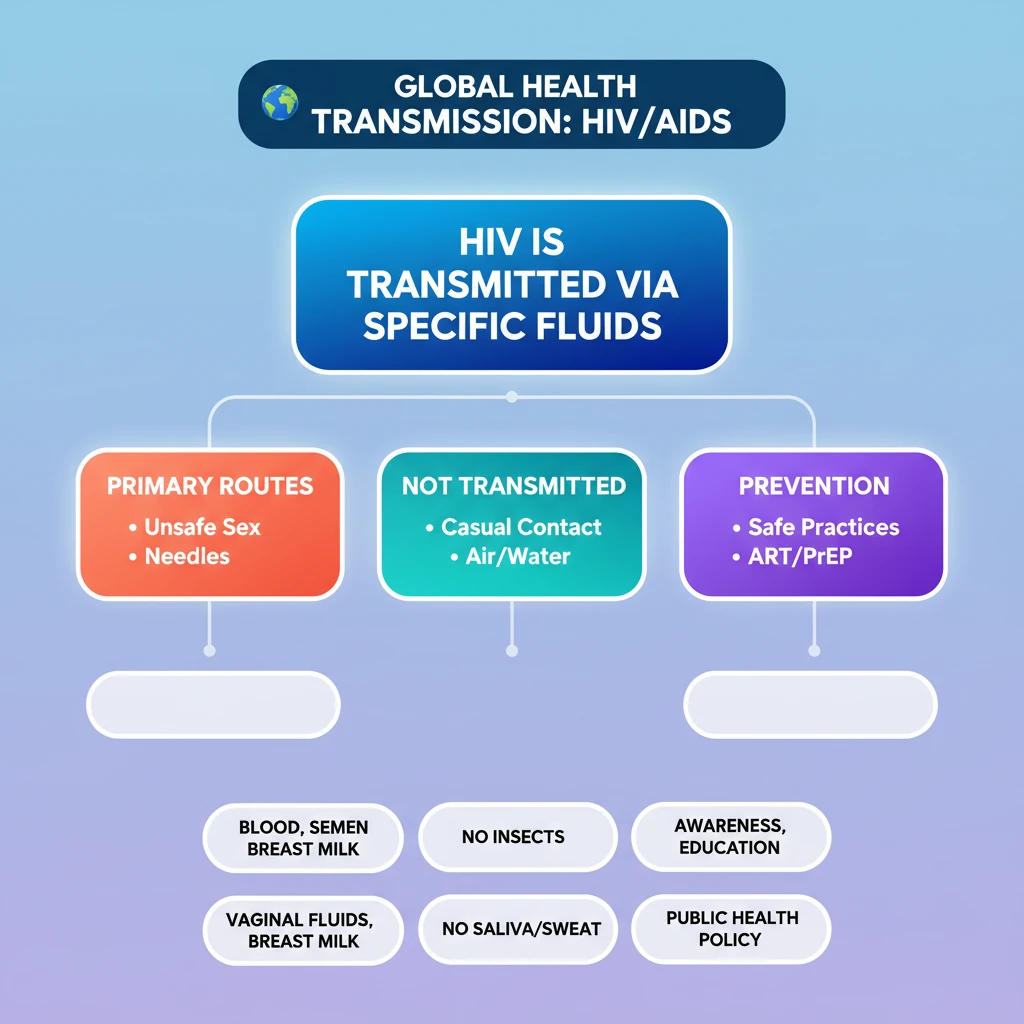
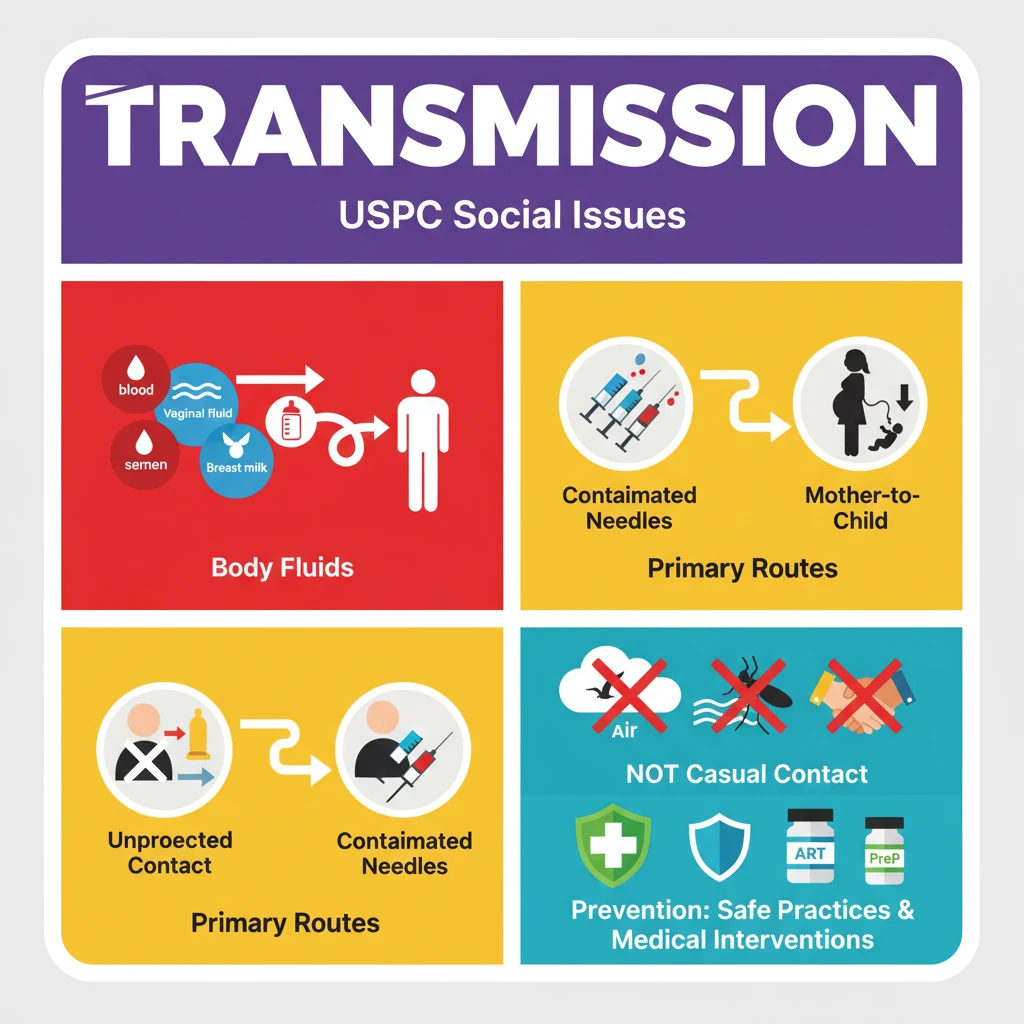
- •HIV is transmitted through specific bodily fluids: blood, semen, vaginal fluids, and breast milk.
- •Primary transmission routes are unprotected sexual contact, sharing contaminated needles, and mother-to-child.
- •HIV is NOT spread through casual contact, air, water, or insects.
- •Prevention relies on safe practices, awareness, and medical interventions like ART and PrEP.
- •Understanding transmission is critical for effective public health policies and reducing stigma.
- •Global efforts aim to end the AIDS epidemic by 2030, emphasizing prevention and access to treatment.
🧠 Memory Techniques
98% Verified Content
📚 Reference Sources
•Joint United Nations Programme on HIV/AIDS (UNAIDS) - Global AIDS Update
•Centers for Disease Control and Prevention (CDC) - HIV Transmission
•NCERT Biology Textbooks - Chapter on Human Health and Diseases