Philosophy Behind the Movement - Social Issues | UPSC Learning
Topics
0 topics • 0 completed
🔍
No topics match your search
Philosophy Behind the Movement
Medium⏱️ 8 min read
social issues
📖 Introduction
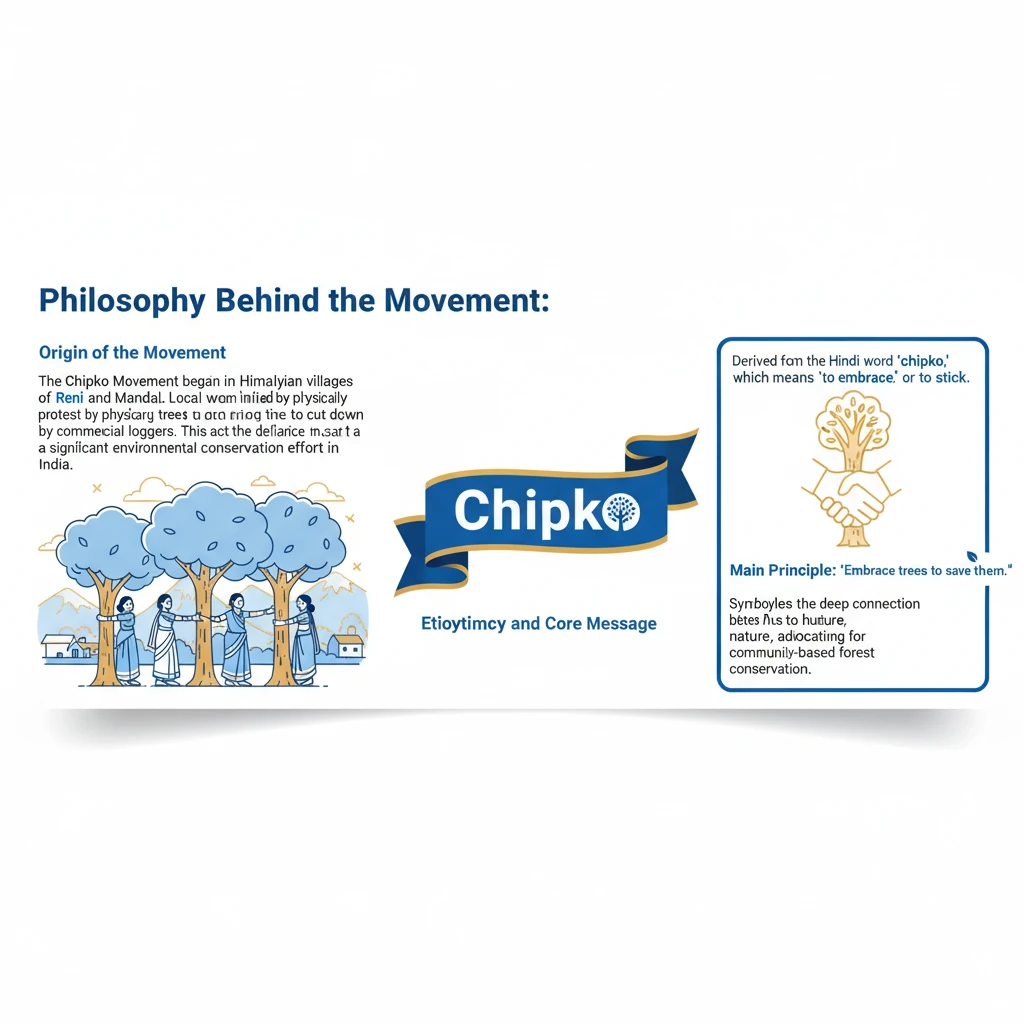
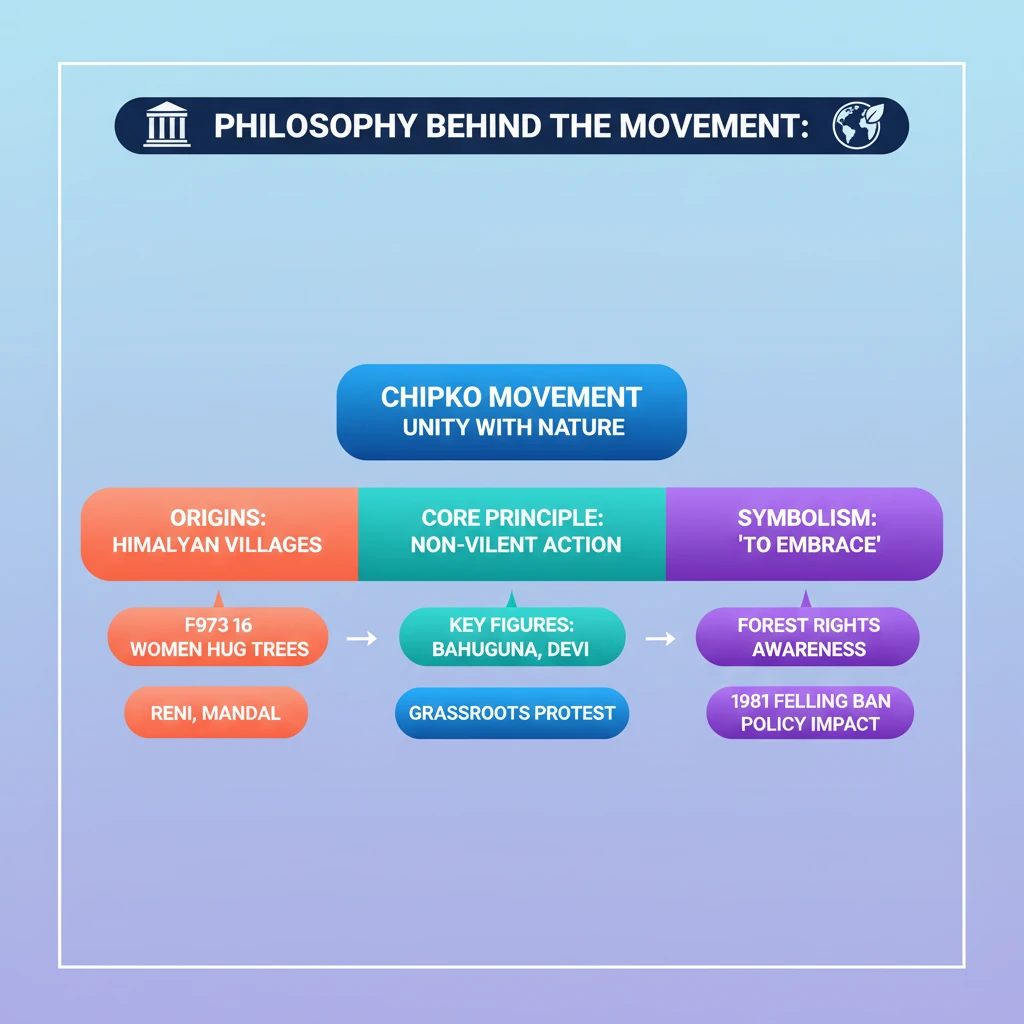
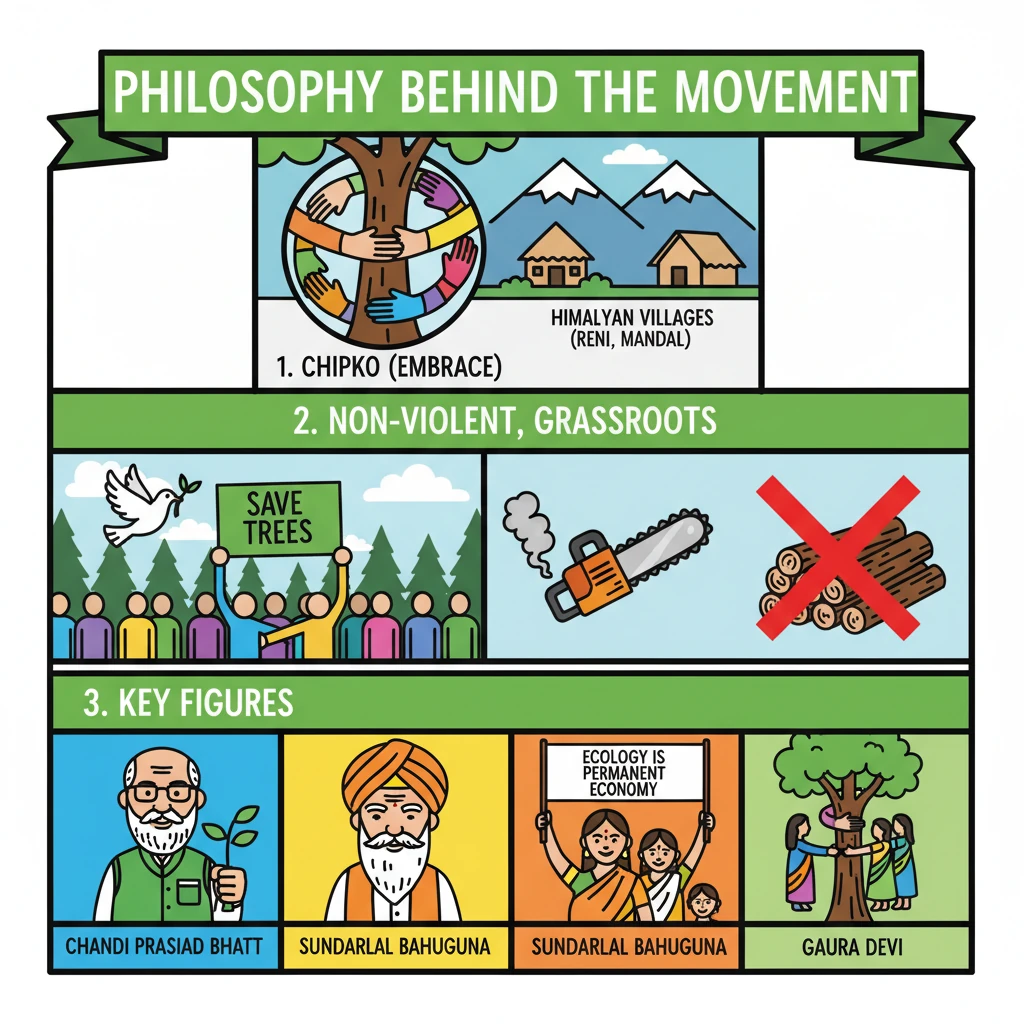
<h4>Philosophy Behind the Chipko Movement</h4><p>The philosophy underpinning the <strong>Chipko Movement</strong> was a powerful blend of traditional wisdom and modern environmentalism. It primarily drew inspiration from <strong>Gandhian principles</strong>, advocating for a harmonious coexistence with nature.</p><div class='key-point-box'><p>The core tenets included <strong>non-violence</strong> (<em>ahimsa</em>) as a method of protest and a deep respect for the natural world. This philosophy emphasized that humans are an integral part of nature, not separate from it, and must live in <strong>harmony with nature</strong>.</p></div><h4>Empowering Local Communities</h4><p>A crucial aspect of the movement's philosophy was the belief in <strong>empowering local communities</strong>. It sought to give them a significant <strong>voice in decision-making processes</strong> regarding the management and utilization of their <strong>natural resources</strong>, particularly forests.</p><p>This approach recognized that local populations, who depend directly on these resources for their livelihoods, possess invaluable traditional knowledge and have a vested interest in their sustainable management.</p><h4>Challenging Exploitative Practices</h4><p>The movement explicitly aimed to challenge and resist the <strong>exploitative practices</strong> of <strong>outside contractors</strong> and commercial logging companies. These practices often led to widespread deforestation and ecological degradation, ignoring the needs of local inhabitants.</p><p>It promoted a more <strong>inclusive and participatory approach</strong> to <strong>forest management</strong>, where the needs and rights of indigenous and forest-dwelling communities were prioritized over commercial interests.</p><h4>Impact and Inspiration</h4><p>The philosophical underpinnings of the Chipko Movement had a profound impact, both nationally and internationally. Its success demonstrated the power of grassroots movements rooted in non-violent resistance and community action.</p><div class='info-box'><p>It inspired similar movements across India, including the <strong>Narmada Bachao Andolan</strong> (Save Narmada Movement), the <strong>Appiko Movement</strong> in Karnataka, and the <strong>Silent Valley Movement</strong> in Kerala, all fighting against environmental destruction and for local rights.</p></div><div class='exam-tip-box'><p>Internationally, the <strong>Chipko Movement</strong> became a powerful symbol of resistance against <strong>environmental destruction</strong>. It showcased how local actions, guided by strong ethical principles, could have global resonance and influence environmental activism worldwide. This is vital for understanding India's role in global environmental movements for <strong>UPSC Mains GS-I and GS-III</strong>.</p></div>
💡 Key Takeaways
- •Gandhian principles of non-violence and harmony with nature were central to the movement's philosophy.
- •Empowerment of local communities in natural resource decision-making was a key objective.
- •The movement challenged exploitative practices by outside contractors and promoted participatory forest management.
- •It inspired significant environmental movements across India (e.g., Appiko, Narmada Bachao Andolan).
- •Internationally, it became a symbol of non-violent resistance against environmental destruction.
- •Its philosophy remains relevant for contemporary issues like climate change, FRA 2006, and SDGs.
🧠 Memory Techniques
98% Verified Content
📚 Reference Sources
•NCERT Textbooks (Social Science, Environment)
•Ministry of Environment, Forest and Climate Change (MoEFCC) reports
•Academic articles on Indian environmental movements
•Official documents on Forest Rights Act (2006)