How Tardigrade Properties Could be Applied for Human Use? - Science And Technology | UPSC Learning
Topics
0 topics • 0 completed
🔍
No topics match your search
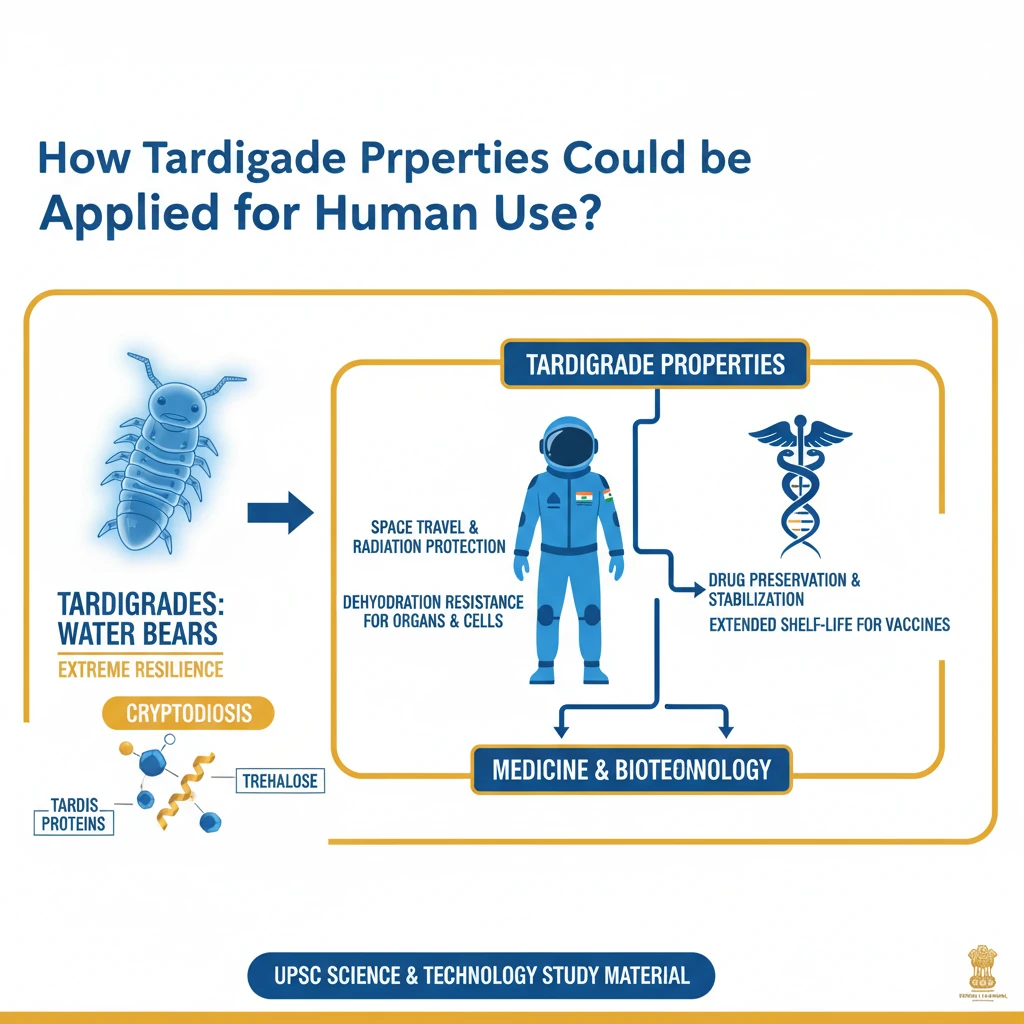
How Tardigrade Properties Could be Applied for Human Use?
Medium⏱️ 7 min read
science and technology
📖 Introduction
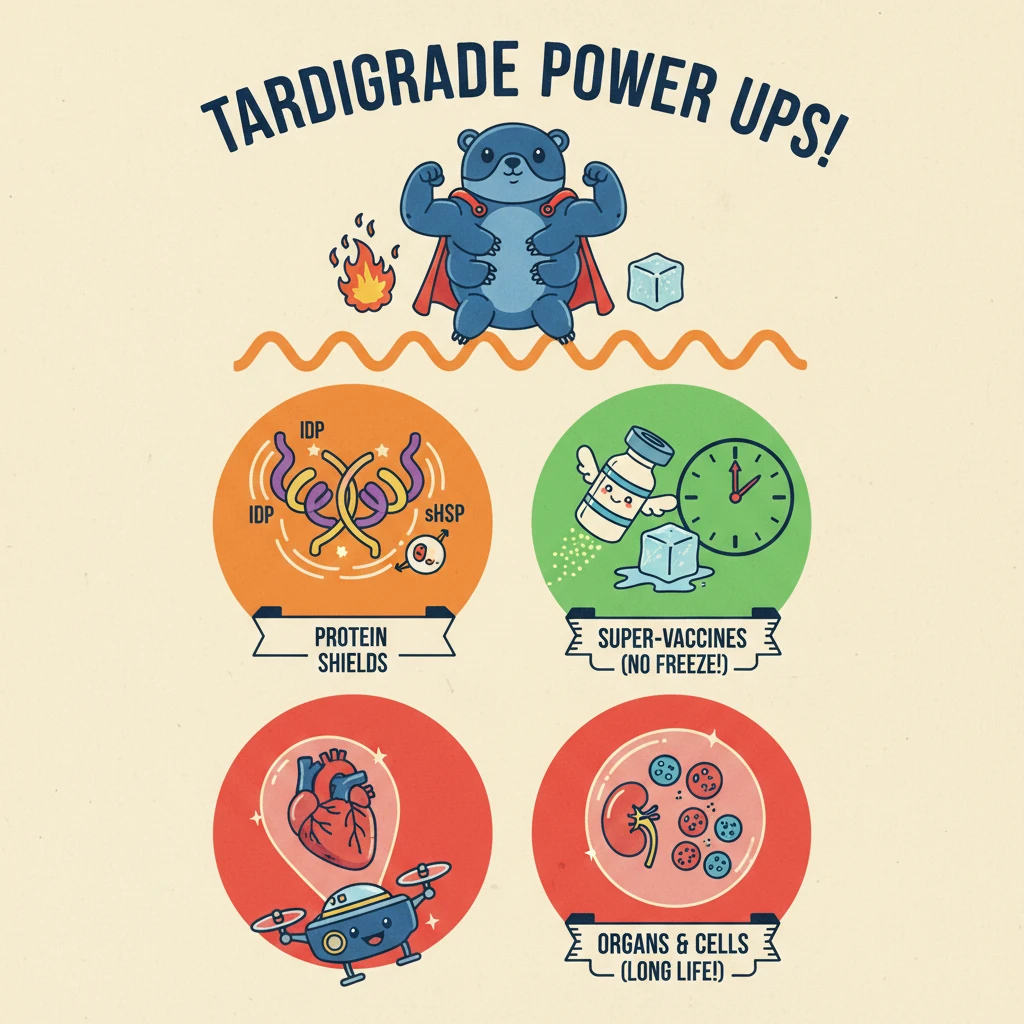
<h4>Introduction to Tardigrades and Their Unique Properties</h4><p><strong>Tardigrades</strong>, also known as <strong>water bears</strong> or <strong>moss piglets</strong>, are microscopic invertebrates renowned for their extraordinary resilience. They can survive extreme conditions that would be lethal to almost all other life forms.</p><p>Their remarkable survival mechanisms, such as <strong>cryptobiosis</strong> (a state of suspended animation), involve specific biological molecules that protect their cellular structures.</p><div class='key-point-box'><p>The focus of research is to understand and harness these properties for various <strong>human applications</strong>, particularly in medicine, biotechnology, and space exploration.</p></div><h4>Intrinsically Disordered Proteins (IDPs)</h4><p>One key to tardigrade survival lies in their <strong>Intrinsically Disordered Proteins (IDPs)</strong>. Specifically, <strong>Secretory-abundant heat-soluble IDPs</strong> play a crucial role.</p><p>These proteins are synthesized in various microbes and have been shown to significantly improve tolerance to <strong>desiccation</strong> (extreme dryness) and heat in completely dried plants.</p><div class='info-box'><p><strong>Application Potential:</strong> Harnessing <strong>IDPs</strong> could lead to the development of more resilient microbes and organisms, capable of surviving harsh environmental conditions.</p></div><h4>Small Heat Shock Proteins (sHSPs)</h4><p>Another protective mechanism involves <strong>Small Heat Shock Proteins (sHSPs)</strong>. These proteins are vital for maintaining cellular integrity under stress.</p><p>When these <strong>sHSPs</strong> are cloned into other microbes, they significantly enhance the microbes' survival and stability, especially in environments characterized by high temperatures or extreme dryness.</p><div class='info-box'><p><strong>Application Potential:</strong> Improved microbial resilience could have implications for industrial biotechnology, bioremediation, and even agricultural applications in arid regions.</p></div><h4>Enhanced Protein Stability</h4><p>The ability of <strong>tardigrades</strong> to stabilize their proteins in extremely harsh environments is a property with immense medical potential. Proteins are essential for biological function but are often fragile.</p><p>By understanding and mimicking these mechanisms, researchers aim to improve the <strong>shelf life</strong> and <strong>effectiveness</strong> of critical biological products.</p><div class='key-point-box'><p><strong>Key Applications:</strong> This includes extending the viability of <strong>vaccines</strong>, preserving the activity of <strong>antibodies</strong>, and enhancing the stability of various <strong>enzymes</strong> used in pharmaceutical and diagnostic applications.</p></div><h4>Advanced Cell Preservation Techniques</h4><p><strong>Tardigrades</strong> possess sophisticated mechanisms to resist cellular damage, even when their cells are subjected to extreme stress, such as dehydration or freezing.</p><p>These cellular protection strategies could be revolutionary for <strong>cell therapies</strong>, which often face significant challenges related to the transport and long-term storage of viable cells.</p><div class='info-box'><p><strong>Application Potential:</strong> Improved <strong>cell preservation</strong> would aid in the efficient transport and storage of therapeutic cells, ultimately enhancing the delivery and efficacy of treatments for various diseases.</p></div><h4>Protective Measures for Outer Space</h4><p>Given their unparalleled resilience to radiation, vacuum, and extreme temperatures, <strong>tardigrade properties</strong> hold significant promise for space exploration.</p><p>Researchers are exploring how insights from tardigrade biology could be used to develop enhanced protective measures for both <strong>human astronauts</strong> and sensitive <strong>materials</strong> in the harsh environment of <strong>outer space</strong>.</p><div class='exam-tip-box'><p>This application is highly relevant for discussions on <strong>space technology</strong> and <strong>biomimicry</strong> in UPSC Mains <strong>GS Paper III</strong>, particularly concerning future manned missions and long-duration space travel.</p></div>
💡 Key Takeaways
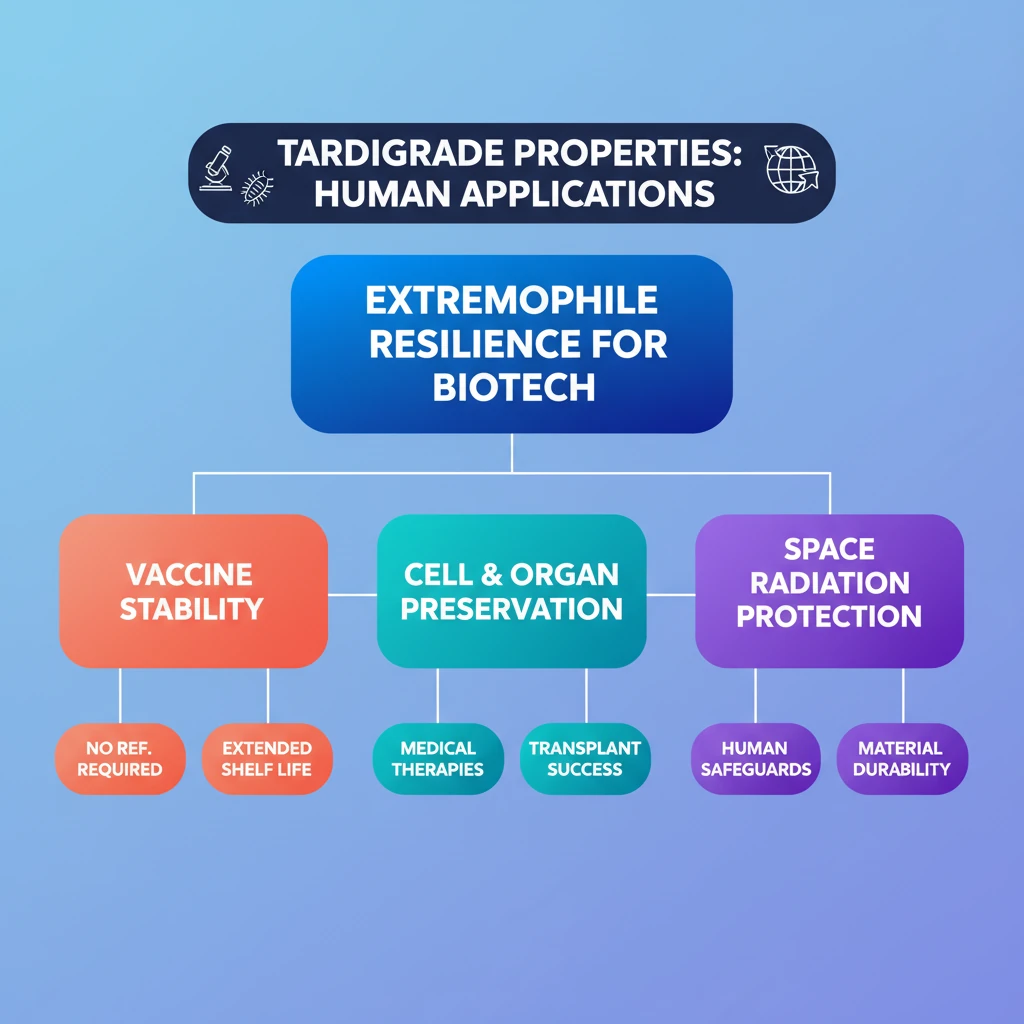
- •Tardigrades (water bears) are extremophiles known for surviving extreme conditions.
- •Their resilience is linked to specialized proteins like Intrinsically Disordered Proteins (IDPs) and Small Heat Shock Proteins (sHSPs).
- •These properties can enhance vaccine stability, extending shelf life without refrigeration.
- •Tardigrade mechanisms can improve cell and organ preservation for medical therapies and transplantation.
- •Insights from tardigrades are being explored for protecting humans and materials in outer space.
- •Biomimicry of tardigrade properties offers solutions in medicine, biotechnology, and space exploration.
🧠 Memory Techniques
98% Verified Content