What is the GenomIndia Project? - Science And Technology | UPSC Learning
Topics
0 topics • 0 completed
🔍
No topics match your search
What is the GenomIndia Project?
Medium⏱️ 7 min read
science and technology
📖 Introduction
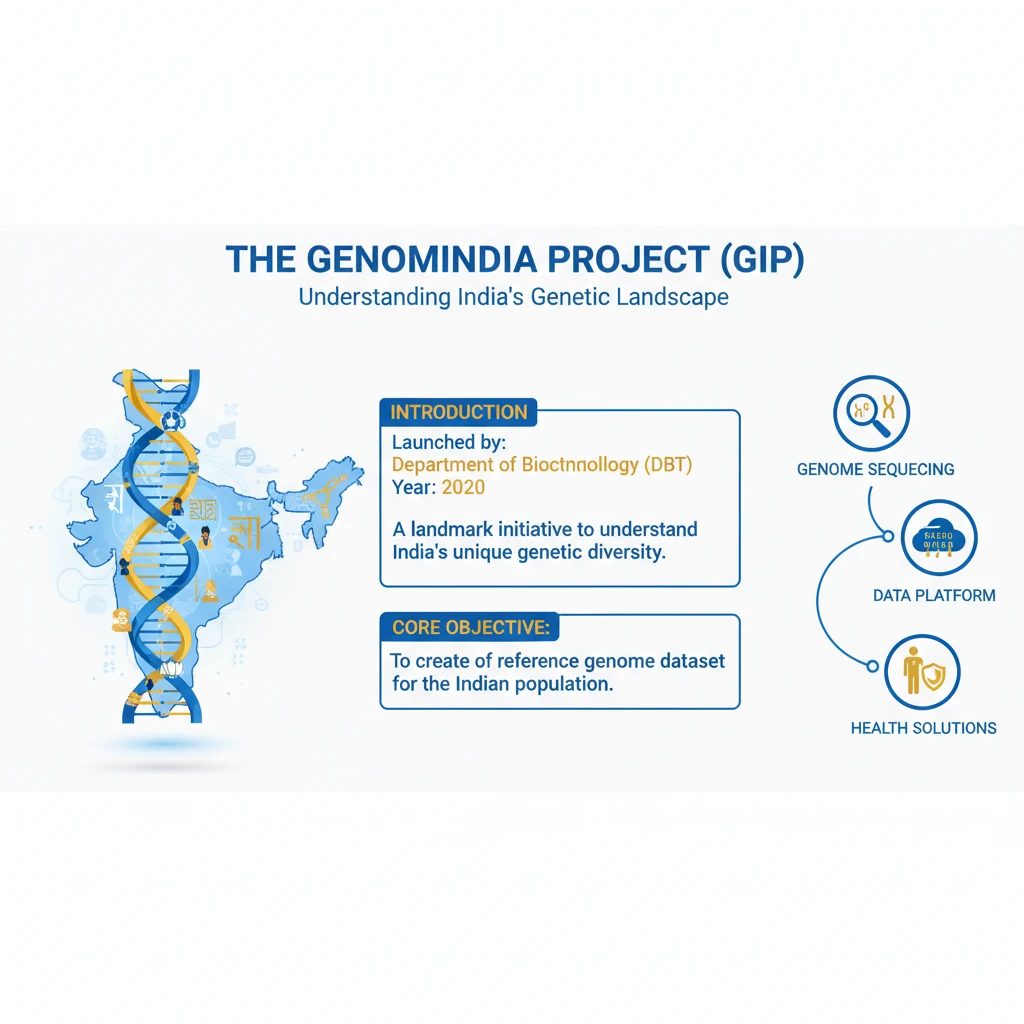
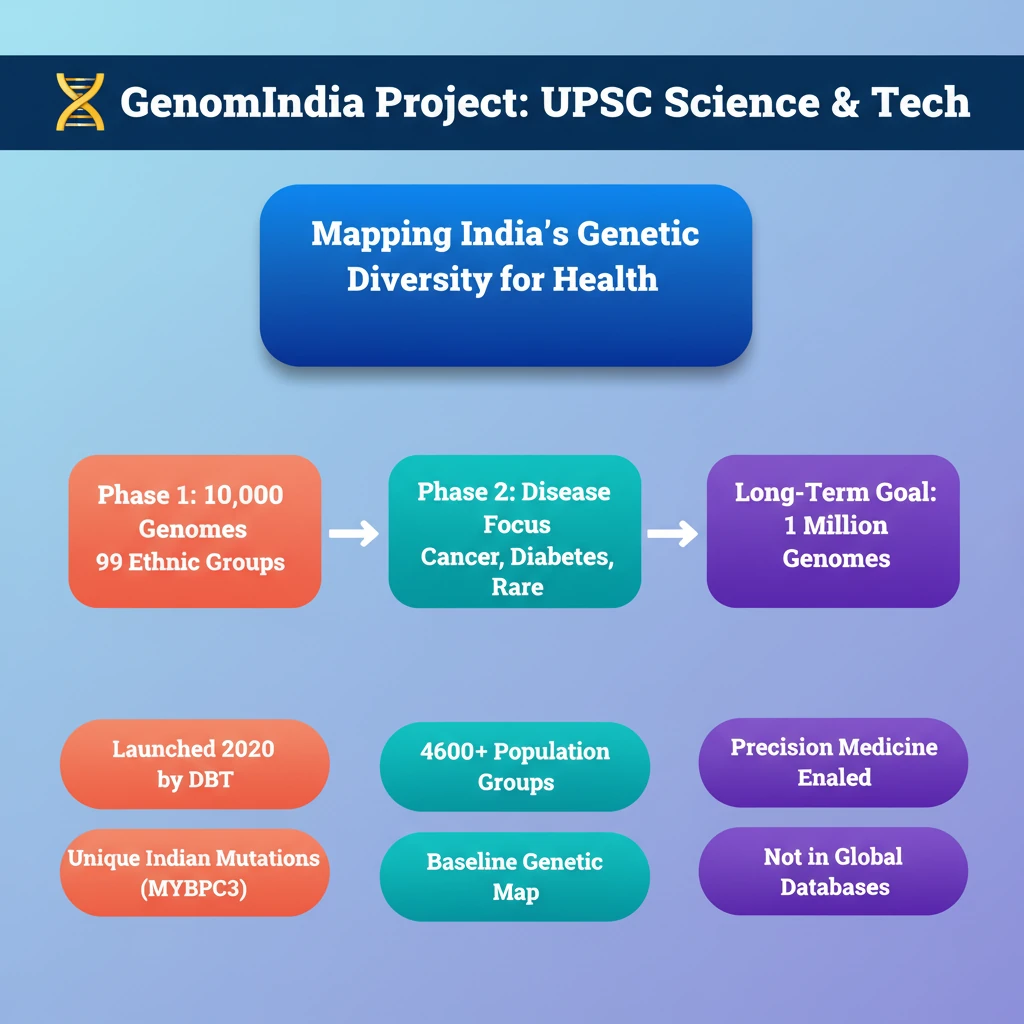
<h4>Introduction to the GenomIndia Project (GIP)</h4><p>The <strong>GenomIndia Project (GIP)</strong> is a landmark initiative launched by the <strong>Department of Biotechnology (DBT)</strong> in <strong>2020</strong>. It stands as a flagship program aimed at comprehensively understanding India's unique genetic landscape.</p><div class='info-box'><p><strong>Launch Year:</strong> 2020</p><p><strong>Nodal Agency:</strong> Department of Biotechnology (DBT)</p></div><h4>Core Objective of GIP</h4><p>The primary goal of the <strong>GIP</strong> is to map the vast <strong>genetic diversity</strong> prevalent across India. This involves sequencing and analyzing the <strong>genomes</strong> of various <strong>population groups</strong> within the country.</p><div class='key-point-box'><p>The project seeks to establish a <strong>baseline genetic map</strong>. This map will be crucial for studying <strong>health</strong>, understanding <strong>disease predisposition</strong>, and identifying <strong>population-specific traits</strong> unique to India.</p></div><h4>Scope and Phases of the Project</h4><p>The <strong>GenomIndia Project</strong> is structured in phases to systematically cover India's diverse genetic makeup.</p><ul><li><strong>Phase One:</strong> This initial phase focuses on sequencing the <strong>genomes of 10,000 individuals</strong>. These individuals are carefully selected to represent <strong>99 distinct ethnic groups</strong> across India.</li><li><strong>Long-term Vision:</strong> The project has ambitious plans to eventually scale up its efforts to sequence <strong>1 million genomes</strong>, providing an even more comprehensive genetic database.</li></ul><p>The second phase of the <strong>GIP</strong> takes a more targeted approach, focusing on specific health challenges.</p><ul><li><strong>Phase Two:</strong> This phase involves sequencing the <strong>genomes of individuals with specific diseases</strong>. Conditions under study include <strong>cancer</strong>, <strong>diabetes</strong>, and various <strong>rare diseases</strong>.</li></ul><div class='info-box'><p>By comparing the genomes of diseased individuals with healthy ones, researchers aim to <strong>identify genes linked to these conditions</strong>. This comparative analysis is vital for understanding disease mechanisms.</p></div><h4>Significance for India's Healthcare</h4><p>India's unparalleled <strong>genetic diversity</strong>, with over <strong>4,600 distinct population groups</strong>, makes the <strong>GIP</strong> particularly significant. This diversity means that genetic factors influencing health and disease can vary significantly from global patterns.</p><div class='key-point-box'><p>The project is expected to uncover <strong>genetic factors unique to Indian populations</strong>. This includes identifying specific <strong>rare diseases</strong> and novel <strong>mutations</strong> that may not be present in international genetic databases.</p></div><div class='exam-tip-box'><p>For instance, the <strong>MYBPC3 mutation</strong>, linked to <strong>early cardiac arrest</strong>, is prevalent in certain Indian populations but is largely absent from global genetic datasets. Understanding such unique genetic markers is critical for developing targeted healthcare interventions.</p></div>
💡 Key Takeaways
- •GenomIndia Project (GIP) launched in 2020 by DBT to map India's genetic diversity.
- •Aims to sequence genomes of 10,000 individuals across 99 ethnic groups in Phase 1, with a long-term goal of 1 million.
- •Phase 2 focuses on sequencing genomes of individuals with specific diseases like cancer, diabetes, and rare diseases.
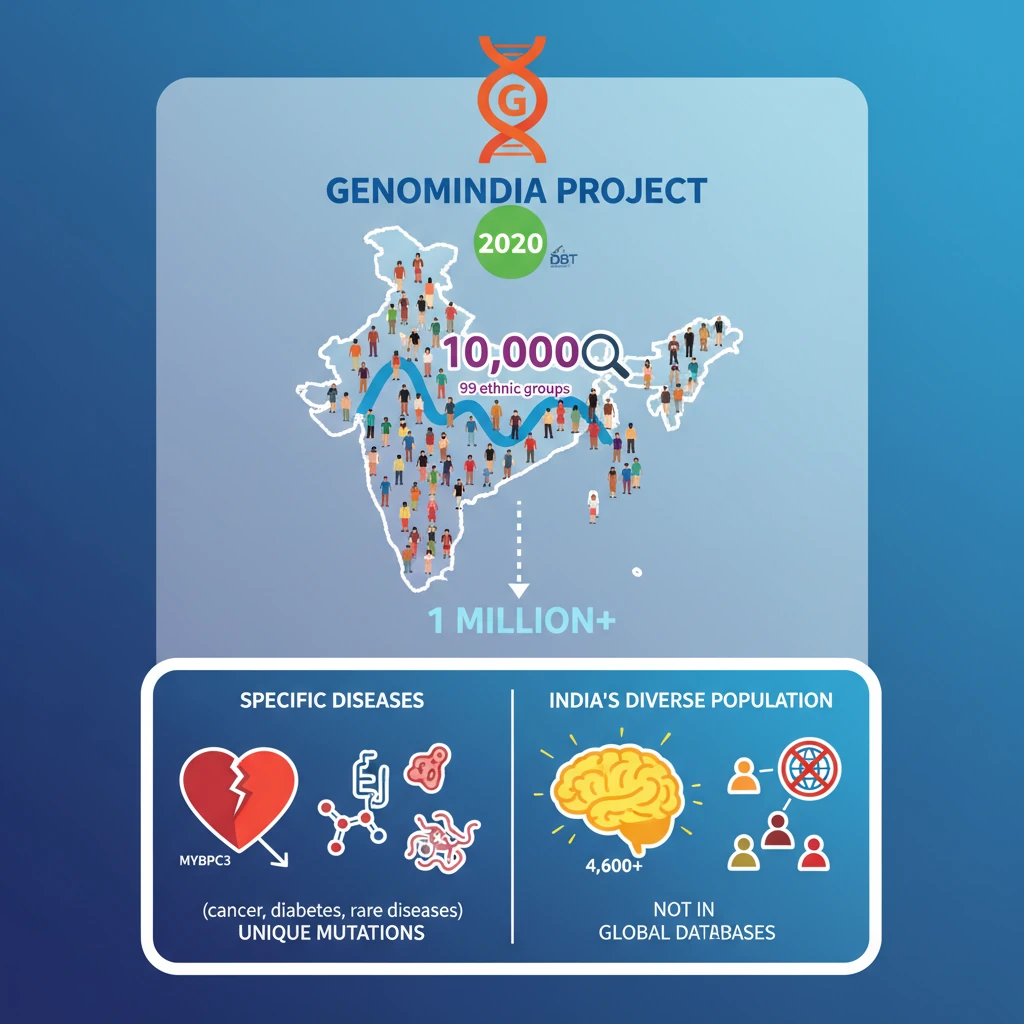
- •Significance lies in identifying unique genetic factors and mutations (e.g., MYBPC3) specific to India's 4,600+ population groups, not found in global databases.
- •Crucial for establishing a baseline genetic map for health, disease predisposition, and population-specific traits, enabling precision medicine.
🧠 Memory Techniques
95% Verified Content
📚 Reference Sources
•Department of Biotechnology (DBT) official website (for GenomIndia Project details)
•Scientific publications and news articles on the GenomIndia Project