PRATUSH Telescope - Science And Technology | UPSC Learning
Topics
0 topics • 0 completed
🔍
No topics match your search
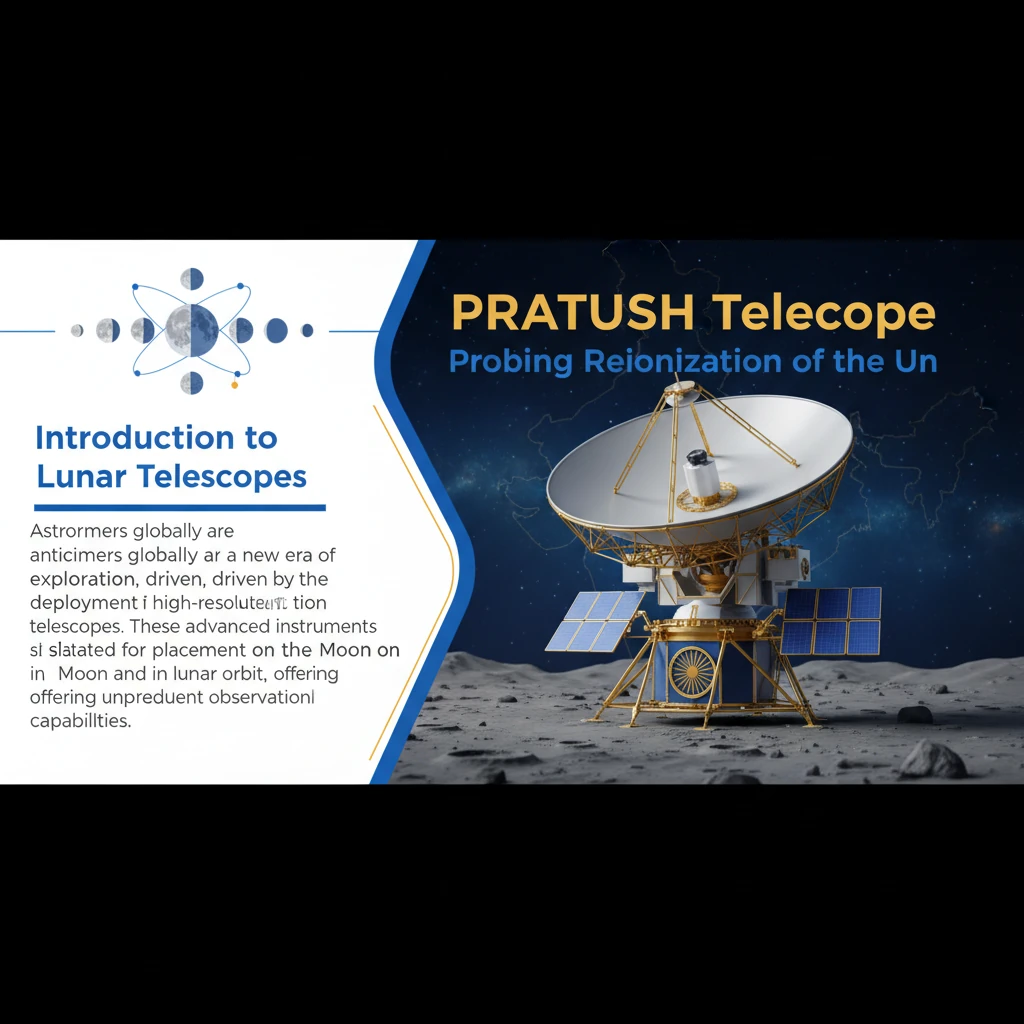
PRATUSH Telescope
Medium⏱️ 7 min read
science and technology
📖 Introduction
<h4>Introduction to Lunar Telescopes</h4><p>Astronomers globally are anticipating a <strong>new era of exploration</strong>, driven by the deployment of <strong>high-resolution telescopes</strong>.</p><p>These advanced instruments are slated for placement on the <strong>Moon</strong> and in <strong>lunar orbit</strong>, offering unprecedented observational capabilities.</p><h4>Understanding PRATUSH Telescope</h4><p><strong>PRATUSH</strong> is an acronym for <strong>Probing Reionization of the Universe using Signal from Hydrogen</strong>.</p><div class='key-point-box'><p>It represents a significant proposal from <strong>India</strong>, positioning the nation at the forefront of this next generation of lunar-based astronomical instruments.</p></div><p>The primary objective of <strong>PRATUSH</strong> is to open a <strong>new window to the universe</strong>, specifically to investigate the critical period known as the <strong>Epoch of Reionization</strong>.</p><div class='exam-tip-box'><p>Understanding initiatives like <strong>PRATUSH</strong> is crucial for <strong>UPSC Science & Technology</strong>, particularly topics related to <strong>space exploration</strong>, <strong>astronomy</strong>, and <strong>India's contributions</strong> to global scientific endeavors.</p></div>
💡 Key Takeaways
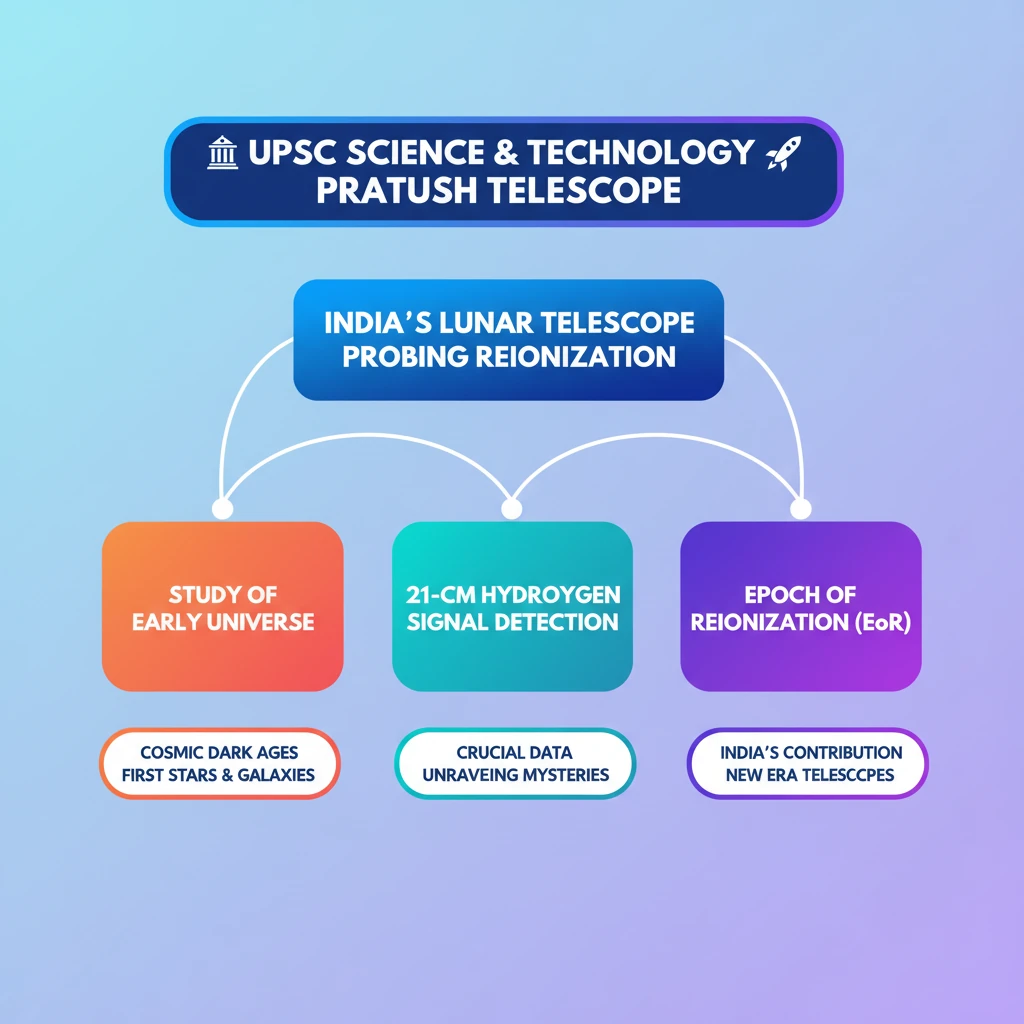
- •PRATUSH (Probing Reionization of the Universe using Signal from Hydrogen) is India's proposed lunar telescope.
- •Its primary goal is to study the Epoch of Reionization (EoR) by detecting the 21-cm hydrogen signal.
- •PRATUSH represents India's contribution to the new era of high-resolution telescopes placed on the Moon or in lunar orbit.
- •This mission is crucial for understanding the early universe, cosmic dark ages, and the formation of the first stars and galaxies.
🧠 Memory Techniques

95% Verified Content
📚 Reference Sources
•ISRO official communications and project descriptions (for PRATUSH context)
•NASA and ESA scientific publications (for general lunar telescope concepts and EoR studies)
•Standard cosmology textbooks and academic articles on 21-cm cosmology