World Diabetes Day 2024 - Science And Technology | UPSC Learning
Topics
0 topics • 0 completed
🔍
No topics match your search
World Diabetes Day 2024
Medium⏱️ 7 min read
science and technology
📖 Introduction
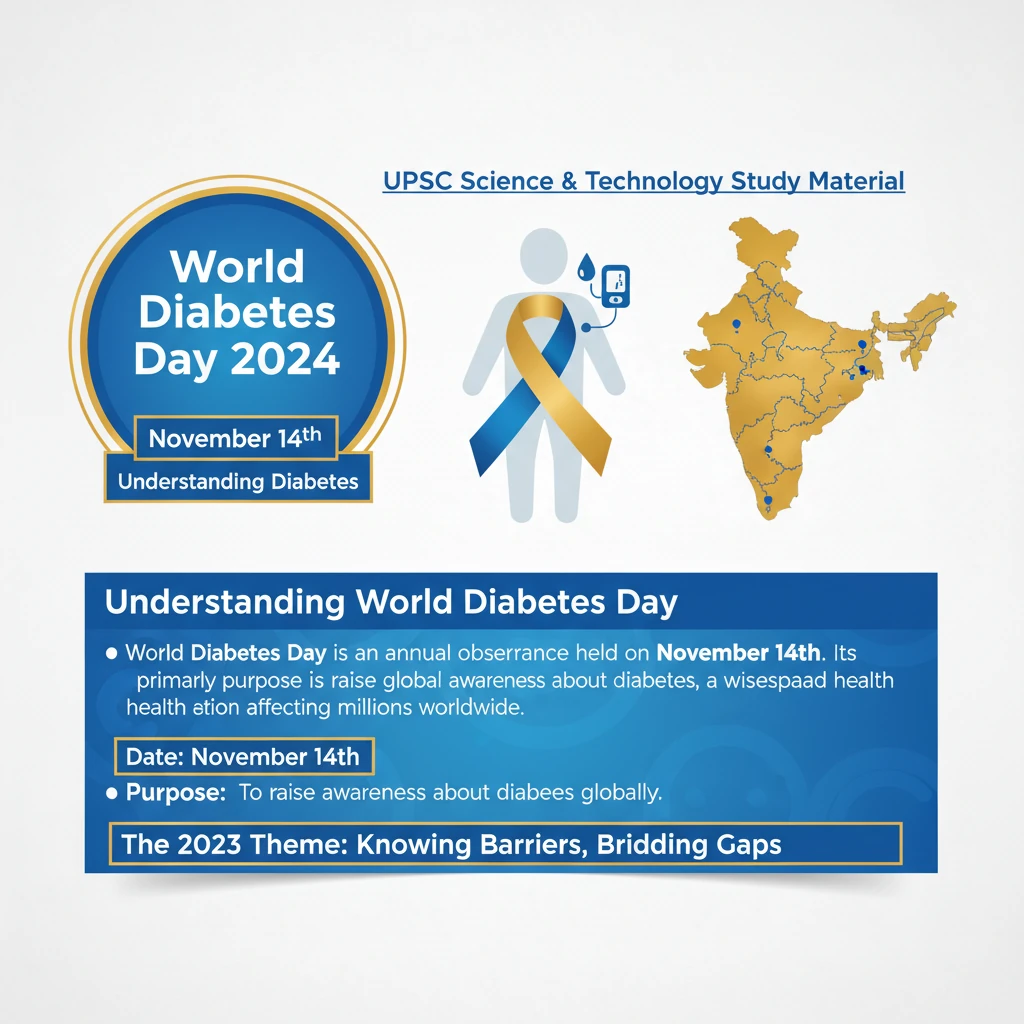
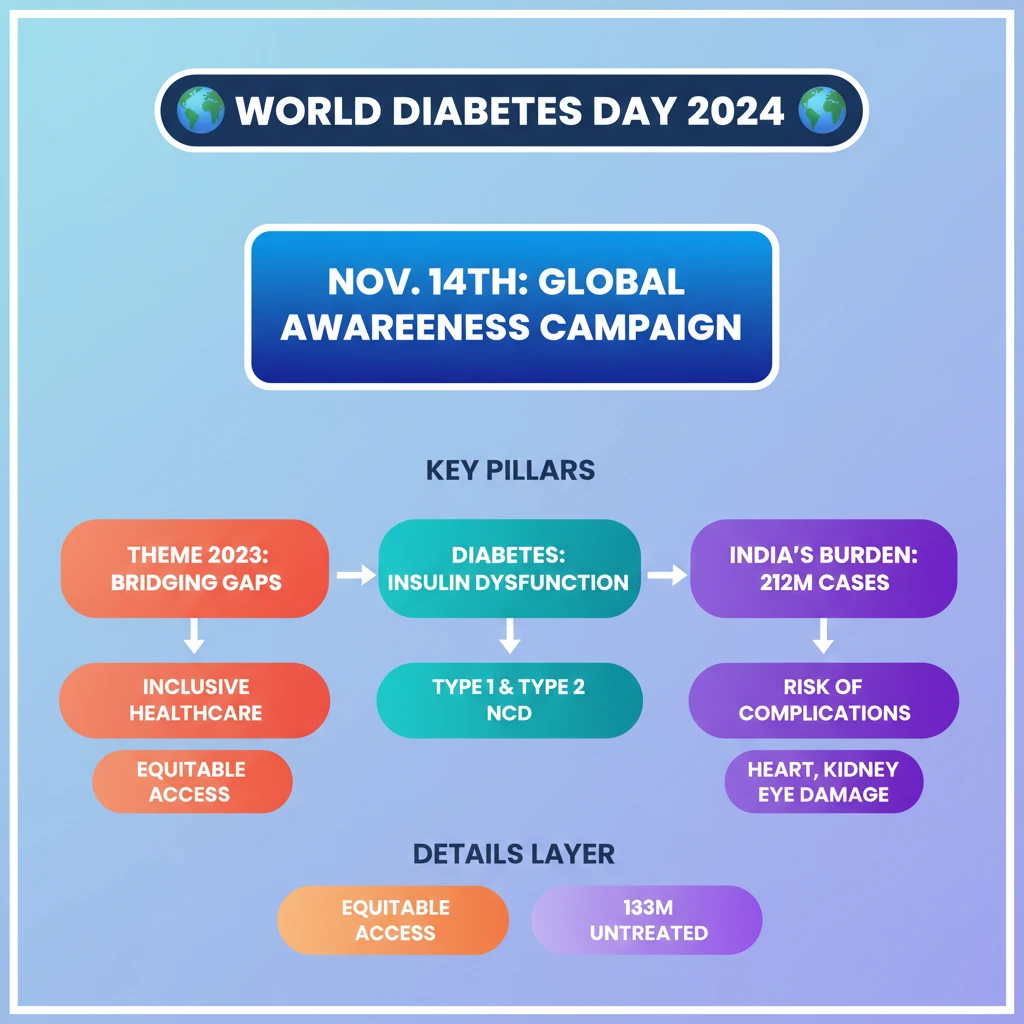
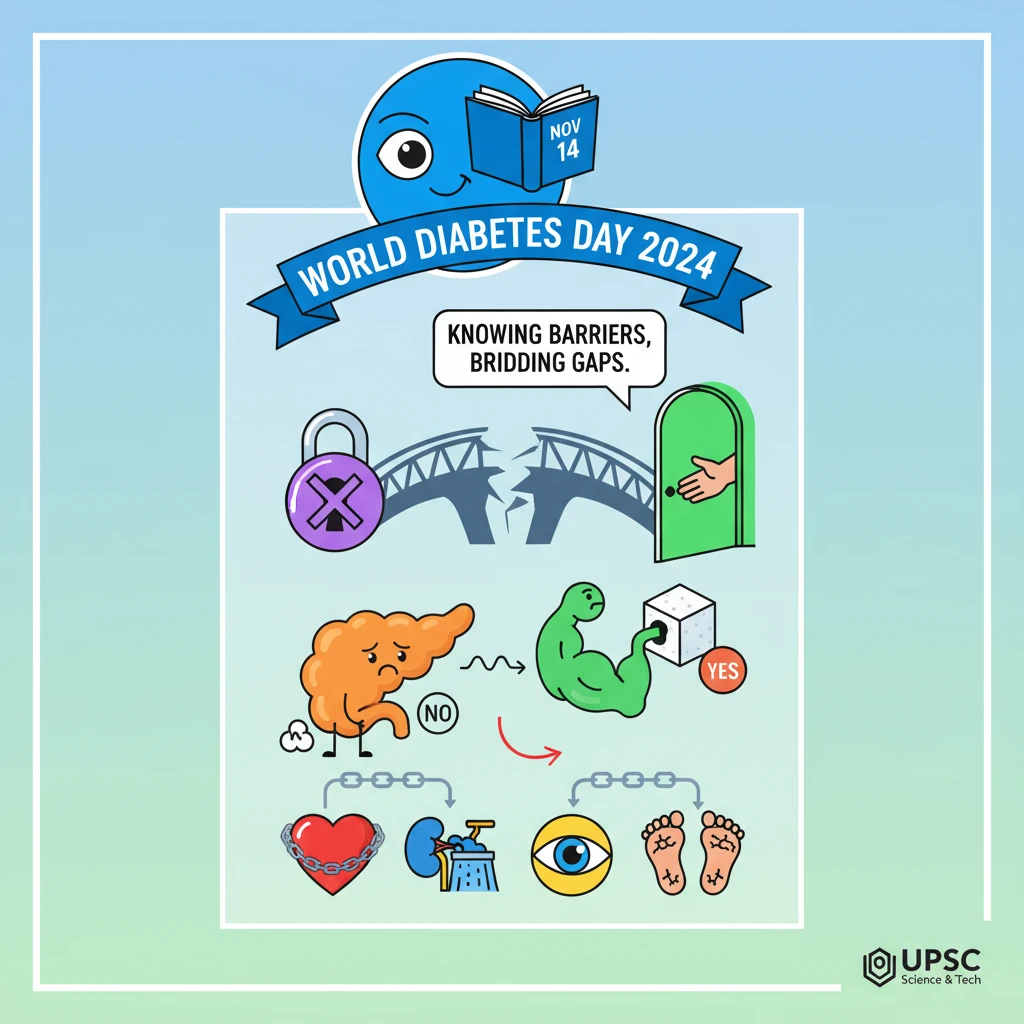
<h4>World Diabetes Day 2024: An Overview</h4><p><strong>World Diabetes Day</strong> is an internationally recognized observance celebrated annually on <strong>November 14th</strong>. Its primary purpose is to raise global awareness about <strong>diabetes</strong>, a chronic condition affecting millions worldwide.</p><div class='info-box'><p>The theme for <strong>World Diabetes Day 2023</strong> was <strong>“Knowing Barriers, Bridging Gaps.”</strong> This theme underscored the critical need for inclusive healthcare systems and equitable access to essential diabetes management and care for all individuals.</p></div><h4>Understanding Diabetes: A Non-Communicable Disease</h4><p><strong>Diabetes</strong> is categorized as a <strong>Non-communicable disease (NCD)</strong>. It arises when the body either fails to produce sufficient <strong>insulin</strong> or cannot effectively utilize the <strong>insulin</strong> it produces. <strong>Insulin</strong> is a vital hormone responsible for regulating <strong>blood sugar (glucose)</strong> levels in the body.</p><div class='key-point-box'><p><strong>Key Concept:</strong> Diabetes is an <strong>NCD</strong>, highlighting its chronic nature and the importance of lifestyle and management rather than infectious transmission.</p></div><p>There are two primary forms of diabetes: <strong>Type 1 diabetes</strong> and <strong>Type 2 diabetes</strong>. Each type has distinct causes and management approaches.</p><h4>Severe Health Complications of Uncontrolled Diabetes</h4><p>If left unmanaged, <strong>diabetes</strong> can lead to a range of severe and debilitating health complications. These complications significantly impact a person's quality of life and can be life-threatening.</p><ul><li><strong>Heart disease:</strong> Increased risk of heart attacks and strokes.</li><li><strong>Kidney failure:</strong> Damage to the kidneys, potentially requiring dialysis or transplant.</li><li><strong>Vision loss:</strong> Conditions like diabetic retinopathy, which can lead to blindness.</li><li>Other issues include nerve damage, foot problems, and increased susceptibility to infections.</li></ul><div class='exam-tip-box'><p><strong>UPSC Insight:</strong> Understanding <strong>NCDs</strong> like diabetes, their causes, impacts, and government responses, is crucial for <strong>GS Paper 2 (Health)</strong> and <strong>GS Paper 3 (Science & Technology, Economy)</strong>. Be prepared to discuss policy implications and public health challenges.</p></div>
💡 Key Takeaways
- •World Diabetes Day (Nov 14) raises awareness about diabetes.
- •The 2023 theme focused on 'Knowing Barriers, Bridging Gaps' for equitable care.
- •Diabetes is a Non-communicable disease (NCD) affecting insulin production or usage.
- •India has 212 million diabetics, with 133 million untreated, and prevalence quadrupled since 1990.
- •Government initiatives like NP-NCD and PMBJP aim to combat diabetes.
- •Uncontrolled diabetes leads to severe complications like heart disease, kidney failure, and vision loss.
🧠 Memory Techniques
95% Verified Content
📚 Reference Sources
•World Health Organization (WHO) reports on Non-Communicable Diseases (NCDs)
•Ministry of Health & Family Welfare, Government of India publications on national health programs
•International Diabetes Federation (IDF) data and campaigns