Space Debris & Collision Risk: Threats in Low Earth Orbit (LEO) - Science And Technology | UPSC Learning
Topics
0 topics • 0 completed
🔍
No topics match your search
Space Debris & Collision Risk: Threats in Low Earth Orbit (LEO)
Medium⏱️ 5 min read
science and technology
📖 Introduction
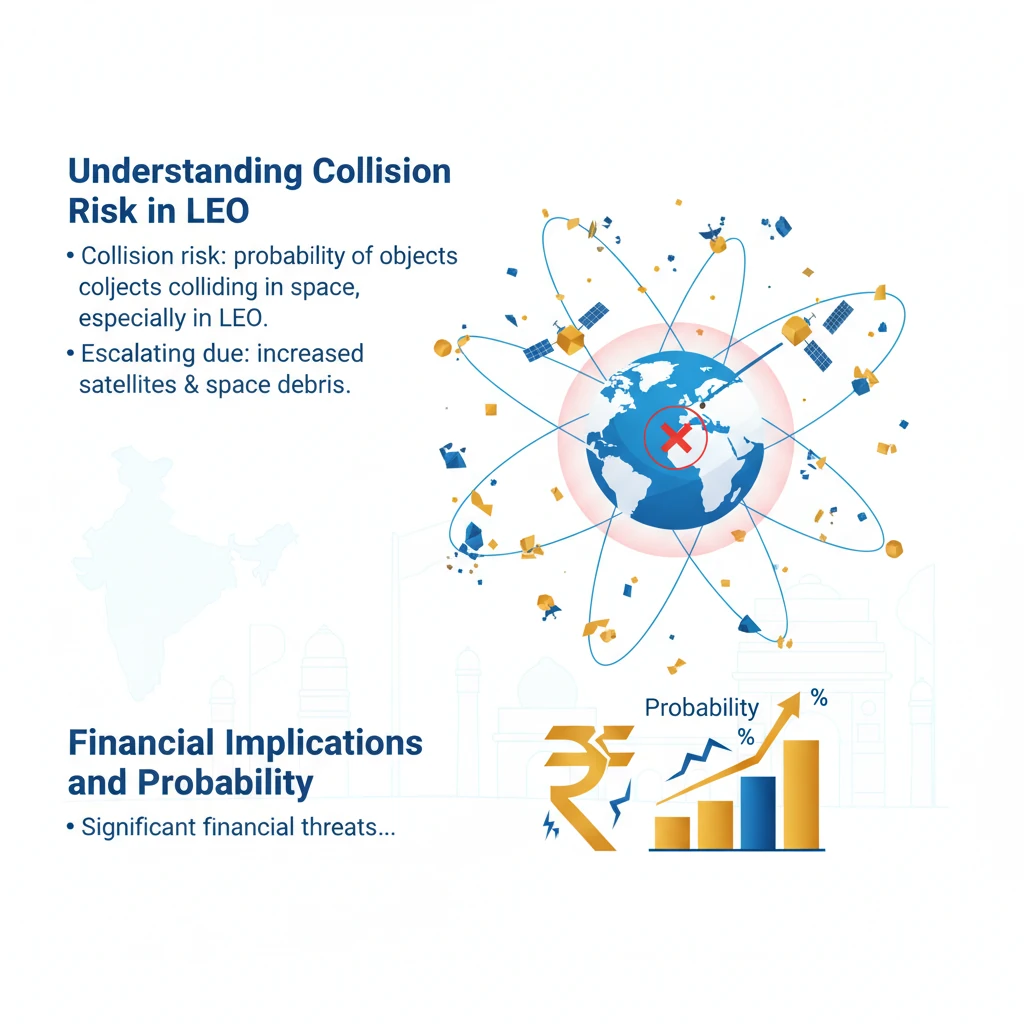
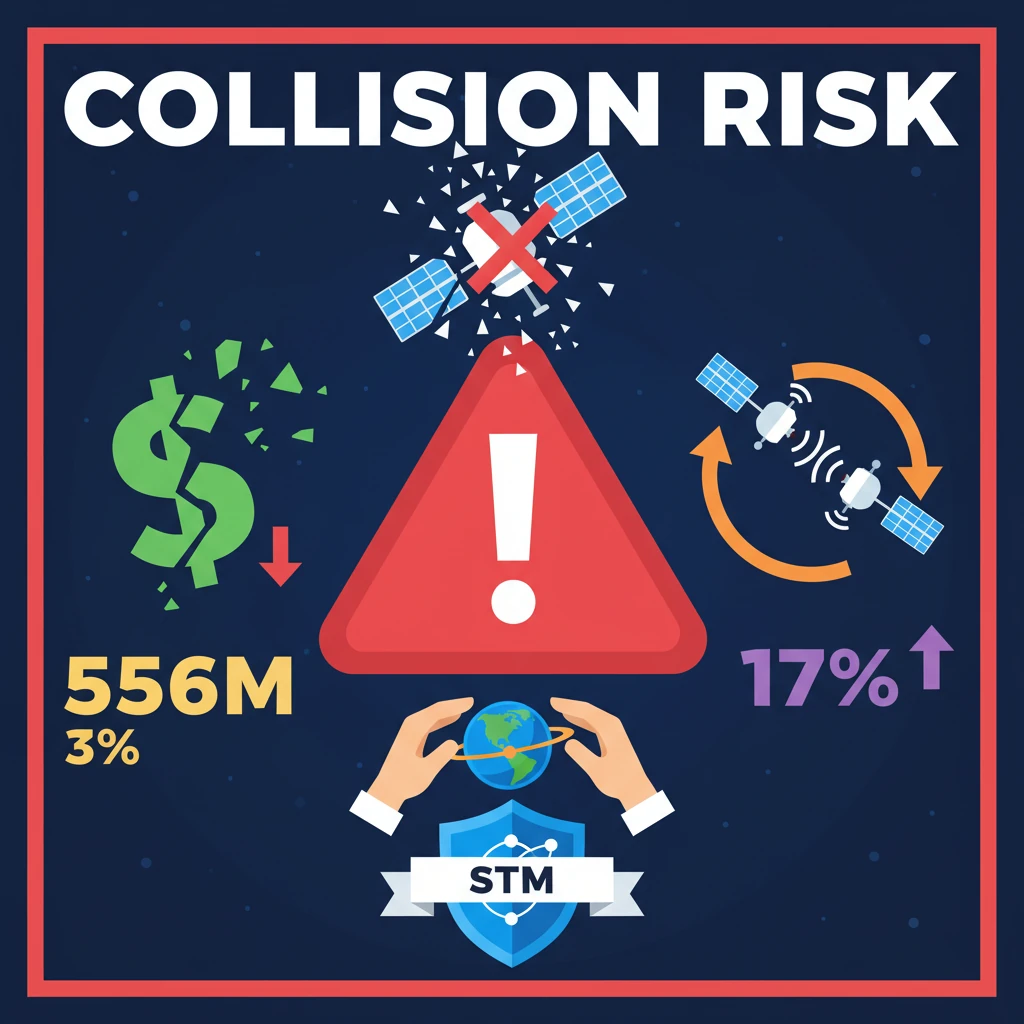
<h4>Understanding Collision Risk in LEO</h4><p><strong>Collision risk</strong> refers to the probability of two or more objects in space, particularly in <strong>Low Earth Orbit (LEO)</strong>, colliding with each other.</p><p>This risk is escalating due to the rapid increase in the number of operational satellites and the growing volume of <strong>space debris</strong>.</p><h4>Financial Implications and Probability</h4><p>The increasing congestion in LEO poses significant financial threats to space operations.</p><div class='info-box'><p><strong>Projected Damages:</strong> The estimated financial damage from potential collisions in LEO is approximately <strong>USD 556 million</strong> between <strong>2024 and 2029</strong>.</p><p><strong>Collision Probability:</strong> There is a significant <strong>3.13% probability</strong> of such a collision occurring within this timeframe.</p></div><h4>Increasing Close Encounters</h4><p>The frequency of near-misses, or <strong>close encounters</strong>, has also seen a sharp rise, indicating the intensifying congestion.</p><div class='info-box'><p>In the past year alone, there has been a notable <strong>17% increase</strong> in close encounters per satellite, highlighting the growing density of objects in LEO.</p></div><div class='key-point-box'><p>The combination of increased congestion, substantial financial risk, and rising close encounters underscores the urgent need for effective <strong>Space Traffic Management (STM)</strong> and international cooperation.</p></div>
💡 Key Takeaways
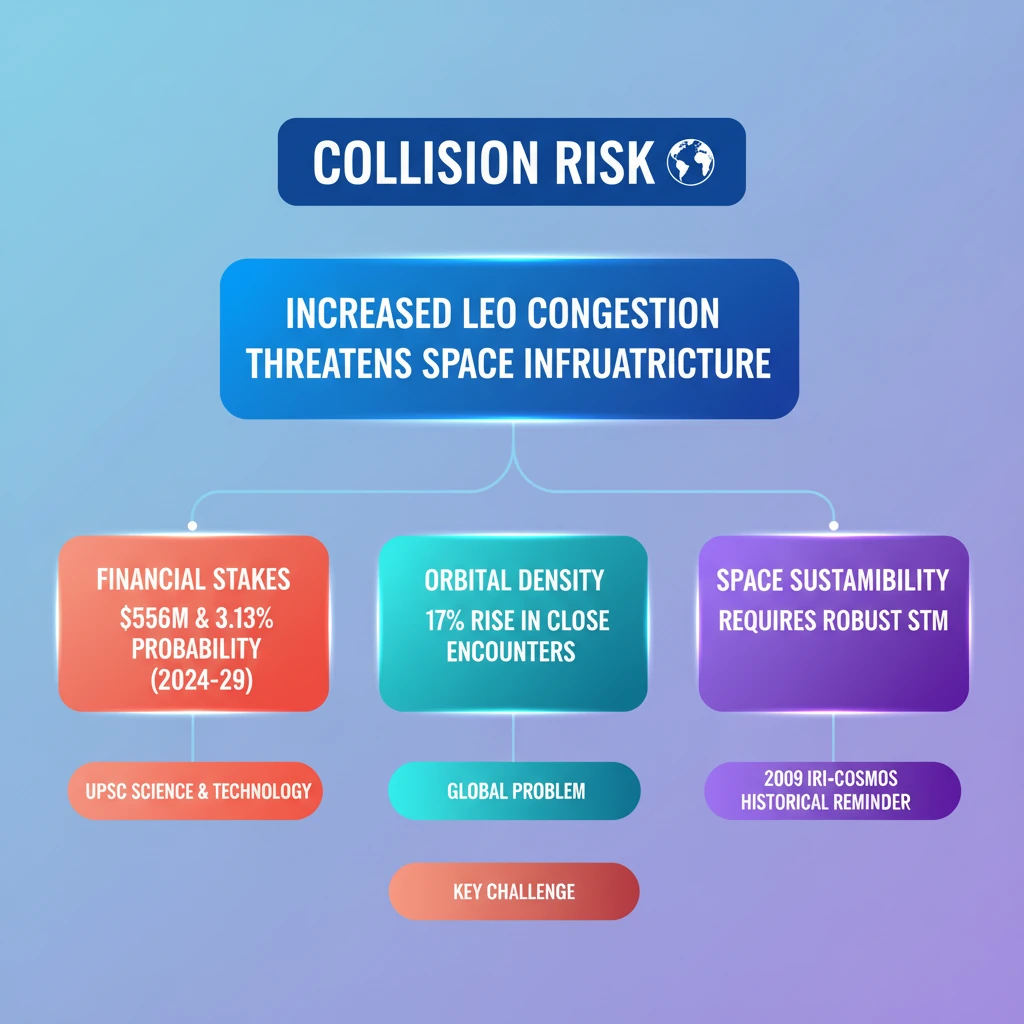
- •Increased LEO congestion poses a significant collision risk, threatening space infrastructure.
- •Projected damages of USD 556 million and a 3.13% collision probability (2024-29) highlight the financial stakes.
- •A 17% increase in close encounters per satellite in the past year indicates rapidly worsening orbital density.
- •Collision risk is a critical challenge for space sustainability, demanding robust Space Traffic Management (STM).
- •The 2009 Iridium-Cosmos collision serves as a stark historical reminder of actual orbital collision events.
🧠 Memory Techniques
95% Verified Content