Global Cooperation in Space Debris Management - Science And Technology | UPSC Learning
Topics
0 topics • 0 completed
🔍
No topics match your search
Global Cooperation in Space Debris Management
Medium⏱️ 8 min read
science and technology
📖 Introduction
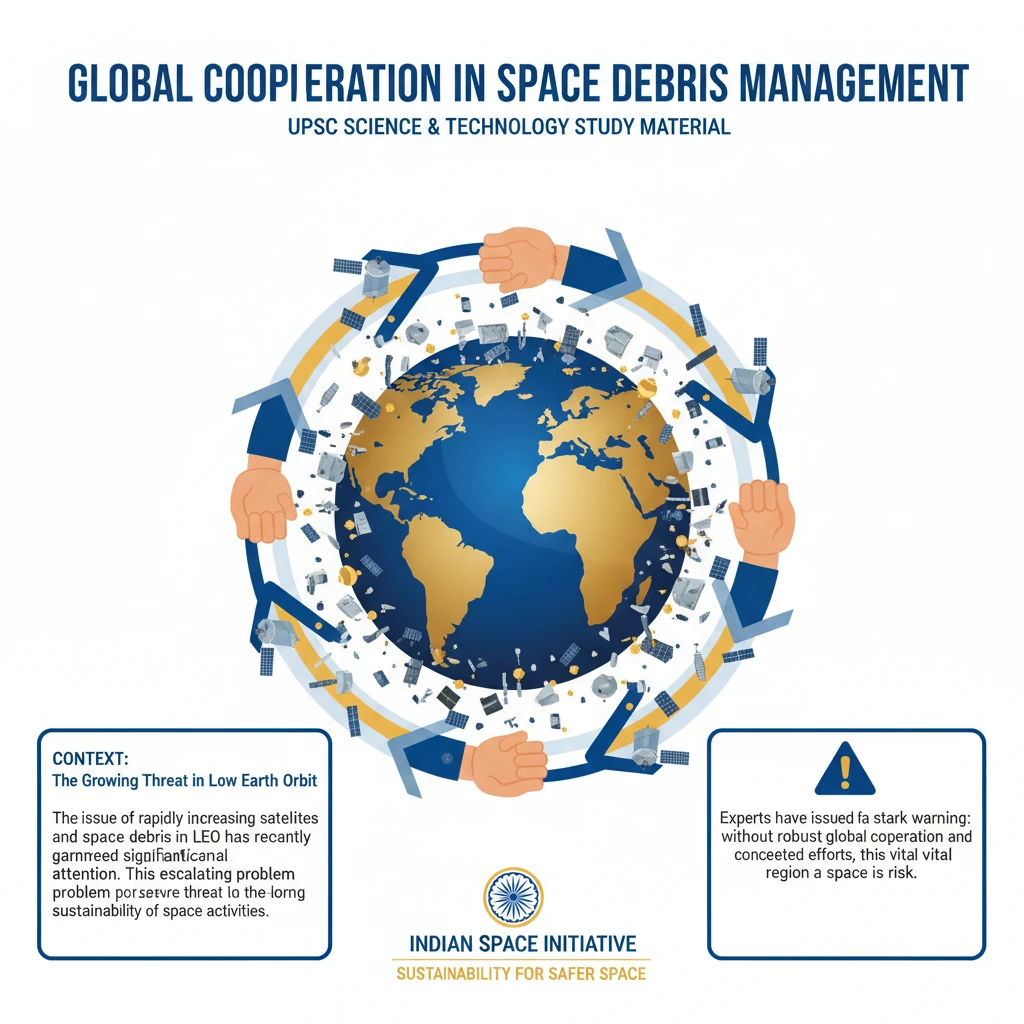
<h4>Context: The Growing Threat in Low Earth Orbit</h4><p>The issue of rapidly increasing <strong>satellites</strong> and <strong>space debris</strong> in <strong>Low Earth Orbit (LEO)</strong> has recently garnered significant international attention. This escalating problem poses a severe threat to the long-term sustainability of space activities.</p><p>Experts have issued a stark warning: without robust <strong>global cooperation</strong> and concerted efforts, this vital region of space risks becoming completely <strong>unusable</strong> for future missions and satellite deployments.</p><div class='info-box'><p><strong>Low Earth Orbit (LEO)</strong> is the region of space typically below 2,000 km altitude. It is crucial for most operational satellites, including communication, Earth observation, and scientific missions.</p></div><h4>The Challenge of Space Debris</h4><p><strong>Space debris</strong> refers to any human-made object orbiting Earth that no longer serves a useful purpose. This includes spent rocket stages, defunct satellites, and fragments from collisions or explosions.</p><p>The increasing density of objects in LEO significantly raises the probability of <strong>collisions</strong>, which in turn generate more debris, creating a cascading effect known as the <strong>Kessler Syndrome</strong>.</p><div class='key-point-box'><p>The <strong>Kessler Syndrome</strong> describes a scenario where the density of objects in LEO is high enough that collisions between objects could cause a cascade of further collisions, creating enough debris to make space activities impractical for many generations.</p></div><h4>The Imperative for Global Cooperation</h4><p>Managing space debris is a challenge that transcends national borders. Debris from one country's satellite can pose a threat to another country's assets, highlighting the need for a unified approach.</p><p>Effective <strong>global cooperation</strong> is essential for developing and implementing common standards, sharing data, coordinating debris mitigation strategies, and investing in active debris removal technologies.</p><div class='exam-tip-box'><p>For <strong>UPSC Mains (GS-III)</strong>, understanding the implications of space debris on <strong>space security</strong>, <strong>international relations</strong>, and <strong>sustainable development goals</strong> is crucial. Emphasize the multi-faceted nature of the problem and solutions.</p></div>
💡 Key Takeaways
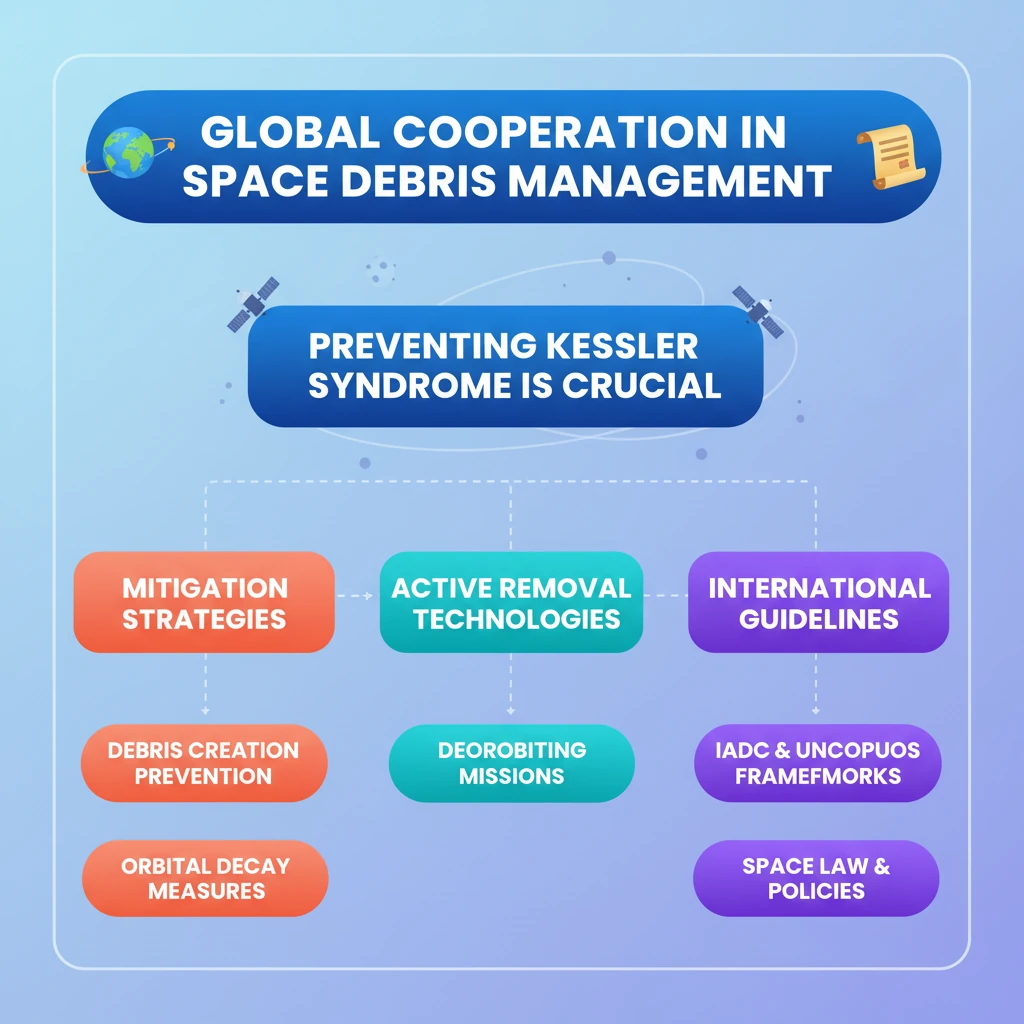
- •Increasing satellites and space debris in LEO threaten its usability.
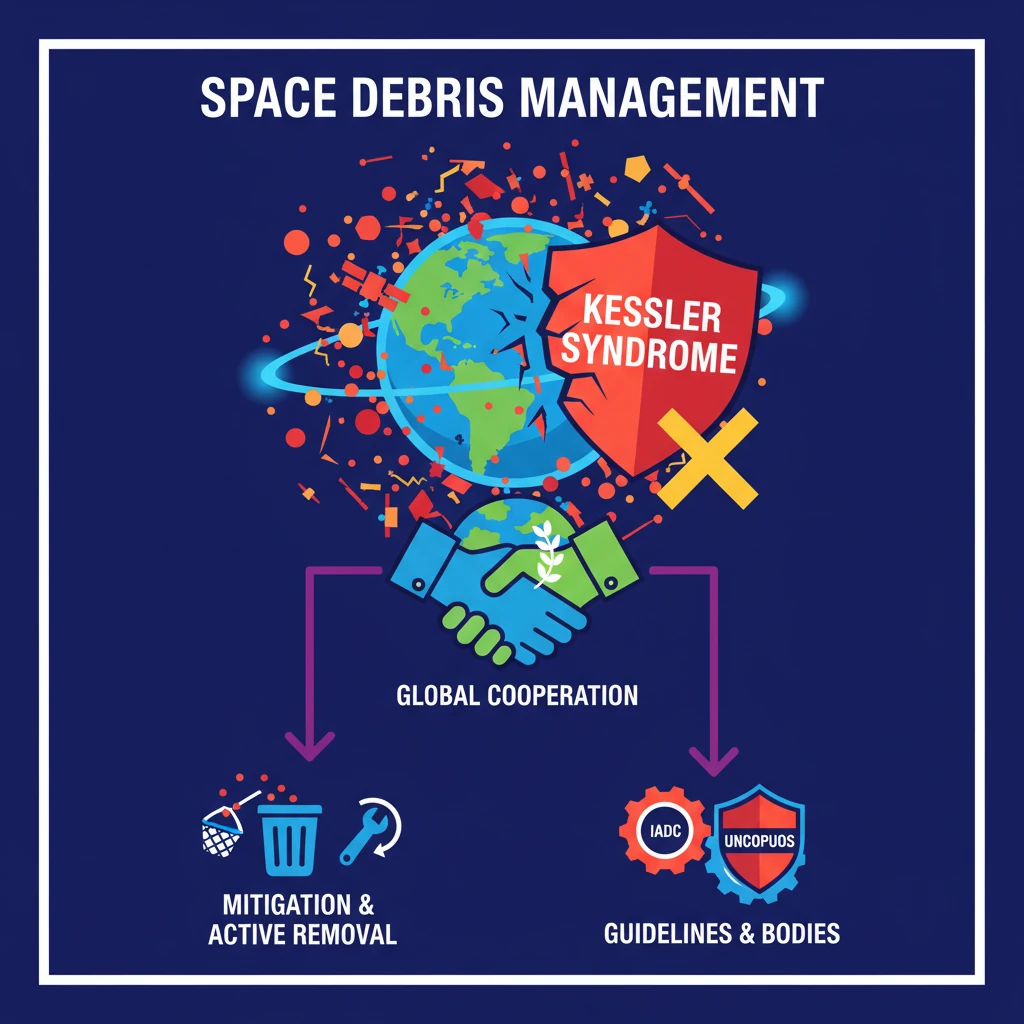
- •Global cooperation is essential to prevent the Kessler Syndrome.
- •Space debris management requires both mitigation and active removal strategies.
- •International bodies like IADC and UNCOPUOS play a crucial role in setting guidelines.
- •Mega-constellations intensify the debris challenge, demanding urgent solutions.
- •Sustainable space practices are vital for future economic and scientific activities.
🧠 Memory Techniques
95% Verified Content
📚 Reference Sources
•NASA Orbital Debris Program Office reports
•European Space Agency (ESA) Space Debris Office publications
•United Nations Office for Outer Space Affairs (UNOOSA) documents
•Inter-Agency Space Debris Coordination Committee (IADC) guidelines