Gamma Rays and Related Health Hazards - Science And Technology | UPSC Learning
Topics
0 topics • 0 completed
🔍
No topics match your search
Gamma Rays and Related Health Hazards
Medium⏱️ 8 min read
science and technology
📖 Introduction
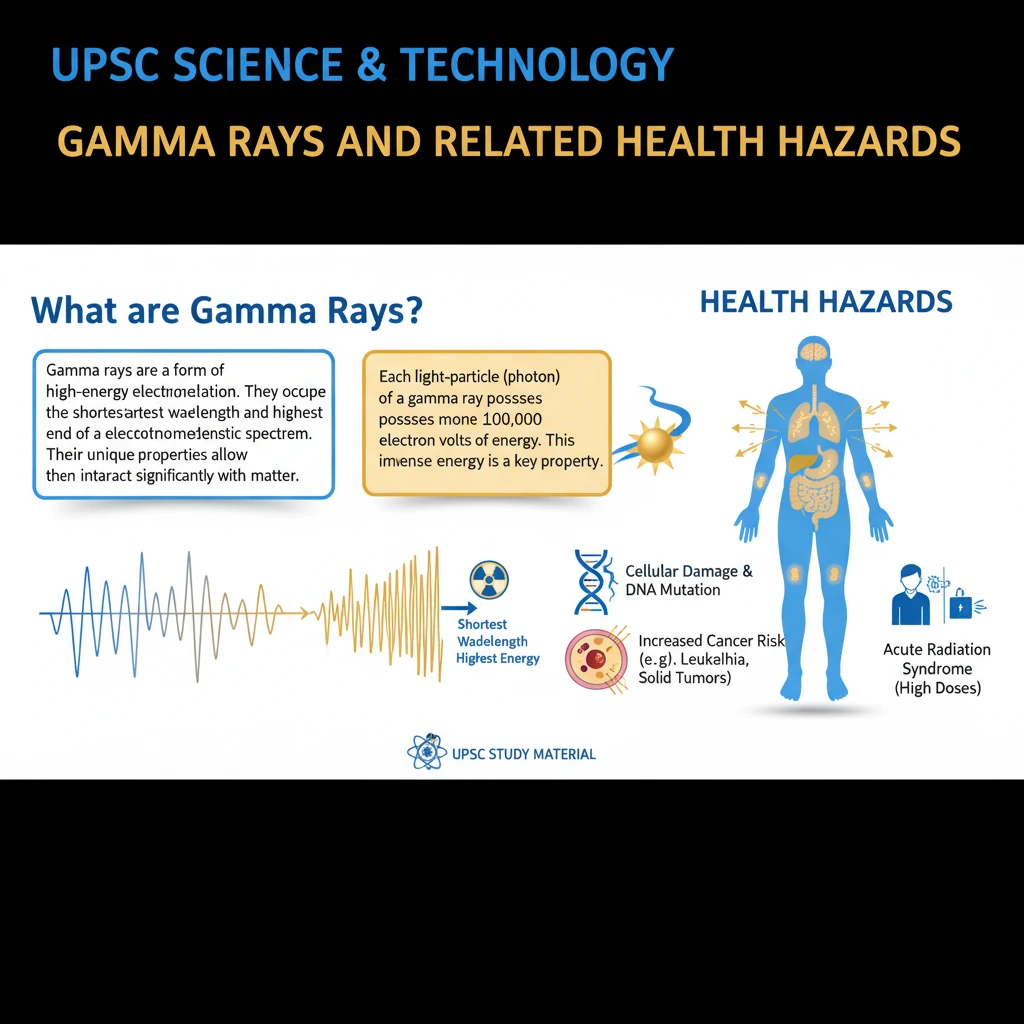
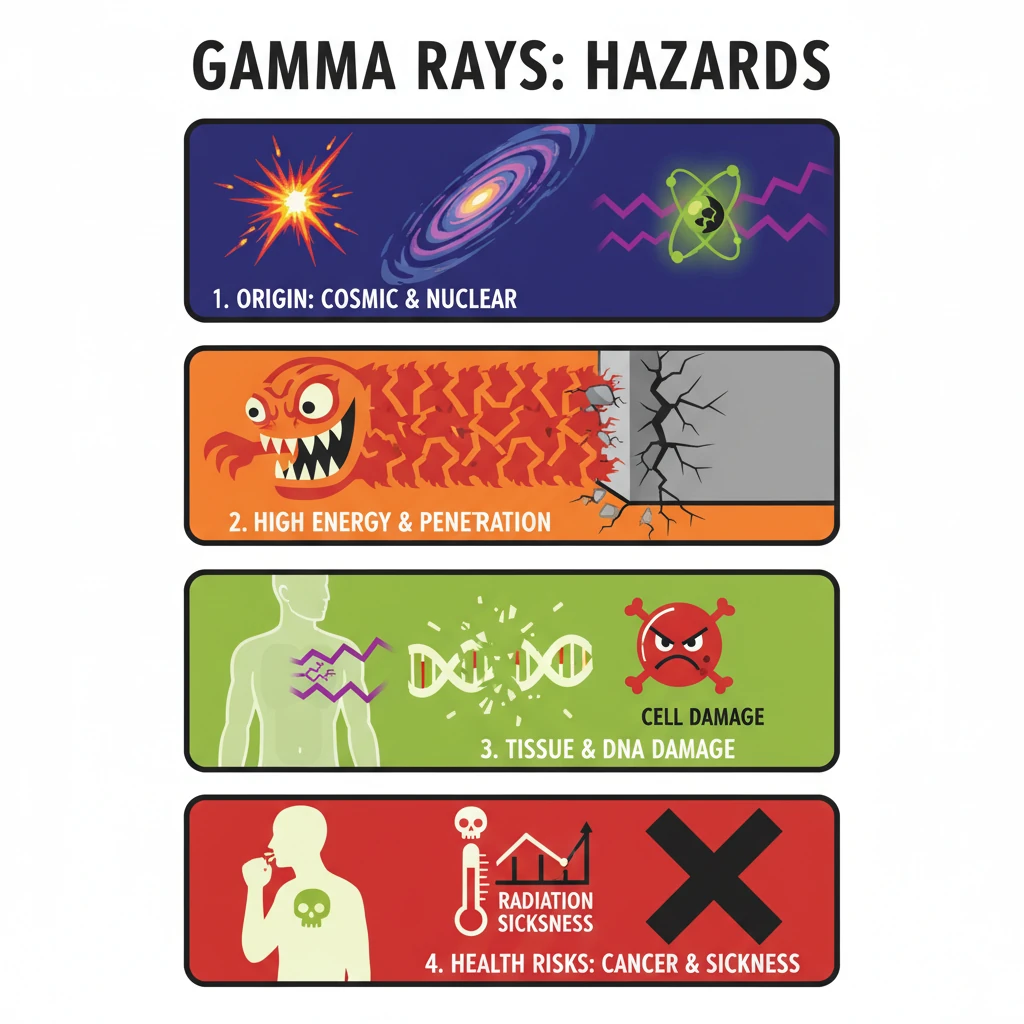
<h4>What are Gamma Rays?</h4><p><strong>Gamma rays</strong> are a form of <strong>high-energy electromagnetic radiation</strong>. They occupy the shortest wavelength and highest energy end of the <strong>electromagnetic spectrum</strong>. Their unique properties allow them to interact significantly with matter.</p><div class='info-box'><p>Each <strong>light-particle</strong> (photon) of a gamma ray possesses more than <strong>100,000 electron volts</strong> of energy. This immense energy is a key factor in their penetrating capabilities and biological effects.</p></div><p>Due to their exceptionally high energy, <strong>gamma rays</strong> can <strong>penetrate most materials</strong>, including dense substances and living tissues. This deep penetration capability is what makes them both useful in certain applications and dangerous to biological systems.</p><h4>Sources of Gamma Rays</h4><p><strong>Gamma rays</strong> originate from extremely energetic phenomena both in the cosmos and on Earth. Their production is indicative of powerful physical processes.</p><ul><li><strong>Cosmic Sources:</strong> They are produced by exotic and energetic objects in the universe, such as rapidly spinning <strong>pulsars</strong>, catastrophic <strong>supernova explosions</strong>, and hot whirlpools of matter surrounding <strong>black holes</strong>. Intense bursts known as <strong>gamma-ray bursts</strong> are also significant cosmic emitters.</li><li><strong>Terrestrial Sources:</strong> On Earth, <strong>gamma rays</strong> are emitted during processes like <strong>radioactive decay</strong> of unstable atomic nuclei and various <strong>nuclear reactions</strong>, which are fundamental to nuclear physics and energy.</li></ul><h4>Health Hazards of Gamma Ray Exposure</h4><p>Exposure to <strong>gamma rays</strong> poses significant health risks due to their ability to ionize matter and damage biological structures. The high energy of these rays makes them a potent form of <strong>ionizing radiation</strong>.</p><div class='key-point-box'><p>The primary mechanism of harm involves damage to <strong>cells and DNA</strong>. When gamma rays pass through tissue, they can directly break chemical bonds within DNA molecules or create highly reactive free radicals that subsequently damage cellular components.</p></div><p>This cellular and DNA damage can lead to a range of adverse health outcomes, both acute and long-term. The severity depends on the dose and duration of exposure.</p><ul><li><strong>Radiation Sickness:</strong> Acute, high-dose exposure can result in <strong>radiation sickness</strong>, characterized by symptoms such as nausea, vomiting, fatigue, hair loss, and compromised immune function.</li><li><strong>Increased Cancer Risk:</strong> Long-term or even low-dose exposure can significantly increase the risk of developing various types of <strong>cancer</strong> due to unrepaired DNA damage leading to uncontrolled cell growth.</li><li><strong>Other Long-Term Effects:</strong> Other potential long-term effects include genetic mutations, birth defects in offspring of exposed individuals, cataracts, and cardiovascular diseases.</li></ul><div class='exam-tip-box'><p>For <strong>UPSC Mains (GS Paper III - Science & Technology)</strong>, understanding both the nature and the dual impact (beneficial applications vs. health hazards) of <strong>gamma rays</strong> is crucial. Be prepared to discuss their sources, properties, and the mechanisms of biological harm, along with regulatory measures.</p></div>

💡 Key Takeaways
- •Gamma rays are high-energy electromagnetic radiation with the shortest wavelength and highest energy.
- •They originate from cosmic events (pulsars, supernovae, black holes) and terrestrial nuclear processes (radioactive decay, nuclear reactions).
- •Gamma rays have high penetrating power, capable of damaging human tissue and DNA.
- •Exposure leads to health risks like radiation sickness and increased cancer risk.
- •Despite hazards, gamma rays have crucial applications in medicine (radiation therapy, PET scans) and industry (sterilization, non-destructive testing).
- •Managing gamma ray exposure requires strict safety protocols and robust regulatory frameworks.
🧠 Memory Techniques
98% Verified Content
📚 Reference Sources
•General Physics Textbooks (Electromagnetic Spectrum, Nuclear Physics)
•World Health Organization (WHO) - Radiation Health Effects
•NASA - Gamma-Ray Astronomy