Stem Cell Transplants - Science And Technology | UPSC Learning
Topics
0 topics • 0 completed
🔍
No topics match your search
Stem Cell Transplants
Medium⏱️ 8 min read
science and technology
📖 Introduction
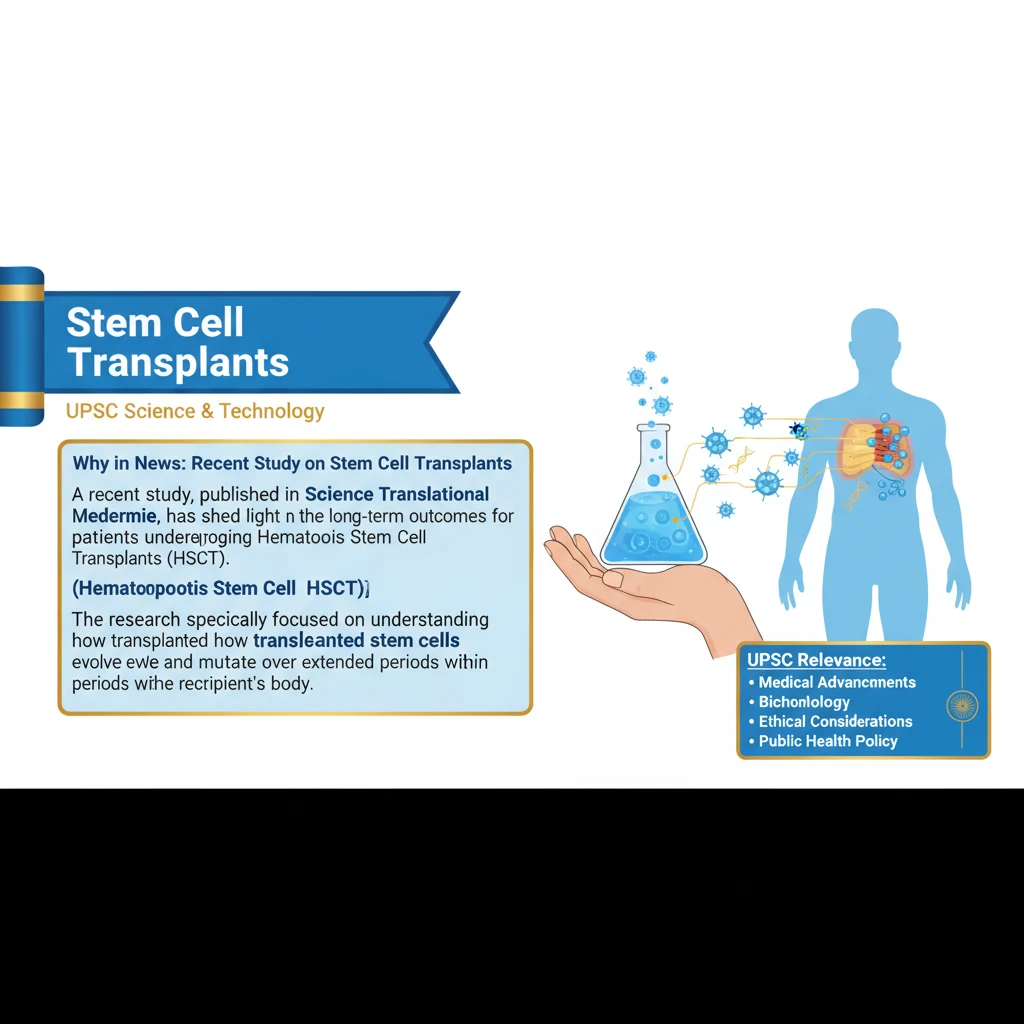
<h4>Why in News: Recent Study on Stem Cell Transplants</h4><p>A recent study, published in <strong>Science Translational Medicine</strong>, has shed light on the long-term outcomes for patients undergoing <strong>Hematopoietic Stem Cell Transplants (HSCT)</strong>.</p><p>The research specifically focused on understanding how transplanted <strong>stem cells</strong> evolve and mutate over extended periods within the recipient's body.</p><div class='exam-tip-box'><p><strong>UPSC Relevance:</strong> Studies like these are important for <strong>Science & Technology (GS Paper III)</strong>, particularly in the domain of <strong>Biotechnology</strong> and <strong>Health</strong>. Understanding recent advancements and their implications is crucial for both prelims and mains.</p></div><h4>Key Findings of the Study</h4><p>The study involved a cohort of <strong>16 pairs of donors and recipients</strong>, providing a unique insight into the dynamics of transplanted stem cells.</p><p>A significant finding was the surprisingly <strong>low mutation rates</strong> observed in both groups: an average of <strong>2% annually in donors</strong> and <strong>2.4% annually in recipients</strong>.</p><div class='key-point-box'><p>This low mutation rate suggests a <strong>stable clonal expansion</strong> of stem cells, indicating their ability to regenerate and maintain function over several decades post-transplant.</p></div><p>While all donors exhibited some level of <strong>clonal hematopoiesis</strong>, the absence of widespread clonal expansion pointed towards a <strong>robust regenerative capacity</strong> of the <strong>bone marrow</strong>.</p><h4>Implications of the Research</h4><p>The findings from this study are crucial for significantly improving the <strong>long-term outcomes</strong> of stem cell transplants.</p><p>However, the presence of <strong>clonal hematopoiesis</strong> in recipients raises a potential concern regarding the increased risk of developing <strong>blood cancers</strong> or other <strong>chronic diseases</strong>.</p><div class='info-box'><h4>Understanding Clonal Hematopoiesis</h4><p><strong>Clonal hematopoiesis</strong> occurs when one specific type of <strong>blood cell</strong> increases disproportionately in number compared to other blood cell types within the blood system.</p><p>Common examples of conditions associated with or resulting from clonal hematopoiesis include <strong>chronic myeloid leukemia</strong> and <strong>myelodysplastic syndromes (MDS)</strong>.</p></div>
💡 Key Takeaways
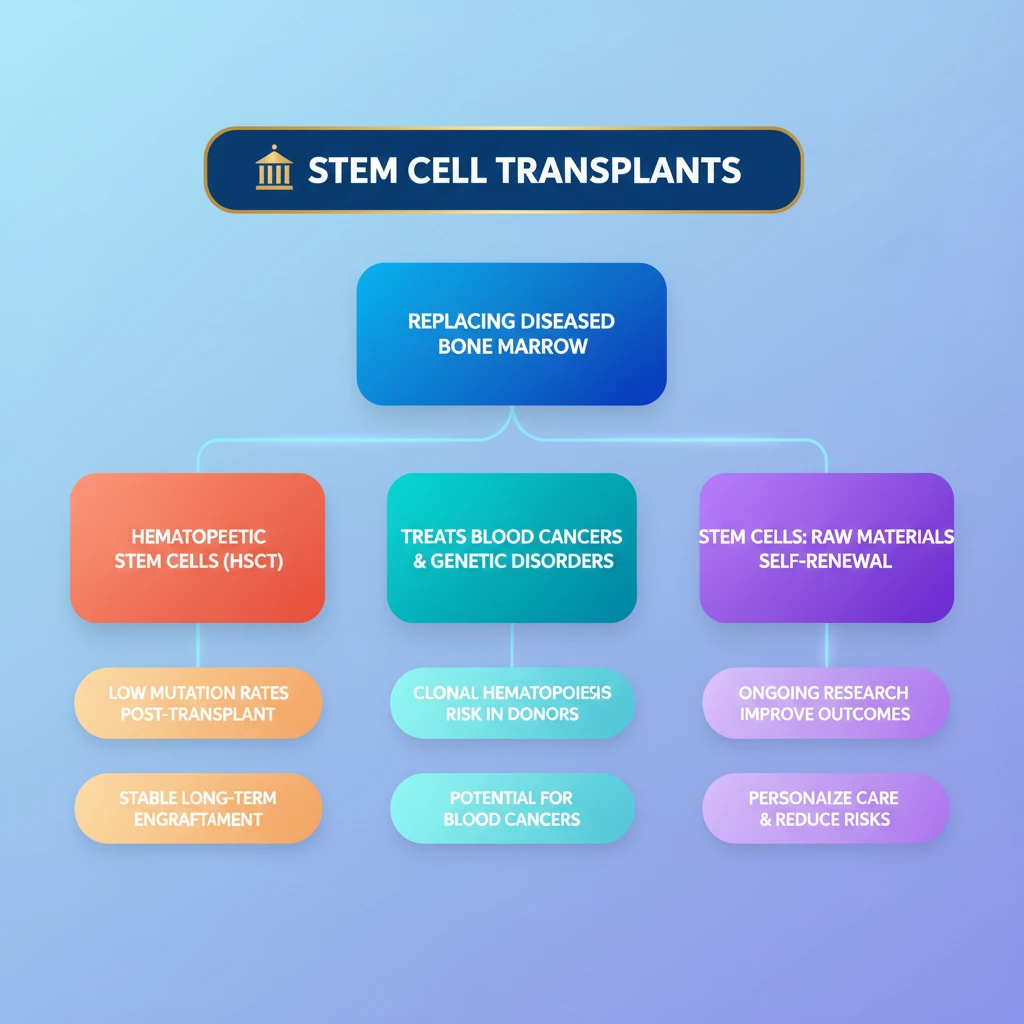
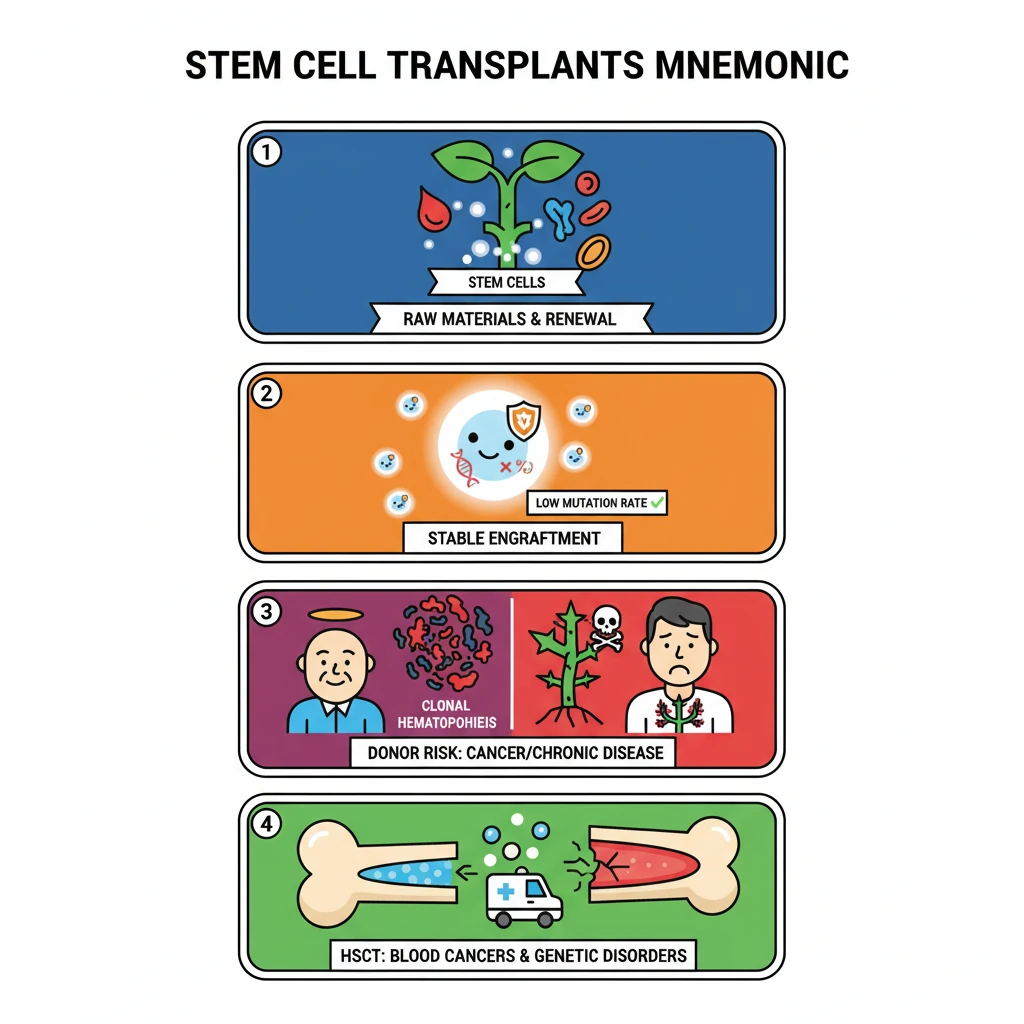
- •Recent study highlights low mutation rates in transplanted hematopoietic stem cells, suggesting stable long-term engraftment.
- •Clonal hematopoiesis, while common in donors, poses a potential risk for recipients developing blood cancers or chronic diseases.
- •Hematopoietic Stem Cell Transplants (HSCT) are crucial for treating blood cancers and genetic disorders by replacing diseased bone marrow.
- •Stem cells are the body's raw materials, capable of self-renewal and differentiation into specialized cells.
- •Ongoing research aims to improve HSCT outcomes, personalize post-transplant care, and address associated risks.
🧠 Memory Techniques
95% Verified Content
📚 Reference Sources
•Drishti IAS Summary (initial source)
•NCERT Biology Textbooks (for basic stem cell concepts)
•Reputable medical journals/websites (for HSCT history and applications)