Nobel Prize 2024 in Physiology or Medicine - Science And Technology | UPSC Learning
Topics
0 topics • 0 completed
🔍
No topics match your search
Nobel Prize 2024 in Physiology or Medicine
Medium⏱️ 8 min read
science and technology
📖 Introduction
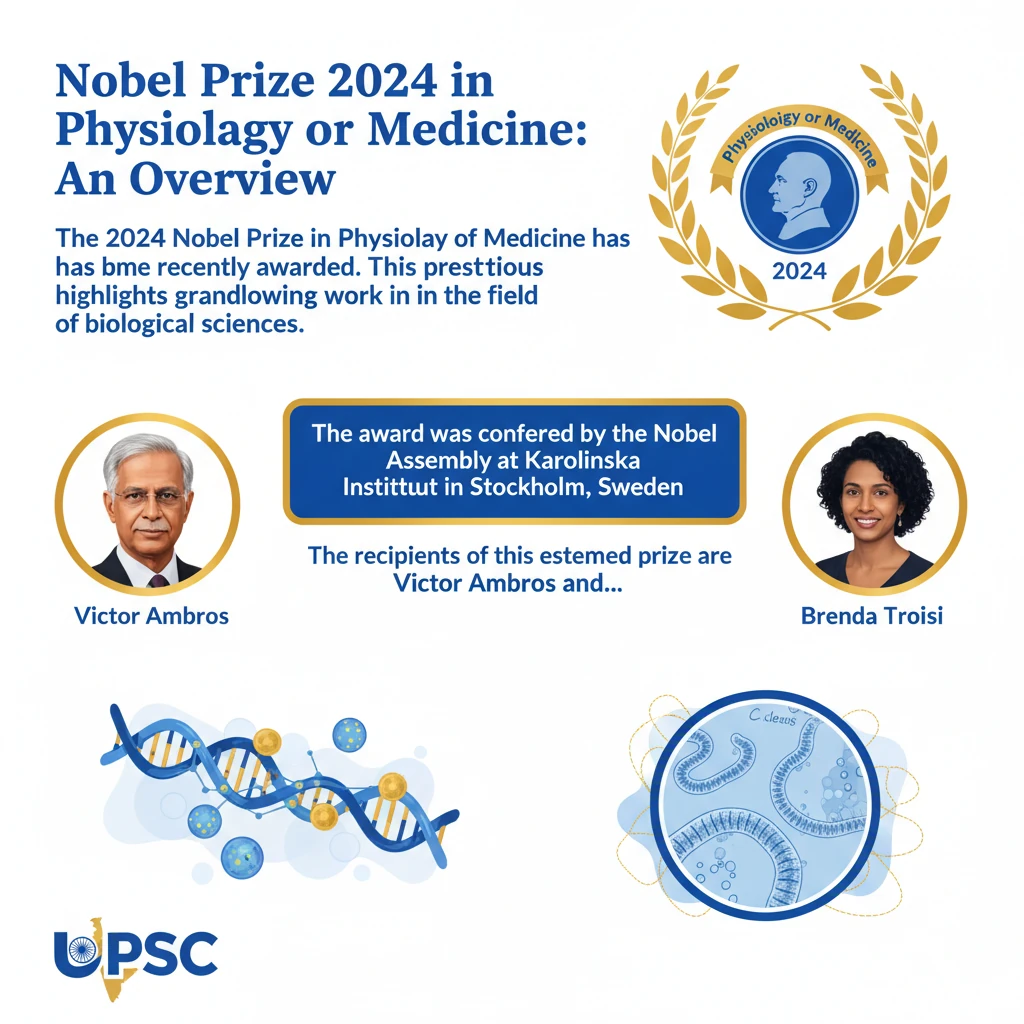
<h4>Nobel Prize 2024 in Physiology or Medicine: An Overview</h4><p>The <strong>2024 Nobel Prize in Physiology or Medicine</strong> has been recently awarded. This prestigious recognition highlights groundbreaking work in the field of biological sciences.</p><div class='info-box'><p>The award was conferred by the <strong>Nobel Assembly at Karolinska Institutet</strong> in <strong>Stockholm, Sweden</strong>.</p></div><p>The recipients of this esteemed prize are <strong>Victor Ambros</strong> and <strong>Gary Ruvkun</strong>. Their collaborative efforts have significantly advanced our understanding of gene regulation.</p><h4>Groundbreaking Discovery: MicroRNA</h4><p>Ambros and Ruvkun were honored for their pivotal discovery of <strong>microRNA</strong>. This finding revolutionized the understanding of how genes are controlled within organisms.</p><div class='key-point-box'><p>Their work specifically elucidated the role of <strong>microRNA</strong> in <strong>post-transcriptional gene regulation</strong>. This mechanism is crucial for the proper functioning of cells and organisms.</p></div><h4>Understanding Post-Transcriptional Gene Regulation</h4><p><strong>Post-transcriptional gene regulation</strong> refers to the control of gene expression after the process of transcription (DNA to RNA) but before translation (RNA to protein). <strong>MicroRNAs</strong> act as key regulators in this intricate process.</p><h4>Previous Nobel Recognitions Mentioned</h4><p>It is important to note the context of recent Nobel Prizes in related fields, as highlighted in the source material.</p><div class='info-box'><p>The <strong>2023 Nobel Prize in Physiology or Medicine</strong> was awarded to <strong>Katalin Karikó</strong> and <strong>Drew Weissman</strong>. Their recognition was for their work on <strong>messenger Ribonucleic Acid (mRNA)</strong>, which paved the way for effective mRNA vaccines against COVID-19.</p></div><div class='info-box'><p>The <strong>2022 Nobel Prize in Physics</strong> was awarded to <strong>John J. Hopfield</strong> and <strong>Geoffrey E. Hinton</strong>. They were recognized for their fundamental contributions to <strong>modern artificial neural networks (ANNs)</strong> and <strong>machine learning (ML)</strong>.</p></div><div class='exam-tip-box'><p><strong>UPSC Insight:</strong> While the primary focus is the 2024 prize, knowing previous years' laureates and their discoveries (like <strong>mRNA</strong> and <strong>ANNs</strong>) can provide broader context for science and technology questions in <strong>GS Paper III</strong>. Pay attention to the impact of these discoveries on society and future technologies.</p></div>
💡 Key Takeaways
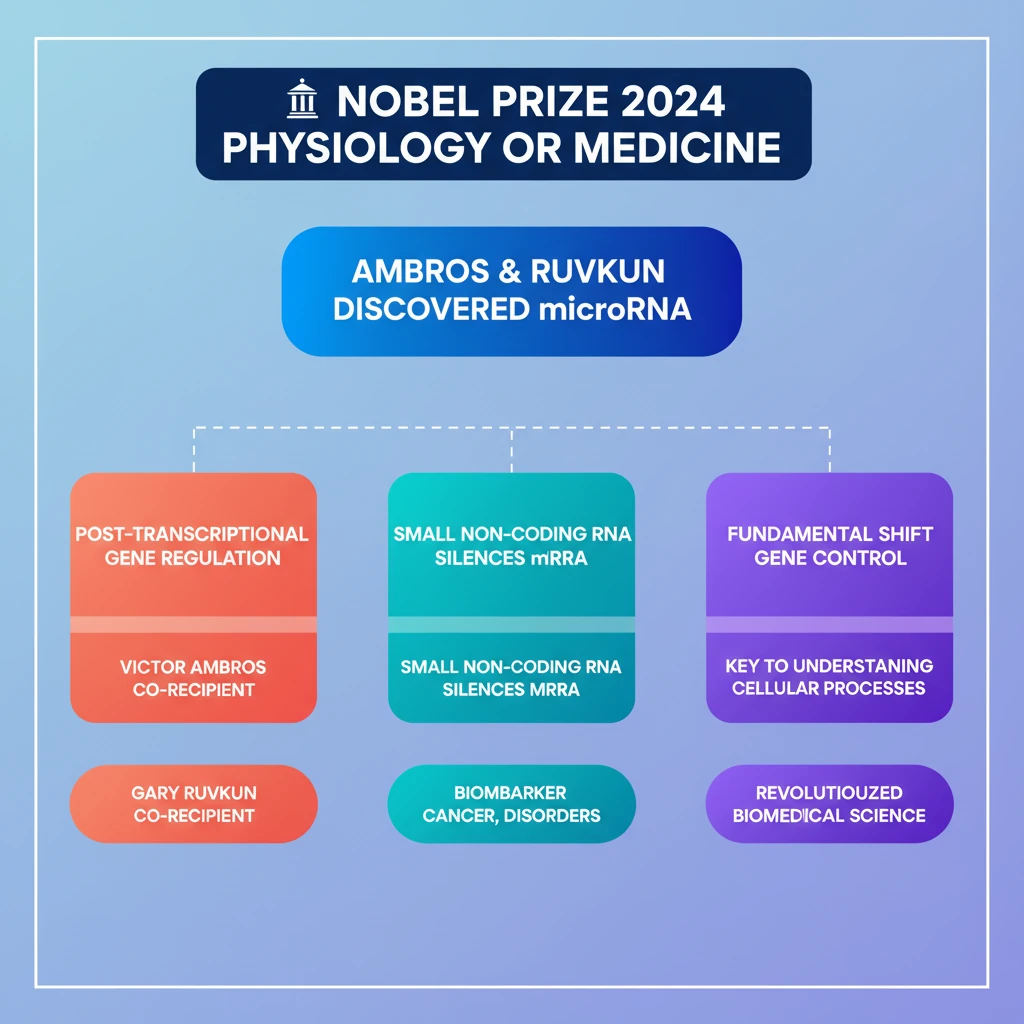
- •The 2024 Nobel Prize in Physiology or Medicine was awarded to Victor Ambros and Gary Ruvkun.
- •They were recognized for their discovery of microRNA and its role in post-transcriptional gene regulation.
- •MicroRNAs are small non-coding RNA molecules that regulate gene expression by silencing mRNA.
- •This discovery fundamentally changed our understanding of how genes are controlled in organisms.
- •MicroRNAs have significant current relevance as biomarkers for disease diagnosis and potential therapeutic targets, especially in cancer and developmental disorders.
🧠 Memory Techniques
98% Verified Content
📚 Reference Sources
•Karolinska Institutet press releases for Nobel Prize in Physiology or Medicine
•Drishti IAS Summary (provided source content)