International Thalassemia Day - Science And Technology | UPSC Learning
Topics
0 topics • 0 completed
🔍
No topics match your search
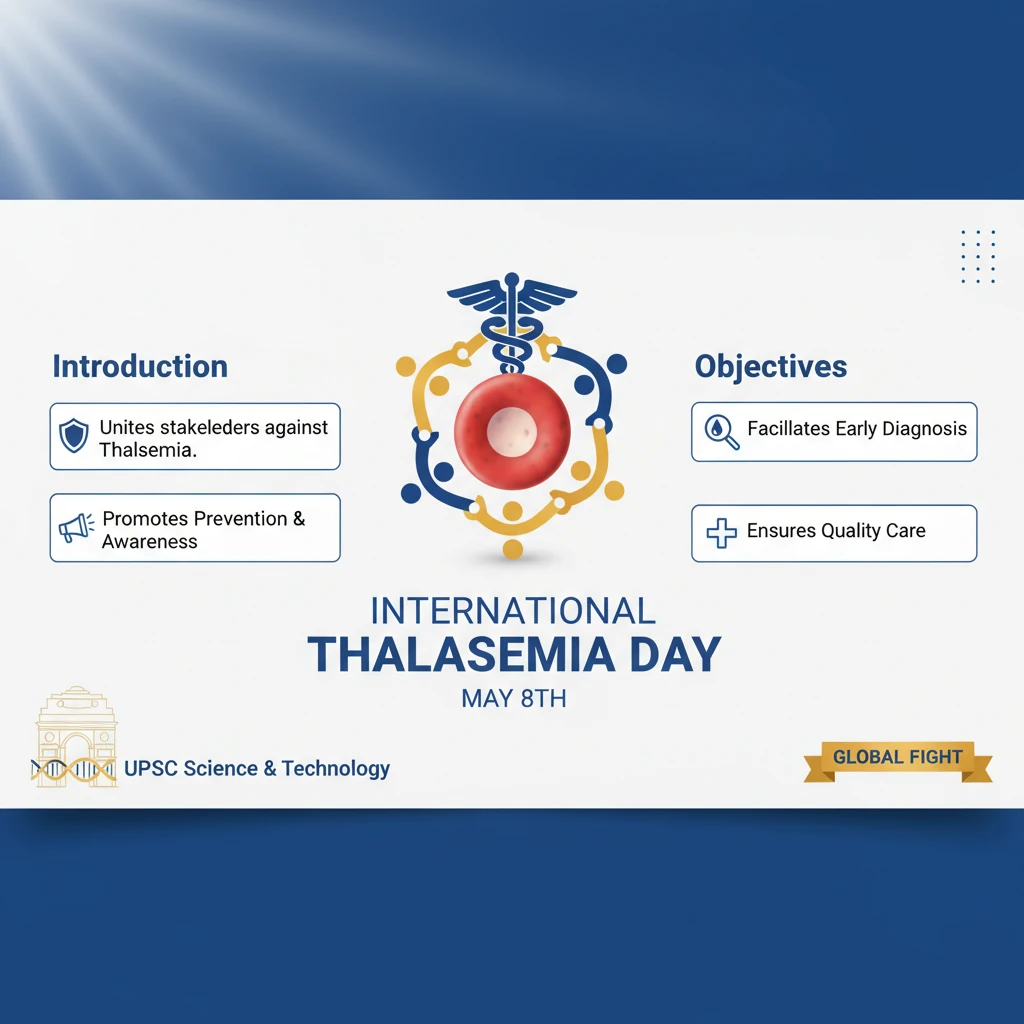
International Thalassemia Day
Medium⏱️ 8 min read
science and technology
📖 Introduction
<h4>Introduction to International Thalassemia Day</h4><p><strong>International Thalassemia Day</strong> is observed annually on <strong>May 8th</strong>. This day serves as a crucial platform to unite various stakeholders in the global fight against <strong>thalassemia</strong>.</p><p>The primary objectives include promoting <strong>prevention</strong>, raising widespread <strong>awareness</strong>, facilitating <strong>early diagnosis</strong>, and ensuring access to <strong>quality care</strong> for all patients affected by this genetic disorder.</p><h4>What is Thalassemia?</h4><div class='info-box'><p><strong>Thalassemia</strong> (pronounced thal-uh-SEE-mee-uh) is an <strong>inherited blood disorder</strong>. It directly impacts the body's capacity to produce <strong>normal hemoglobin</strong>, which is essential for carrying oxygen in red blood cells.</p><p>Individuals with thalassemia produce fewer healthy <strong>hemoglobin proteins</strong>. Consequently, their <strong>bone marrow</strong> generates a reduced number of healthy <strong>red blood cells</strong>, leading to anemia and other complications.</p></div><h4>Types of Thalassemia</h4><p>Thalassemia is broadly categorized into different types based on which globin protein chain is affected:</p><ul><li><strong>Alpha Thalassemia:</strong> This type occurs when there are defects in one or more of the <strong>four genes</strong> responsible for making <strong>alpha globin protein chains</strong>. These genes are inherited, two from each parent. The severity depends on the number of defective genes.</li><li><strong>Beta Thalassemia:</strong> This type results from defects in one or both of the <strong>two beta-globin genes</strong>, one inherited from each parent. The severity of anemia and the overall condition are determined by the number of defective genes and the specific location of the defect within the <strong>beta globin protein chain</strong>.</li></ul><h4>Symptoms of Thalassemia</h4><p>The symptoms of thalassemia can vary significantly, ranging from no noticeable signs to severe, life-threatening conditions:</p><ul><li><strong>Asymptomatic:</strong> Some individuals may carry the trait but exhibit <strong>no symptoms</strong> at all.</li><li><strong>Mild to Moderate Symptoms:</strong> These can include <strong>growth problems</strong>, <strong>delayed puberty</strong>, <strong>bone abnormalities</strong> (such as <strong>osteoporosis</strong>), and an <strong>enlarged spleen</strong>.</li><li><strong>Severe Symptoms:</strong> Patients with severe thalassemia often experience <strong>poor appetite</strong>, <strong>pale or yellowish skin</strong> (known as <strong>jaundice</strong>), <strong>dark or tea-colored urine</strong>, and irregular <strong>bone structure in the face</strong>.</li></ul><h4>2024 Theme and Focus</h4><div class='key-point-box'><p>The theme for <strong>International Thalassemia Day 2024</strong> is <strong>“Empowering Lives, Embracing Progress: Equitable and Accessible Thalassemia Treatment for All.”</strong></p><p>This theme underscores the critical importance of ensuring <strong>equality in access</strong> to comprehensive care, treatment, and support for all individuals living with thalassemia, regardless of their geographical location or socioeconomic status.</p></div><h4>Integration with RCH Program</h4><p>During the 2024 observance, there was a strong emphasis on the urgent need to integrate <strong>compulsory Thalassemia testing</strong> into the existing <strong>Reproductive and Child Health (RCH) program</strong>.</p><p>This integration is proposed as a vital strategy to significantly alleviate the burden of <strong>Thalassemia</strong> within the population by enabling early detection and intervention.</p><div class='info-box'><p>The <strong>RCH program</strong> is a comprehensive flagship initiative launched in <strong>2005</strong> under the broader umbrella of the <strong>National Health Mission (NHM)</strong>. Its primary goal is to achieve specific RCH targets, including the reduction of <strong>maternal and infant mortality rates</strong> and the overall <strong>total fertility rates</strong> in India.</p></div><div class='exam-tip-box'><p><strong>UPSC Insight:</strong> Understanding the connection between specific health days (like International Thalassemia Day), national health programs (<strong>RCH, NHM</strong>), and genetic disorders is crucial for <strong>GS Paper 2 (Health)</strong>. Be prepared to discuss policy implications and public health strategies.</p></div>
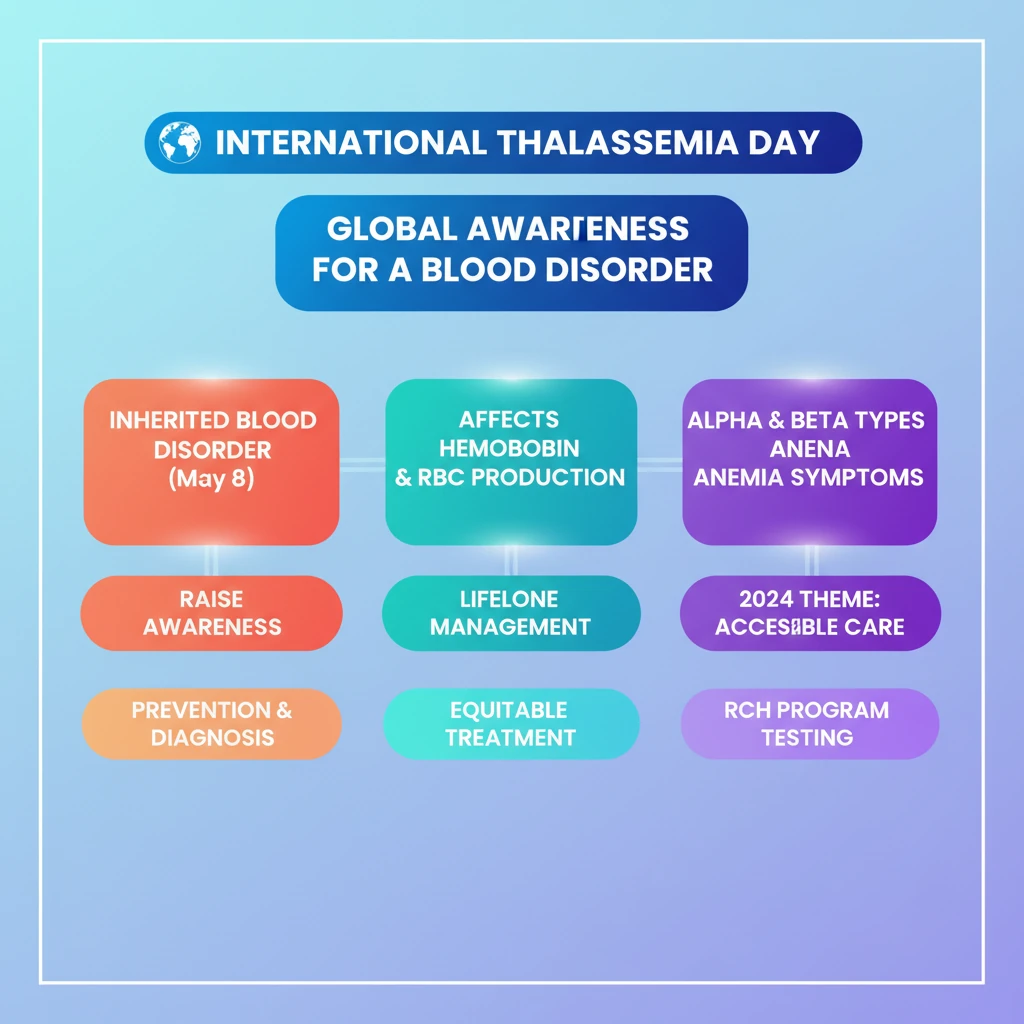
💡 Key Takeaways
- •International Thalassemia Day is observed on May 8th to raise awareness and promote prevention, diagnosis, and care.
- •Thalassemia is an inherited blood disorder affecting hemoglobin and red blood cell production, leading to anemia.
- •It has types (Alpha, Beta) and varying symptoms from asymptomatic to severe, requiring lifelong management.
- •The 2024 theme emphasizes equitable and accessible treatment for all patients.
- •Integration of compulsory thalassemia testing into the RCH program is crucial for prevention and reducing disease burden.
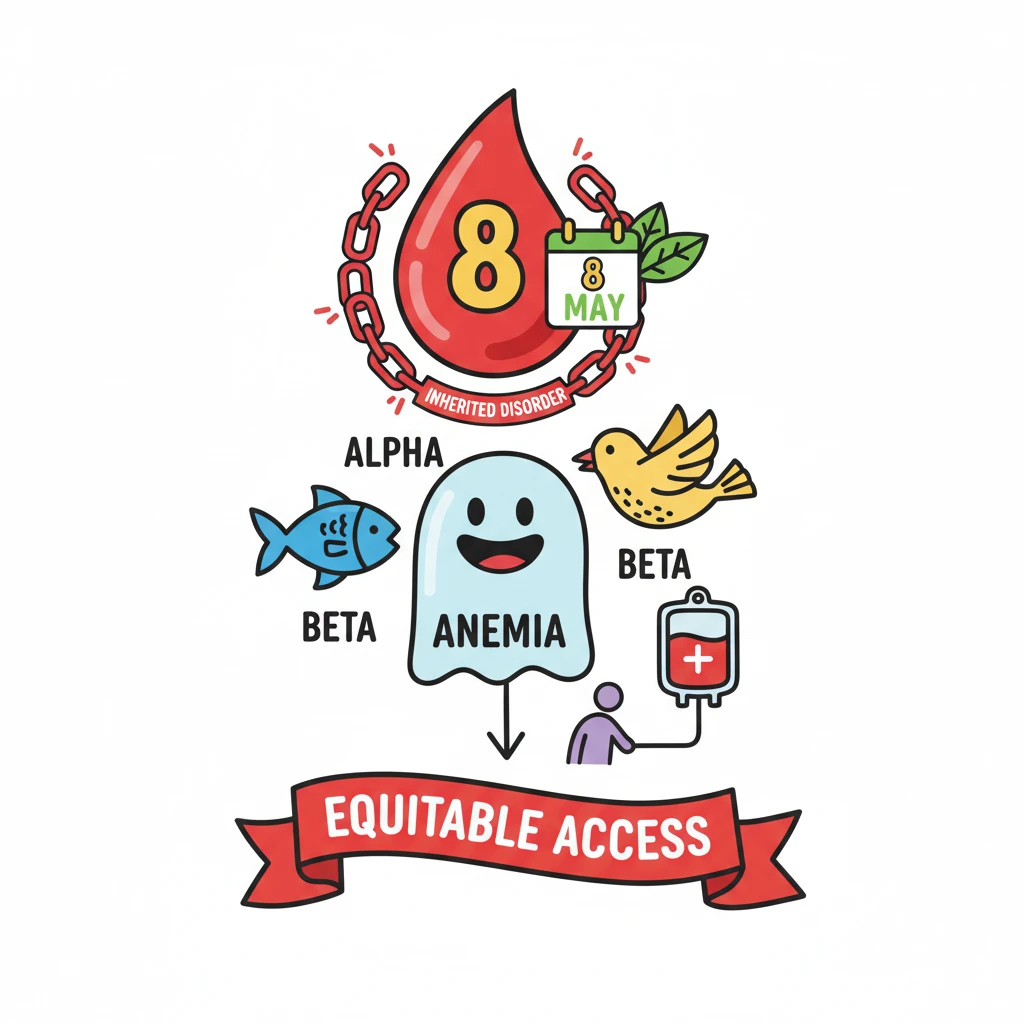
🧠 Memory Techniques
95% Verified Content
📚 Reference Sources
•International Thalassemia Federation (ITF) official website
•World Health Organization (WHO) publications on Thalassemia
•National Health Mission (NHM) guidelines and documents