What is Deep-Sea Mining? - Science And Technology | UPSC Learning
Topics
0 topics • 0 completed
🔍
No topics match your search
What is Deep-Sea Mining?
Medium⏱️ 8 min read
science and technology
📖 Introduction
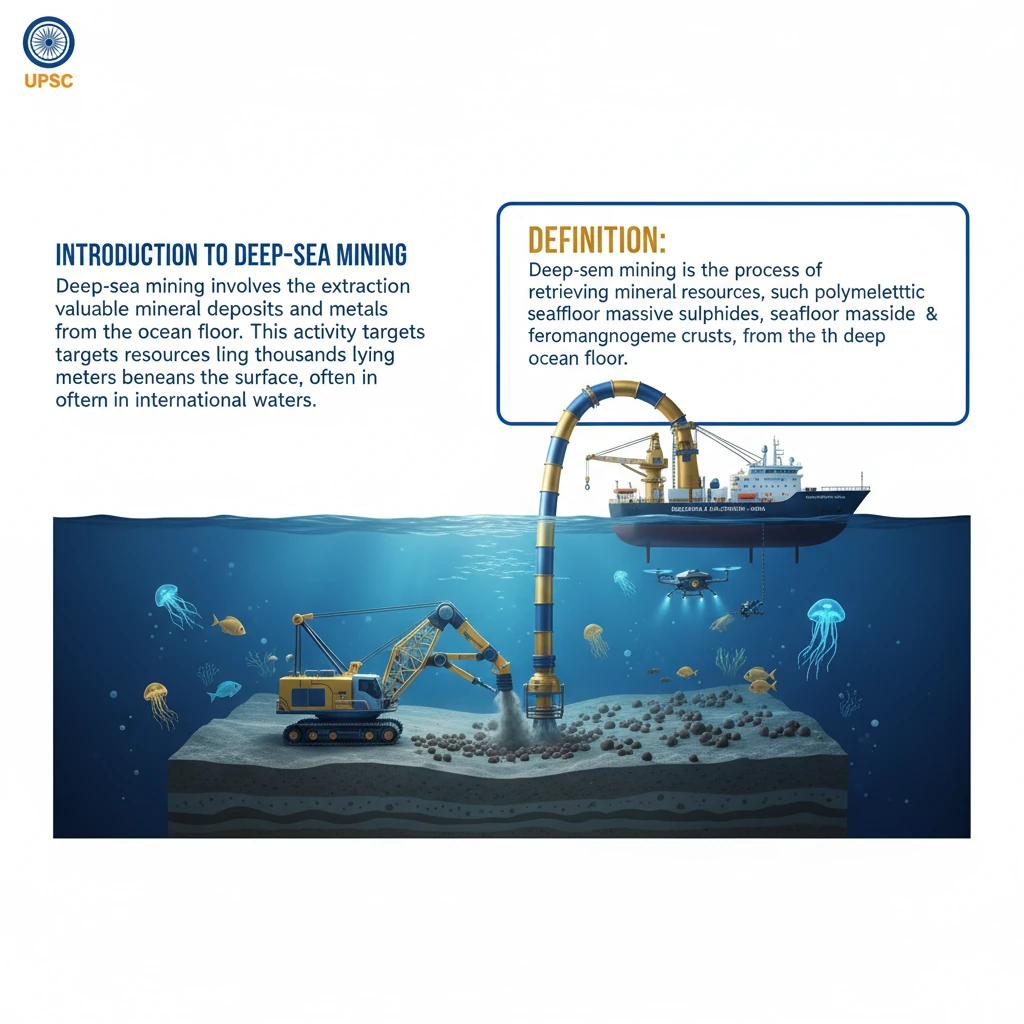
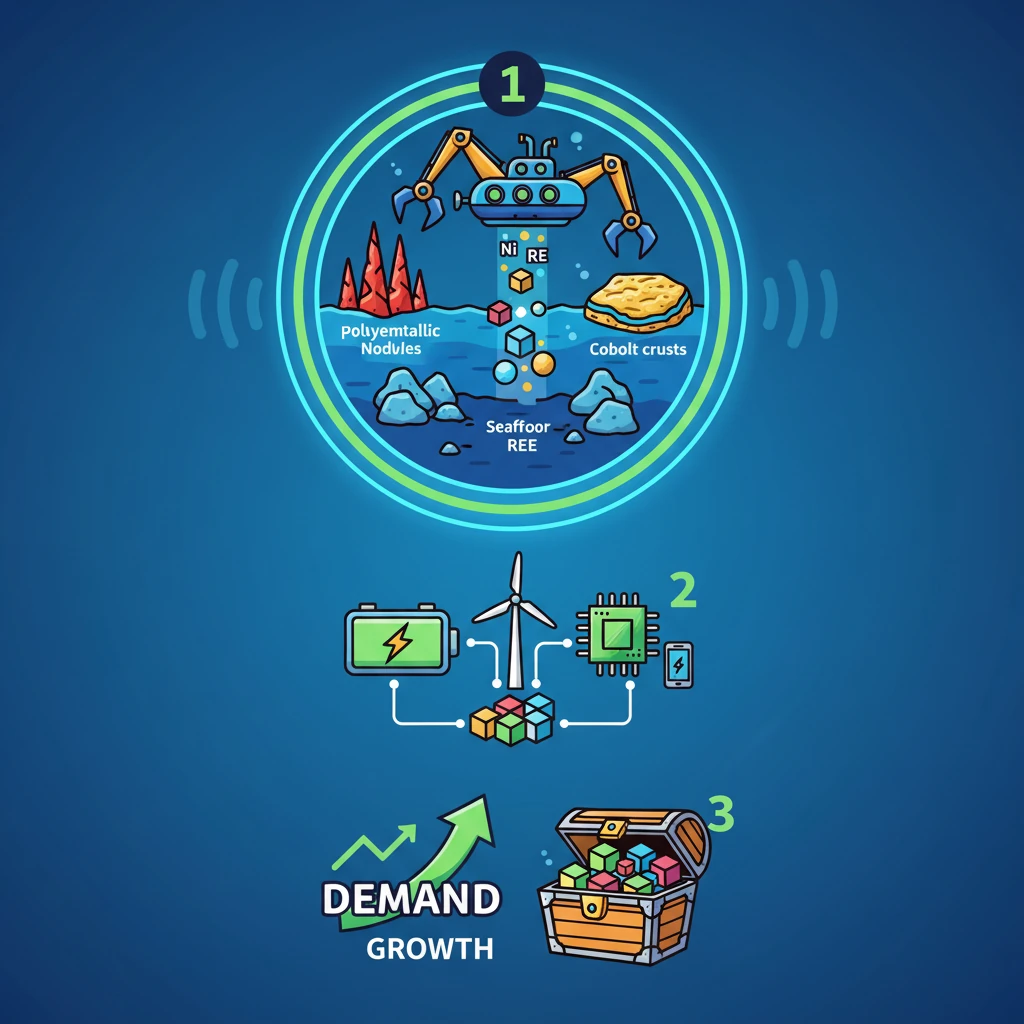
<h4>Introduction to Deep-Sea Mining</h4><p><strong>Deep-sea mining</strong> involves the extraction of valuable <strong>mineral deposits</strong> and <strong>metals</strong> from the <strong>ocean floor</strong>. This activity targets resources lying thousands of meters beneath the surface, often in international waters.</p><div class='info-box'><p><strong>Definition:</strong> <strong>Deep-sea mining</strong> is the process of retrieving mineral resources, such as polymetallic nodules, seafloor sulfides, and cobalt crusts, from the deep ocean environment.</p></div><h4>Types of Deep-Sea Mining Activities</h4><p>There are three primary methods currently considered or practiced for extracting minerals from the deep sea, each targeting different geological formations and mineral types.</p><ul><li><strong>Polymetallic Nodules Removal:</strong> This involves collecting potato-sized <strong>polymetallic nodules</strong> rich in various metals from the abyssal plains of the seabed.</li><li><strong>Seafloor Sulfide Mining:</strong> This targets massive deposits of <strong>seafloor sulfides</strong>, typically found near hydrothermal vents, which are rich in copper, zinc, gold, and silver.</li><li><strong>Cobalt Crusts Extraction:</strong> This method focuses on extracting <strong>cobalt crusts</strong> that form on the flanks of seamounts and other rock formations, valuable for their cobalt, nickel, and rare earth elements.</li></ul><h4>Valuable Materials Extracted</h4><p>The nodules, deposits, and crusts found in the deep sea contain a wealth of materials critical for modern industries and technologies. These resources are becoming increasingly vital globally.</p><div class='info-box'><p><strong>Key Minerals:</strong> Extracted materials include <strong>nickel</strong>, <strong>rare earth elements</strong>, and <strong>cobalt</strong>. These are indispensable for the manufacturing of <strong>batteries</strong>, various <strong>renewable energy technologies</strong>, and common <strong>everyday devices</strong> such as cell phones and computers.</p></div><h4>Future Outlook for Deep-Sea Mining</h4><p>Experts anticipate that <strong>deep-sea mining</strong> is poised to become a significant marine resource extraction activity in the coming decades. This projection is largely driven by the extensive availability of certain mineral types.</p><div class='key-point-box'><p><strong>Anticipated Growth:</strong> The abundance of <strong>polymetallic nodules</strong>, in particular, suggests that deep-sea mining will play a crucial role in meeting the global demand for critical minerals in the near future.</p></div><h4>Environmental Concerns of Deep-Sea Mining</h4><p>The burgeoning interest in <strong>deep-sea mining</strong> has raised significant <strong>environmental concerns</strong> among scientists and conservationists. The fragile ecosystems of the deep ocean are particularly vulnerable to disruption.</p><div class='info-box'><p><strong>'Dark Oxygen' Discovery:</strong> The recent discovery of <strong>'dark oxygen'</strong> highlights the existence of unique ecosystems reliant on previously unknown oxygen sources. Mining activities could severely damage these delicate environments by altering their oxygen supply.</p></div><p>Experts are particularly worried that the removal of <strong>polymetallic nodules</strong> could be highly detrimental to these sensitive marine environments, impacting biodiversity and ecosystem functions.</p><div class='exam-tip-box'><p><strong>UPSC Insight (Nov 2023 Study):</strong> A study published in <strong>November 2023</strong> indicated that <strong>deep-sea mining</strong> could harm <strong>deep-sea jellyfish</strong>. This impact is primarily due to the creation of <strong>mud plumes</strong> in ocean water, which interfere with the <strong>nutrient and reproductive cycles</strong> of these and other marine species. This highlights a specific ecological risk.</p></div>
💡 Key Takeaways
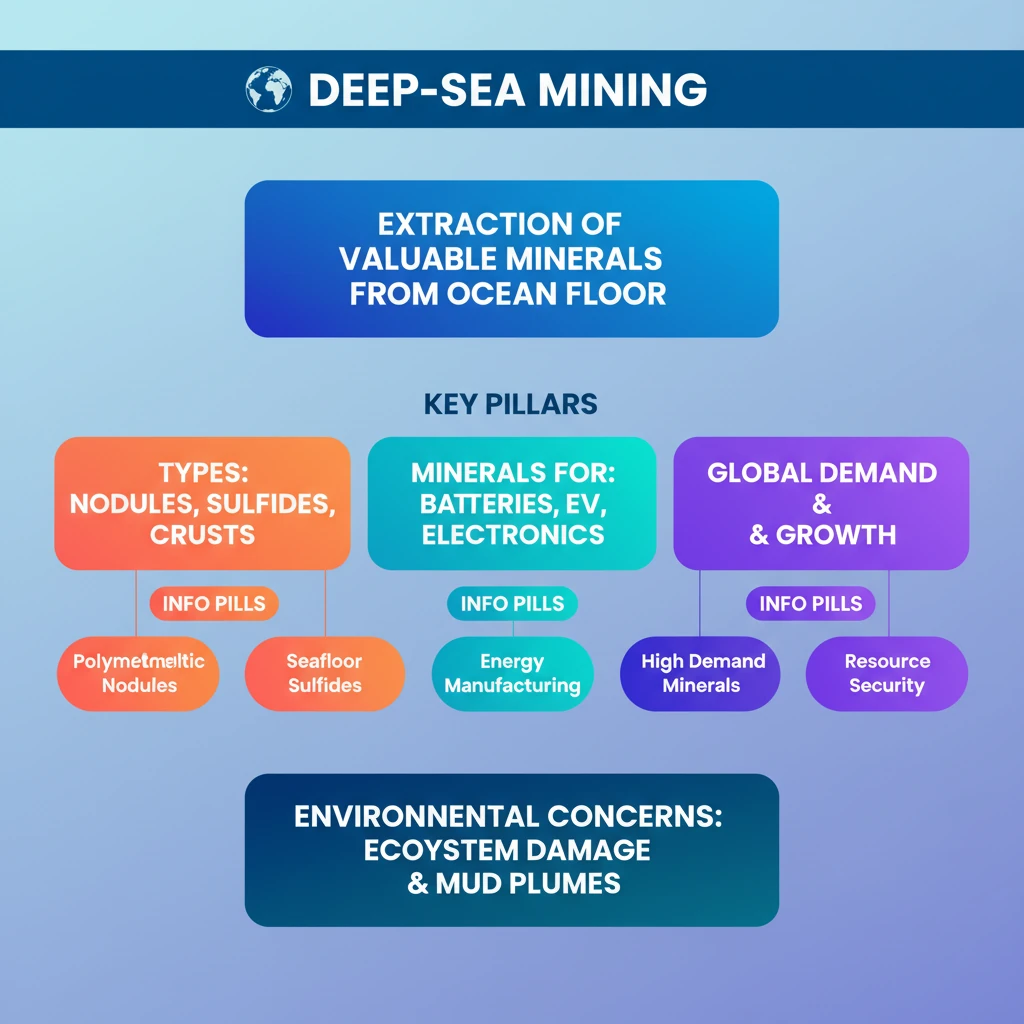
- •Deep-sea mining extracts valuable minerals (nickel, cobalt, rare earths) from the ocean floor.
- •Three main types: polymetallic nodules, seafloor sulfides, and cobalt crusts.
- •Minerals are crucial for batteries, renewable energy, and electronics.
- •Anticipated to grow due to high demand and polymetallic nodule availability.
- •Significant environmental concerns exist, including damage to 'dark oxygen' ecosystems and marine species like jellyfish via mud plumes.
- •Regulated by the International Seabed Authority (ISA) in international waters.
🧠 Memory Techniques
98% Verified Content