AR Gene Transfer Mechanism - Science And Technology | UPSC Learning
Topics
0 topics • 0 completed
🔍
No topics match your search
AR Gene Transfer Mechanism
Medium⏱️ 8 min read
science and technology
📖 Introduction
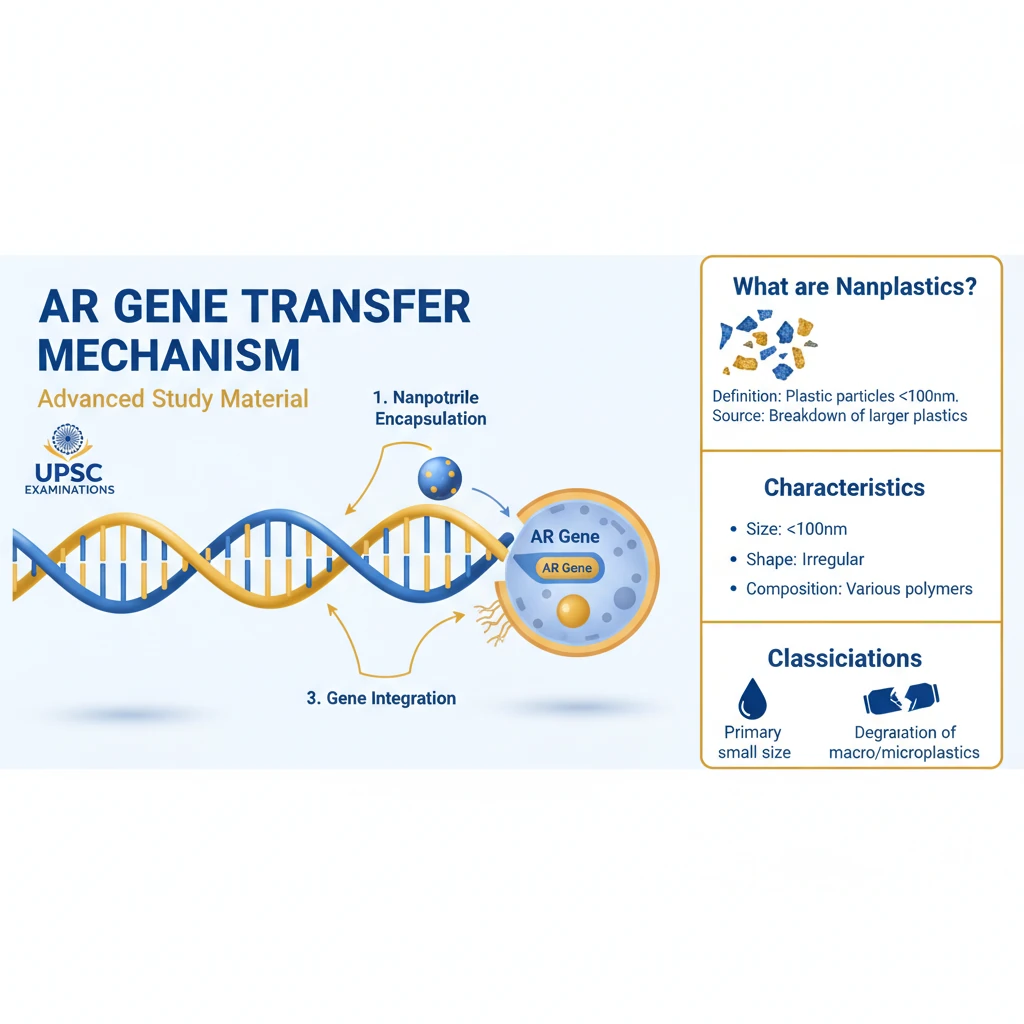
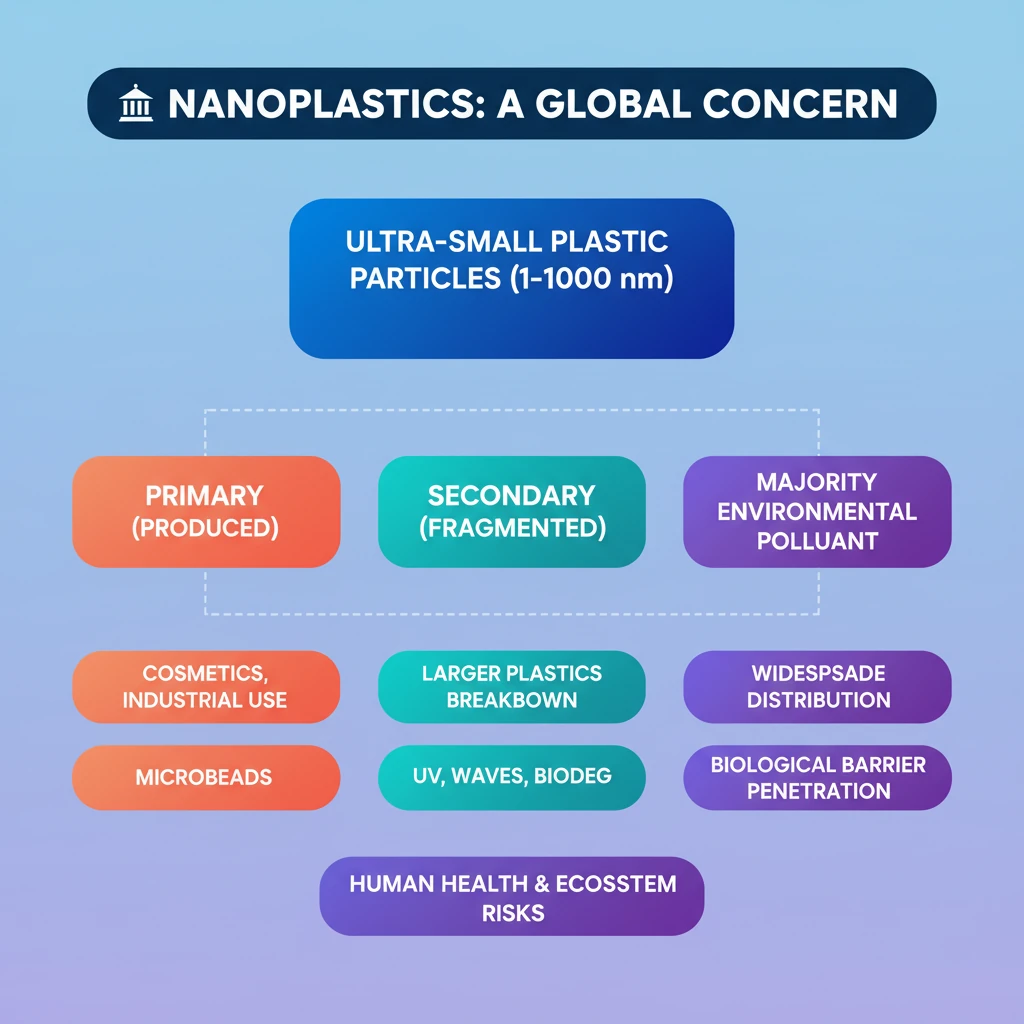
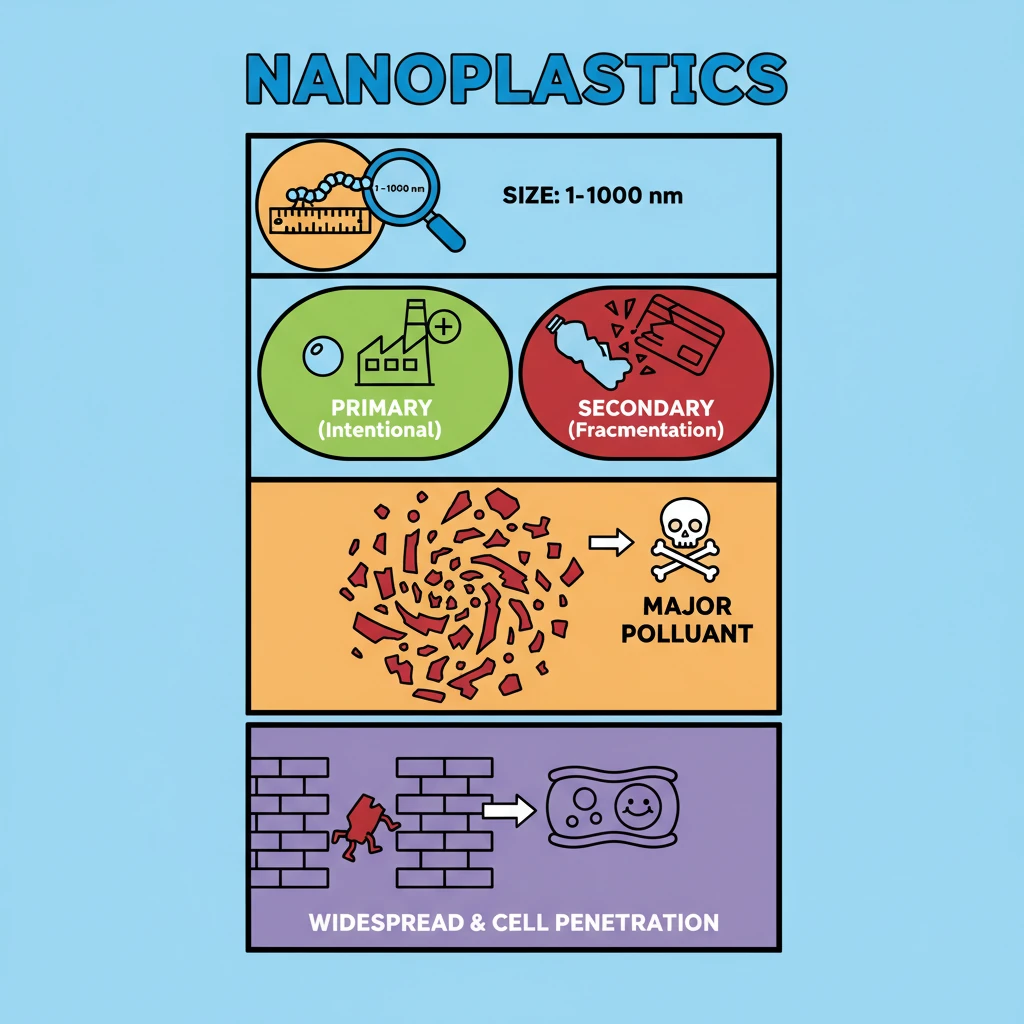
<h4>Understanding Nanoplastics: A Key Environmental Concern</h4><p>While the broader topic mentioned is <strong>AR Gene Transfer Mechanism</strong>, the provided content specifically details <strong>Nanoplastics</strong>. This section will elaborate on what nanoplastics are, their characteristics, and their primary classifications, which are crucial for understanding contemporary environmental challenges.</p><h4>Definition and Characteristics of Nanoplastics</h4><p><strong>Nanoplastics</strong> are defined as minute solid particles composed of <strong>synthetic</strong> or <strong>heavily modified natural polymers</strong>. These particles possess an extremely small size, placing them within a specific range.</p><div class='info-box'><p><strong>Size Range:</strong> Nanoplastics typically measure between <strong>1 nanometer (nm)</strong> and <strong>1000 nanometers (nm)</strong>. This microscopic scale makes them particularly challenging to detect and manage in various environments.</p></div><p>Their polymeric nature means they originate from plastic materials, which are ubiquitous in modern society. Understanding their composition is vital for addressing their environmental impact.</p><h4>Types of Nanoplastics: Primary and Secondary</h4><p>Nanoplastics are broadly categorized into two main types based on their origin: <strong>Primary Nanoplastics</strong> and <strong>Secondary Nanoplastics</strong>. This distinction is critical for developing targeted mitigation strategies.</p><div class='key-point-box'><p><strong>Primary Nanoplastics:</strong> These are <strong>intentionally produced</strong> nanometer-sized plastic particles. They are manufactured for specific industrial or commercial applications, where their small size offers unique functional properties.</p></div><ul><li>Examples of applications include cosmetics, medical diagnostics, and advanced material coatings, where their nanoscale properties are leveraged.</li></ul><div class='key-point-box'><p><strong>Secondary Nanoplastics:</strong> Constituting the vast majority of nanoplastics found in the environment, these particles are <strong>not intentionally produced</strong>. Instead, they arise from the <strong>fragmentation</strong> of larger plastic items.</p></div><ul><li>This fragmentation process occurs due to various environmental factors such as UV radiation, mechanical abrasion, and biological degradation, breaking down macro and microplastics into nanoscale particles.</li><li>They represent a significant environmental concern due to their widespread and unintentional release into ecosystems globally.</li></ul><div class='exam-tip-box'><p><strong>UPSC Insight:</strong> Questions on environmental pollution often feature topics like <strong>microplastics</strong> and <strong>nanoplastics</strong>. Understanding their definition, types, and sources is fundamental for GS3 (Environment) and essay papers. Focus on the distinction between primary and secondary sources.</p></div>
💡 Key Takeaways
- •Nanoplastics are solid plastic particles ranging from 1 to 1000 nanometers.
- •They are categorized into Primary (intentionally produced) and Secondary (from fragmentation of larger plastics).
- •Secondary nanoplastics constitute the majority and are a major environmental pollutant.
- •Their small size allows widespread distribution and potential penetration of biological barriers.
- •Pose significant environmental and emerging human health concerns.
- •Addressing nanoplastics requires global efforts in waste reduction, recycling, and material innovation.
🧠 Memory Techniques
95% Verified Content
📚 Reference Sources
•General scientific literature on nanoplastics and microplastics (e.g., UNEP reports, peer-reviewed journals)
•Environmental Protection Agency (EPA) resources on plastic pollution