Mpox Virus & Snakebite Envenoming: Recent Developments & Global Impact - Science And Technology | UPSC Learning
Topics
0 topics • 0 completed
🔍
No topics match your search
Mpox Virus & Snakebite Envenoming: Recent Developments & Global Impact
Medium⏱️ 8 min read
science and technology
📖 Introduction
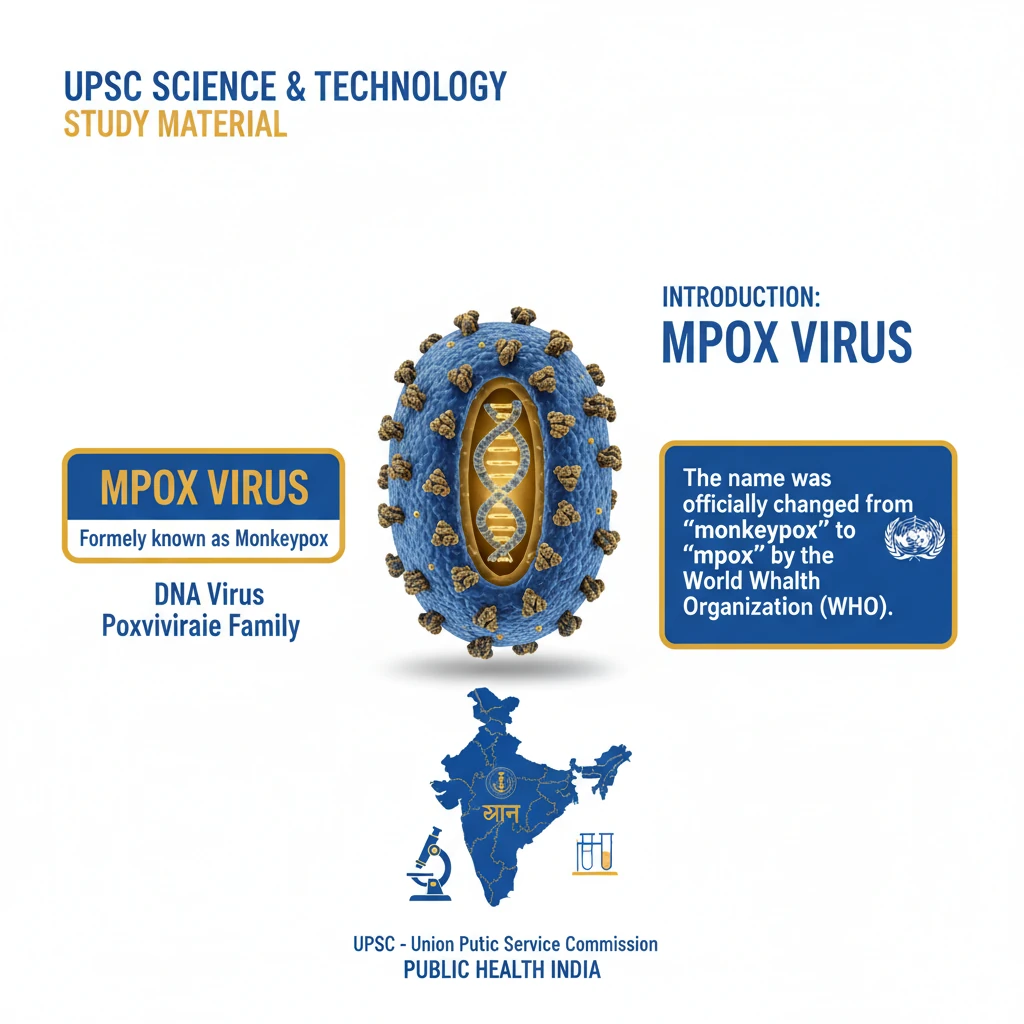
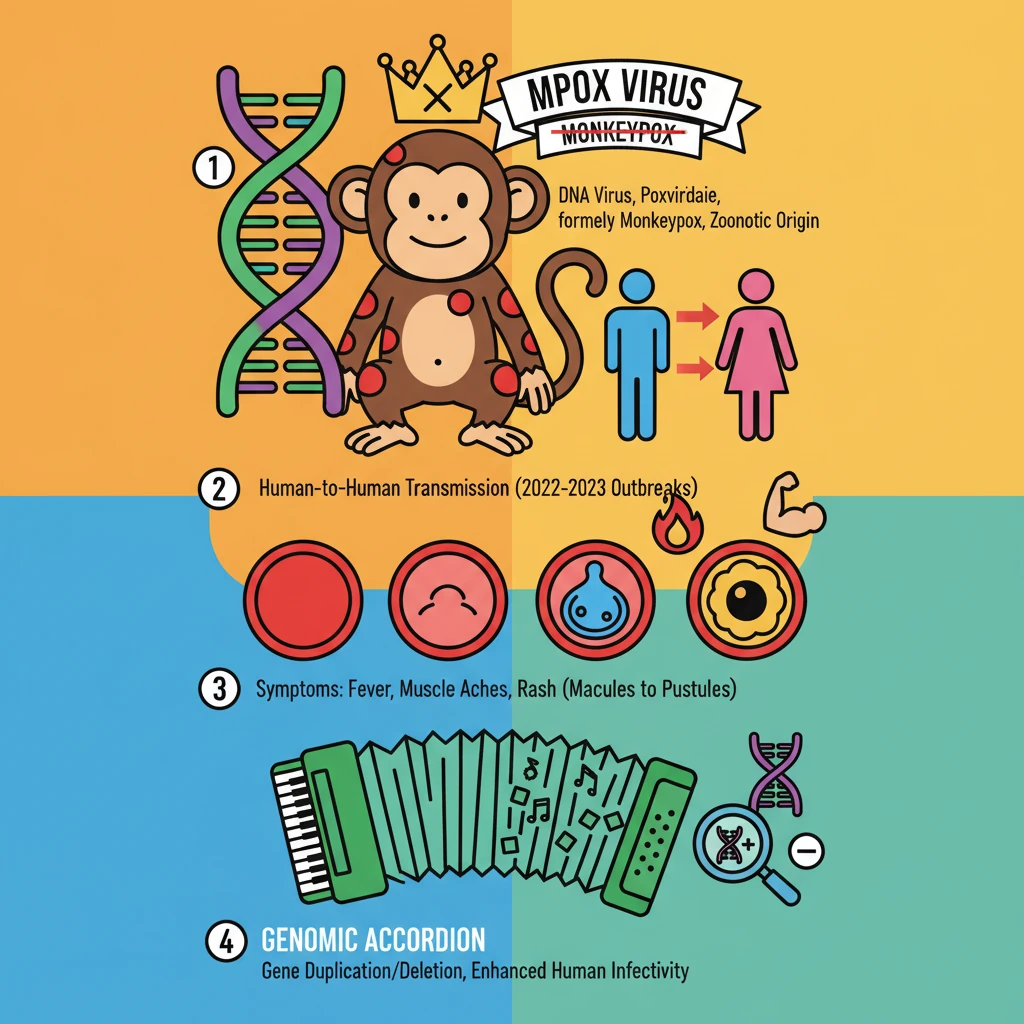
<h4>Introduction: Mpox Virus</h4><p>The <strong>Mpox virus</strong>, formerly known as <strong>monkeypox</strong>, has garnered significant global attention due to recent outbreaks. This DNA virus belongs to the <strong>Poxviridae family</strong>, which is known for its large, double-stranded DNA viruses.</p><div class='info-box'><p>The name was officially changed from <strong>“monkeypox”</strong> to <strong>“mpox”</strong> by the <strong>World Health Organization (WHO)</strong>. This change was implemented to avoid stigma associated with monkeys and to accurately reflect the virus's direct human infectivity, especially during recent outbreaks.</p></div><h4>Recent Developments: Novel Adaptation</h4><p>A recent study has shed light on a novel <strong>adaptation mechanism</strong> of the <strong>Mpox virus</strong>. This mechanism significantly enhances its ability to infect humans, which is a critical factor in understanding recent outbreaks.</p><div class='key-point-box'><p>Understanding these <strong>evolutionary adaptations</strong> is crucial for developing more effective prevention and control measures against the virus.</p></div><h4>What is Mpox?</h4><p><strong>Mpox</strong> is a <strong>DNA virus</strong> that was first identified in <strong>monkeys in 1958</strong>. While initially found in animals, it has since been confirmed to infect humans as well.</p><h5>Transmission Routes</h5><ul><li><strong>Animal-to-human transmission:</strong> Primarily occurs through direct contact with infected animals, particularly <strong>rodents and primates</strong>. It can also spread via contaminated objects.</li><li><strong>Human-to-human transmission:</strong> The 2022-2023 outbreak highlighted significant human-to-human spread, particularly through <strong>close contact</strong> and the <strong>sexual route</strong>.</li></ul><h5>Common Symptoms</h5><p>Symptoms of <strong>Mpox infection</strong> in humans typically include <strong>fever, headache, and muscle aches</strong>. A characteristic rash then develops, progressing through stages from <strong>macules to papules, vesicles, and pustules</strong>.</p><h5>Vaccination and Global Response</h5><p>A vaccine for <strong>Mpox</strong> does exist, but its availability and overall effectiveness are often limited. This limitation underscores the urgent need for improved global prevention and control strategies.</p><div class='info-box'><p>The <strong>2022–2023 global outbreak</strong> of <strong>Mpox</strong> affected over <strong>100,000 people</strong> across more than <strong>118 countries</strong>. The <strong>WHO</strong> declared this outbreak a <strong>Public Health Emergency of International Concern</strong>, prompting coordinated global efforts.</p></div><h4>Genomic Features and Evolution</h4><p>The genomic structure of <strong>Mpox viruses</strong> provides crucial insights into its adaptability and transmission patterns. Researchers analyze these features to track its evolution.</p><h5>Clades and Lineages</h5><ul><li><strong>Clade I and Clade II:</strong> <strong>Mpox genomes</strong> are categorized into two main clades, <strong>Clade I</strong> and <strong>Clade II</strong>. Evidence suggests that <strong>Clade I</strong> is associated with higher mortality rates.</li><li><strong>Clade IIb:</strong> The significant <strong>2022 outbreak</strong> involved a new lineage, specifically <strong>Clade IIb</strong>. This lineage demonstrated enhanced adaptation for efficient <strong>human-to-human transmission</strong>.</li></ul><h5>Genomic Analysis Findings</h5><p>Recent genomic analysis revealed a distinct lineage of <strong>Clade I</strong> linked to human-to-human transmission. This finding suggests a relatively recent <strong>zoonotic spillover event</strong> into human populations.</p><h5>Evolutionary Adaptations: Genomic Accordion</h5><p><strong>Mpox viruses</strong> exhibit a unique evolutionary mechanism known as <strong>genomic accordion</strong>. This process involves the duplication or deletion of genes within the viral genome.</p><div class='key-point-box'><p>The <strong>genomic accordion</strong> allows the virus to rhythmically expand and contract its genome size, enabling it to adapt effectively to different hosts and environmental conditions.</p></div><p>A study published in <strong>Nature Communications</strong> sequenced the <strong>Mpox virus genome</strong> from the <strong>2022 outbreak</strong>. It identified specific sections that strongly influence human-to-human transmission, confirming these as the virus’s <strong>genomic accordions</strong>.</p><div class='exam-tip-box'><p>For <strong>UPSC Mains (GS-III Science & Technology)</strong>, understanding viral evolution mechanisms like <strong>genomic accordion</strong> and their impact on disease transmission is critical. Be prepared to discuss the implications for public health and vaccine development.</p></div>
💡 Key Takeaways
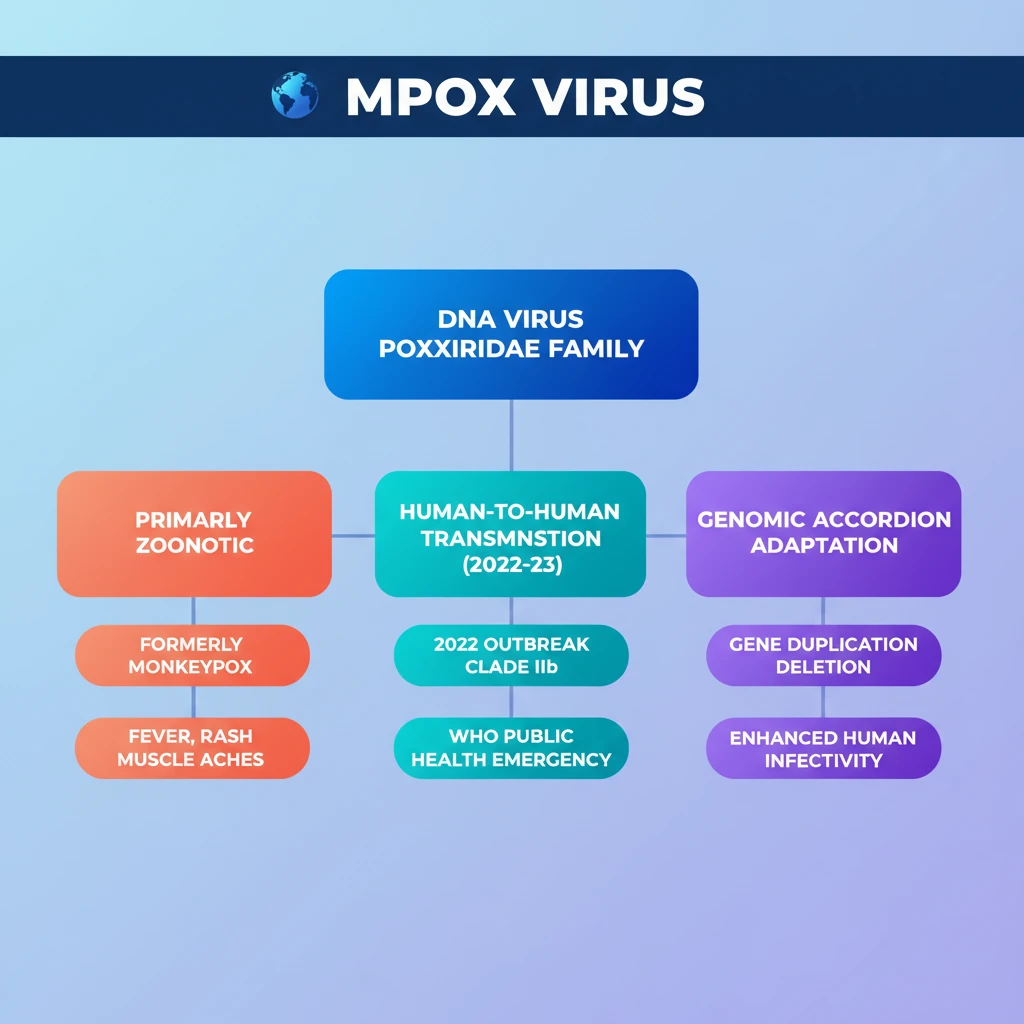
- •Mpox is a DNA virus (Poxviridae family), formerly known as monkeypox, renamed to avoid stigma.
- •Primarily zoonotic, but recent outbreaks (2022-2023) showed significant human-to-human transmission.
- •Symptoms include fever, muscle aches, and a characteristic rash progressing from macules to pustules.
- •Genomic accordion is a key evolutionary adaptation mechanism, involving gene duplication/deletion, enhancing human infectivity.
- •The 2022 outbreak (Clade IIb lineage) led WHO to declare a Public Health Emergency, highlighting global health challenges.
🧠 Memory Techniques
98% Verified Content
📚 Reference Sources
•World Health Organization (WHO) - Mpox (Monkeypox) Fact Sheets and Outbreak Updates
•Nature Communications - Study on Mpox genomic adaptation (general reference, specific paper not named in source)
•Centers for Disease Control and Prevention (CDC) - Mpox Information