Subclinical Tuberculosis - Science And Technology | UPSC Learning
Topics
0 topics • 0 completed
🔍
No topics match your search
Subclinical Tuberculosis
Medium⏱️ 5 min read
science and technology
📖 Introduction
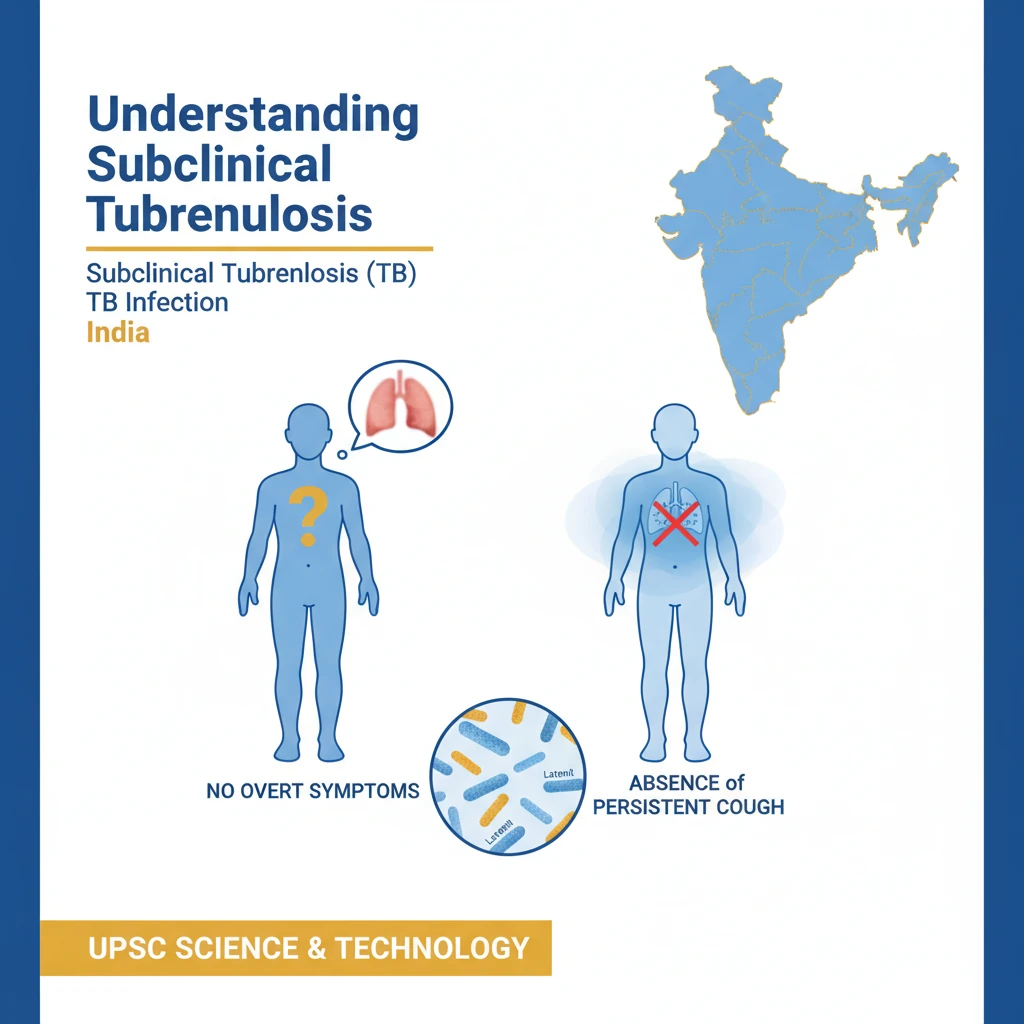
<h4>Understanding Subclinical Tuberculosis</h4><p><strong>Subclinical Tuberculosis</strong> (<strong>TB</strong>) represents a significant public health challenge, particularly in countries like <strong>India</strong>. It refers to a form of <strong>TB infection</strong> where individuals are infected but do not display the typical, overt <strong>symptoms</strong> commonly associated with the disease.</p><p>This absence of clear <strong>symptoms</strong>, such as a <strong>persistent cough</strong>, makes <strong>subclinical TB</strong> particularly insidious. Infected individuals may unknowingly transmit the bacteria, contributing to ongoing community spread.</p><div class='key-point-box'><p>The growing concern around <strong>subclinical TB</strong> stems from its contribution to the slow decline in <strong>TB incidence rates</strong>. Despite advancements in detection and treatment for symptomatic cases, this hidden reservoir of infection continues to fuel the epidemic.</p></div><h4>The Challenge of Detection</h4><p>Detecting <strong>subclinical TB</strong> is inherently more difficult compared to <strong>active TB</strong>. <strong>Active TB</strong> typically presents with more apparent and recognizable <strong>symptoms</strong>, prompting individuals to seek medical attention.</p><div class='info-box'><p>Unlike <strong>active TB</strong>, where diagnostic tools are often triggered by visible <strong>symptoms</strong>, <strong>subclinical TB</strong> requires proactive screening and advanced diagnostic methods to identify infected individuals before they develop overt illness or spread the disease.</p></div><div class='exam-tip-box'><p>For <strong>UPSC Mains GS-II (Health)</strong>, understanding <strong>subclinical TB</strong> is crucial for discussing challenges in disease eradication programs and the need for innovative public health strategies.</p></div>
💡 Key Takeaways
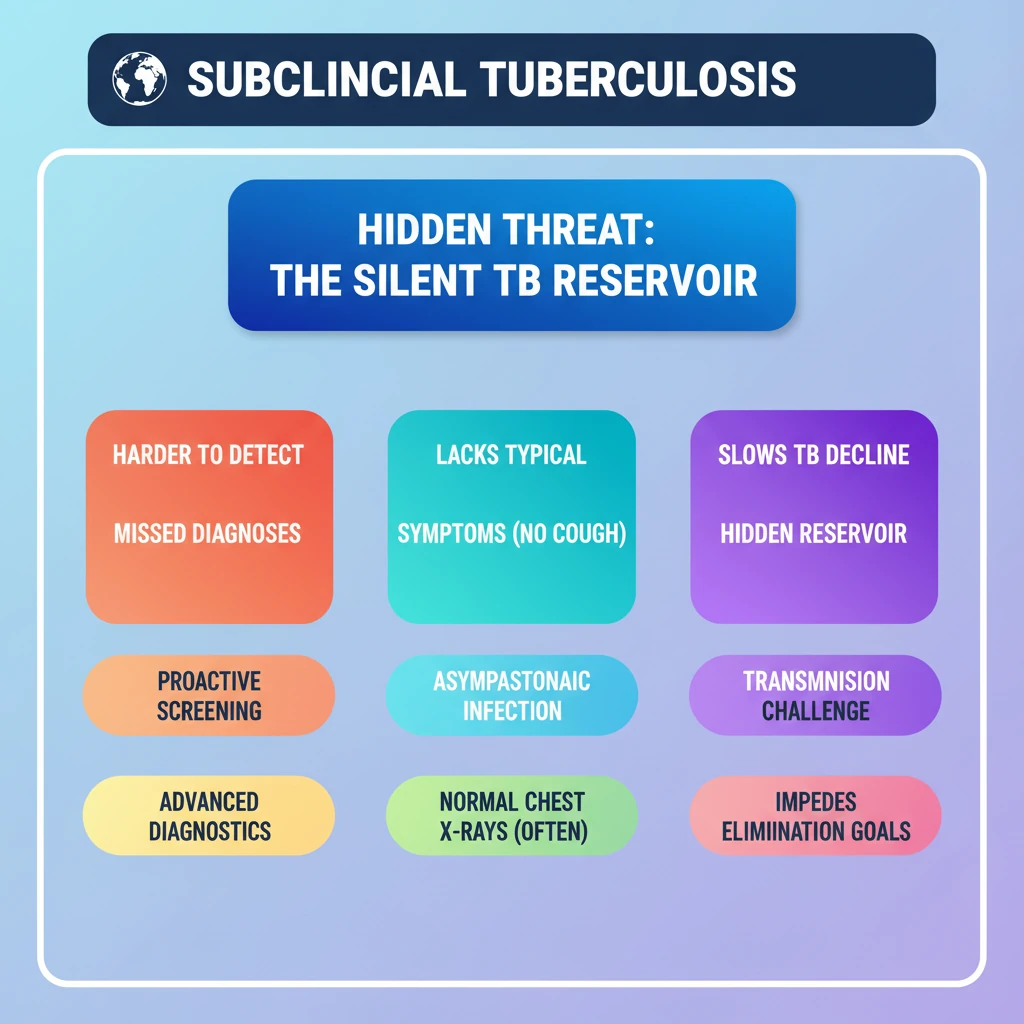
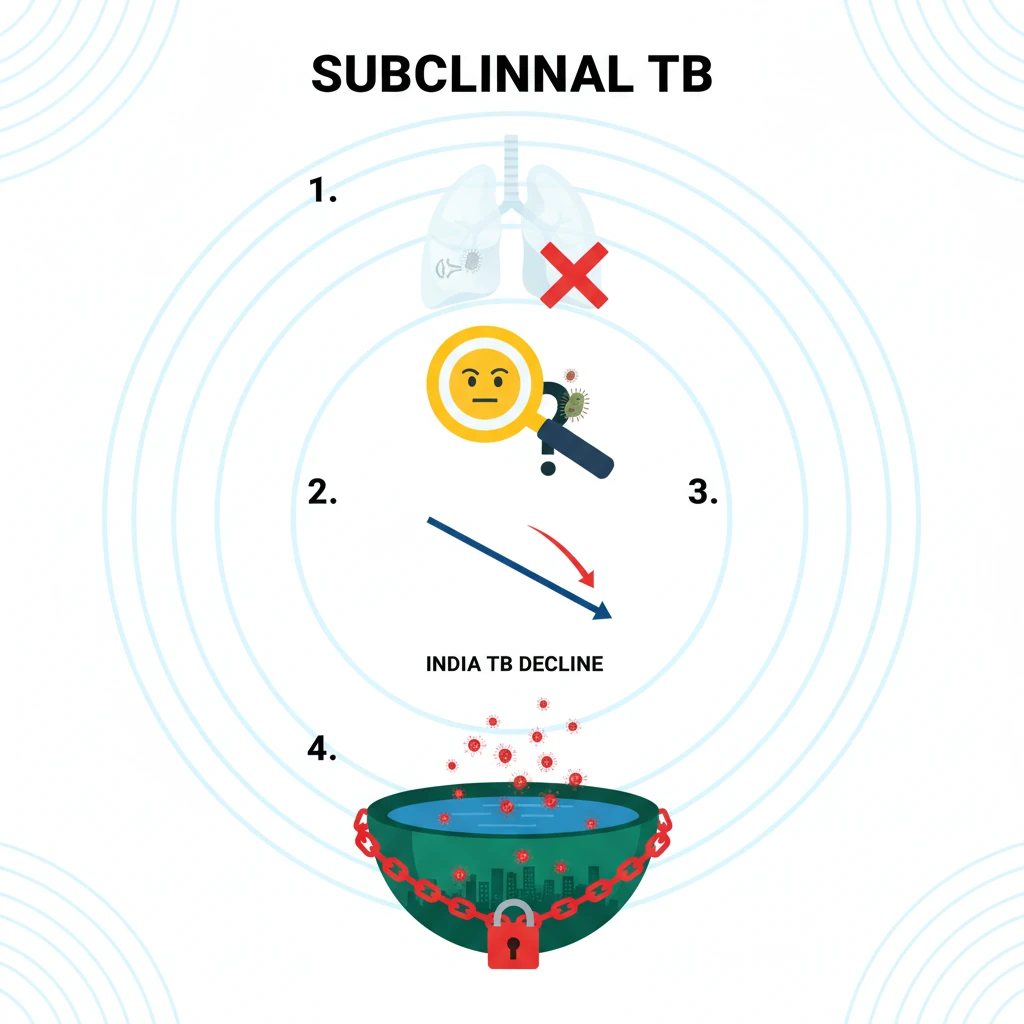
- •Subclinical TB lacks typical symptoms like persistent cough.
- •It is harder to detect than active TB, leading to missed diagnoses.
- •Subclinical TB contributes to the slow decline in India's TB incidence rates.
- •It represents a hidden reservoir of infection, posing a challenge to TB elimination.
- •Proactive screening and advanced diagnostics are essential to identify and manage subclinical cases.
🧠 Memory Techniques
95% Verified Content
📚 Reference Sources
•World Health Organization (WHO) Guidelines on Tuberculosis
•India's National Strategic Plan for TB Elimination (2017-2025)