Polymetallic Nodules & Oxygen Production: Study in Clarion-Clipperton Zone - Science And Technology | UPSC Learning
Topics
0 topics • 0 completed
🔍
No topics match your search
Polymetallic Nodules & Oxygen Production: Study in Clarion-Clipperton Zone
Medium⏱️ 6 min read
science and technology
📖 Introduction
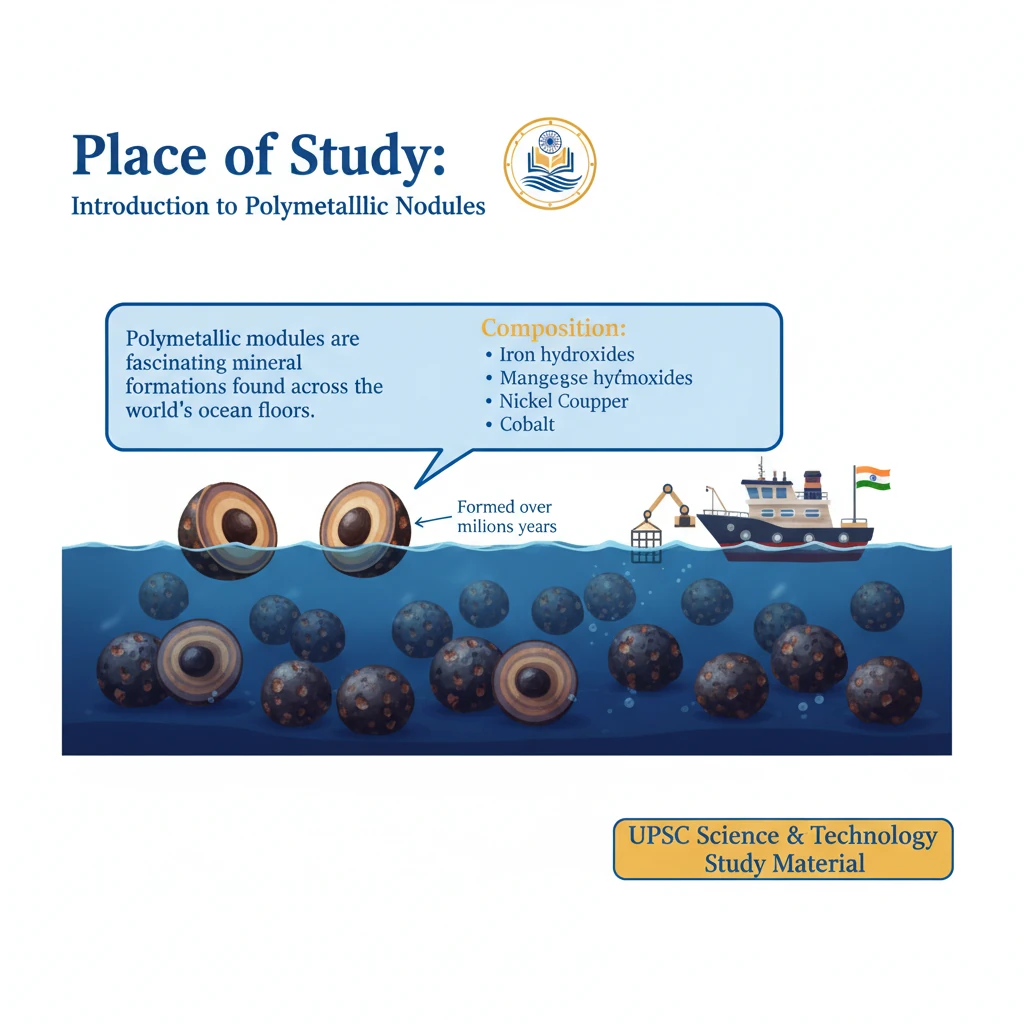
<h4>Introduction to Polymetallic Nodules</h4><p><strong>Polymetallic nodules</strong> are fascinating mineral formations found across the world's ocean floors. They are typically spherical or potato-shaped lumps, rich in various valuable metals.</p><div class='info-box'><p>These nodules are primarily composed of <strong>iron</strong> and <strong>manganese hydroxides</strong>, along with other trace metals like nickel, copper, and cobalt. They form slowly over millions of years by the precipitation of metals from seawater onto a nucleus.</p></div><h4>Hypothesis on Oxygen Production</h4><p>A recent scientific hypothesis proposes an intriguing role for these nodules in marine ecosystems. It suggests that <strong>polymetallic nodules</strong> might contribute to <strong>oxygen production</strong> in the deep sea.</p><p>The hypothesis posits that these nodules possess the ability to transport <strong>electric charges</strong>. These charges, in turn, could facilitate the <strong>splitting of water molecules</strong> (H2O), thereby releasing free <strong>oxygen</strong> (O2) into the surrounding environment.</p><div class='key-point-box'><p>While the mechanism of water splitting by nodules is hypothesized, the precise <strong>energy source</strong> that powers this process remains largely <strong>unclear</strong> and is a subject of ongoing scientific investigation.</p></div><h4>The Clarion-Clipperton Zone: A Key Study Area</h4><p>A significant study investigating the potential oxygen production by <strong>polymetallic nodules</strong> was conducted in a specific region known as the <strong>Clarion-Clipperton Zone (CCZ)</strong>.</p><div class='info-box'><p>The <strong>Clarion-Clipperton Zone</strong> is an extensive abyssal plain located in the <strong>Pacific Ocean</strong>, specifically off <strong>Mexico's west coast</strong>. It stretches between the Clarion and Clipperton fracture zones.</p></div><h4>Significance of the Study Location</h4><p>The choice of the <strong>Clarion-Clipperton Zone</strong> for this study is highly strategic. This region is globally recognized for its exceptionally high concentration of <strong>polymetallic nodules</strong>.</p><p>Its abundant nodule deposits make it an ideal natural laboratory to observe and understand the potential biogeochemical roles of these formations, including the hypothesized oxygen generation.</p><div class='exam-tip-box'><p>Understanding specific geographical locations like the <strong>Clarion-Clipperton Zone</strong> is crucial for <strong>UPSC Prelims</strong>, especially for questions related to oceanography, marine resources, and environmental studies. Its importance for deep-sea mining is also a recurring theme.</p></div>
💡 Key Takeaways
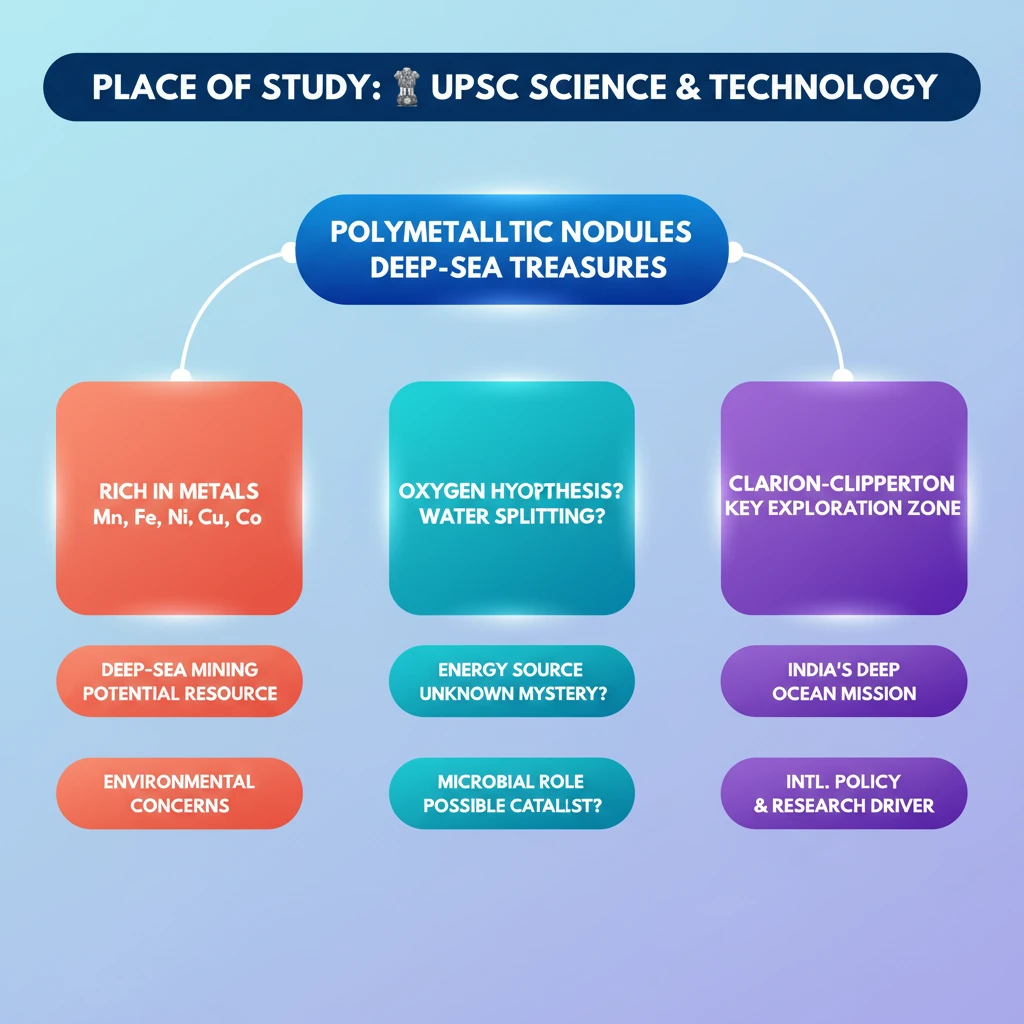
- •Polymetallic nodules are iron-manganese concretions on the ocean floor, rich in valuable metals.
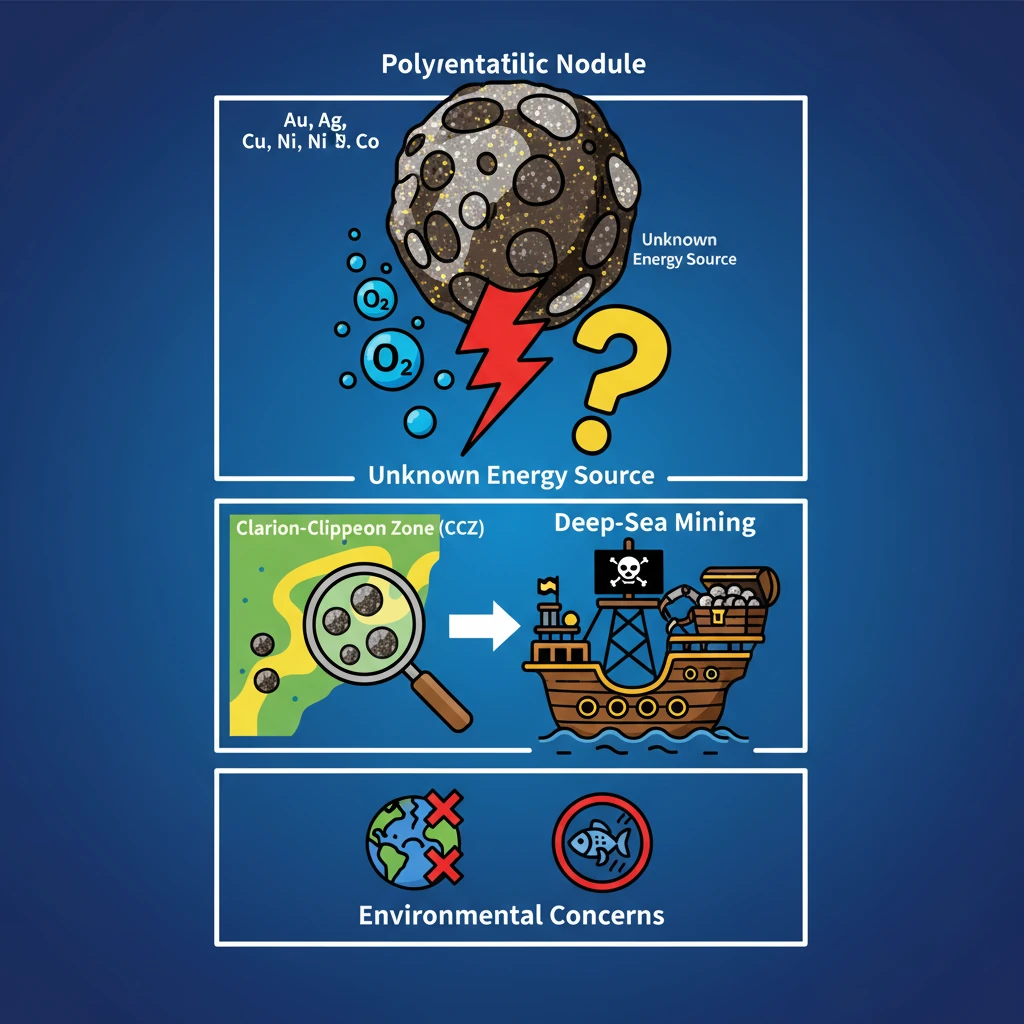
- •A hypothesis suggests nodules split water molecules to produce oxygen, though the energy source is unknown.
- •The Clarion-Clipperton Zone (CCZ) off Mexico's west coast is a key study area due to its high nodule concentration.
- •Nodules are crucial for potential deep-sea mining but raise significant environmental concerns.
- •Research on nodules informs international policies and India's Deep Ocean Mission.
🧠 Memory Techniques
95% Verified Content
📚 Reference Sources
•Scientific journals on oceanography and marine geology (general category)
•Reports from the International Seabed Authority (ISA)
•UNCLOS documents
•National Institute of Ocean Technology (NIOT) publications related to Deep Ocean Mission