How do RNA and DNA Editing Differ? - Science And Technology | UPSC Learning
Topics
0 topics • 0 completed
🔍
No topics match your search
How do RNA and DNA Editing Differ?
Medium⏱️ 6 min read
science and technology
📖 Introduction
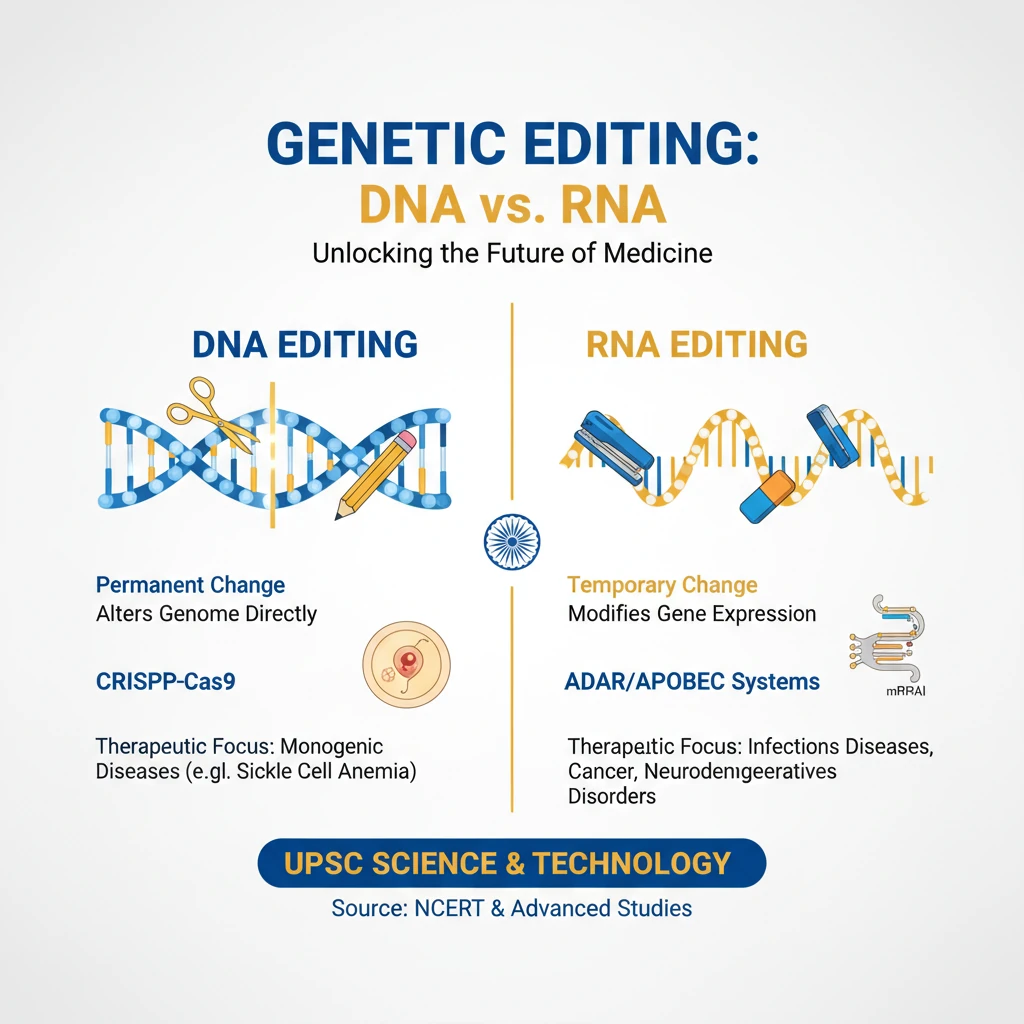
<h4>Introduction to Genetic Editing</h4><p><strong>Genetic editing</strong> involves precisely modifying an organism's genetic material. This advanced technology holds immense promise for treating various diseases and understanding biological processes.</p><p>It primarily focuses on altering either <strong>DNA</strong> or <strong>RNA</strong>, each possessing distinct characteristics and implications for therapeutic applications.</p><h4>Core Differences: DNA vs. RNA Editing</h4><div class='key-point-box'><p>The fundamental distinctions between <strong>DNA editing</strong> and <strong>RNA editing</strong> are based on their permanence, the tools utilized, and the resulting immune responses within the body.</p></div><table class='info-table'><tr><th>Aspect</th><th>DNA Editing</th><th>RNA Editing</th></tr><tr><td><strong>Permanence</strong></td><td>Permanent: Alters an individual’s <strong>genome permanently</strong>. Changes are inherited if germline cells are affected.</td><td>Temporary: Makes <strong>temporary changes</strong> in <strong>RNA</strong> that fade over time as RNA molecules degrade.</td></tr><tr><td><strong>Risk of Errors</strong></td><td>May lead to <strong>irreversible errors</strong> if off-target modifications occur, increasing long-term risks.</td><td>Provides flexibility to <strong>discontinue therapy</strong> if problems arise, reducing long-term risks due to transient effects.</td></tr><tr><td><td><strong>Tools Used</strong></td><td>Often uses <strong>CRISPR-Cas9</strong> or other tools derived from <strong>bacteria</strong> or other non-human sources.</td><td>Utilises <strong>ADAR enzymes</strong> (Adenosine Deaminases Acting on RNA) naturally present in human cells.</td></tr><tr><td><strong>Immune Response</strong></td><td>Can trigger <strong>immune reactions</strong> due to the introduction of foreign bacterial proteins into the body.</td><td>Poses a <strong>lower risk of immune or allergic responses</strong> because it uses endogenous (naturally occurring) enzymes.</td></tr><tr><td><strong>Suitability</strong></td><td>Requires careful consideration due to potential for <strong>irreversible changes</strong> and immune reactions. Best for permanent genetic corrections.</td><td>Suitable for <strong>repeated treatments</strong> and individuals with <strong>immune sensitivities</strong>, ideal for transient modulation of gene expression.</td></tr></table><h4>Understanding DNA Editing</h4><p><strong>DNA editing</strong> directly modifies the organism's <strong>genome</strong>, which is the complete set of an organism's genetic material. These changes are made at the foundational level.</p><p>The modifications are typically <strong>permanent</strong> and can potentially be passed on to subsequent generations if performed on germline cells (sperm or egg cells).</p><div class='info-box'><p>The most prominent tool for <strong>DNA editing</strong> is <strong>CRISPR-Cas9</strong>, a revolutionary system adapted from bacterial immune defenses. It allows for precise cutting and editing of specific DNA sequences.</p></div><h4>Understanding RNA Editing</h4><p>In contrast, <strong>RNA editing</strong> modifies the <strong>RNA molecule</strong>, which serves as a temporary messenger carrying instructions from DNA for protein synthesis. It targets the transient copies of genetic information.</p><p>These modifications are inherently <strong>temporary</strong> because RNA molecules have a shorter lifespan than DNA and are constantly being synthesized and degraded by the cell.</p><div class='info-box'><p><strong>RNA editing</strong> primarily utilizes <strong>ADAR enzymes</strong> (Adenosine Deaminases Acting on RNA), which are naturally occurring in human cells and convert adenosine to inosine in RNA, thereby altering the genetic message.</p></div><div class='exam-tip-box'><p>UPSC often asks about the ethical implications and practical applications of these technologies. Understanding the core differences in <strong>permanence</strong> and <strong>immune response</strong> is crucial for comprehensive answers, especially in <strong>GS Paper III: Science and Technology</strong> and <strong>GS Paper IV: Ethics</strong>.</p></div>
💡 Key Takeaways
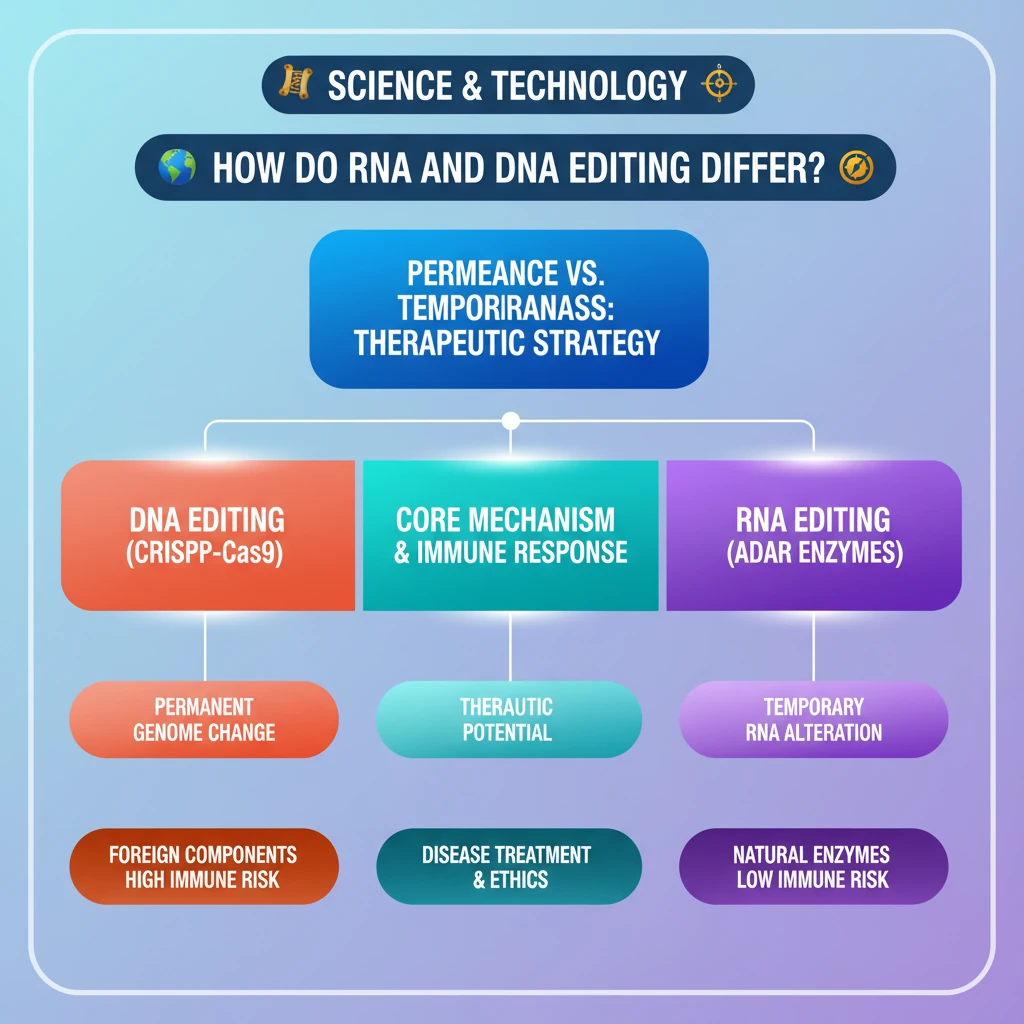
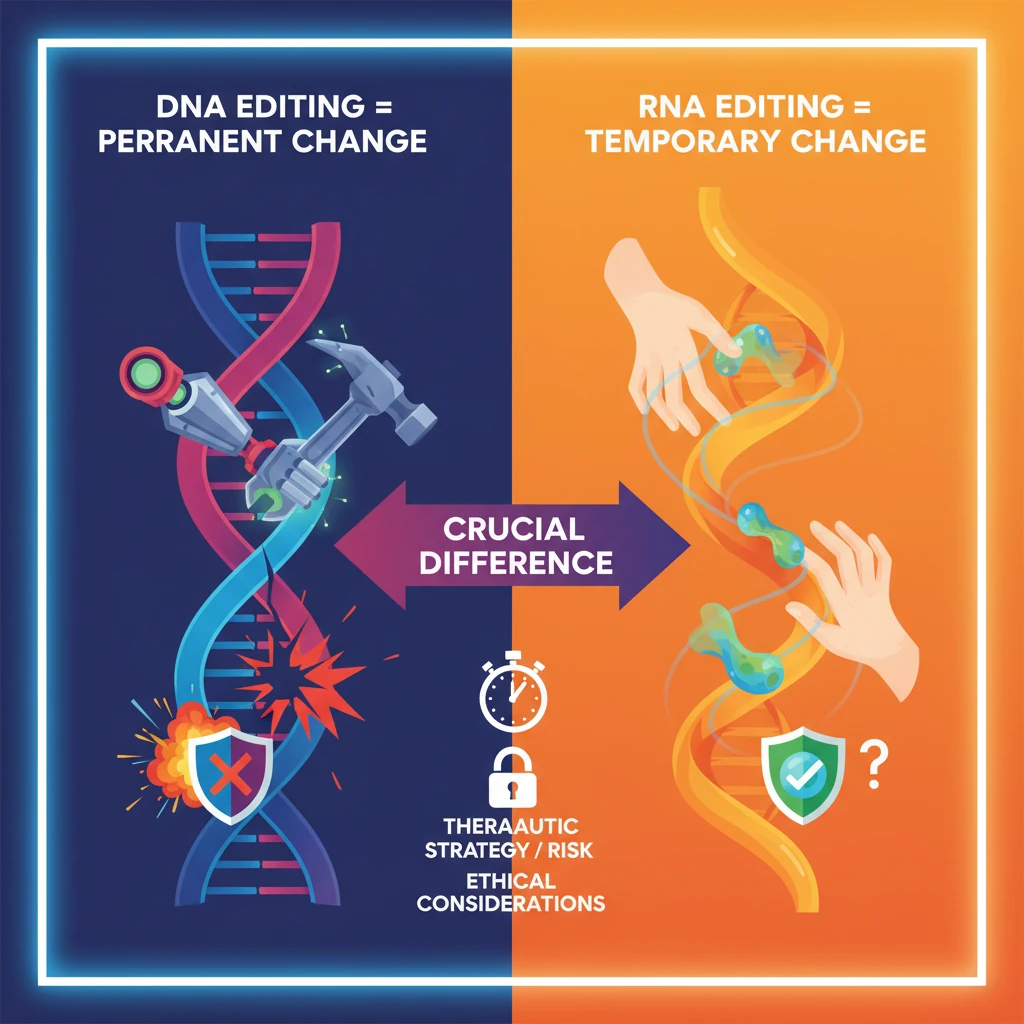
- •DNA editing causes permanent alterations to the genome, while RNA editing results in temporary changes to RNA molecules.
- •DNA editing (e.g., CRISPR-Cas9) often uses foreign bacterial components, which can trigger an immune response.
- •RNA editing (e.g., ADAR enzymes) utilizes naturally occurring human enzymes, posing a lower risk of immune reactions.
- •The permanence vs. temporariness difference is crucial for determining therapeutic strategy, risk assessment, and ethical considerations.
- •Both technologies offer vast potential for treating diseases but are suited for distinct applications based on their mechanisms and safety profiles.
🧠 Memory Techniques
95% Verified Content
📚 Reference Sources
•National Center for Biotechnology Information (NCBI) - for ADAR and CRISPR mechanisms
•Nature and Science journals (general knowledge on gene editing advancements)
•World Health Organization (WHO) - for ethical guidelines on gene editing