What are microRNAs? - Science And Technology | UPSC Learning
Topics
0 topics • 0 completed
🔍
No topics match your search
What are microRNAs?
Medium⏱️ 10 min read
science and technology
📖 Introduction
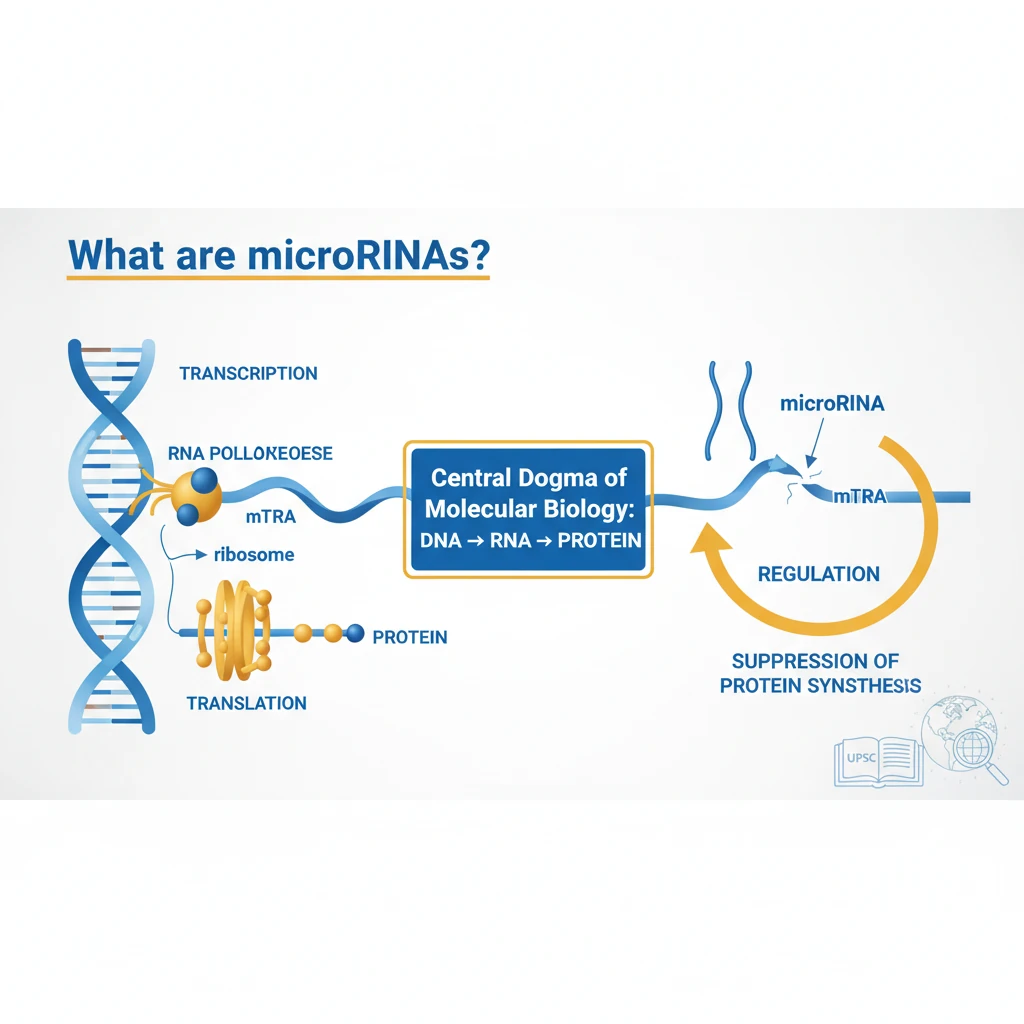
<h4>Understanding Protein Synthesis: The Central Dogma</h4><p>The human body constantly synthesizes <strong>proteins</strong>, which are essential for virtually all cellular functions. This complex biological process involves two primary steps: <strong>transcription</strong> and <strong>translation</strong>.</p><div class='info-box'><p><strong>Central Dogma of Molecular Biology:</strong> This fundamental principle describes the flow of genetic information within a biological system. It states that information flows from <strong>DNA</strong> to <strong>RNA</strong>, and then from <strong>RNA</strong> to <strong>protein</strong>.</p></div><h4>Transcription: From DNA to mRNA</h4><p>The first step, <strong>transcription</strong>, occurs within the <strong>cell nucleus</strong>. Here, a specific sequence of <strong>Deoxyribonucleic acid (DNA)</strong> is copied into a molecule called <strong>messenger Ribonucleic acid (mRNA)</strong>. This process ensures that the genetic instructions are accurately transferred.</p><p>The <strong>DNA</strong> serves as a template, and an enzyme called <strong>RNA polymerase</strong> facilitates the synthesis of a complementary <strong>mRNA</strong> strand. This newly formed <strong>mRNA</strong> molecule carries the genetic code out of the nucleus.</p><h4>Translation: From mRNA to Protein</h4><p>Following transcription, the <strong>mRNA</strong> exits the <strong>nucleus</strong> and moves into the <strong>cytoplasm</strong>, the fluid within the cell. It then attaches to a cellular machinery called a <strong>ribosome</strong>. This marks the beginning of the second main step: <strong>translation</strong>.</p><p>At the <strong>ribosome</strong>, the genetic code carried by the <strong>mRNA</strong> is 'read' and used to assemble a chain of <strong>amino acids</strong>, which folds into a functional <strong>protein</strong>. This process involves other types of RNA, such as <strong>transfer RNA (tRNA)</strong>.</p><h4>What are microRNAs (miRNAs)?</h4><p>While the above describes how proteins are made, not all <strong>RNA</strong> molecules are translated into proteins. <strong>microRNAs (miRNAs)</strong> are a class of small, non-coding <strong>RNA</strong> molecules, typically 19-25 nucleotides in length. They do not carry instructions for protein synthesis themselves.</p><div class='key-point-box'><p><strong>Key Concept: Non-coding RNA</strong> <strong>miRNAs</strong> are a crucial example of <strong>non-coding RNA (ncRNA)</strong>. Unlike <strong>mRNA</strong>, which codes for proteins, <strong>ncRNAs</strong> perform various regulatory and structural functions directly without being translated.</p></div><h4>Function and Mechanism of miRNAs</h4><p>The primary function of <strong>miRNAs</strong> is to regulate <strong>gene expression</strong>. They achieve this by binding to specific <strong>mRNA</strong> molecules, usually in the 3' untranslated region (UTR). This binding can lead to two main outcomes:</p><ul><li><strong>mRNA degradation:</strong> The <strong>miRNA</strong>-bound <strong>mRNA</strong> is marked for destruction, preventing its translation into protein.</li><li><strong>Translational repression:</strong> The <strong>miRNA</strong> inhibits the ribosome from translating the <strong>mRNA</strong> into protein, even if the <strong>mRNA</strong> is not immediately degraded.</li></ul><p>Through these mechanisms, <strong>miRNAs</strong> effectively 'silence' or reduce the production of specific proteins, playing a critical role in fine-tuning cellular processes.</p><h4>Biological Significance of miRNAs</h4><p><strong>miRNAs</strong> are involved in a vast array of biological processes. Their regulatory power makes them essential for proper cellular function and development.</p><ul><li><strong>Cell Development:</strong> They guide cell differentiation and tissue formation.</li><li><strong>Cell Proliferation and Apoptosis:</strong> They control cell growth and programmed cell death.</li><li><strong>Immune Response:</strong> They modulate the body's defense mechanisms.</li><li><strong>Disease Pathogenesis:</strong> Dysregulation of <strong>miRNAs</strong> is implicated in many diseases, including various types of <strong>cancer</strong>, <strong>neurodegenerative disorders</strong>, and <strong>cardiovascular diseases</strong>.</li></ul><div class='exam-tip-box'><p><strong>UPSC Insight:</strong> Understanding the distinction between <strong>coding RNA (mRNA)</strong> and <strong>non-coding RNA (miRNA, tRNA, rRNA)</strong> is fundamental. Questions often test the regulatory roles of these molecules in health and disease, especially in the context of biotechnology and medicine.</p></div>
💡 Key Takeaways
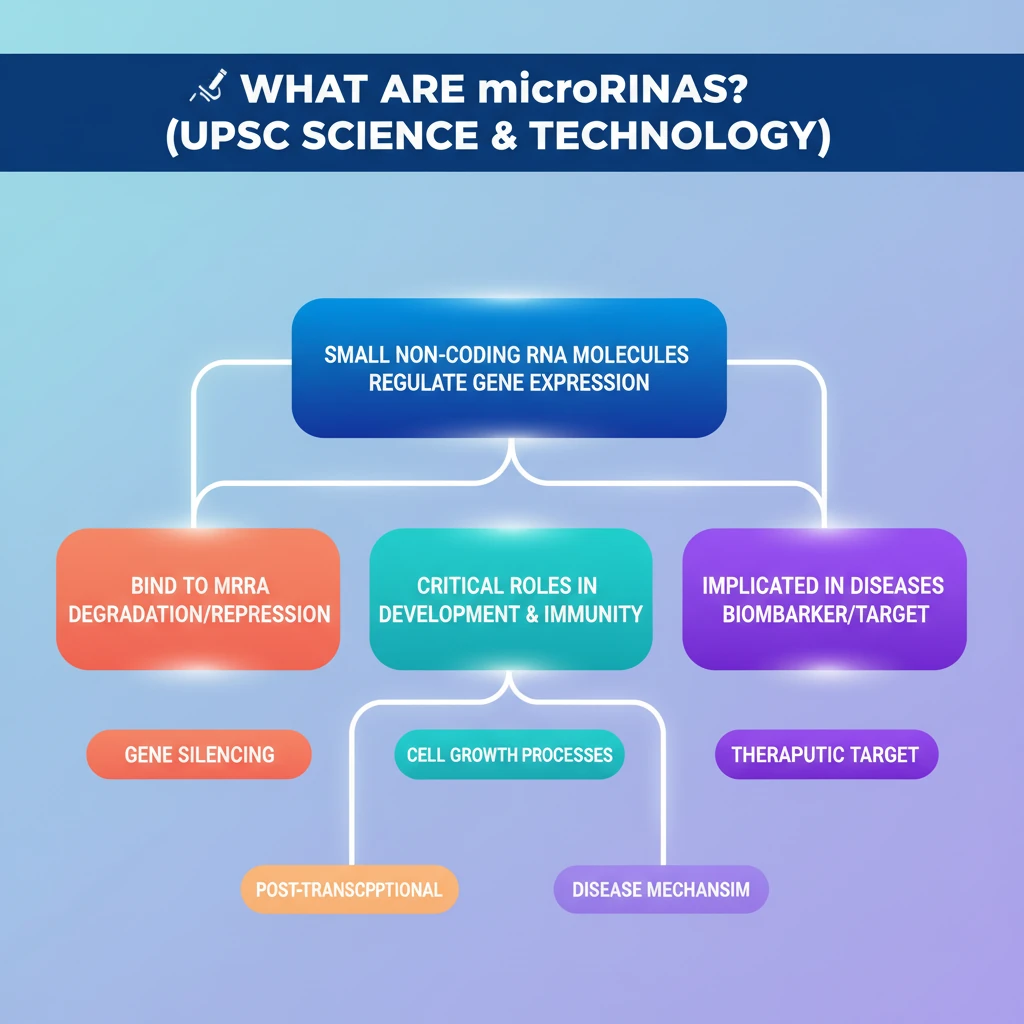
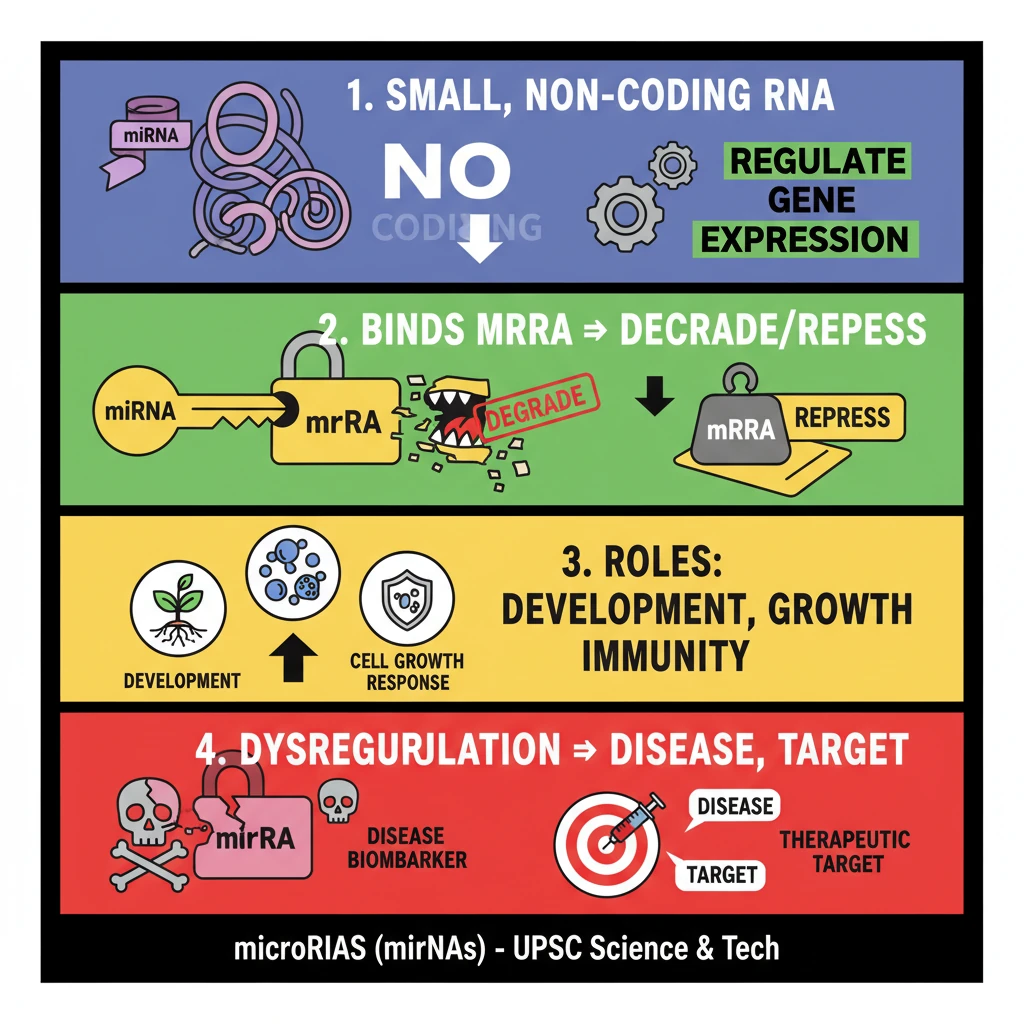
- •microRNAs (miRNAs) are small, non-coding RNA molecules that regulate gene expression.
- •They function by binding to specific messenger RNA (mRNA) molecules, leading to mRNA degradation or translational repression.
- •miRNAs play critical roles in various biological processes, including development, cell growth, and immune response.
- •Dysregulation of miRNAs is implicated in numerous diseases, making them potential biomarkers and therapeutic targets.
- •The discovery of miRNAs expanded the understanding of gene regulation beyond protein-coding genes.
🧠 Memory Techniques
95% Verified Content
📚 Reference Sources
•National Center for Biotechnology Information (NCBI) - PubMed articles on microRNAs
•Nature Education - Scitable articles on gene regulation and microRNAs
•Alberts B, Johnson A, Lewis J, et al. Molecular Biology of the Cell. 4th edition. New York: Garland Science; 2002.