Sucralose: A Promising Sweetener for Diabetics - Science And Technology | UPSC Learning
Topics
0 topics • 0 completed
🔍
No topics match your search
Sucralose: A Promising Sweetener for Diabetics
Medium⏱️ 6 min read
science and technology
📖 Introduction
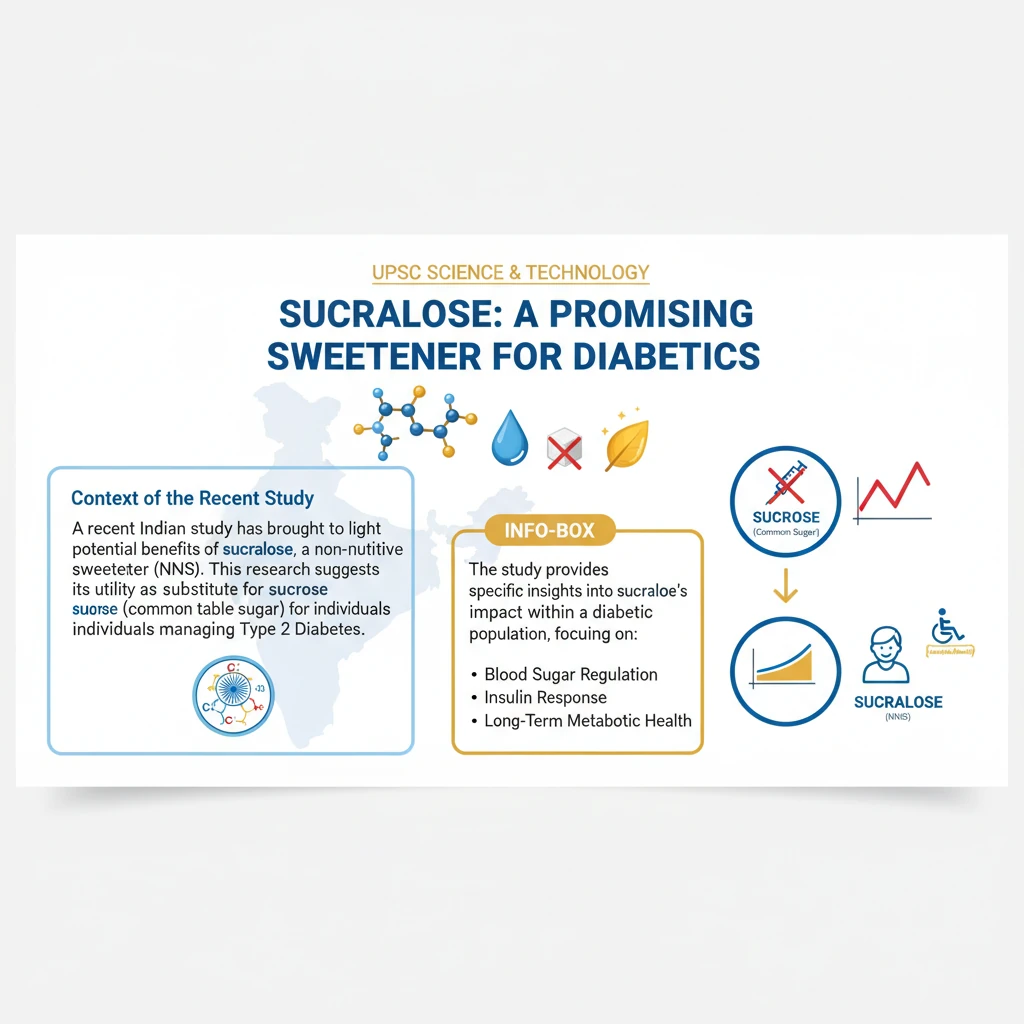
<h4>Context of the Recent Study</h4><p>A recent <strong>Indian study</strong> has brought to light the potential benefits of <strong>sucralose</strong>, a <strong>non-nutritive sweetener (NNS)</strong>. This research suggests its utility as a substitute for <strong>sucrose</strong> (common table sugar) for individuals managing <strong>Type 2 Diabetes</strong>.</p><div class='info-box'><p>The study provides specific insights into <strong>sucralose's</strong> impact within a diabetic population, offering a nuanced perspective on its use.</p></div><h4>Contrasting Views on Non-Nutritive Sweeteners</h4><p>The findings of this Indian study stand in contrast to a recent advisory from the <strong>World Health Organization (WHO)</strong>. The <strong>WHO</strong> has cautioned against the general use of <strong>Non-Nutritive Sweeteners</strong> for <strong>weight control</strong>, particularly in non-diabetic populations.</p><div class='key-point-box'><p>This highlights an ongoing debate and evolving understanding regarding the broader health implications of <strong>NNS</strong> across different demographic groups.</p></div><h4>Key Findings of the Indian Study</h4><p>The intervention and control groups in the study showed <strong>no significant changes</strong> in key health markers. Specifically, there were no notable differences observed in <strong>glucose levels</strong> or <strong>HbA1c levels</strong> between the groups.</p><div class='info-box'><p><strong>HbA1c</strong> is a crucial indicator that reflects average <strong>blood glucose control</strong> over the preceding two to three months. The stability of this marker is a significant finding for diabetics.</p></div><div class='exam-tip-box'><p><strong>UPSC Insight:</strong> Questions on <strong>dietary science</strong>, <strong>public health policies</strong>, and <strong>medical advancements</strong> are common in <strong>GS-II (Social Justice)</strong> and <strong>GS-III (Science & Technology)</strong>. Understanding the nuances of such studies is crucial.</p></div>
💡 Key Takeaways
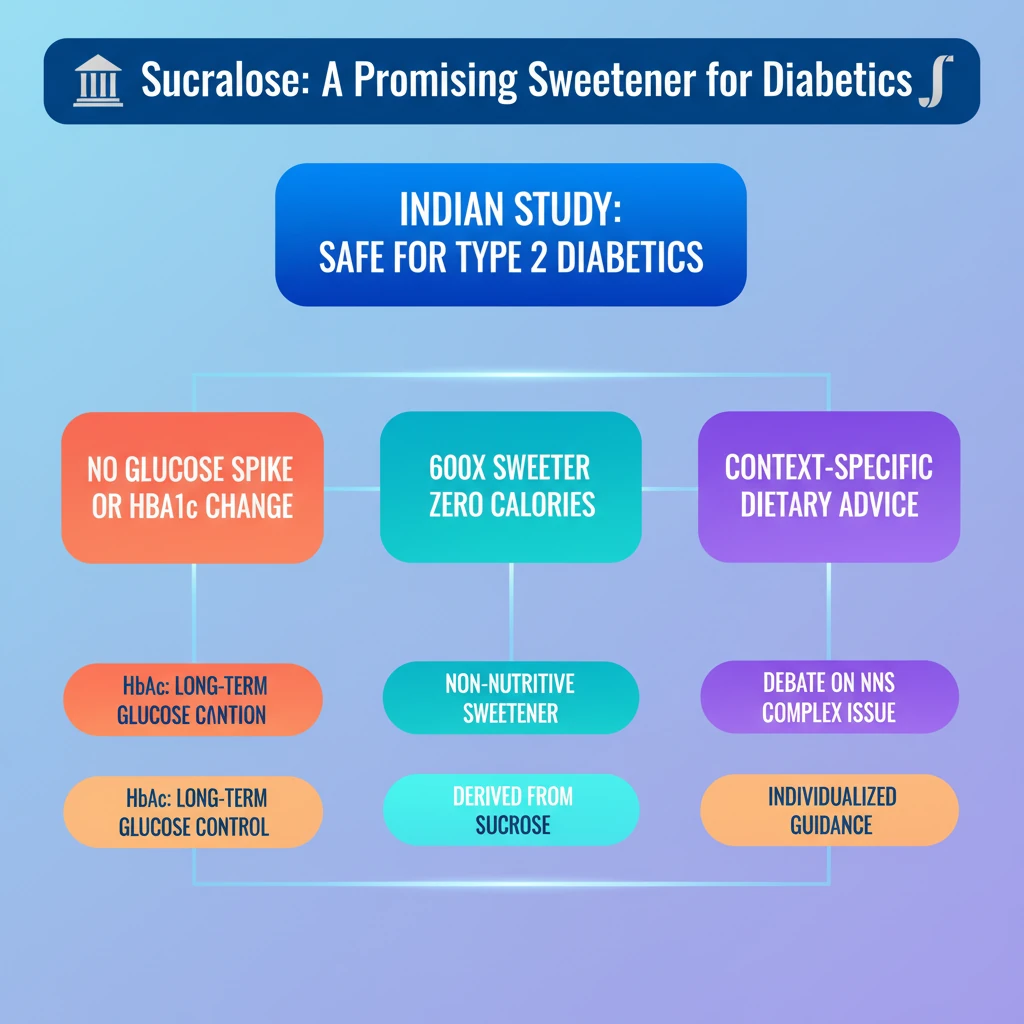
- •An Indian study suggests sucralose is a promising sweetener for Type 2 Diabetics, showing no significant changes in glucose or HbA1c.
- •This finding contrasts with WHO's caution against NNS for weight control in non-diabetics.
- •Sucralose is a non-nutritive sweetener, approximately 600 times sweeter than sucrose with no calories.
- •HbA1c is a key indicator for long-term blood glucose control in diabetes.
- •The debate on NNS highlights the complexity of dietary recommendations and the need for context-specific guidance.
- •Regulatory bodies and scientific research continuously evaluate the safety and efficacy of food additives.
🧠 Memory Techniques

95% Verified Content
📚 Reference Sources
•World Health Organization (WHO) Guidelines on Non-Sugar Sweeteners
•General scientific literature on Sucralose and Type 2 Diabetes